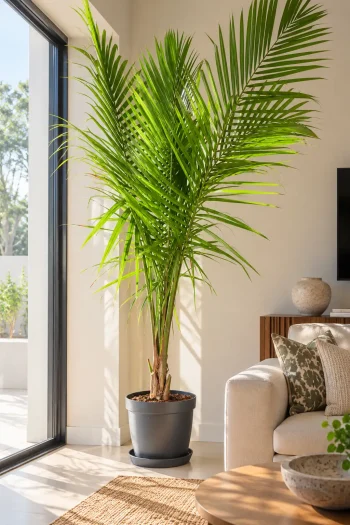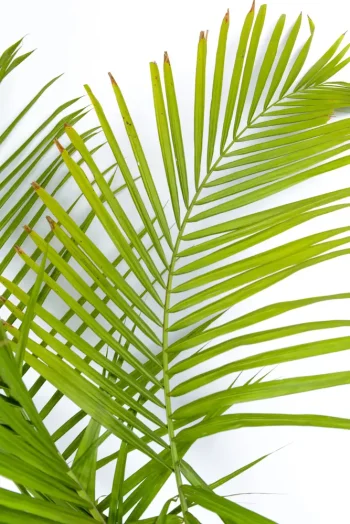






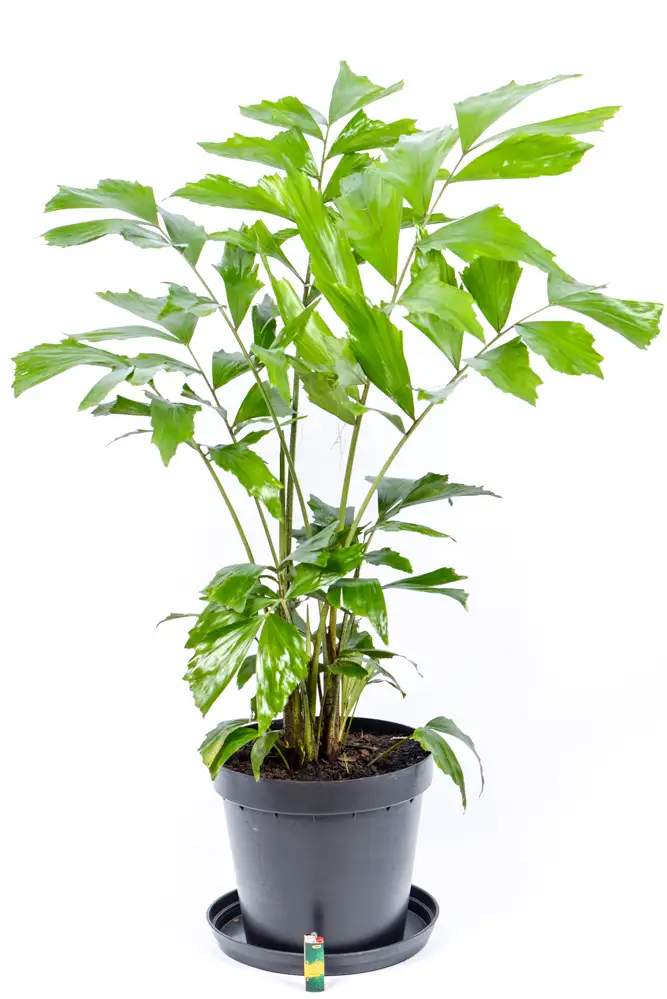
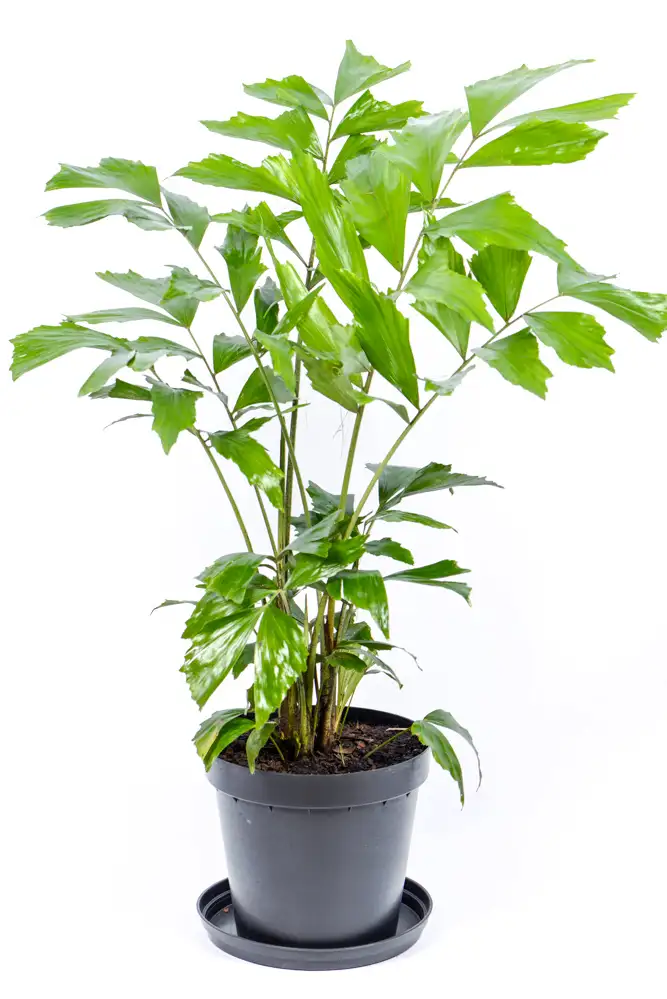
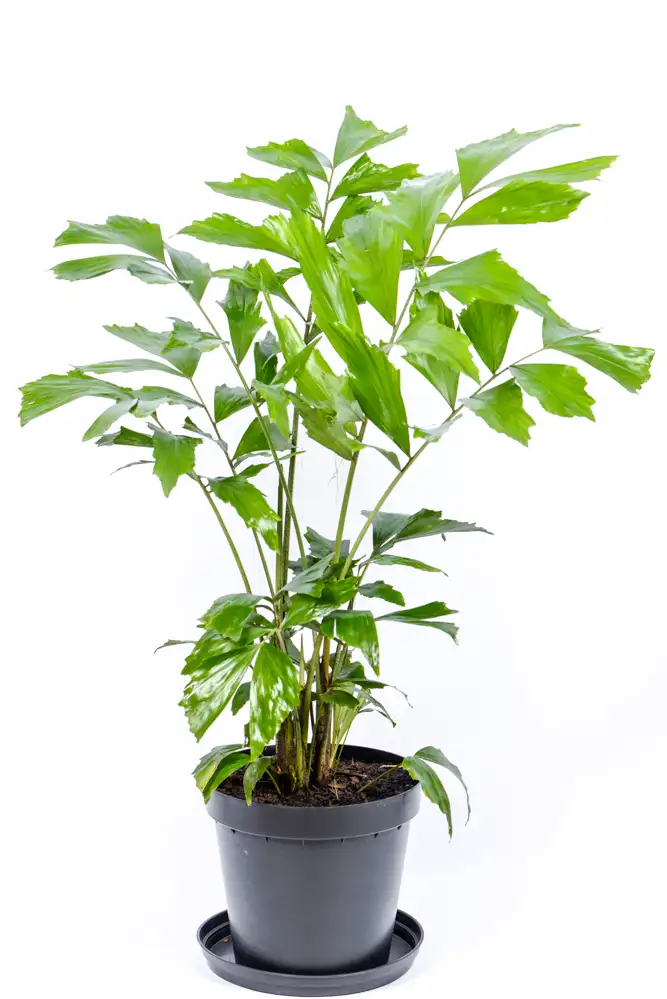
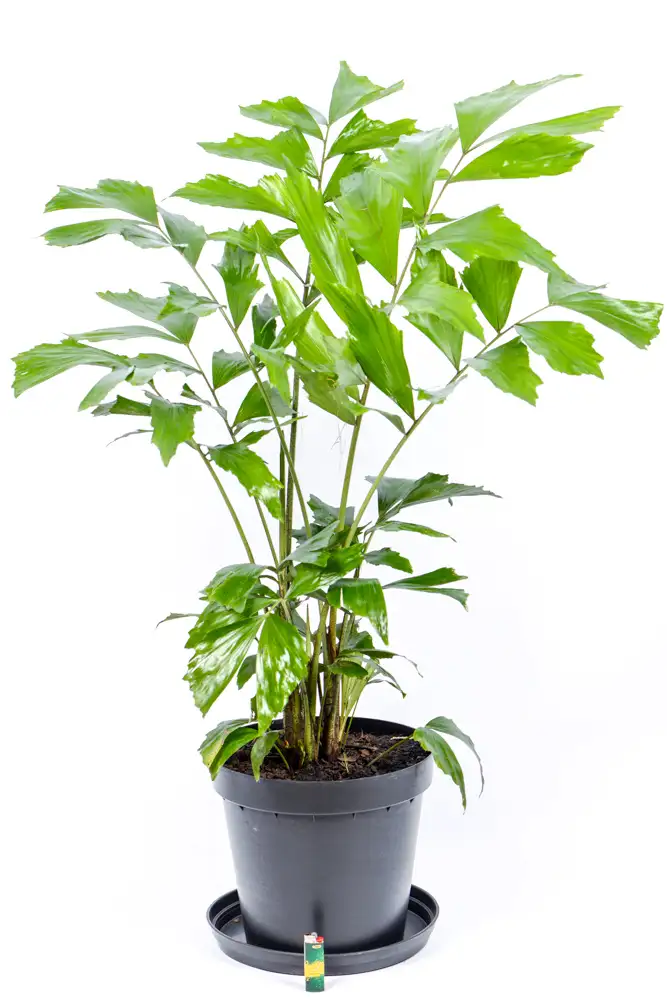

Commonly known as: XL Fishtail Palm | Burmese Fishtail Palm
Botanical name:ย Caryota mitis
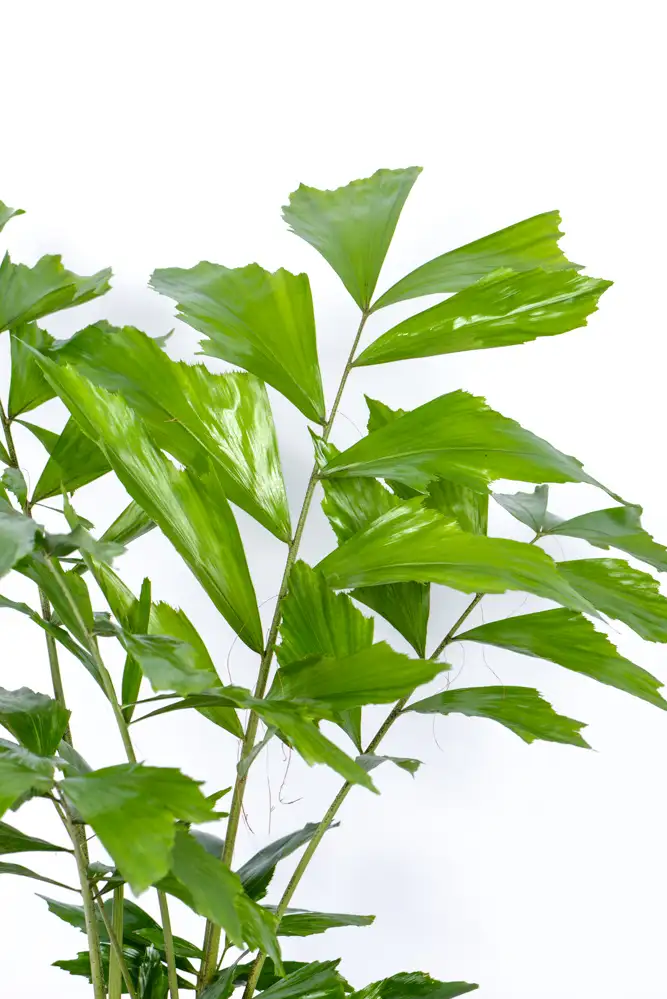
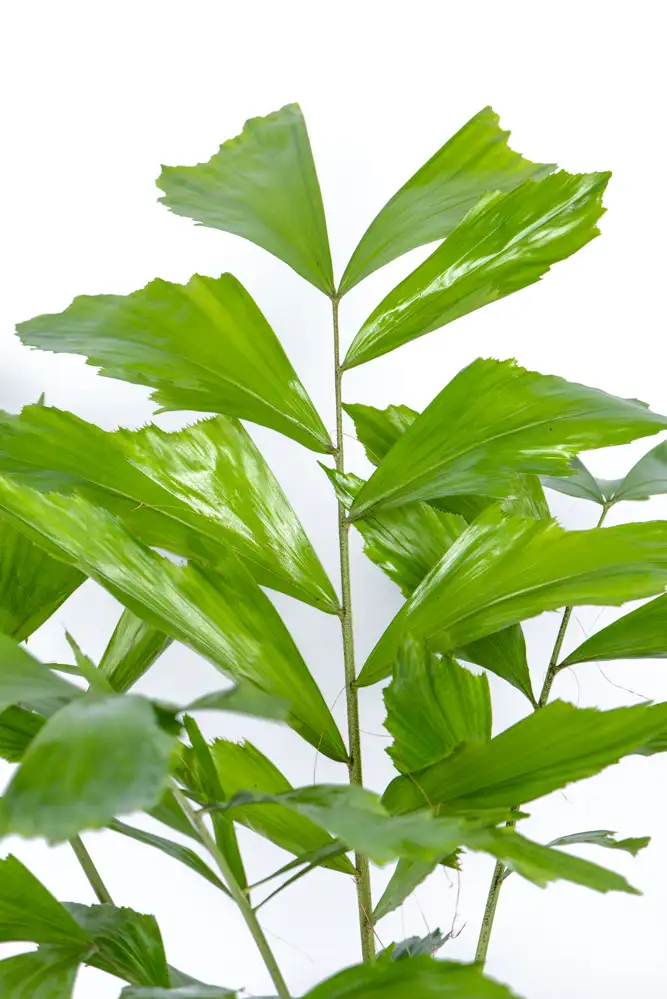
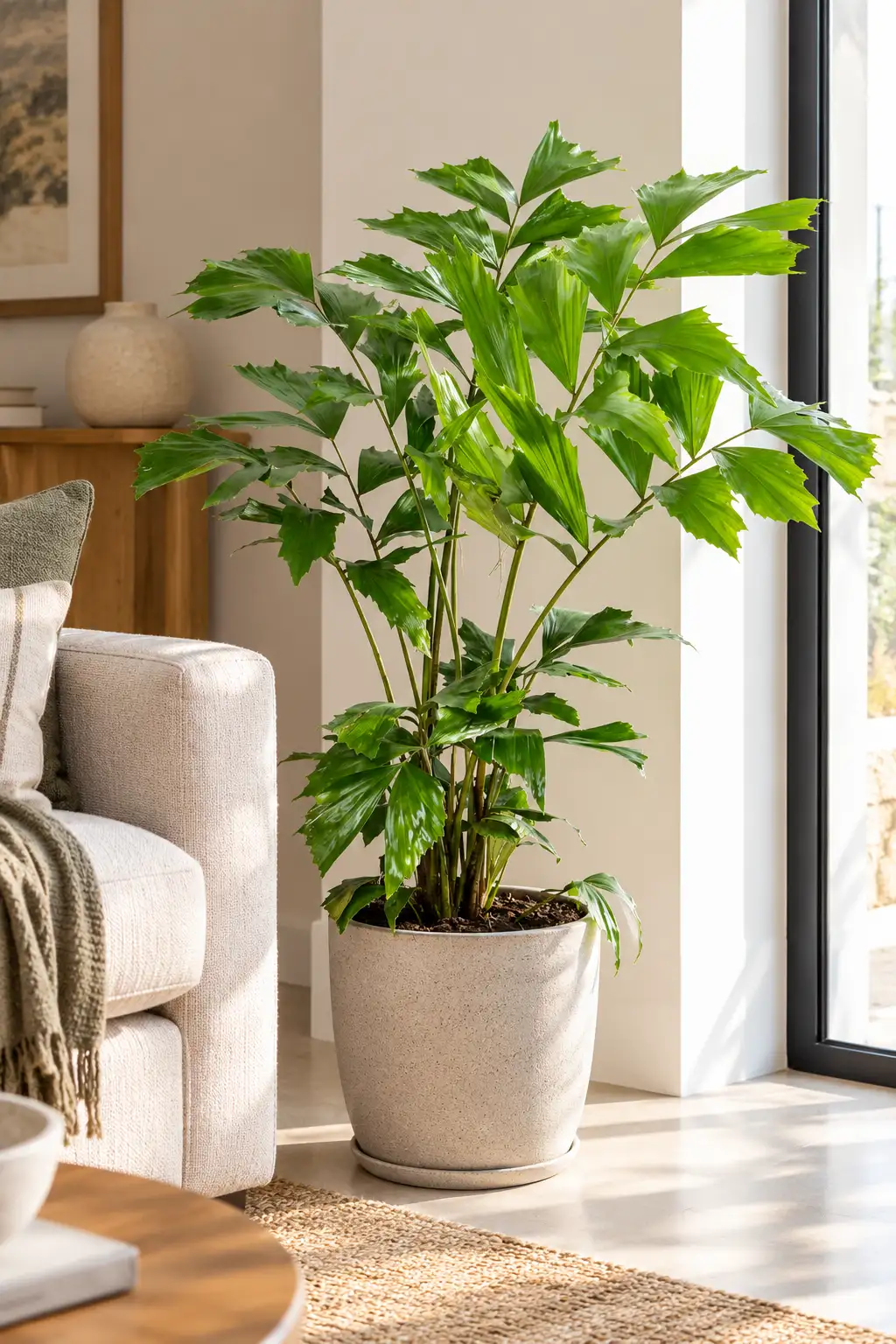
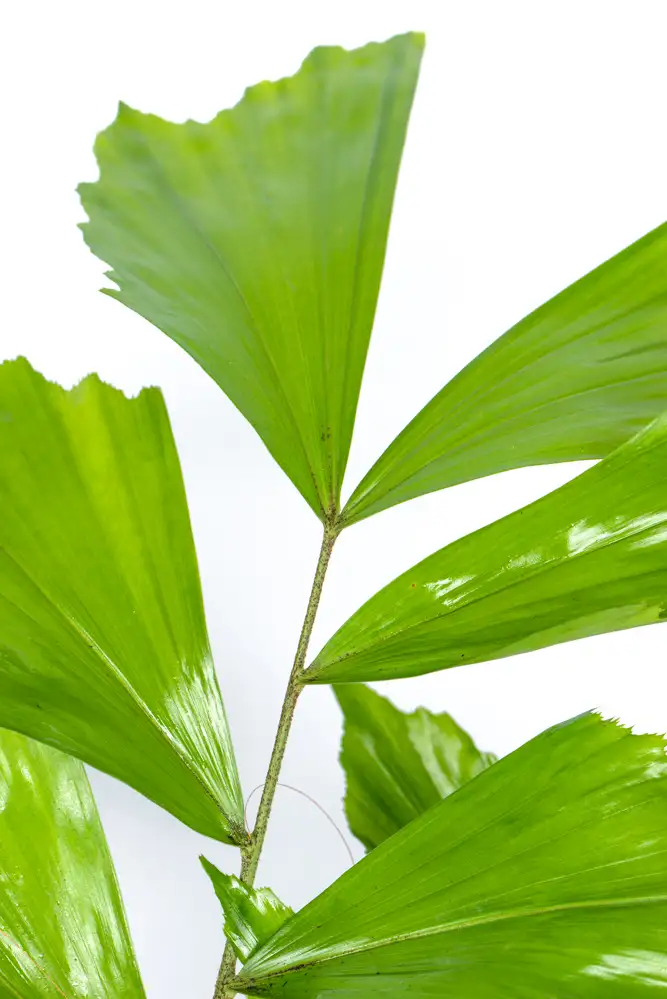
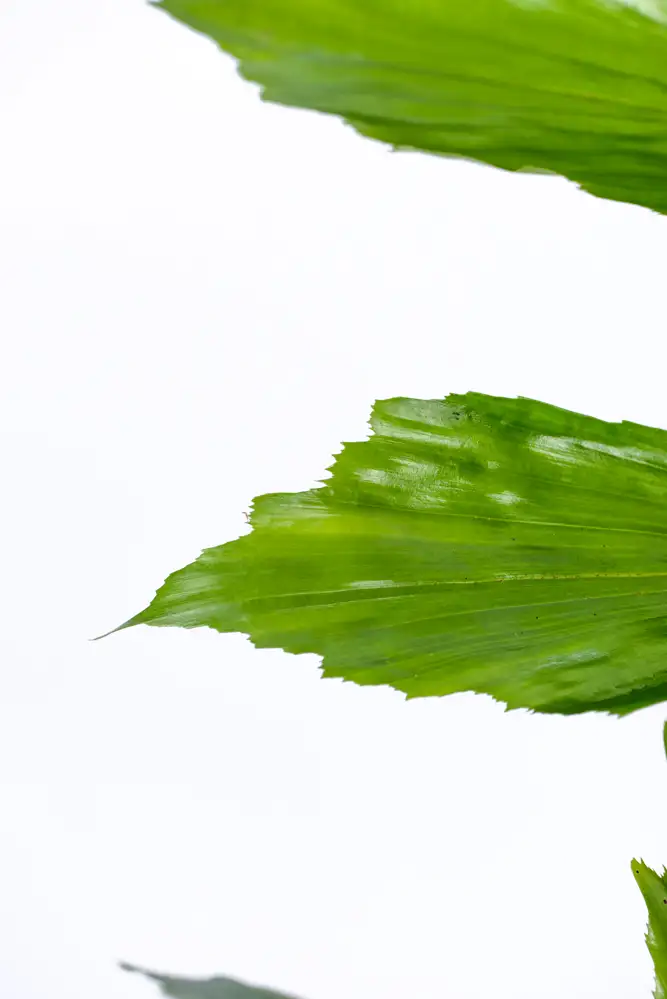
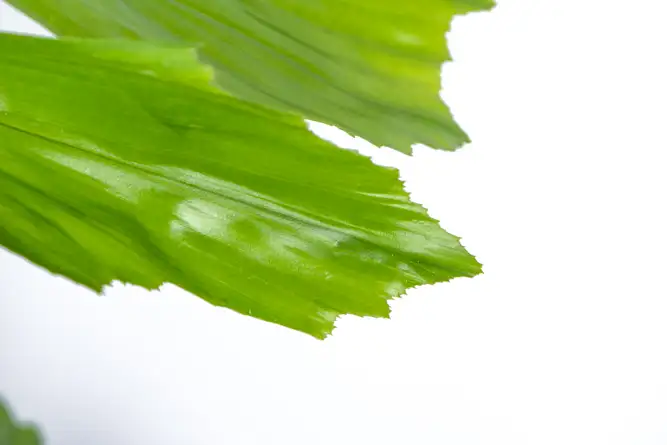
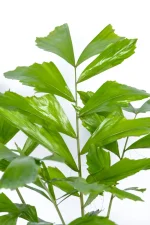
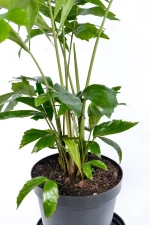
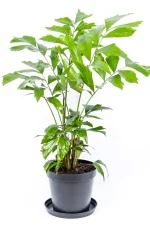
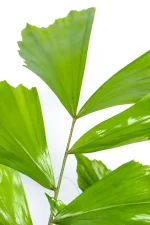
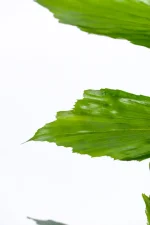
The XL Fishtail Palm doesn’t have the typical long, narrow leaflets you expect to see on a palm. Instead, Caryota mitis produces broad leaflets with irregular, jagged ends that look remarkably like fishtails.
It’s this unusual foliage that gives the palm both its common name and its distinctive appearance.
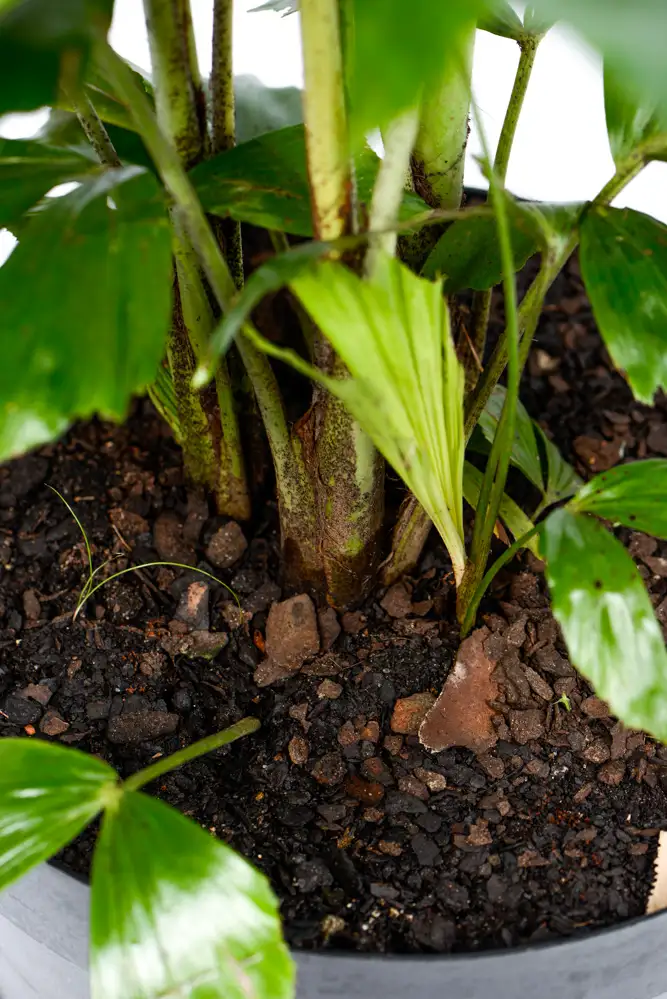
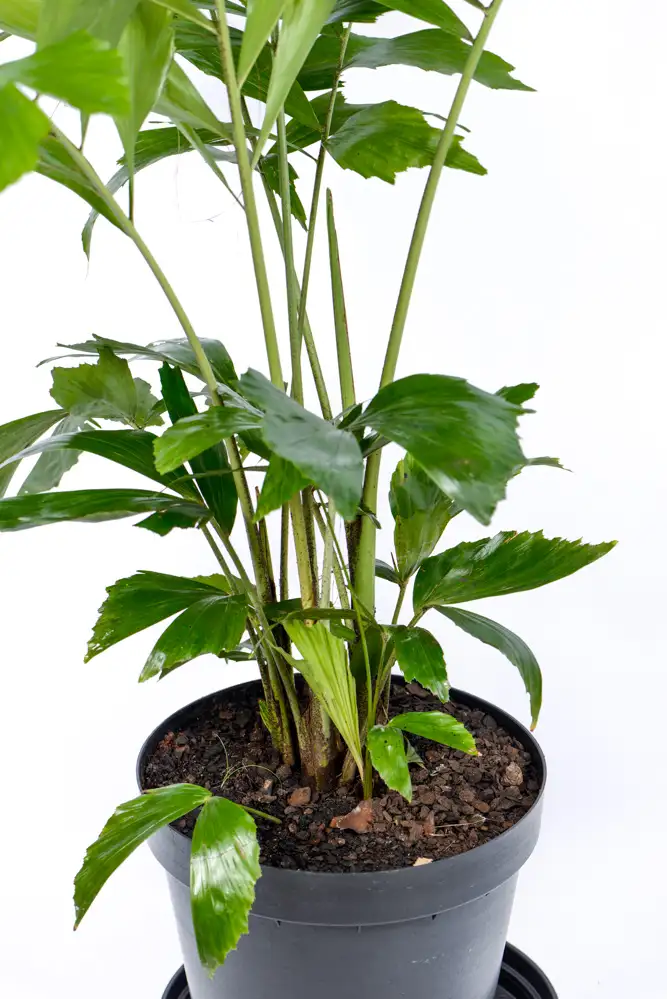
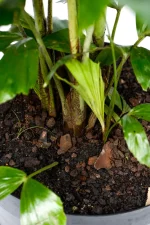
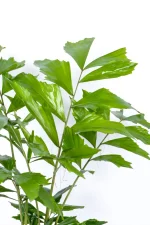
Caryota mitis is naturally a clumping palm, producing multiple stems from the base rather than developing as a single trunk. As fresh stems develop, the plant becomes progressively fuller and creates a dense canopy of bright green foliage.
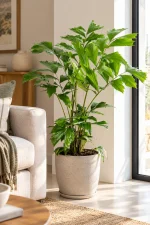
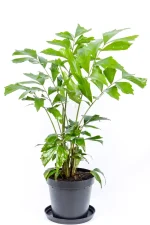
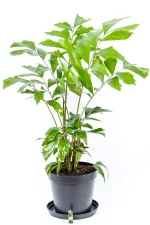
At approximately 1m tall in a 30cm pot, these are already nicely established plants with plenty of foliage.
Indoors, give your Fishtail Palm lots of bright natural light. A position close to a large window is ideal, while some gentle direct sun is perfectly suitable once the foliage has acclimatised.
Fishtail Palms also appreciate consistent moisture. Don’t keep the roots waterlogged, but avoid leaving the entire root ball bone dry for extended periods. During warm weather, an established palm can use a surprising amount of water.
Regular feeding, good airflow and an occasional thorough hose-down will help keep the foliage healthy and the plant actively growing.
XL Fishtail Palm Care Guide
Water โ How often should I water my Fishtail Palm?
Keep the growing medium consistently moist without leaving it permanently soggy.
Water thoroughly once the upper layer starts to dry, making sure the entire root ball receives water before allowing the excess to drain away.
Don’t allow the plant to sit bone dry for extended periods. During hot weather, check it regularly as a full palm in a 30cm pot can use water quickly.
Light โ Where should I place my Fishtail Palm?
Give it plenty of bright natural light.
A position close to a large window is ideal. Gentle morning or late-afternoon sun is beneficial, and the palm can handle stronger light once gradually acclimatised.
Avoid putting it into a dark corner. Good light supports stronger stems, healthy foliage and active new growth.
Humidity โ Does a Fishtail Palm like humidity?
Yes. Fishtail Palms appreciate moderate to higher humidity, particularly during hot, dry weather.
Good airflow is equally useful. If practical, take the palm outside occasionally and give the foliage a thorough hose-down. This removes accumulated dust and helps discourage spider mites.
Soil โ What growing medium should I use?
Use a growing medium that holds enough moisture to keep the roots consistently hydrated while still allowing excess water to drain freely.
I recommend Milled Bark Growing Medium. Some Perlite can be added to increase drainage and airflow around the root system.
Avoid heavy growing media that become compacted or remain waterlogged.
Feeding โ Does my Fishtail Palm need regular fertiliser?
Yes. Regular feeding helps maintain strong green foliage and supports the steady production of new growth.
Controlled Release Fertiliser provides balanced, convenient nutrition consistently over time.
For strong active growth, Novatec Soluble Fertiliser is another excellent option.
Repotting โ When should I repot my Fishtail Palm?
There’s no need to rush.
Allow the root system to properly fill its current container before moving up. When it does need repotting, increase by one sensible pot size and use fresh, free-draining growing medium.
Try not to disturb the root system unnecessarily during repotting.
Pests โ What should I watch for?
Spider mites are particularly worth watching for on indoor palms. Scale and mealybugs can occasionally appear too.
Check underneath the foliage and along the stems regularly, especially during hot and dry conditions.
An occasional thorough hose-down is one of the easiest ways to keep the foliage clean and help keep spider mites under control.
Temperature โ What temperatures does a Fishtail Palm prefer?
Fishtail Palms enjoy warm conditions and should be protected from cold temperatures and frost.
Keep the plant away from very cold winter drafts. Growth will naturally slow during cooler weather, so the growing medium will generally take longer to dry between waterings.
FAQ’s
One interesting thing about Caryota mitis is that it naturally produces multiple stems from its base.
Individual stems eventually mature, flower and complete their growth cycle, while younger stems continue developing from the clump. This is a natural part of the plant’s growth habit rather than a sign that the whole palm is dying.
If an old stem eventually declines, it can be removed at the base once it has finished.
Q: Why are the leaves shaped like fishtails?
That’s the natural foliage of Caryota mitis. Each leaflet has an irregular, torn-looking edge that resembles the tail of a fish.
Q: Why are the tips of my Fishtail Palm turning brown?
Check the moisture first. Allowing the root ball to become excessively dry can cause brown tips. Very dry air and mineral build-up in the growing medium can also contribute.
Q: Can a Fishtail Palm handle direct sunlight?
Yes, particularly gentler morning or late-afternoon sun. Introduce stronger direct light gradually if the palm has previously been grown under protected conditions.
Q: Can I remove older yellow or brown fronds?
Yes. Once a frond has naturally yellowed or browned, cut it away cleanly. Leave healthy green foliage in place.
Q: Is Fishtail Palm pet safe?
No. Caryota mitis contains irritating calcium oxalate crystals, particularly in its fruit, so it should be kept away from pets and small children who may chew or ingest it.
Be sure to visit and follow us Facebook and Instagram