








Commonly known as:Â Beetle Peperomia
Botanical name:Â Peperomia angulata (syn. Peperomia quadrangularis)
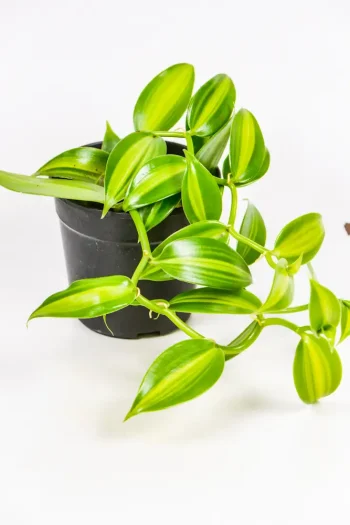
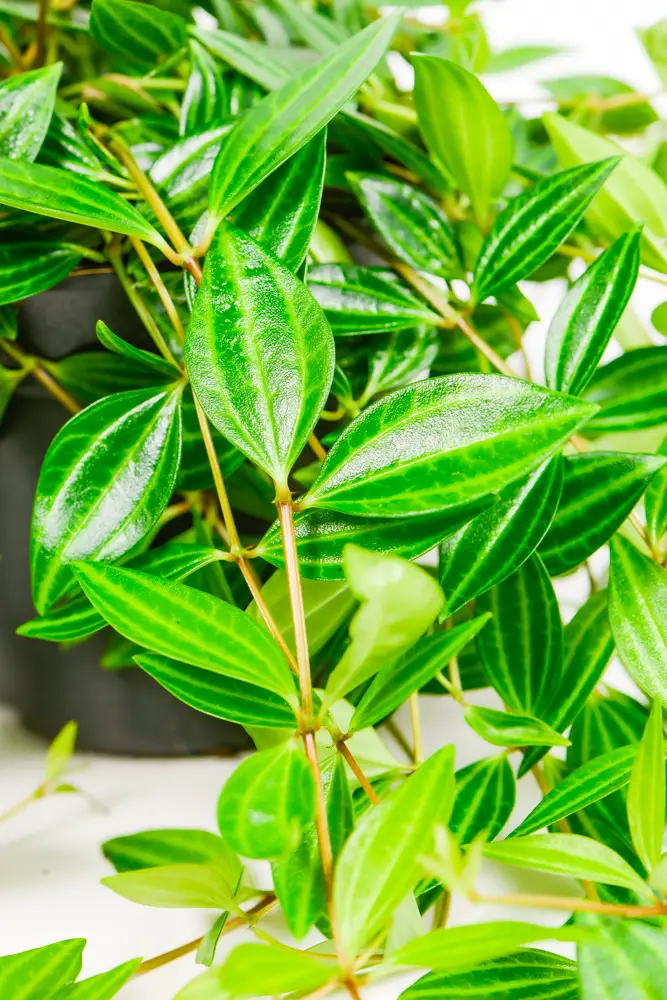
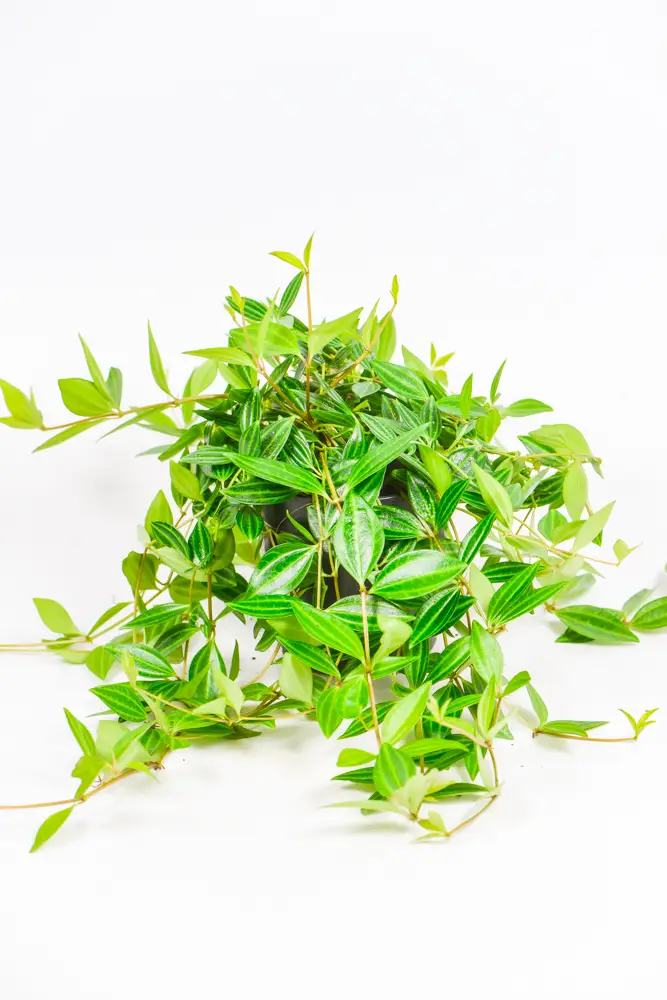
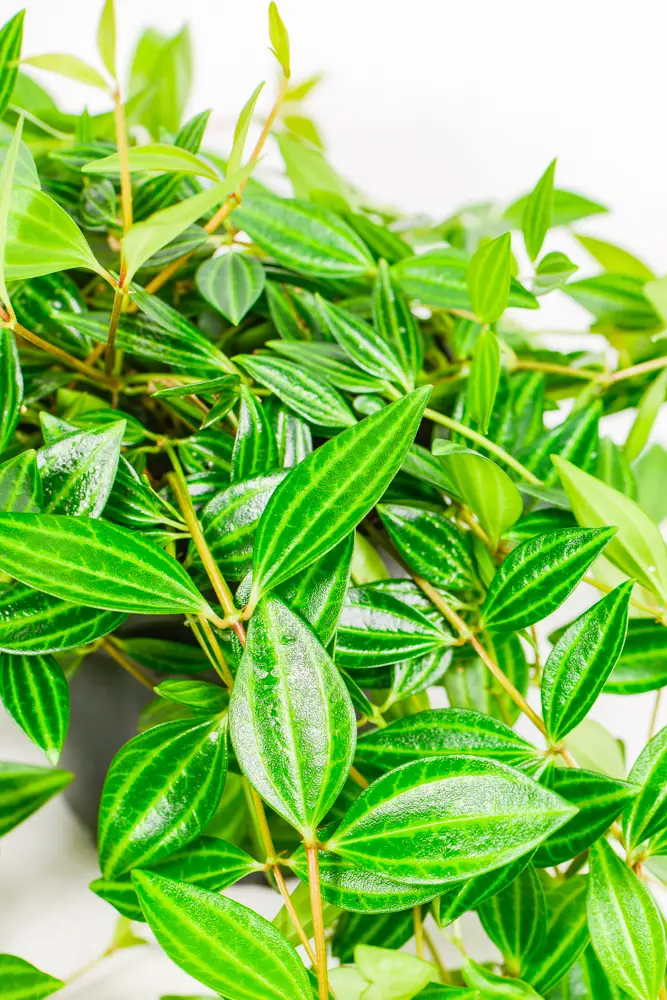
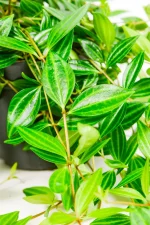
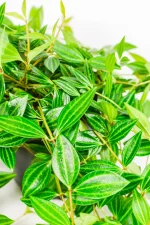
Beetle Peperomia is grown for its fine textured foliage and compact trailing growth. The small oval leaves display alternating light and dark green striping that resembles the patterning found on certain beetles, which is where the plant gets its common name.
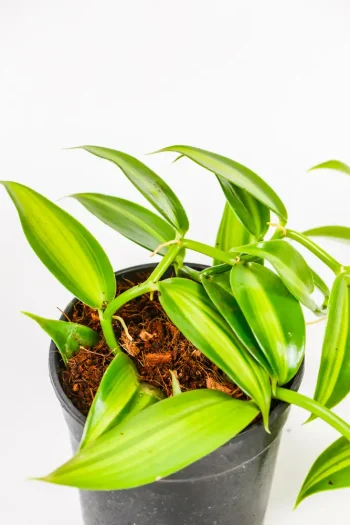
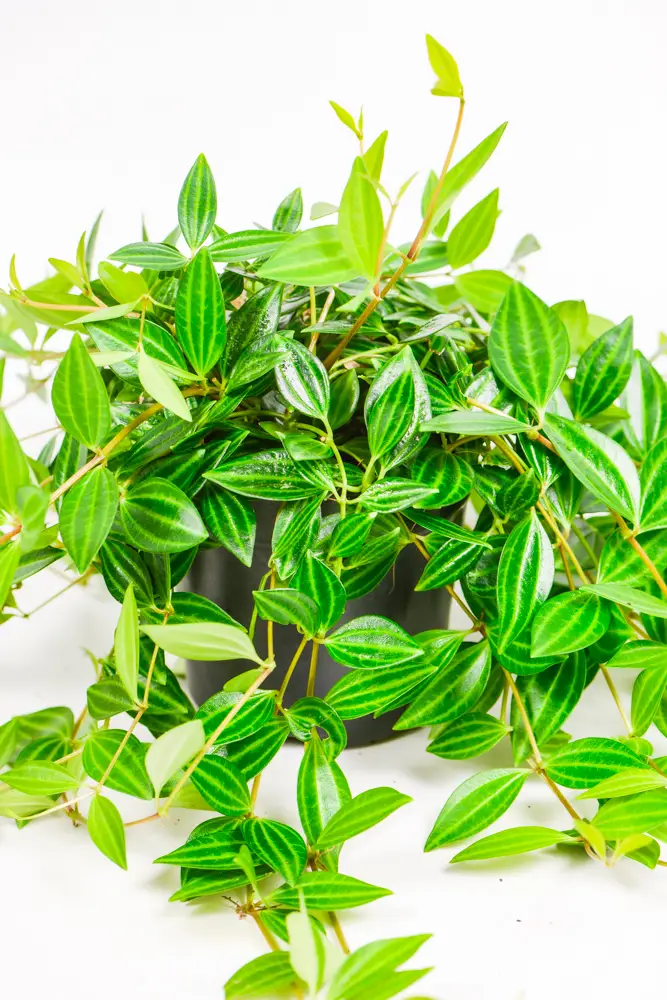
The stems remain relatively fine and flexible, allowing the plant to form a soft cascading shape as it matures. At this size in a 12cm pot, the plant already has good density and begins layering naturally as new growth develops along the stems.
Unlike larger trailing plants, Beetle Peperomia maintains a more delicate and refined appearance. The smaller leaves create texture without becoming visually heavy, making it particularly effective for shelves, desktops, smaller plant displays, or mixed collections.
The foliage has a lightly succulent nature, allowing the plant to store some moisture within the leaves and stems. This gives it slightly better drought tolerance than thinner tropical plants while still appreciating stable moisture and warmth.
As the plant settles and matures, the vines gradually lengthen and branch, creating a fuller trailing effect over time. Because of its controlled growth habit, it remains manageable indoors and does not become aggressive or sprawling.
Beetle Peperomia works especially well where softer trailing greenery is needed without the bulk of larger hanging plants.
Beetle Peperomia Care Guide
Watering – How often should it be watered?
Allow the top portion of the growing medium to dry slightly between waterings. Keep moisture levels balanced but avoid waterlogged conditions. The slightly succulent foliage allows the plant to tolerate brief dry periods.
Light – What light does Beetle Peperomia need?
Bright, indirect light works best. Good light helps maintain compact growth and stronger leaf patterning. Avoid prolonged harsh direct sun.
Humidity – Does it need extra humidity?
Average indoor humidity is suitable, although moderate humidity supports healthier foliage and stronger trailing growth.
Soil – What soil works best?
Use a breathable, well-draining growing medium. Milled Bark Growing Medium works particularly well, helping maintain airflow around the roots while retaining balanced moisture. Additional Perlite can be incorporated for sharper drainage if preferred.
Feeding – How should it be fertilised?
Feed during active growth with Grobest Organic Fertiliser every 4–6 weeks. For stronger vine growth, Novatec Soluble Fertiliser can be used occasionally.
Repotting – When should it be repotted?
Repot every 12–18 months or once the plant becomes root-bound. Move up one size only. Refresh with Milled Bark Growing Medium and lightly incorporate TerraPlus Natura N and Controlled Release Fertiliser.
Pests – What pests should I watch for?
Watch for mealybugs and spider mites, especially within dense foliage. Treat early with an insecticidal spray if needed.
Temperature – What temperature suits it best?
Beetle Peperomia grows well between 18°C and 28°C. Avoid temperatures below 12°C and protect from cold drafts.
FAQ’s
Is Beetle Peperomia a trailing plant?
Yes. As the stems mature they gradually spill and trail over the pot edges.
Does it grow quickly?
Growth is moderate and becomes fuller with regular pruning and good light.
Is it difficult to care for?
No. It is generally easy to maintain with balanced watering and good drainage.
Can it grow in lower light?
It tolerates medium light, but brighter conditions help maintain denser growth and better leaf patterning.
Is it pet-safe?
Yes. Peperomias are generally considered non-toxic.
Be sure to visit and follow us Facebook and Instagram