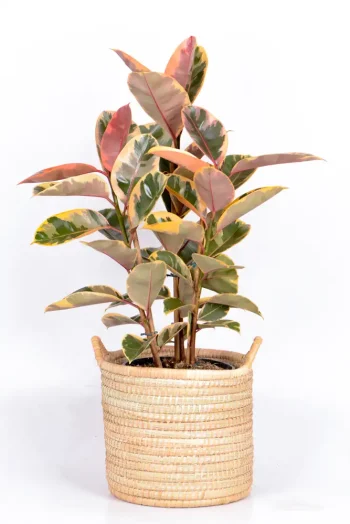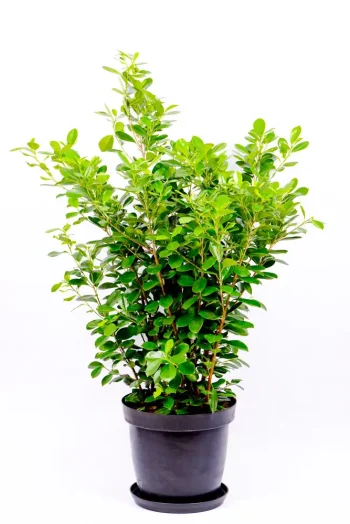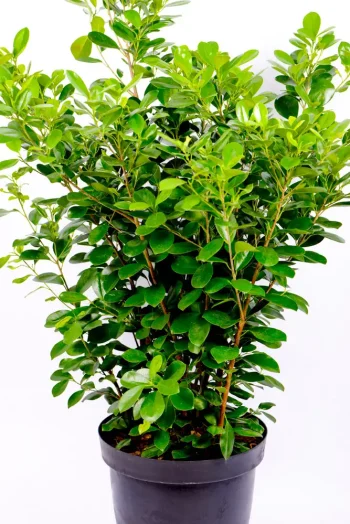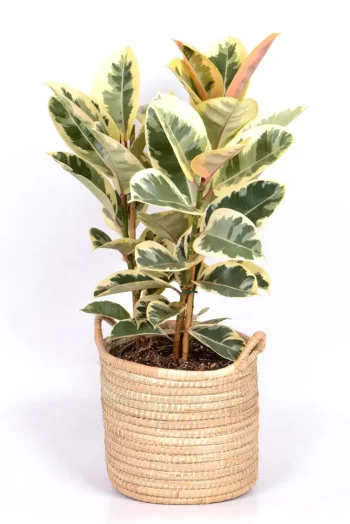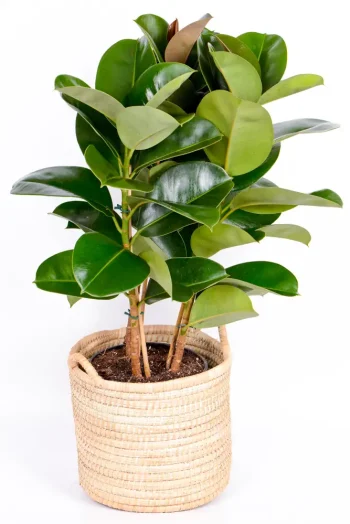






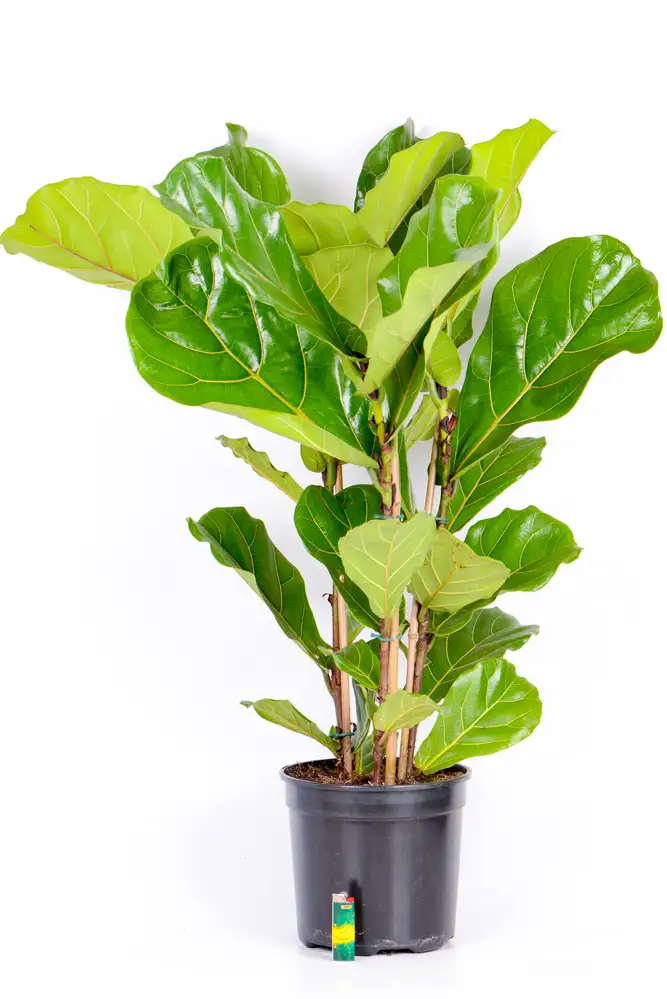
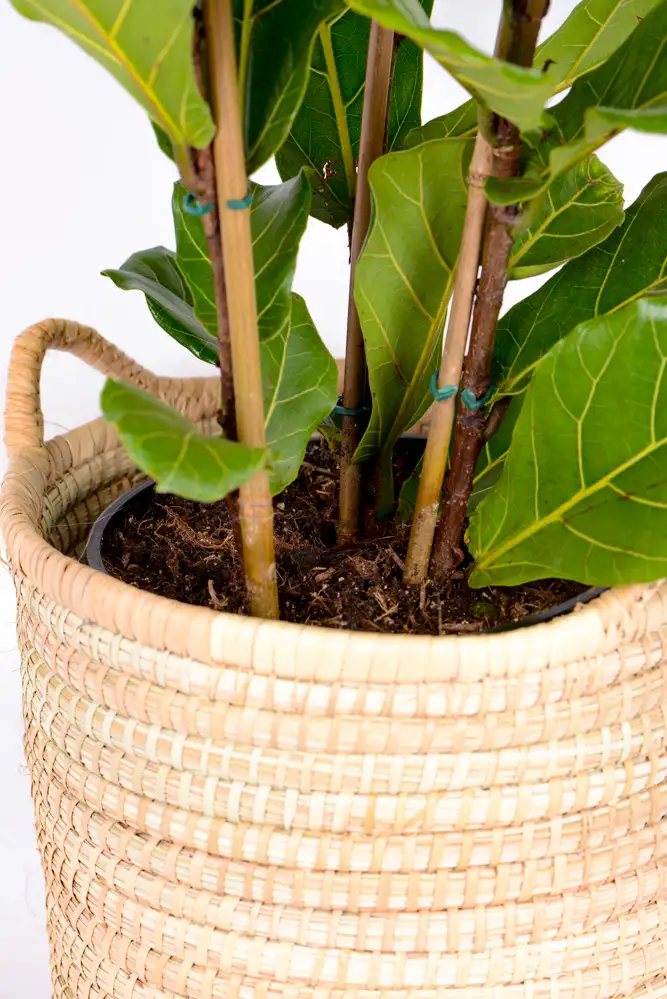
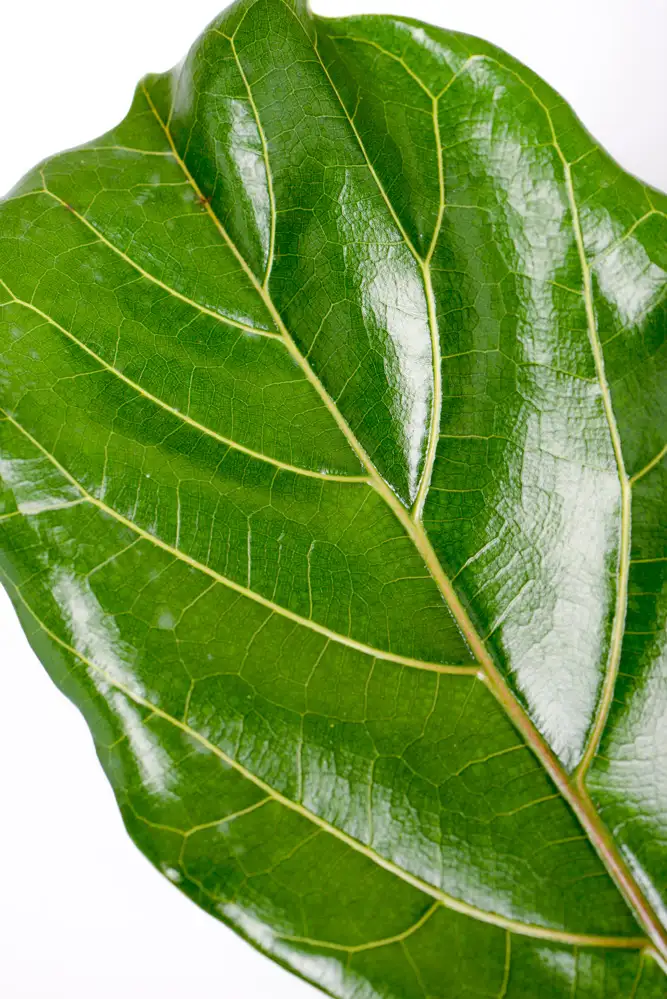
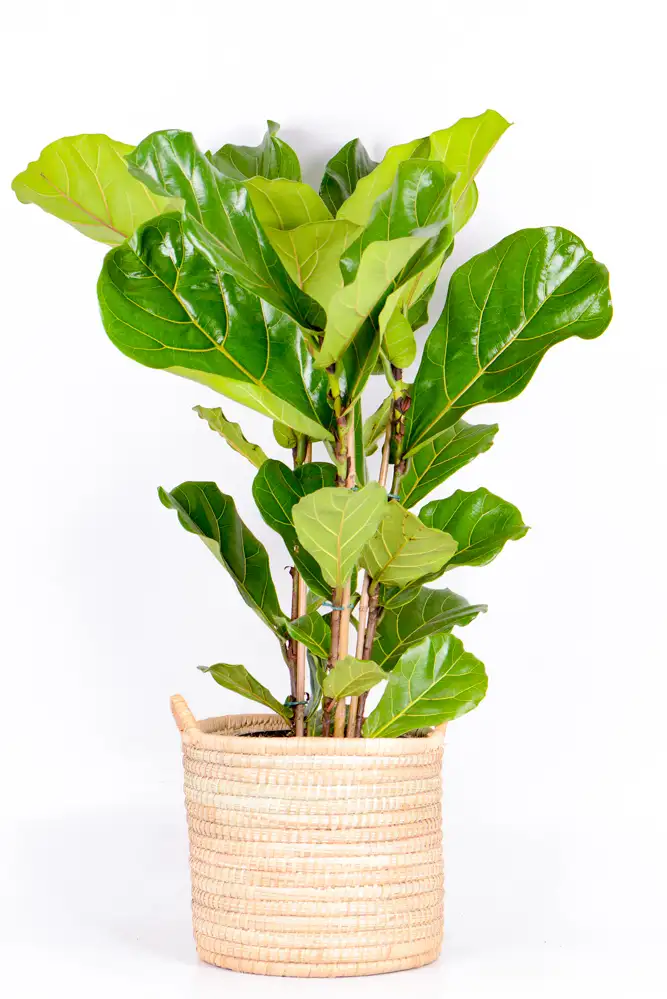
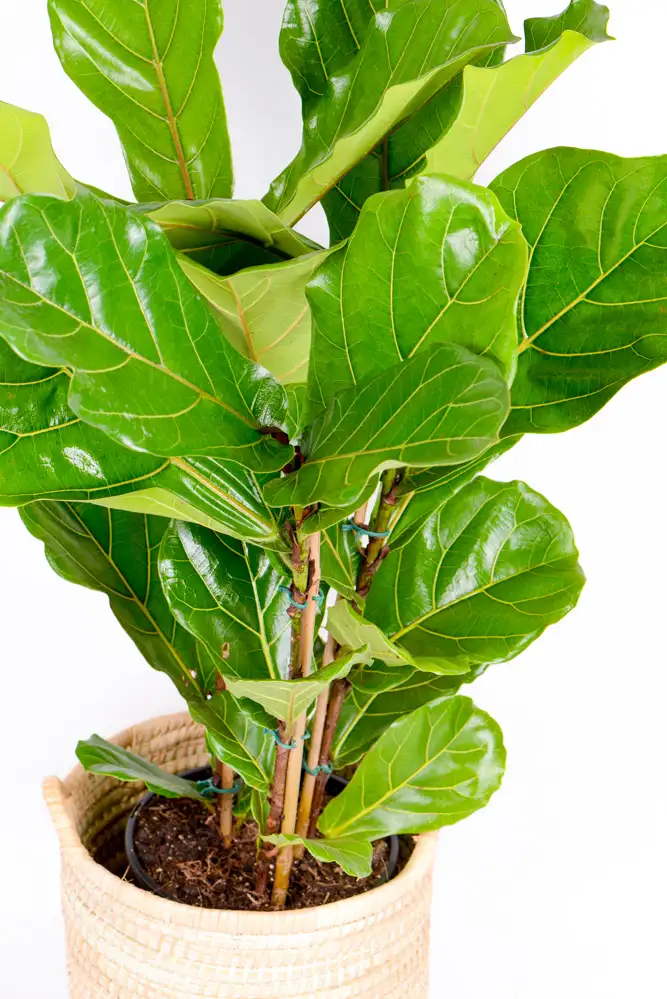
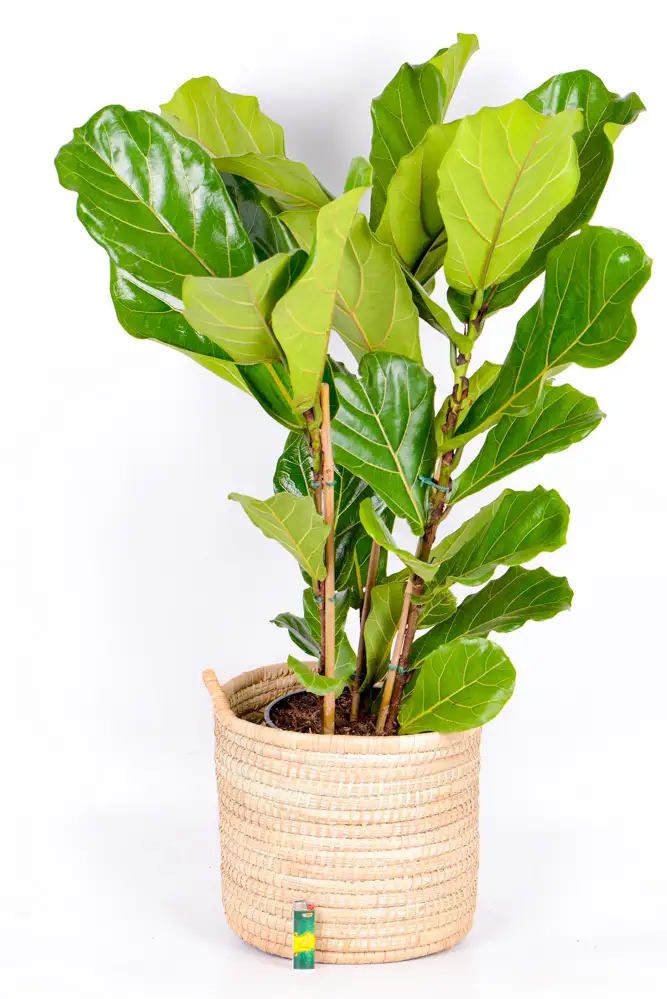
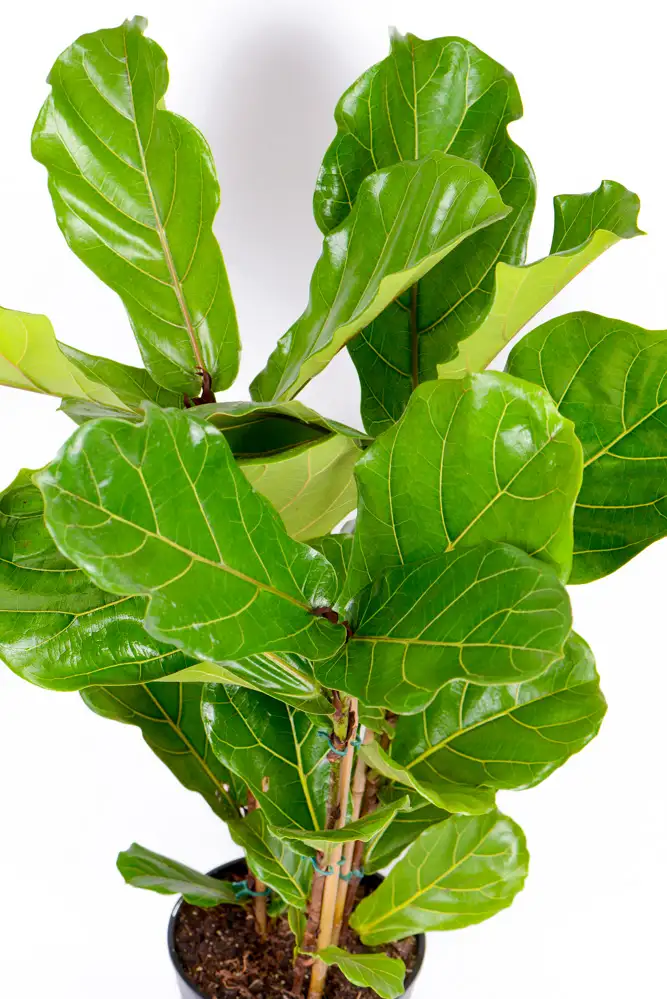
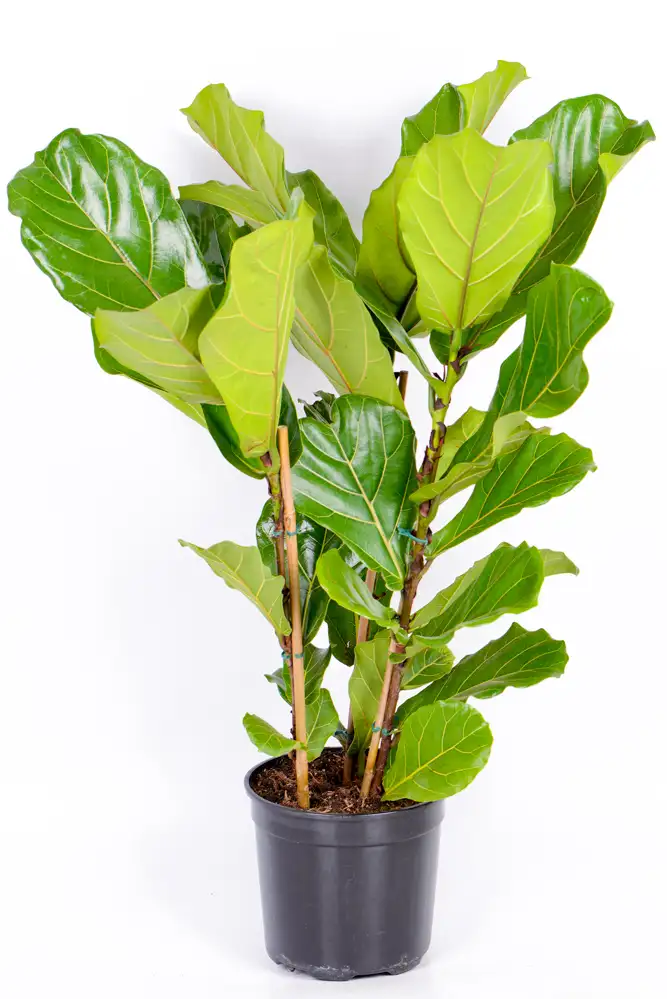
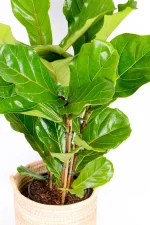
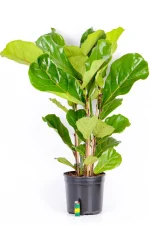

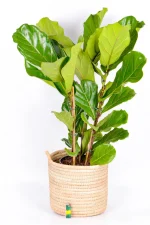
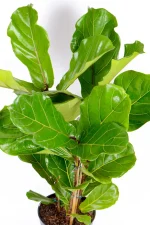
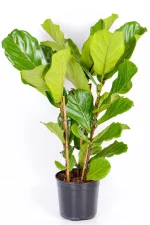
Commonly known as: Large Multi-Stem Fiddle Leaf FigÂ
Botanical name:Â Ficus Lyrata
Fiddle Leaf Figs remain one of the most recognisable indoor trees, and the multi-stem form gives you a particularly full plant from the start.
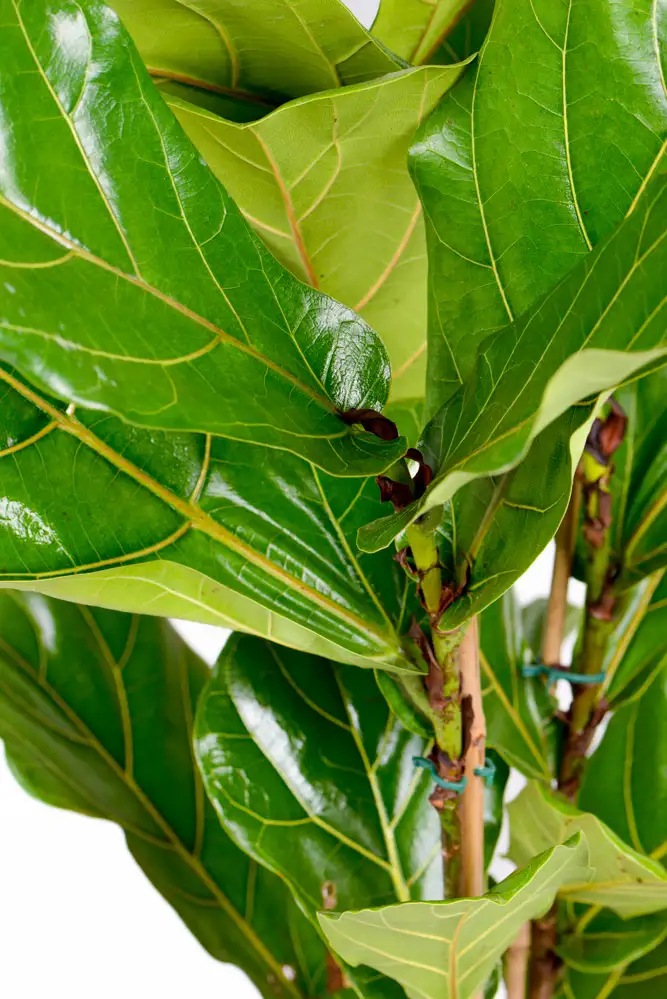
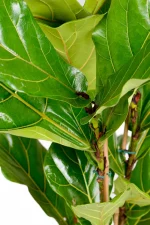
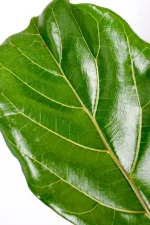
Instead of relying on one central trunk, this plant develops from several stems, creating a broader canopy with plenty of established foliage. The large violin-shaped leaves give Ficus lyrata its name and become even more impressive as the plant matures in strong light.
The biggest mistake with Fiddle Leaf Figs is putting them somewhere too dark.
They want lots of natural light. A position close to a large window works best, and once the plant has acclimatised properly, a few hours of direct sun can be very beneficial.
Consistent watering also matters. Don’t leave the plant bone dry for long stretches, but don’t keep the roots constantly wet either. A good rhythm of thorough watering followed by partial drying works far better than erratic watering.
Regular feeding, good airflow and occasional hosing all help keep the foliage looking its best. With the right conditions, Fiddle Leaf Figs can put on a surprising amount of fresh growth and develop into substantial indoor trees over time.
Large Multi-Stem Fiddle Leaf Fig Care Guide
Water – How often should I water my Fiddle Leaf Fig?
Water thoroughly once the upper section of the growing medium starts to dry, then let all excess water drain away.
Ficus lyrata prefers consistent watering. Avoid leaving it dry for extended periods and then suddenly soaking it heavily. That stop-start cycle can stress the plant far more than a steady routine.
Check the growing medium rather than watering on a fixed day every week.
Light – Where should I place my Fiddle Leaf Fig?
Give it loads of bright natural light.
A position close to a large window is ideal. Once acclimatised, it can handle a few hours of direct sun and will usually grow more strongly for it.
Avoid dark corners. If the leaves start drooping heavily or growth becomes weak and stretched, light should be the first thing you reassess.
Humidity – Does a Fiddle Leaf Fig need high humidity?
Normal household humidity is usually fine.
Good airflow matters more than trying to keep the air excessively humid. Dense foliage benefits from fresh air moving around the leaves, especially during warm weather.
Taking the plant outside occasionally for a thorough hose-down is also useful for removing dust and discouraging spider mites.
Soil – What growing medium should I use?
Use a growing medium that drains well but still holds enough moisture for consistent hydration.
I recommend Milled Bark Growing Medium. You can add Perlite if you want to increase drainage and airflow around the roots.
Avoid heavy, compacted mixes that stay wet for too long.
Feeding – Does my Fiddle Leaf Fig need fertiliser?
Yes. Ficus lyrata responds very well to regular feeding while actively growing.
Controlled Release Fertiliser gives you steady nutrition over time, while Novatec Soluble Fertiliser is an excellent option when you want to push strong, active growth.
Good feeding helps support larger leaves, stronger stems and a fuller canopy.
Repotting – When should I move it into a larger pot?
Repot once the roots have properly filled the current container.
Move up by one sensible pot size rather than jumping into a very large pot. Too much wet growing medium around a relatively small root system can create unnecessary problems.
Spring and summer are generally the easiest times to repot while the plant is actively growing.
Temperature – What temperatures does Ficus Lyrata prefer?
Warm indoor conditions suit it well.
Protect it from cold drafts and sudden temperature changes, especially during winter. Fiddle Leaf Figs generally perform best when conditions stay reasonably stable.
Temperature – What’s the ideal temperature range?
Keep between 16 °C and 26 °C. Avoid drafts, heaters, or cold windowsills. Steady, mild warmth keeps growth consistent and fronds fresh.
FAQ’s
Q: Why are my Fiddle Leaf Fig leaves drooping?
Check the light first. Leaves that sit noticeably lower than normal often point to insufficient light rather than an automatic need for more water.
Q: What should I do if my Fiddle Leaf Fig starts dropping leaves?
Move it into the brightest suitable position you have and keep watering consistent. If leaf drop continues, a few days outdoors in a bright protected position can help. Give the foliage a good hose-down and deeply water only if the growing medium actually needs it.
Q: Can Fiddle Leaf Figs handle direct sunlight?
Yes, once acclimatised gradually. Introduce stronger light over time rather than moving the plant straight from indoor shade into harsh sun.
Q: Can I prune a multi-stem Fiddle Leaf Fig?
Yes. Pruning can help shape the plant and encourage branching. Remove damaged growth or shorten overly long stems when needed.
Q: Is Ficus Lyrata pet safe?
No. Ficus sap can irritate the mouth and skin, so keep it away from pets that are likely to chew the leaves.
Be sure to visit and follow us Facebook and Instagram