





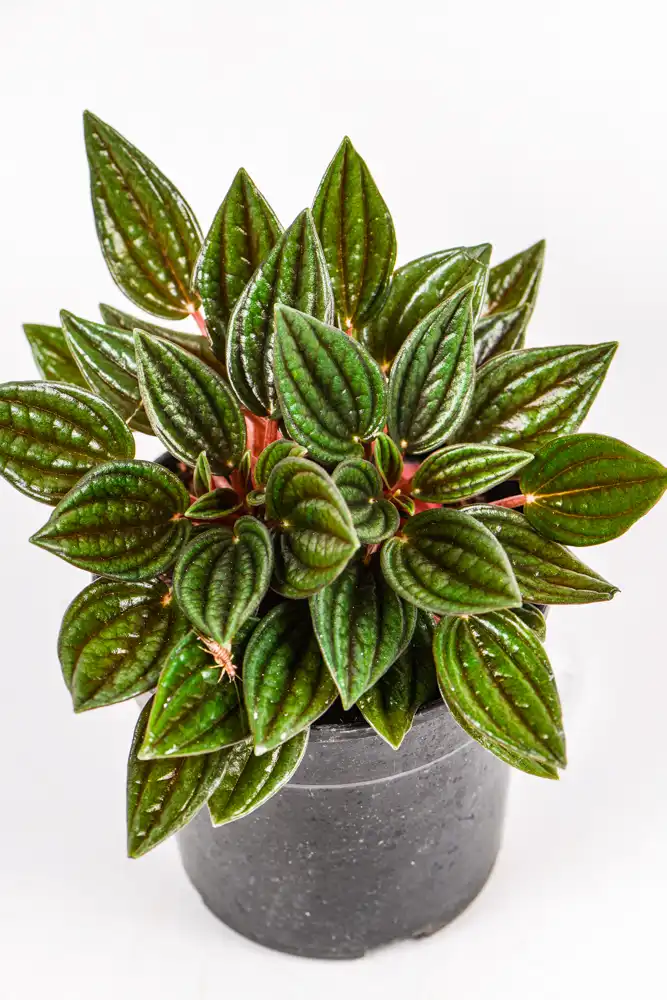
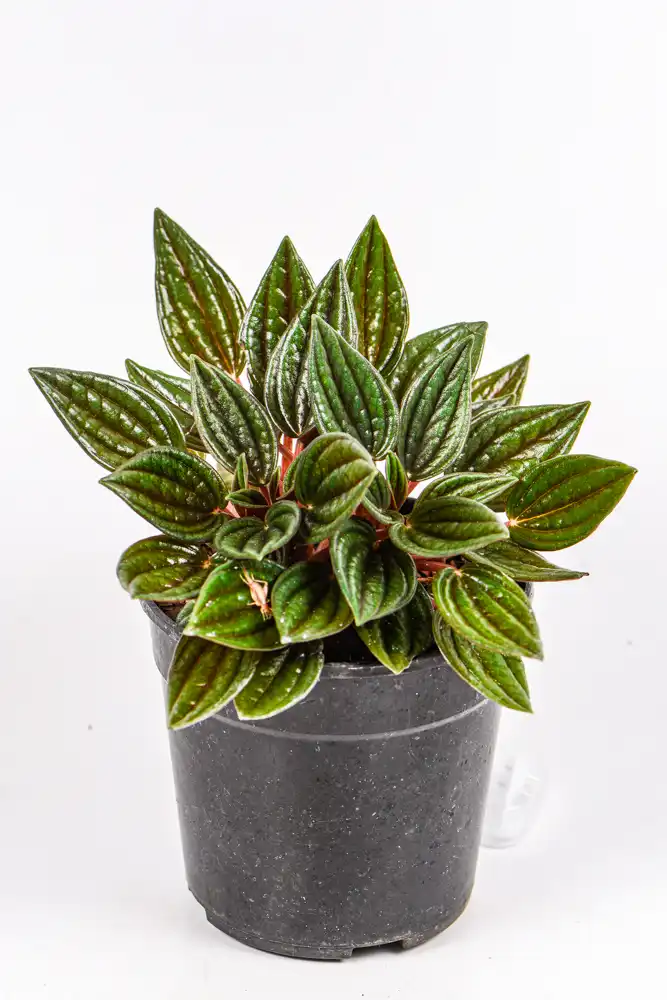
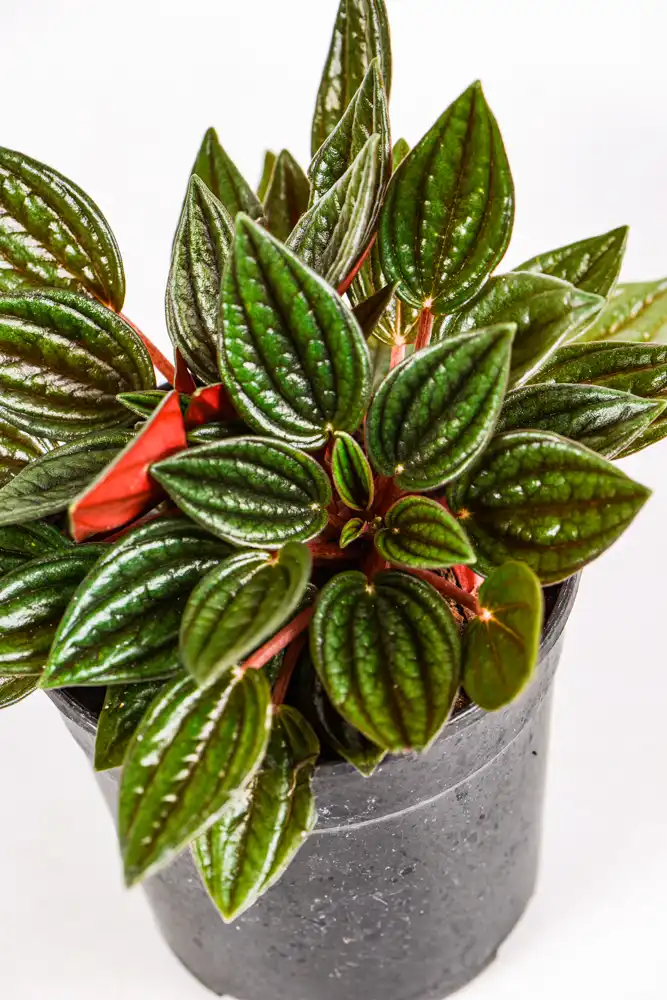
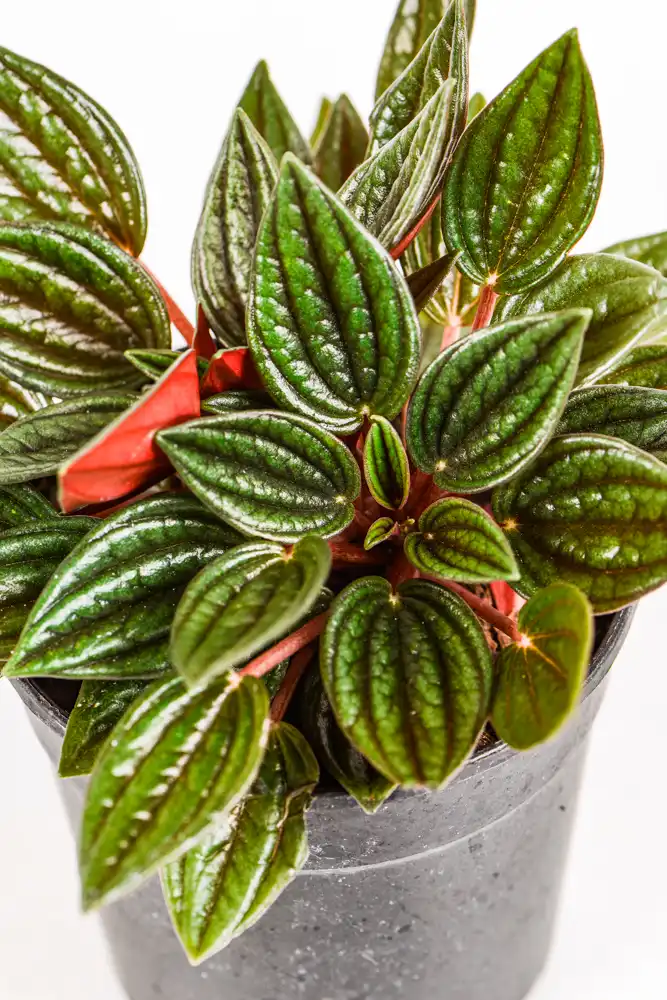
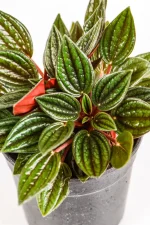
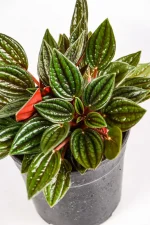
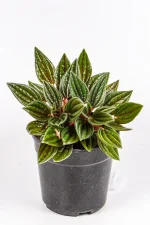
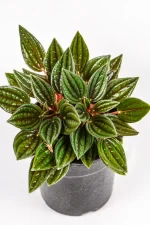
Commonly known as: Peperomia Zorro | Ripple Peperomia
Botanical name:Â Peperomia Caperata Zorro
Peperomia Zorro is one of those plants that rewards a closer look.
From a distance, it appears to be a neat mound of dark green foliage. Look a little closer and you’ll notice each leaf is deeply ridged, almost as though it has been carefully folded from the centre outwards. Turn a leaf over and you’ll discover another surprise – a rich burgundy underside that contrasts beautifully with the dark green upper surface.
Unlike many houseplants that eventually outgrow their spot, Peperomia Zorro naturally stays compact. Its slow, tidy growth makes it well suited to desks, bookshelves, bedside tables and anywhere you want a plant that won’t constantly need moving into a larger area.
Peperomias are native to the tropical forests of Central and South America, where they grow beneath the canopy in bright, filtered light. Their thick leaves store small reserves of water, allowing them to cope better with the occasional missed watering than many other tropical plants.
One of the reasons I enjoy growing Peperomias is that they ask for very little. Give them good natural light, avoid overwatering and they’ll quietly continue producing fresh leaves throughout the growing season.
Although it’s grown mainly for its foliage, mature plants may also produce slender flower spikes. They’re quite unusual looking and add another point of interest without taking attention away from the textured leaves.
If you’re looking for a compact indoor plant that’s a little different from the ordinary, Peperomia Zorro is an excellent choice.
Peperomia Zorro Care Guide
Watering – How often should I water it?
Allow the top few centimetres of the growing medium to dry before watering thoroughly. The thick leaves store moisture, so it’s better to water slightly less often than to keep the growing medium constantly wet. Reduce watering during winter.
Light – Where should I place my Peperomia Zorro?
Peperomia Zorro grows best in bright, indirect light. It also performs well in medium light, but avoid prolonged direct afternoon sun, which can scorch the leaves and dull their colour.
Humidity – Does it need high humidity?
Peperomia Zorro enjoys moderate humidity but adapts very well to normal household conditions. Good airflow around the plant will help keep the foliage healthy.
Soil – What growing medium should I use?
A free-draining growing medium is essential. I recommend Milled Bark Growing Medium, which provides excellent airflow while retaining enough moisture for healthy root development. You can also incorporate Perlite for even better drainage.
Feeding – How should I fertilise it?
Feed every 4–6 weeks during spring and summer using Grobest Organic Fertiliser. If you’d like to encourage stronger growth, Novatec Soluble Fertiliser can also be used during the growing season.
Repotting – When should I repot?
Repot every 2–3 years or once the roots begin filling the pot. Refresh with Milled Bark Growing Medium and incorporate TerraPlus Natura N together with Controlled Release Fertiliser.
Pests – What should I look out for?
Peperomia Zorro is generally trouble-free but may occasionally attract mealybugs or spider mites. Regularly inspecting the leaves and maintaining good airflow will help prevent problems.
Temperature – What’s the ideal temperature?
Peperomia Zorro grows best between 18°C and 28°C. Protect it from temperatures below 12°C and avoid placing it in cold drafts.
FAQ’s
Q: Is Peperomia Zorro easy to care for?
Yes. It’s one of the easier Peperomias to grow and is very forgiving as long as it isn’t overwatered.
Q: Why are the leaves so wrinkled?
The ridged texture is completely natural and one of the defining features of Peperomia Zorro.
Q: How often should I water it?
Allow the growing medium to partially dry before watering again. The thick leaves store moisture, so the plant is more tolerant of slight underwatering than overwatering.
Q: Will it stay small?
Yes. Peperomia Zorro naturally has a compact growth habit and rarely becomes a large plant, making it ideal for smaller areas.
Q: Does Peperomia Zorro flower?
Yes. Mature plants occasionally produce thin flower spikes that rise above the foliage. They’re quite subtle and are usually grown as an added feature rather than the main attraction.
Q: Is Peperomia Zorro pet safe?
Yes. Peperomia species are generally considered non-toxic to cats and dogs, making them an excellent choice for pet-friendly homes.
Be sure to visit and follow us Facebook and Instagram