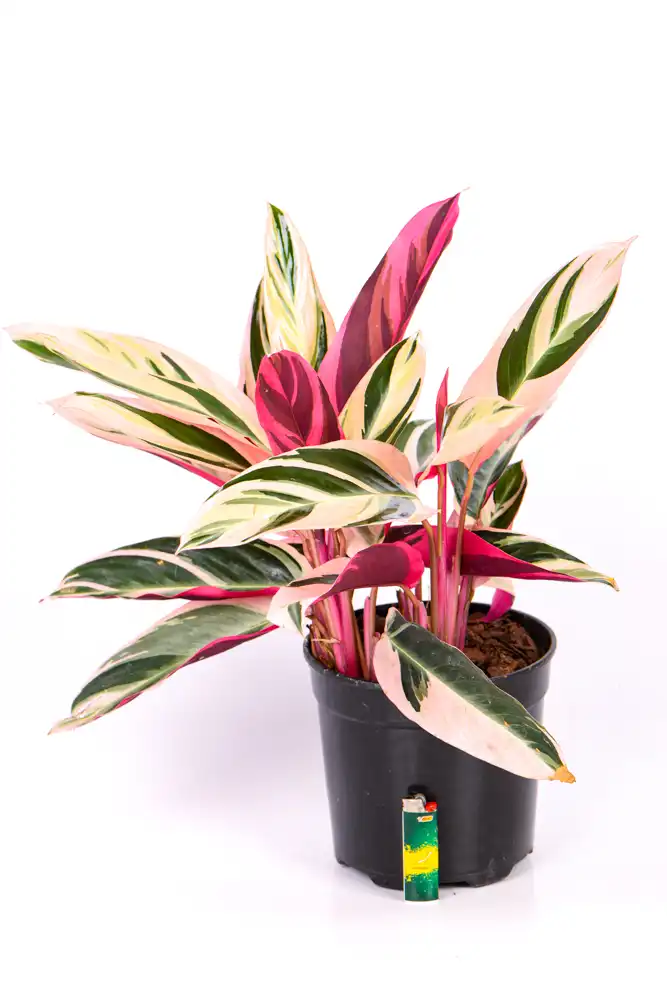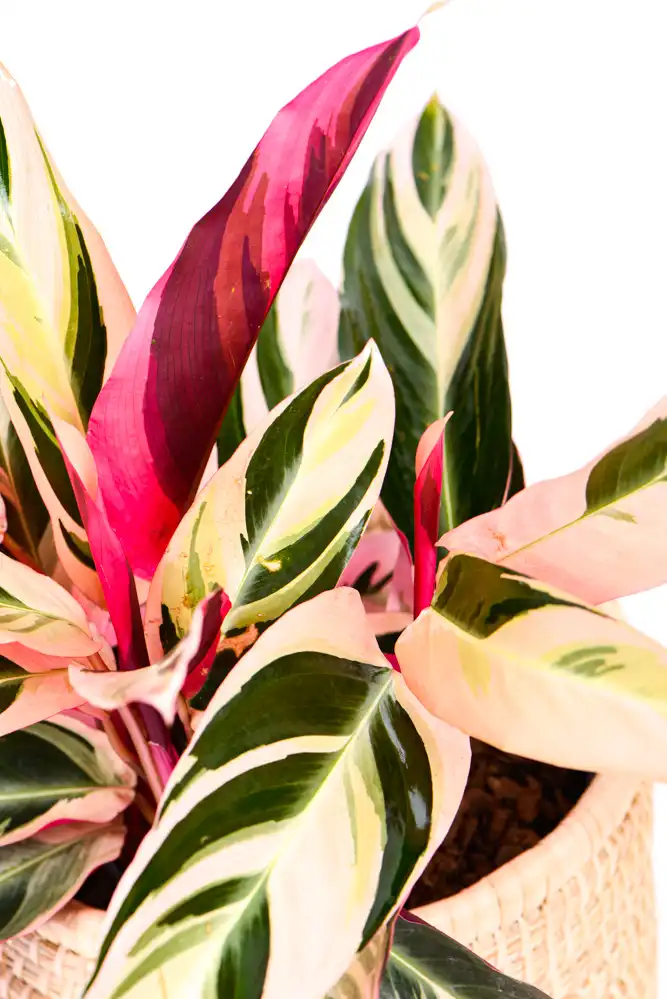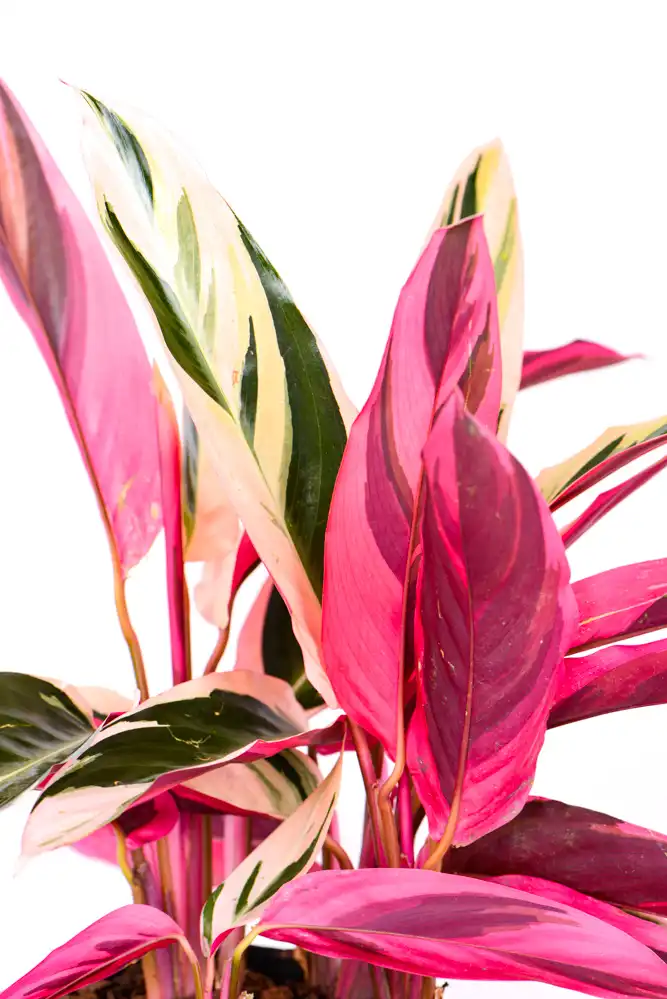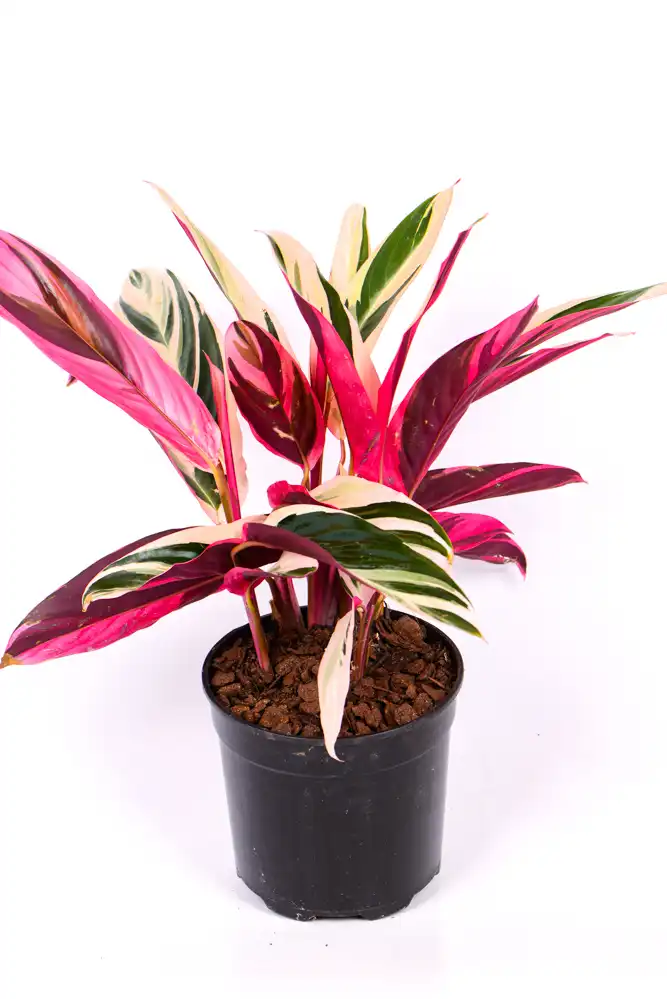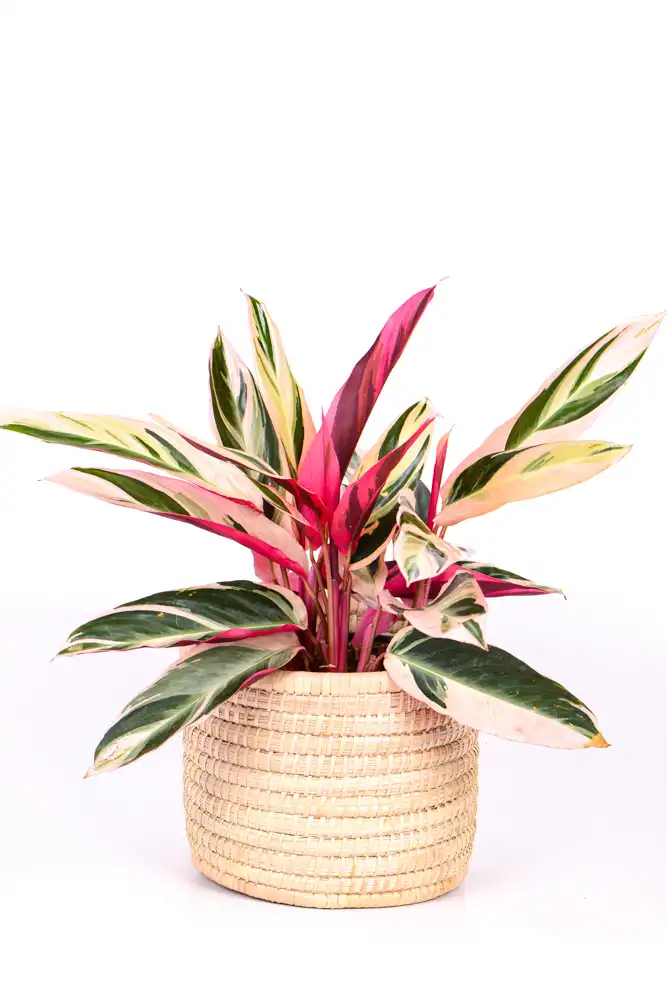



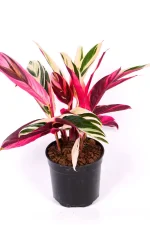

Commonly known as: Calathea Triostar | Stromanthe Triostar | Triostar Prayer Plant | Tricolour Stromanthe
Botanical name: Stromanthe sanguinea ‘Triostar’
There aren’t many indoor plants that produce this combination of colours naturally.
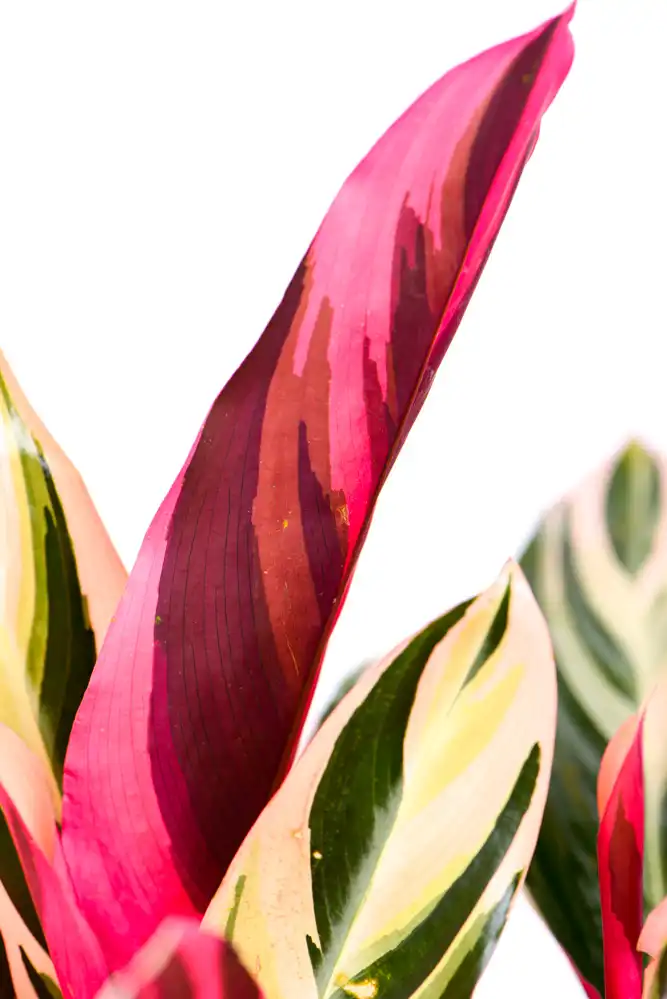
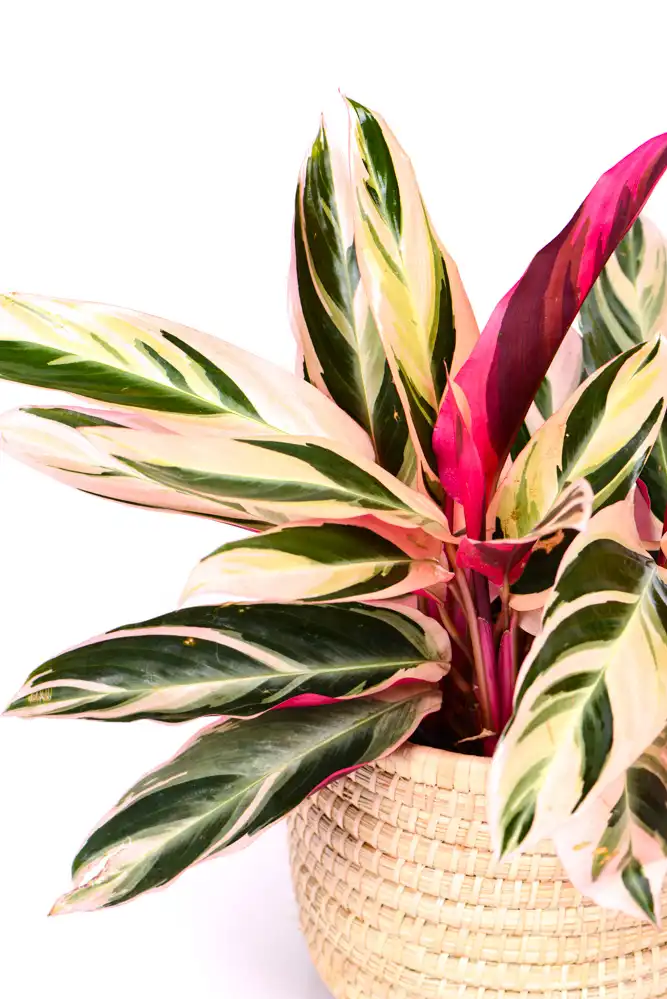
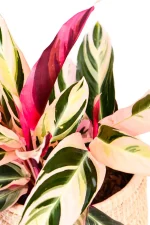
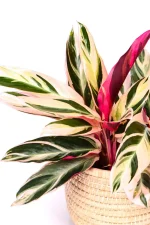
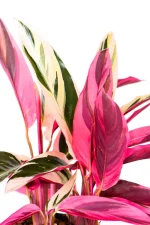
Calathea Triostar produces long leaves irregularly patterned with dark green, cream, white and pink, while the undersides carry much deeper pink and burgundy colouring. Because every leaf develops its own pattern, you’ll find everything from predominantly green leaves to new growth with large areas of cream and pink on the same plant.
Despite the name you’ll most commonly see in nurseries, Triostar is actually a Stromanthe. Its botanical name is Stromanthe sanguinea ‘Triostar’, and it belongs to the same prayer plant family as Calatheas and Marantas. Their care requirements are also very similar, which partly explains why the names have become so mixed up.
Like other prayer plants, Triostar moves its foliage according to changes in light. The leaves may sit flatter during the day before lifting in the evening, exposing much more of those deep pink undersides.
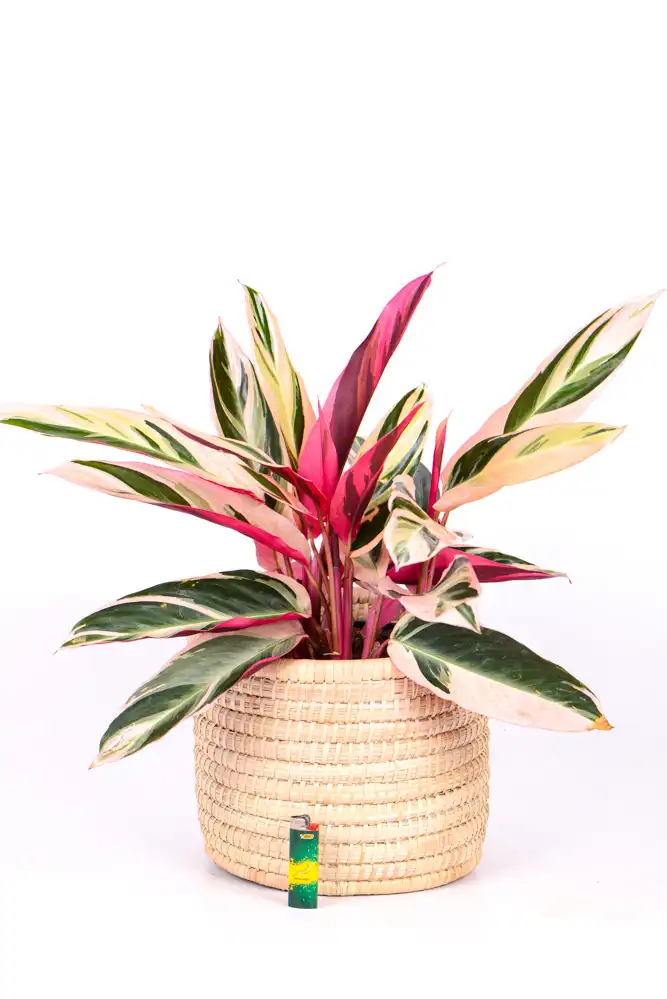
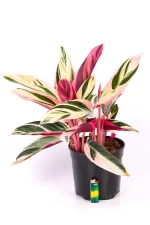
These plants are supplied in 19cm pots and already produce a substantial head of colourful foliage.
Good light is extremely important if you want to maintain that colour. Place Triostar in bright indirect natural light. Too little light will slow the plant considerably, while harsh direct afternoon sun can damage the cream and pink areas of the leaves.
Watering needs to remain consistent. Triostar doesn’t want its root ball repeatedly becoming bone dry, but neither should it remain saturated. Water thoroughly once the upper layer begins drying and allow excess water to drain freely.
Humidity also helps enormously, particularly while fresh leaves are unfurling. Combine this with good airflow rather than keeping the plant in stagnant, permanently damp conditions.
Triostar requires a little more attention than something like a Snake Plant or Jade, but once you understand its watering, it isn’t nearly as difficult as its reputation suggests. Bright light, consistent moisture, warmth and regular feeding are the fundamentals.
And when it’s actively producing new leaves, there are very few prayer plants that compete with it for colour.
Calathea Triostar Care Guide

Watering – How often should I water Triostar?
Keep the growing medium evenly moist without leaving it constantly saturated. Water thoroughly once the upper layer begins drying and allow excess water to drain away. Don’t repeatedly allow the entire root ball to become bone dry.
Water Quality – Does Triostar need filtered water?
Triostar can be sensitive to high concentrations of salts and minerals in tap water. If you’re consistently getting brown leaf tips despite correct watering and humidity, try rainwater, RO or filtered water and see whether the new foliage improves.

Light – How much light does Calathea Triostar need?
Give it bright, indirect natural light. Good light helps maintain the cream and pink variegation and encourages stronger growth. Gentle morning sun can be beneficial, but protect the pale sections of the foliage from harsh midday and afternoon sun.
Colour – How do I keep the pink variegation?
Light matters. Keep the plant in strong indirect natural light. A Triostar kept too far from a window will grow more slowly and may produce less impressive colour. Avoid excessive direct sun, though, because the cream and pink areas are more susceptible to scorching.

Humidity – Does it need high humidity?
Yes — humidity keeps the fronds lush and soft. Bathrooms are ideal, but in drier rooms, mist daily or use a pebble tray with water beneath the pot.

Soil – What growing medium should I use?
Triostar needs a growing medium that retains consistent moisture without becoming heavy or waterlogged. Milled Bark Growing Medium provides a good structure around the roots. Adding some Perlite will help maintain drainage and airflow.
Repotting – When should I repot it?
Don’t rush to repot a newly purchased Triostar. Allow it to grow until the roots have properly filled the 19cm pot. Repot during spring or early summer and move up by only one pot size.

Feeding – How should I fertilise Calathea Triostar?
Feed regularly while the plant is actively producing foliage. Grobest Organic Fertiliser works well for regular feeding, while Controlled Release Fertiliser provides balanced and consistent nutrition over time.

Pruning – Can I remove damaged leaves?
Yes. If an older leaf eventually becomes damaged or dies back, cut the entire stem close to the base using clean scissors. Fresh leaves emerge independently from the established plant.
Leaves – Why does Triostar move its leaves?
It’s completely normal. Stromanthe belongs to the prayer plant family, and the leaves naturally change position in response to the daily light cycle. When the leaves lift, the dark pink undersides become much more noticeable.

Pests – What should I look out for?
Spider mites are the main pest to watch for. Check underneath the leaves regularly, particularly during hot and dry weather. Thrips and mealybugs can also occasionally appear. Keeping the foliage clean and maintaining good airflow makes regular inspection easier.

Temperature – What temperatures does Triostar prefer?
Warm conditions around 18°C–28°C are ideal. Protect the plant from cold drafts and sudden drops in temperature. During winter, water in the morning and naturally reduce the frequency as the growing medium takes longer to dry.
FAQ’s
Q: Is Calathea Triostar actually a Calathea?
Botanically, no. The correct name is Stromanthe sanguinea ‘Triostar’. However, it’s widely sold as Calathea Triostar because Stromanthe and Calathea belong to the same prayer plant family and have similar care requirements.
Q: Is Calathea Triostar a Maranta?
No. Maranta is another genus within the same family. Calathea, Stromanthe and Maranta are related, which is why they’re collectively referred to as prayer plants, but they’re different genera.
Q: How large are these Calathea Triostar plants?
These plants are supplied in 19cm nursery pots with a full head of established foliage.
Q: Is Calathea Triostar difficult to grow?
It’s more particular about watering and humidity than some indoor plants, but it isn’t impossible. Give it plenty of bright indirect light, consistent moisture, warmth and good humidity rather than constantly changing its position or watering routine.
Q: Why are my Triostar’s leaves getting crispy brown edges?
Check for inconsistent watering first. Very dry air and mineral-heavy water can also contribute. Keep the root ball consistently moist and consider filtered, rain or RO water if browning continues.
Q: Why are the new leaves rolled up?
Fresh Stromanthe leaves naturally emerge tightly rolled before gradually opening. Keep the plant evenly hydrated and maintain good humidity while new foliage develops.
Q: Will every leaf have the same amount of pink?
No, and that’s part of the appeal. Variegation differs considerably from leaf to leaf. Some leaves may be predominantly green while others develop large cream, white or pink sections.
Q: Does Calathea Triostar need direct sunlight?
No. Strong indirect light is preferable. Gentle morning sun is generally fine, but harsh direct sunlight can damage the lighter variegated sections.
Q: Is Calathea Triostar pet safe?
Yes. Stromanthe is generally considered non-toxic to cats and dogs.
Be sure to visit and follow us Facebook and Instagram