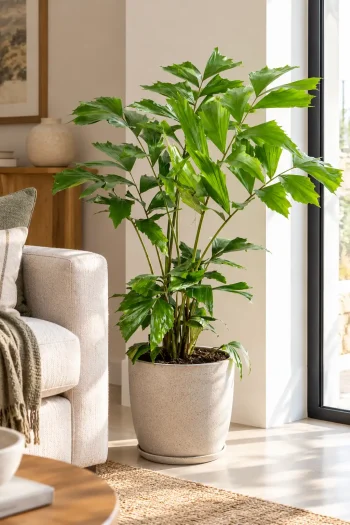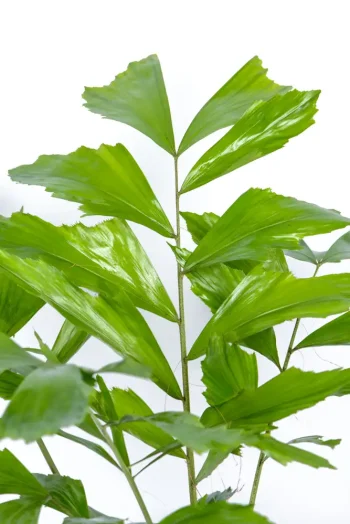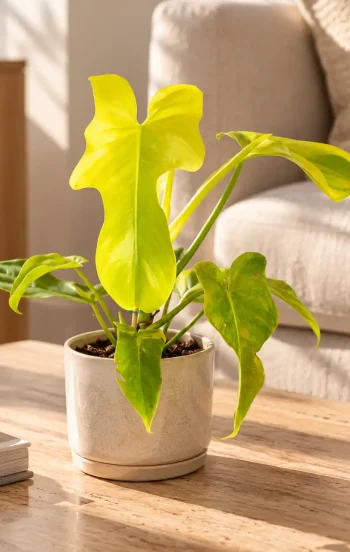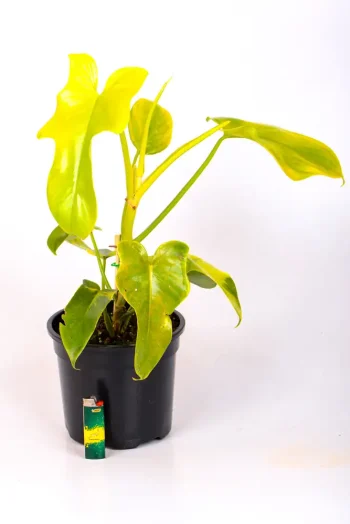
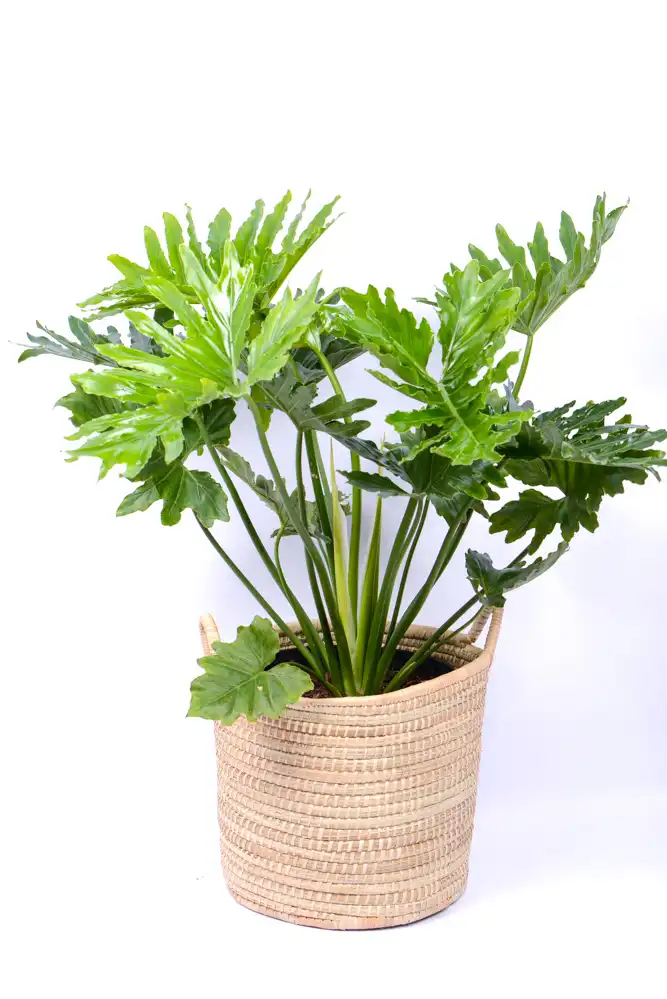
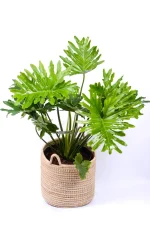
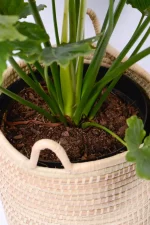
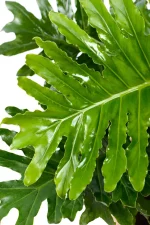
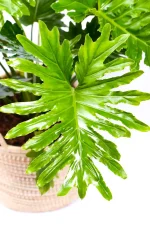
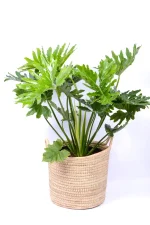
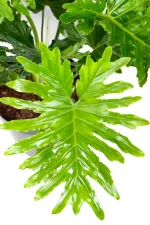

Commonly known as: Philodendron Shangri La | Shangri La Philodendron | Split Leaf Philodendron | Compact Split Leaf Philodendron
Botanical name: Thaumatophyllum ‘Shangri La’
Commonly sold as Philodendron Shangri La
f you love the huge split leaves of a Philodendron Selloum but don’t necessarily want a plant that eventually takes over half the room, Shangri La is an excellent alternative.
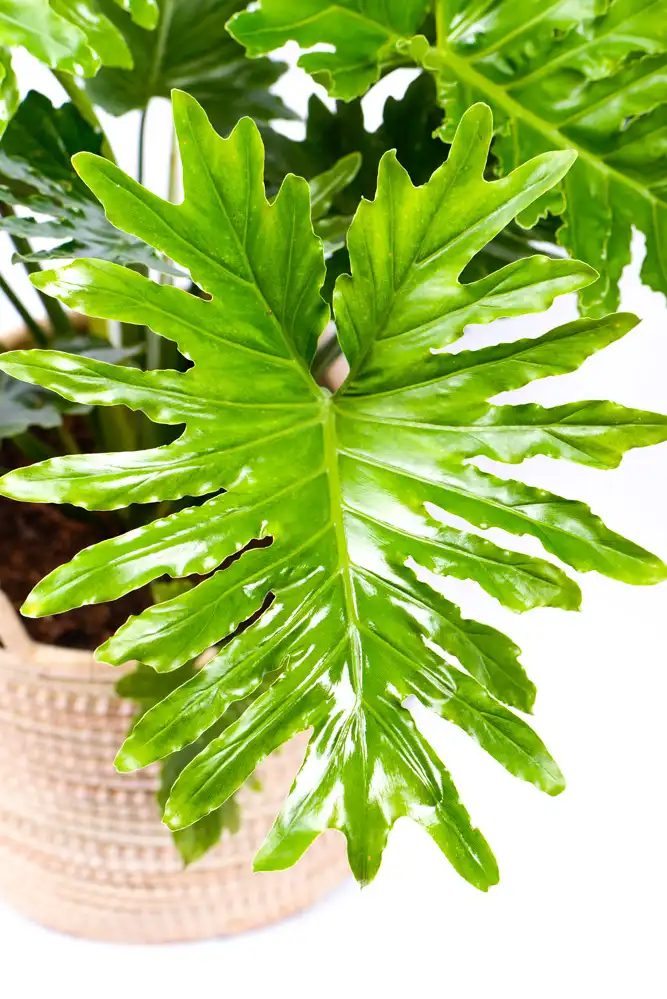
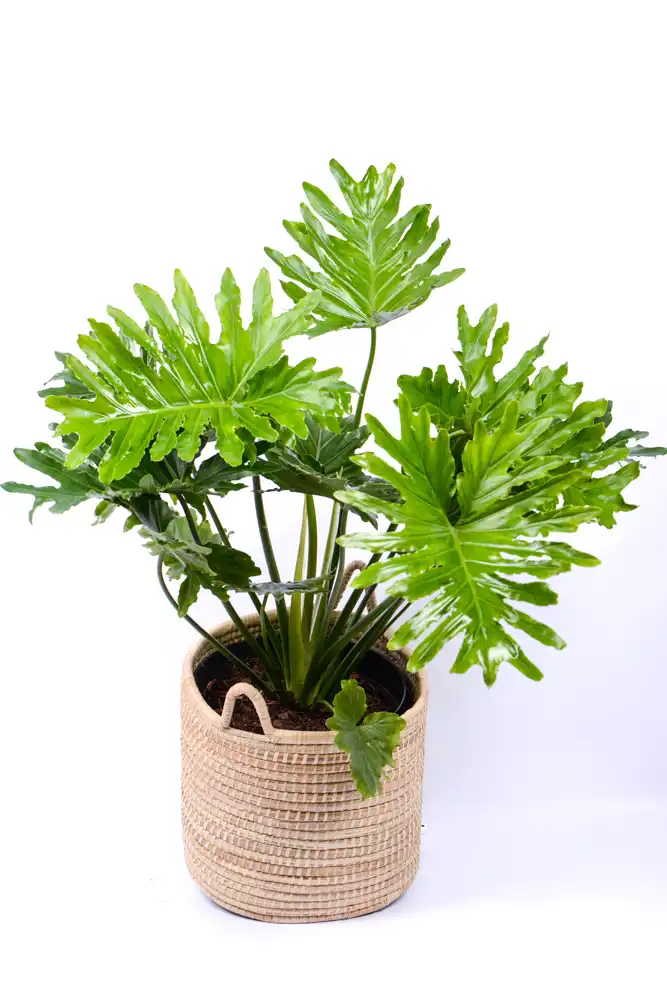
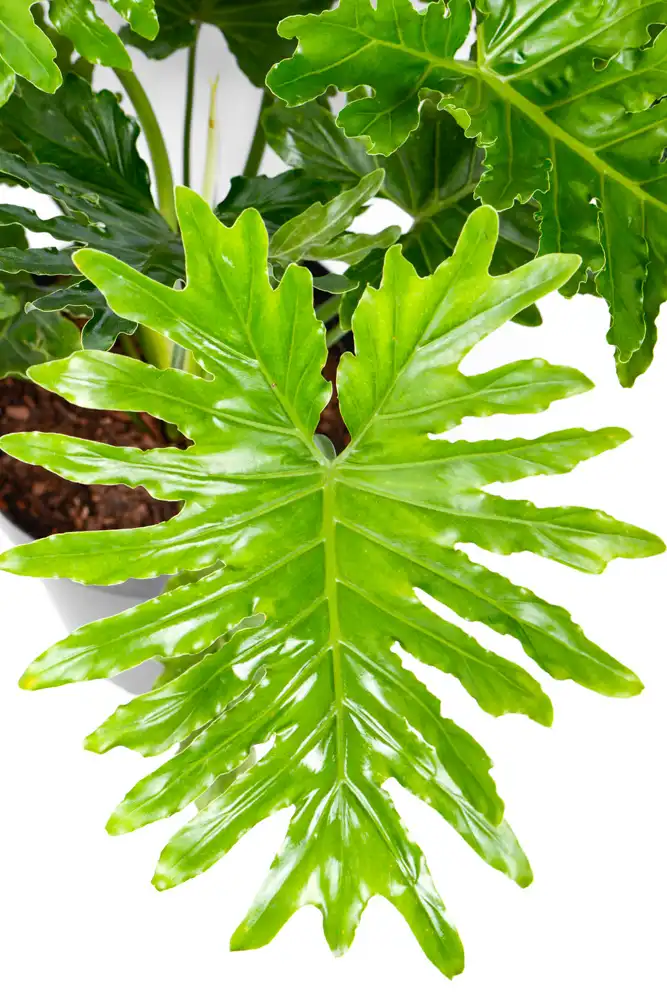
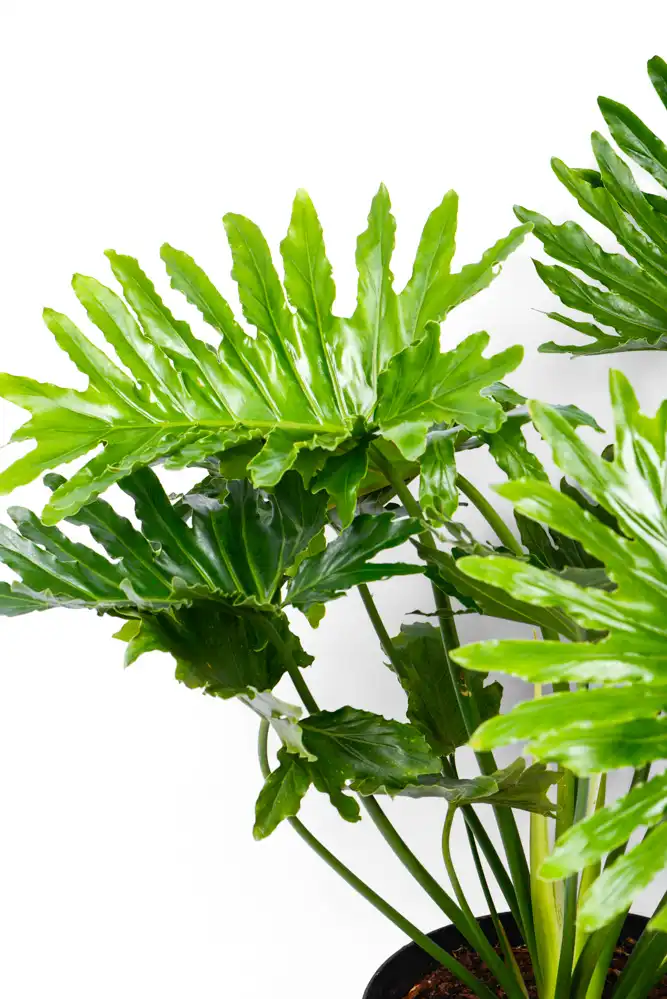
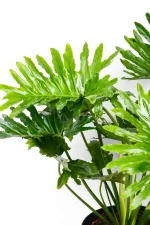
Philodendron Shangri La was selected specifically for its compact, heavily branched growth habit. Mature plants develop masses of deeply divided leaves from a relatively tight base, producing an exceptionally full plant without the long, sprawling leaf stalks associated with a traditional Selloum.
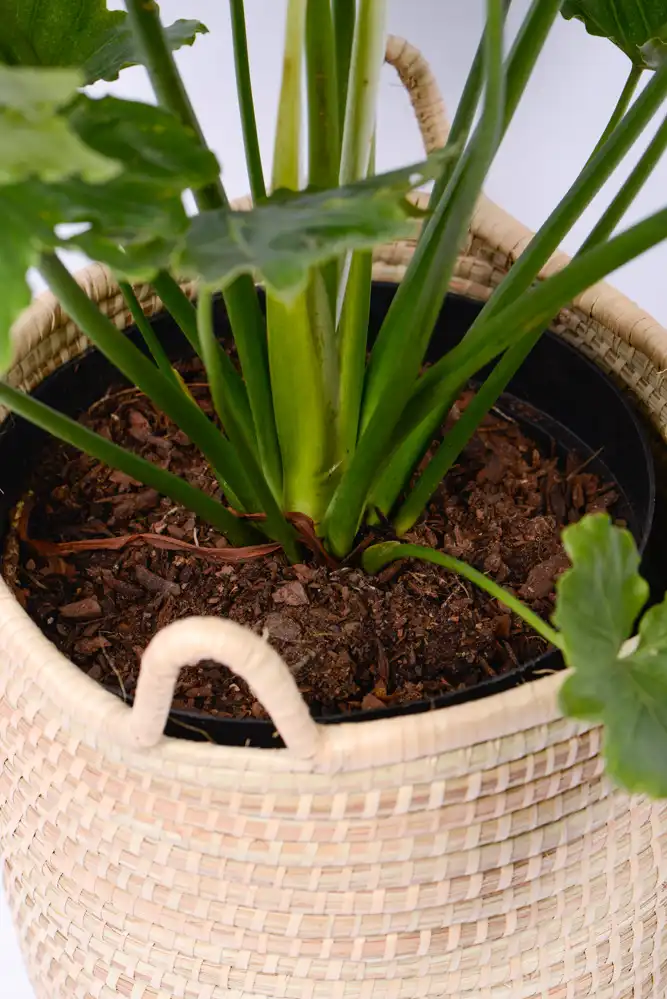
These are already substantial specimens, supplied in 30cm pots and standing approximately 80–90cm tall. More importantly, they’re incredibly bushy. You’re getting a large amount of established foliage from the start rather than a few oversized leaves on long stems.
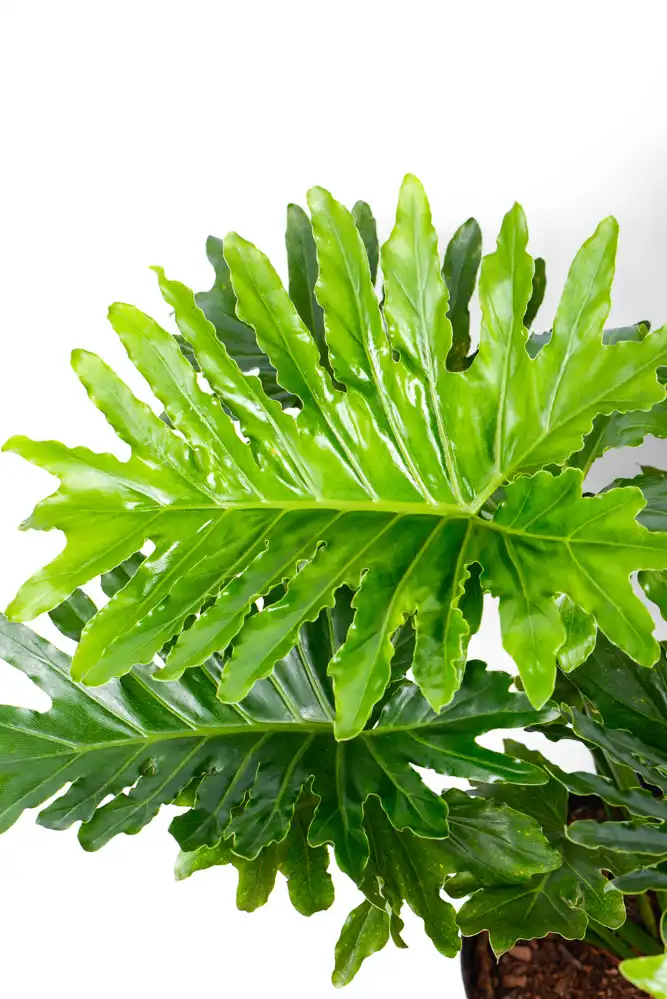
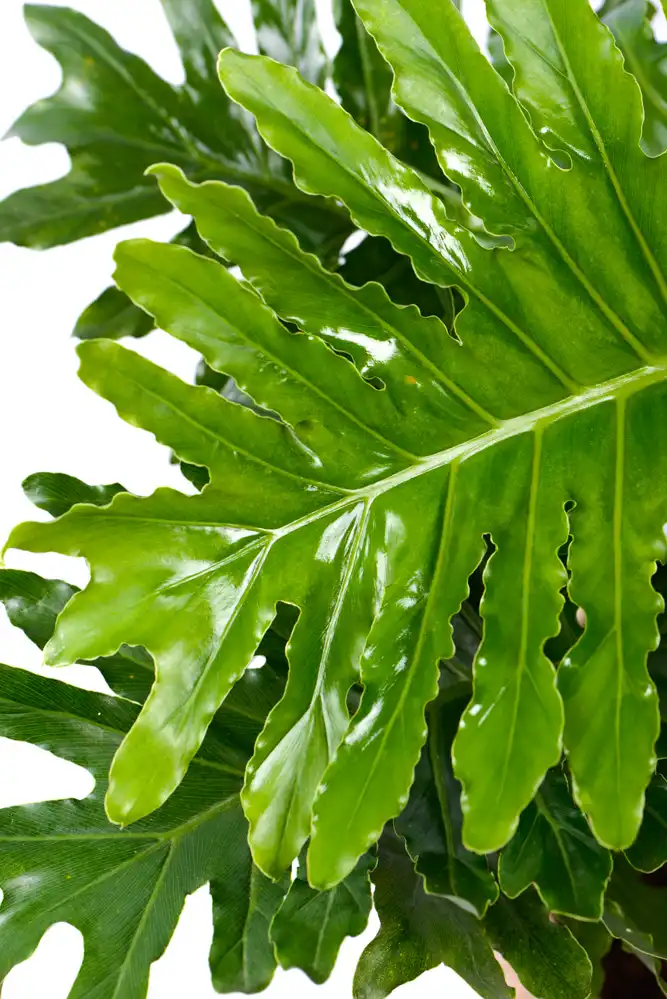
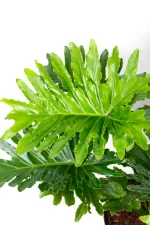
The foliage changes considerably as the plant develops. Younger leaves can emerge relatively simple, but as the plant matures, new foliage becomes increasingly divided until it develops the deeply cut shape Shangri La is known for.
Shangri La vs Selloum – What’s the difference?
This is probably the most useful comparison when deciding between them.
A traditional Philodendron Selloum develops very large leaves on long, thick petioles. As it matures, the plant becomes both tall and extremely wide, eventually developing the thick trunk-like stem associated with mature Selloums.
Shangri La stays considerably more compact. Its leaf stalks are shorter, the foliage sits closer together and the plant branches much more freely. Instead of a few enormous leaves creating a broad canopy, you get many more medium-sized deeply divided leaves packed into a dense plant.
So the decision is fairly straightforward:
Choose Selloum if you want enormous leaves and have plenty of room for a plant that will eventually become very large.
Choose Shangri La if you want the split-leaf appearance but prefer a fuller, denser and more manageable plant.
Shangri La is also straightforward to grow. Give it plenty of bright natural light and you’ll get stronger stems, larger leaves and better divisions in the foliage. While it tolerates medium light, don’t put a plant this dense into a dark corner.
Regular feeding is particularly worthwhile. A 30cm pot carrying this amount of foliage uses plenty of nutrients while actively growing, and a well-fed Shangri La can produce an impressive amount of fresh growth during spring and summer.
Water thoroughly, allow the upper layer of growing medium to begin drying, and then water again. Combine that with good airflow and an open growing medium and you’ve got a large Philodendron that’s remarkably easy to maintain.
Philodendron Shangri La Care Guide

Watering – How often should I water it?
Water thoroughly once the upper few centimetres of growing medium begin drying. Allow excess water to drain freely through the pot. Shangri La enjoys consistent moisture while actively growing, but the roots shouldn’t remain permanently saturated.

Light – How much light does Philodendron Shangri La need?
Give it plenty of bright, indirect natural light. Gentle morning sun is also beneficial. Strong light encourages compact growth, larger leaves and better development of the characteristic splits. It will tolerate medium light, but avoid dark corners.

Humidity – Does Philodendron Shangri La need high humidity?
Normal household humidity is generally sufficient, although it appreciates higher humidity during hot, dry weather. Good airflow through such dense foliage is equally important.
Leaf Care – Should I clean the leaves?
Yes. With so many leaves packed closely together, dust can accumulate surprisingly quickly. Wipe the foliage periodically or take the plant outside and give it a thorough hose-down during warm weather.
Pruning – Can I remove older leaves?
Yes. Older leaves can be removed cleanly at their base once they begin ageing. This keeps the plant tidy and allows the newer foliage to become more prominent.

Repotting – When should I repot it?
Don’t rush to move it out of its 30cm pot. Repot once the roots have properly filled the container, preferably during spring or summer. Move up by only one pot size and use fresh Milled Bark mixed with perlite.

Feeding – How should I fertilise Shangri La?
Feed regularly during active growth. Controlled Release Fertiliser provides balanced, convenient nutrition consistently over time. Grobest Organic Fertiliser works well for regular feeding, while Novatec Soluble Fertiliser is an excellent option when you want to push strong, active growth.
Growth – Why are some of the leaves less divided?
Leaf shape changes as Shangri La matures. Younger foliage may have fewer divisions, while established plants produce increasingly dissected leaves. Plenty of light, regular feeding and healthy active growth encourage the characteristic mature foliage.

Repotting – When should I repot a Maidenhair Fern?
Repot every 12–18 months or once roots fill the pot. Step up only one size and refresh the mix. Add a few Bark Chips to improve aeration and help the roots spread evenly. Handle gently — their root systems are fine and fibrous.

Pests – What should I look out for?
Check regularly for thrips, spider mites, scale and mealybugs. Dense plants have plenty of protected areas between stems, so inspect inside the plant rather than only checking the outer leaves.

Temperature – What temperatures does Shangri La prefer?
Warm conditions around 18°C–28°C are ideal. Protect the plant from cold drafts and temperatures below approximately 12°C, particularly when the growing medium is wet.
FAQ’s
Q: How big are these Philodendron Shangri La plants?
They’re supplied in 30cm pots, stand approximately 80–90cm tall and are particularly full, bushy plants.
Q: What is the main difference between Shangri La and Philodendron Selloum?
The biggest difference is the growth habit. Selloum produces much larger leaves on long stalks and eventually becomes extremely broad, while Shangri La has shorter stems, more branching and considerably more leaves packed into a compact plant.
Q: Is Shangri La just a small Selloum?
No. It’s a distinct cultivated plant selected for its compact growth and freely branching habit. It isn’t simply a young Selloum that will eventually develop exactly the same shape.
Q: Which should I choose – Shangri La or Selloum?
Choose Selloum if your priority is enormous leaves and overall size. Choose Shangri La if you prefer a much bushier plant with lots of divided foliage and a more manageable mature size.
Q: Does Philodendron Shangri La need a moss pole?
No. It has a self-supporting, bushy growth habit and doesn’t climb like a Monstera or climbing Philodendron.
Q: Will Shangri La’s leaves get bigger?
Yes. As the plant matures under good light, the new foliage becomes larger and increasingly divided. Regular feeding during active growth also makes a substantial difference.
Q: Can Philodendron Shangri La grow in low light?
It will tolerate medium light, but I wouldn’t recommend low light. Good natural light keeps the growth dense and produces much better foliage.
Q: Is Philodendron Shangri La easy to care for?
Yes. Give it bright natural light, sensible watering, an open growing medium and regular fertiliser and it’s a very straightforward large indoor plant.
Q: Is Philodendron Shangri La pet safe?
No. Like other members of this group, it contains calcium oxalate crystals and shouldn’t be eaten by cats, dogs or people.
Be sure to visit and follow us Facebook and Instagram