





Commonly known as: Venus Fly Trap
Botanical name: Dionaea muscipula
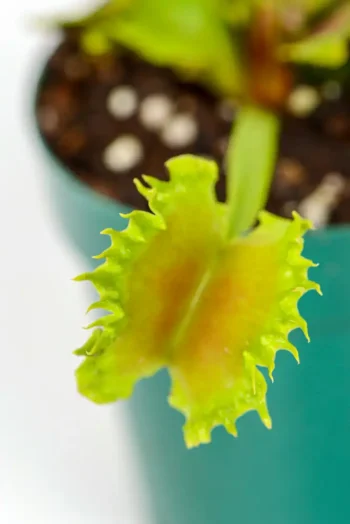
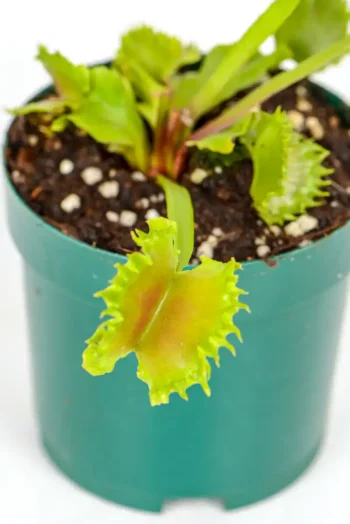
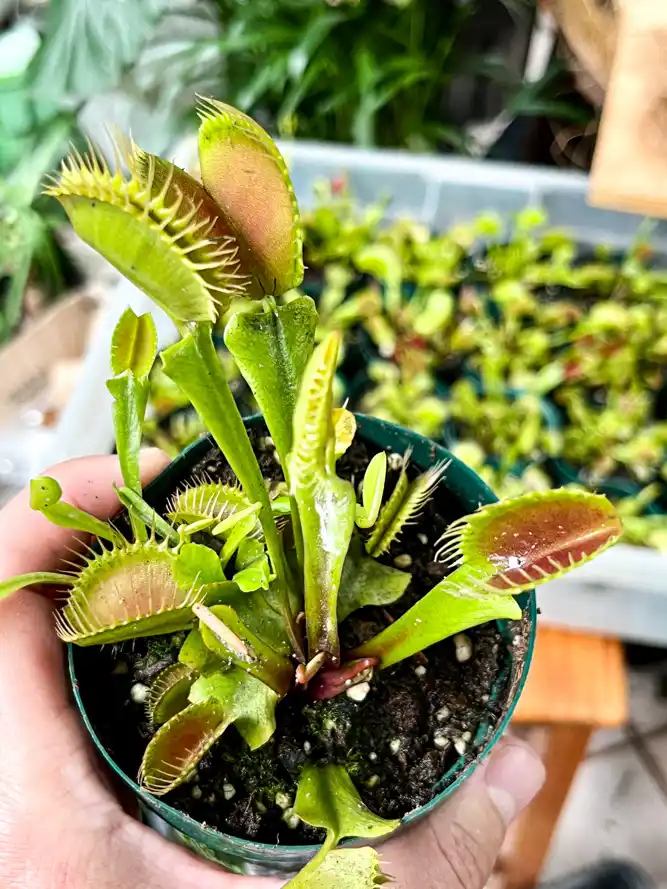
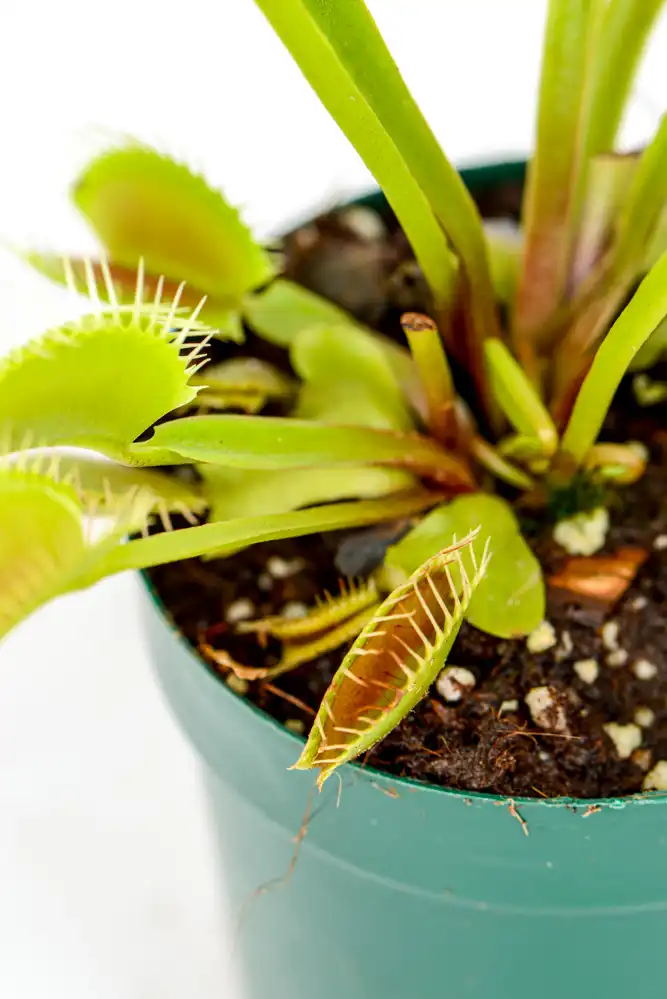
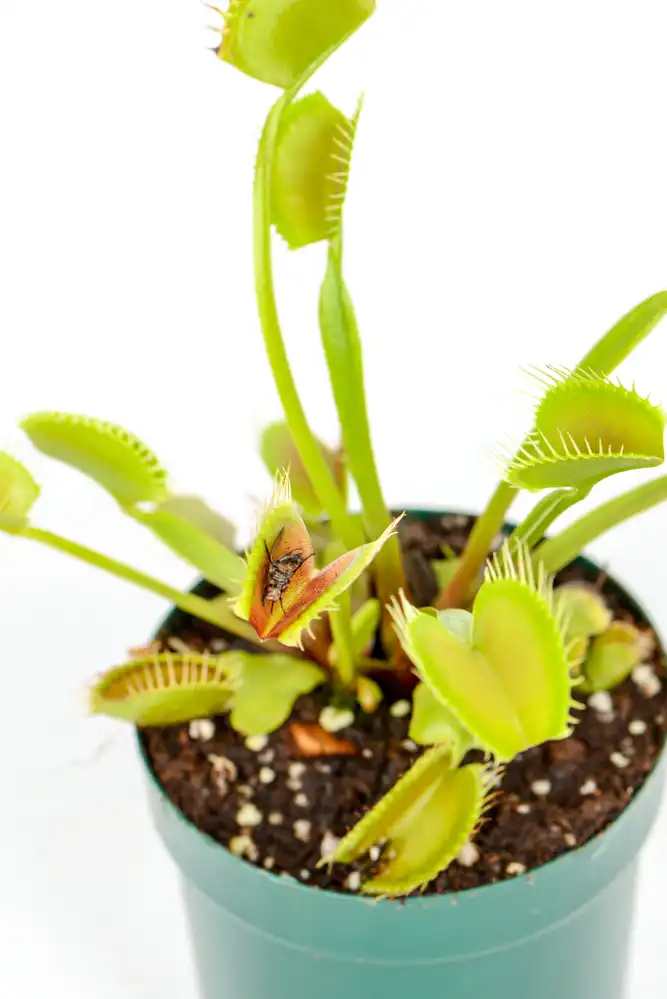
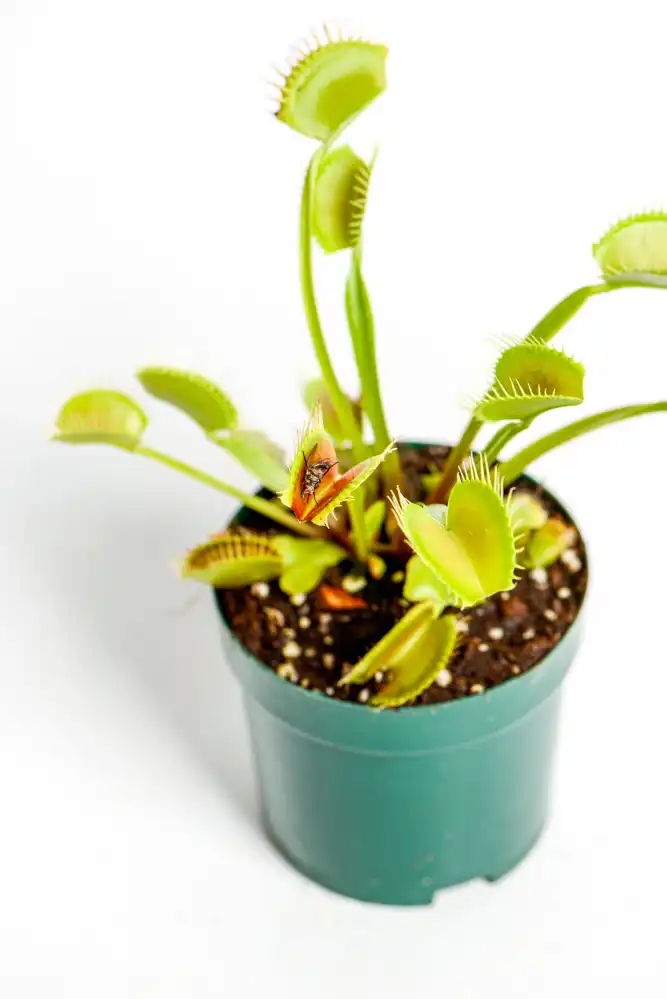
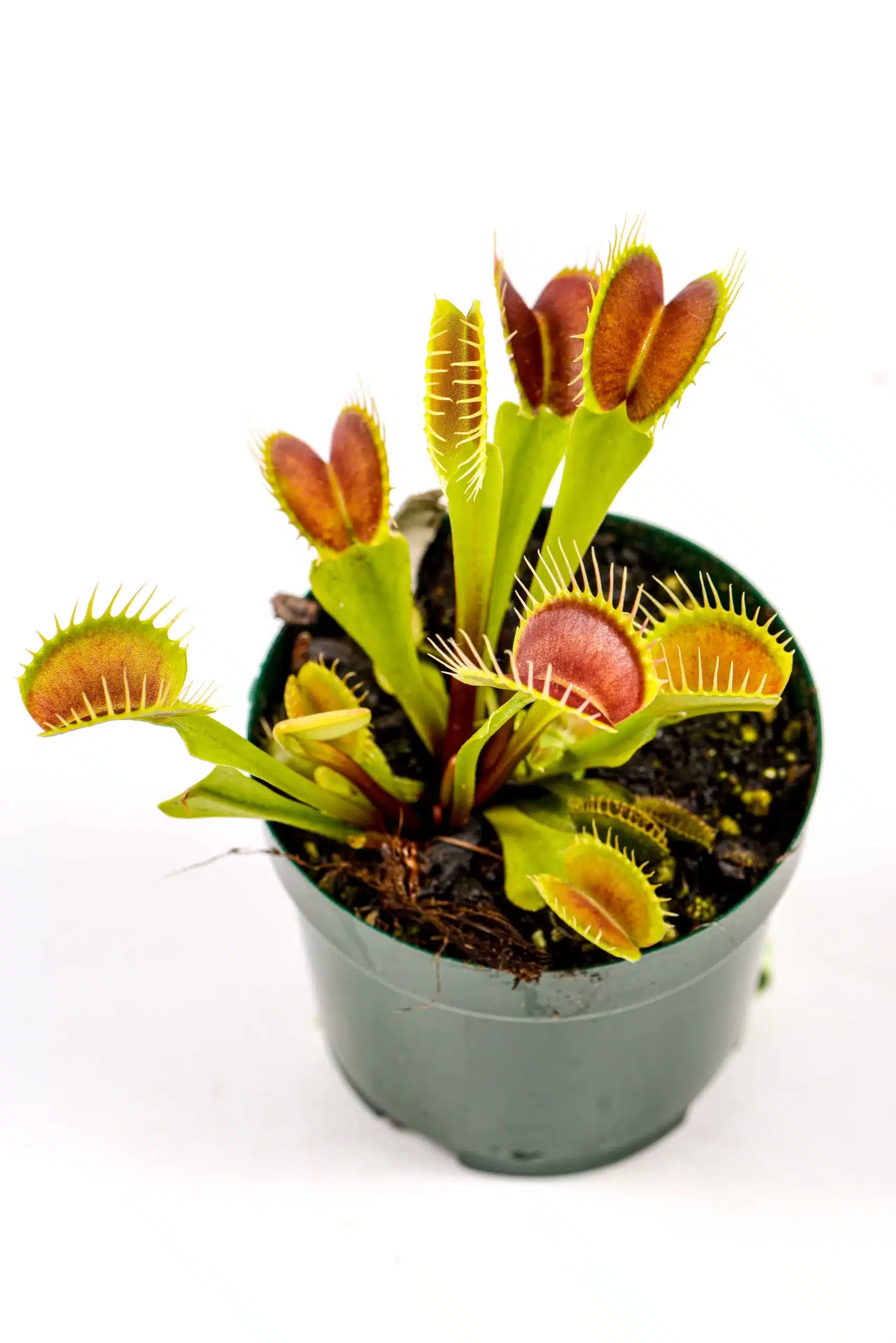
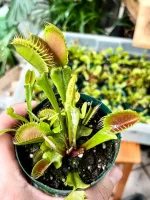
A Venus Fly Trap grows in a low rosette, with two-lobed traps at the ends of its leaves. When a small insect brushes the trigger hairs inside, the trap can snap shut. You may see the inside of some traps take on a red blush as the plant settles into strong sunlight.
These plants come in 9 cm pots. Put yours somewhere sunny where you can easily top up a shallow water tray. It grows best with direct sun, low-mineral water and a mix made for carnivorous plants.
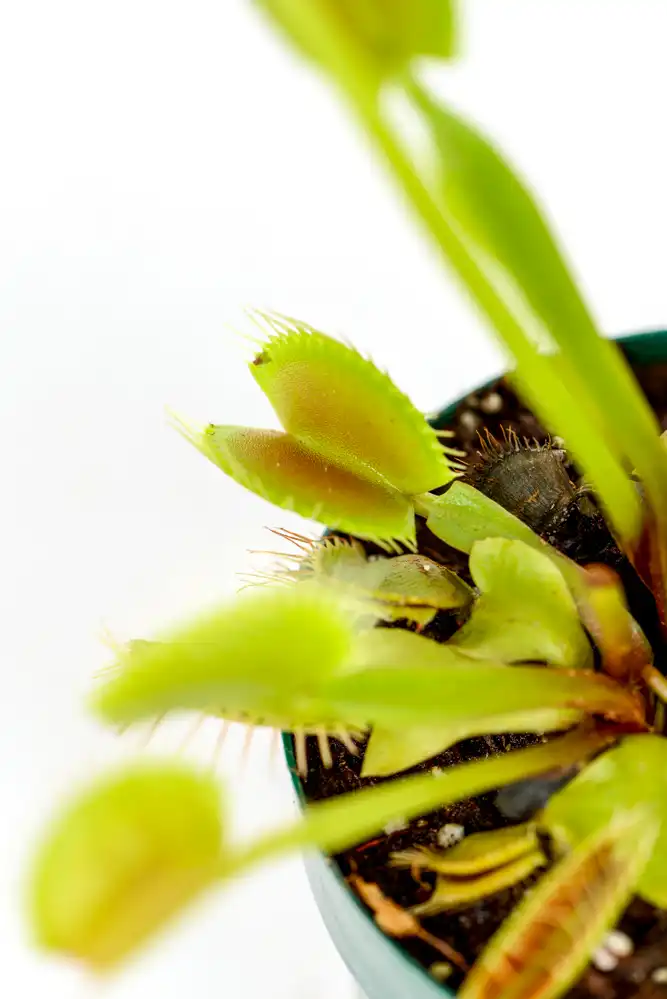
Older traps naturally turn black as they age. Look to the centre for fresh growth in spring and summer, and expect the plant to slow down as winter arrives.
The key to keep these plants happy is loads of direct sun, not letting them dry out (ever) and only using mineral-free water.Â
Venus Fly Trap Care Guide
Watering – What water should I use?
Only use rainwater, distilled water or reverse osmosis water. During active growth, keep the pot in a shallow tray with about 1 cm of water. Top up as needed so the mix stays moist. In winter, use less water and keep the mix damp.
Light – How much direct sun does it need?
Choose a sunny outdoor spot that gets 4–6 hours of direct sun a day. Ease it into stronger sun over a week or two after bringing it home. If you grow it indoors, use your sunniest north-facing window and add a grow light if the plant gets too little direct sun.
Humidity – Does it need a terrarium?
Open air suits a Venus Fly Trap. Use the water tray to keep the roots moist. A closed terrarium can overheat quickly in direct sun.
Soil – What mix should I use?
Our Venus Fly Trap Soil contains sphagnum peat and perlite as the only peat source, with perlite to keep the mix open. Choose a mix free of coco peat, compost and added fertiliser.
Feeding – Does it need insects or fertiliser?
Outdoors, the plant usually catches its own prey. If you grow it indoors, you can occasionally offer one healthy, open trap a small live insect that fits comfortably inside. Keep fertiliser out of the potting mix and skip meat or other kitchen scraps.
Repotting – When should I move it up a size?
Start with the supplied 9 cm pot. When the rosette crowds the pot or the mix compacts, repot in late winter or early spring into a slightly larger pot with drainage holes. Use fresh carnivorous plant mix.
Pests – What should I watch for?
Check distorted new growth for aphids, especially around the centre of the plant. Isolate an affected plant before treating it. An occasional black trap is part of the normal growth cycle.
Temperature – What happens in winter?
As days shorten and temperatures fall, outdoor flytraps naturally slow down. They may make smaller leaves or lose some older traps. Give the plant a cool, bright winter rest, keep the mix damp and shelter the small pot from hard frost. Normal growth resumes as the days warm up.
Frequently asked questions
Can I touch the traps?
It’s best to watch them in action when they catch prey. Repeatedly closing empty traps uses energy.
Why has one trap gone black?
Individual traps have a limited lifespan. Snip a trap off once it has dried fully and leave any green tissue in place.
Will it get rid of the flies in my house?
It catches small insects that fit inside its traps. Think of each catch as part of watching the plant grow.
Be sure to visit and follow us Facebook and Instagram