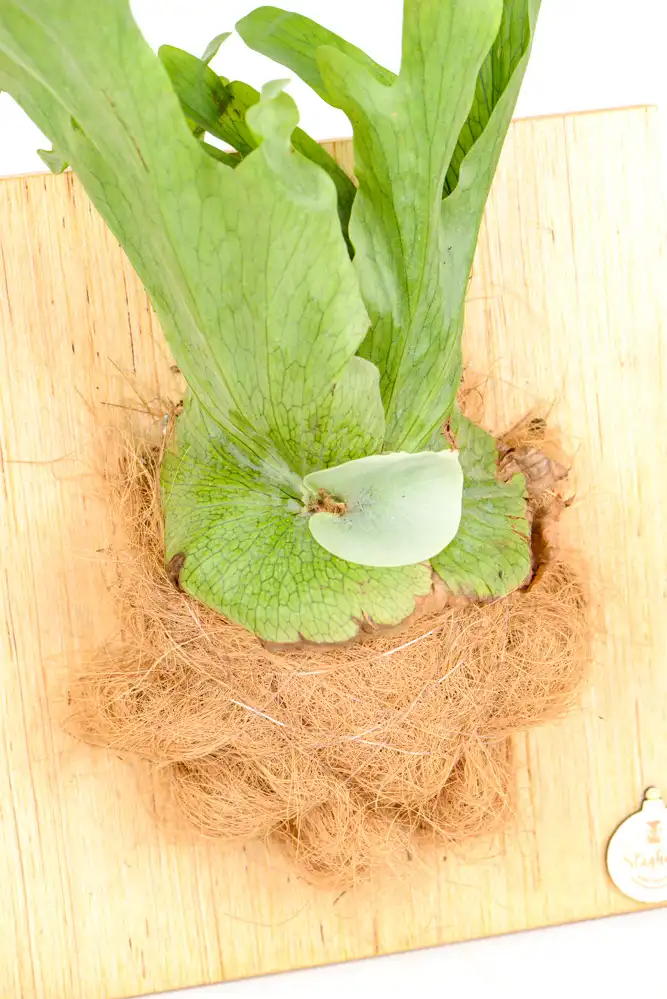
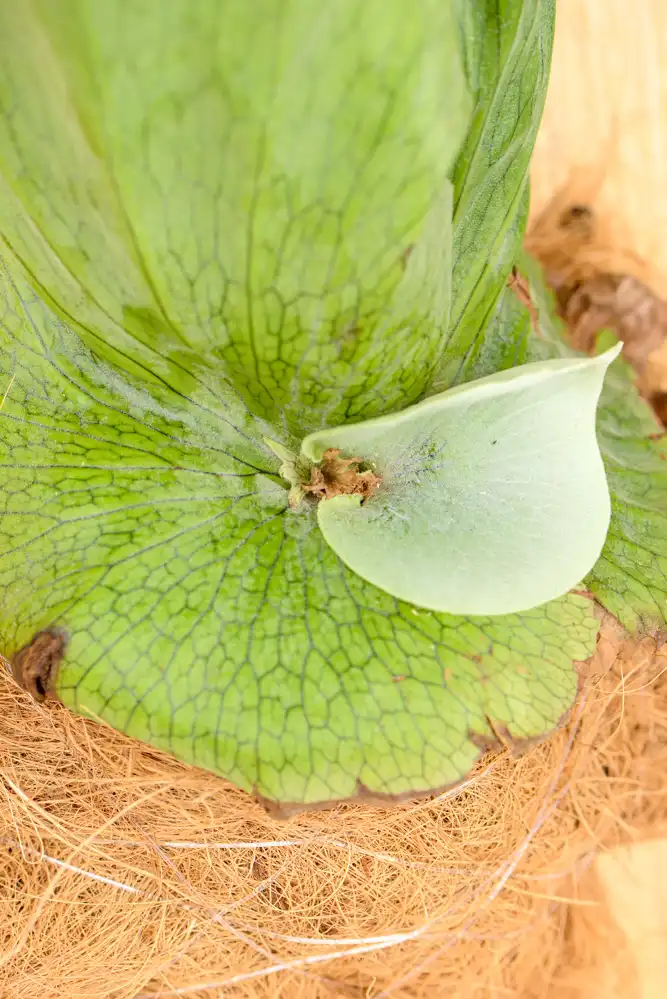
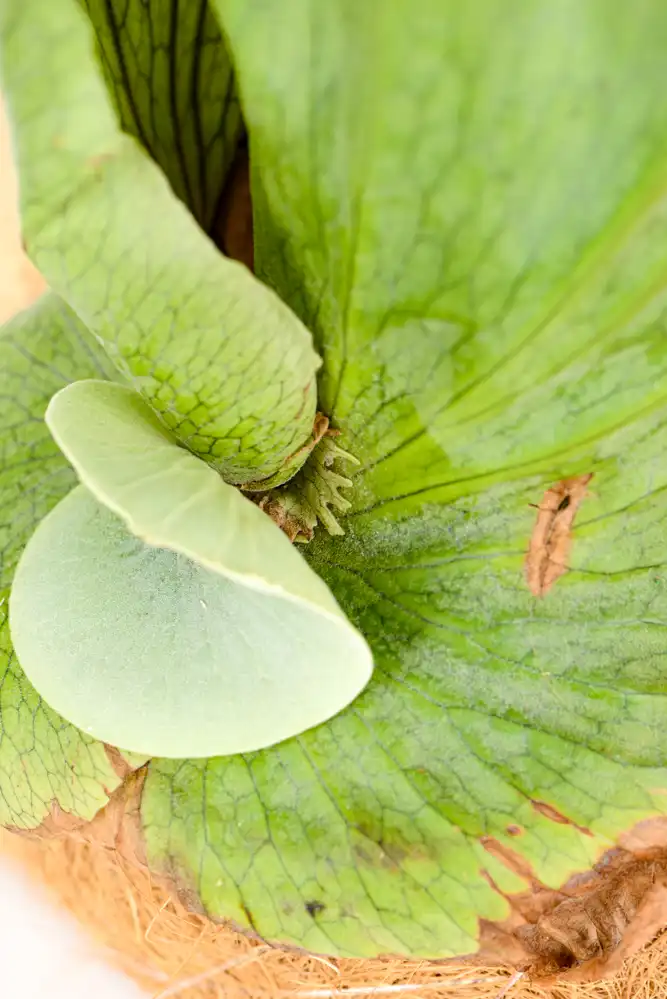
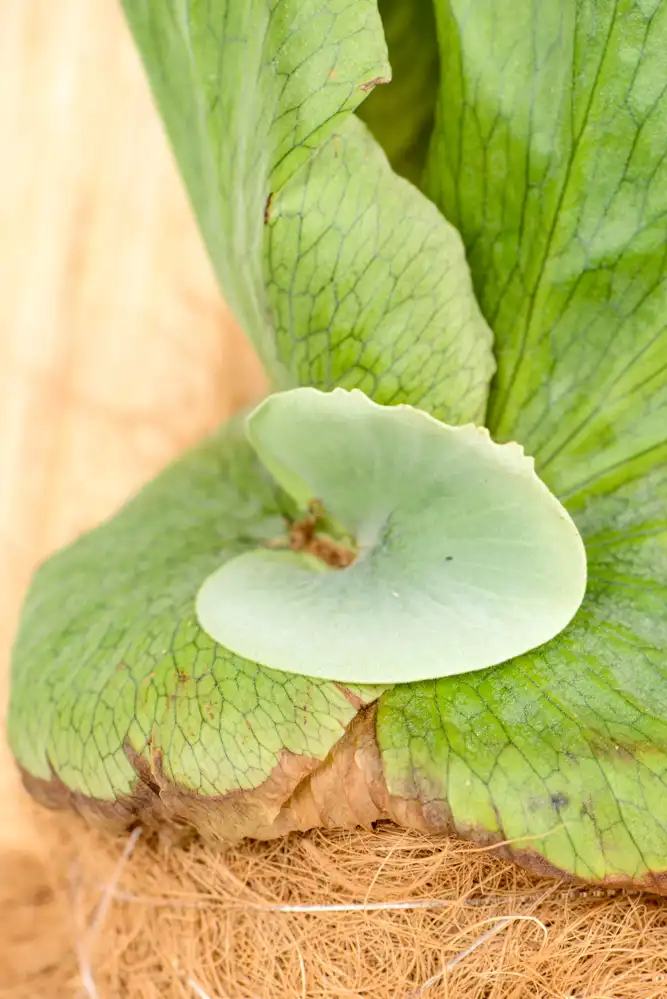




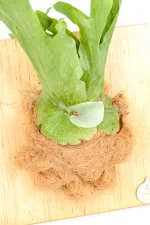
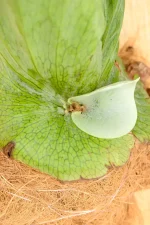
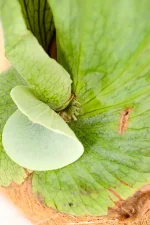
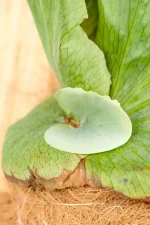


Commonly known as: Platycerium Wandae, Giant Staghorn Fern, Queen Platycerium
Botanical name: Platycerium wandae
If there’s one Staghorn Fern that really deserves the title of giant, it’s the Platycerium Wandae.
Also known as the Queen Staghorn Fern, Platycerium wandae is famous for its enormous growth potential and the remarkable structure of its mature foliage.
Unlike the Staghorns that gradually develop colonies of smaller plants, Wandae typically grows from one central growing point, gradually forming an increasingly large structure of overlapping shield fronds.
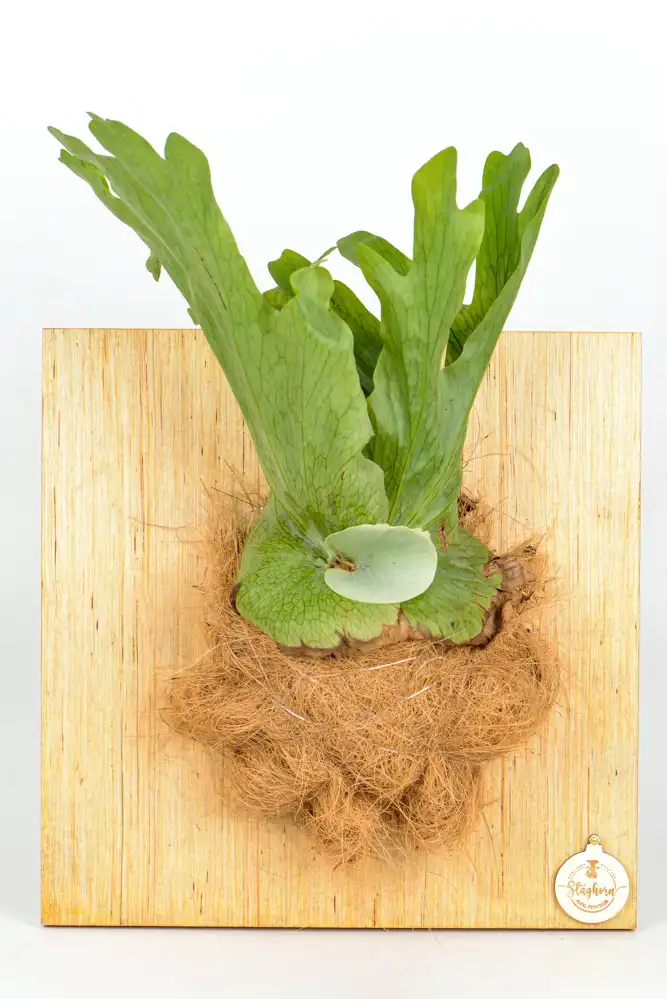
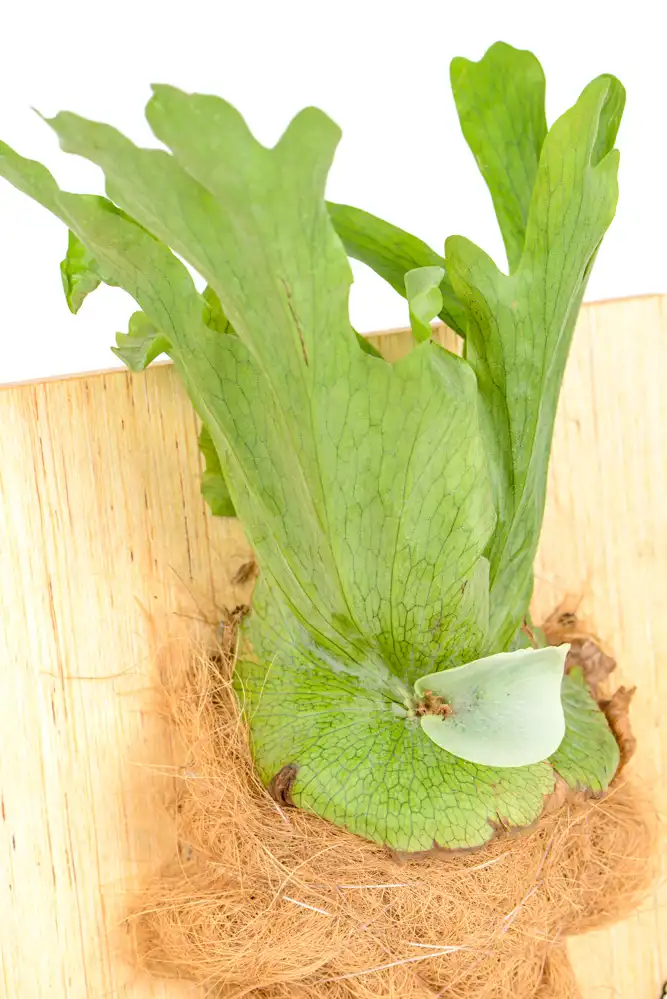
Those shields are particularly impressive. As the plant matures, they grow upwards and outwards, developing deeply divided edges that create a massive, basket-like crown. Mature specimens can develop shield structures exceeding a metre in both height and width.
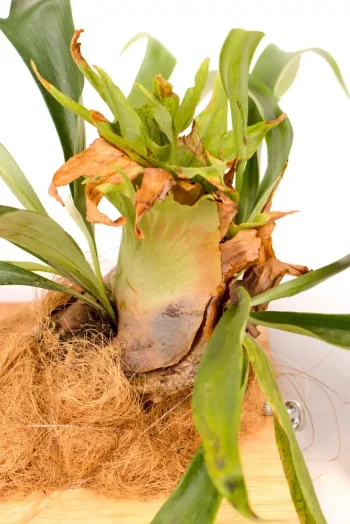
One of Wandae’s most distinctive features is the frilly, branching growth around its central crown, which becomes more noticeable as the plant matures.
Below the shields, long fertile fronds develop and hang downwards, eventually forming an impressive cascade of branching foliage.
In its natural habitat, Wandae grows high in the trees of New Guinea, where its enormous shield structure collects falling leaves, rainwater and organic material. These gradually provide nutrients around the root system.
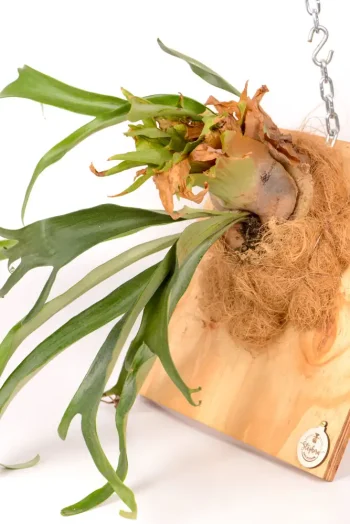
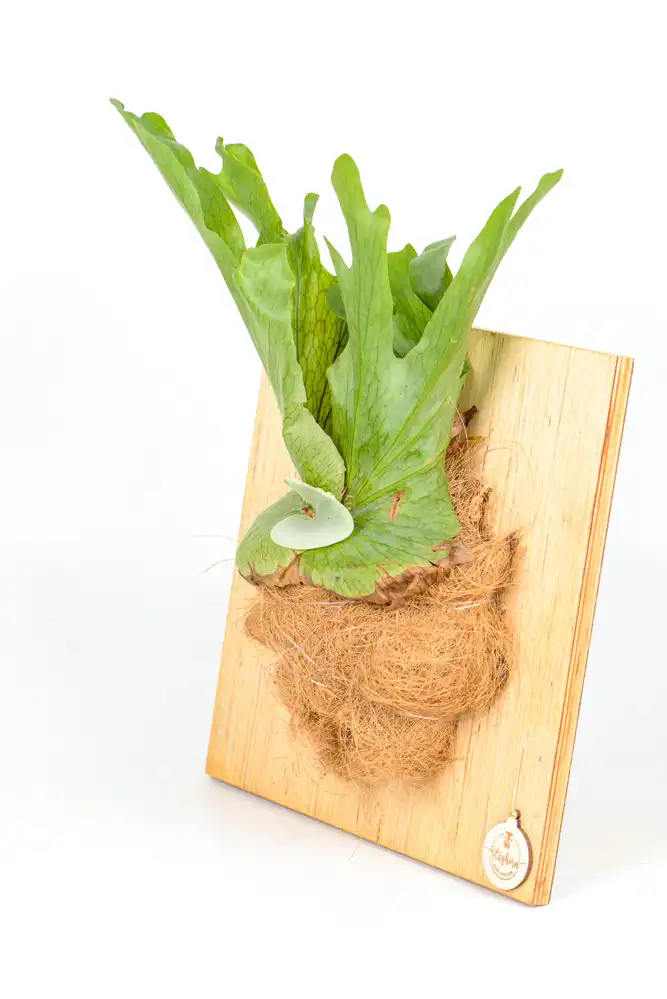
Our plants are already nicely established on 40×40cm wooden boards, giving you a substantial starting point for growing this extraordinary fern.
Wandae is a tropical species that appreciates plenty of warmth and humidity. It also enjoys consistent moisture, particularly during active growth, but the roots must still have access to oxygen.
Bright, filtered natural light is ideal, along with good airflow around the mounting board and foliage.
One important thing to remember is that Wandae will eventually need more room. Its mature size can be enormous, and a healthy specimen may ultimately require a larger, reinforced mounting structure.
For anyone who enjoys growing Staghorns and watching their shield fronds develop over time, Platycerium Wandae is an exceptionally rewarding plant.
Platycerium Wandae Care Guide

Water – How often should I water my Platycerium Wandae?
Wandae appreciates consistent moisture and doesn’t enjoy drying out completely for extended periods.
Water the moss and root area thoroughly, allowing it to absorb plenty of moisture before letting the excess drain away.
During warm weather, you may need to water several times a week, depending on the temperature, humidity and airflow around the board.
Unlike some Staghorns that tolerate extended dry periods, Wandae naturally grows in humid tropical conditions and prefers a more consistent supply of moisture.
However, don’t keep the mounting material permanently saturated. The roots still need plenty of oxygen.
A useful trick is to feel the weight of the board. As the moss dries, the entire mount becomes noticeably lighter.

Light – Where should I hang my Platycerium Wandae?
Give it plenty of bright, filtered natural light.
A position near a large window or beneath a bright, sheltered patio roof is ideal.
Gentle morning sunlight is beneficial once the plant has acclimatised, but avoid suddenly exposing it to harsh afternoon sun.
Good light encourages healthy shield development and supports the production of strong, mature fertile fronds.
Avoid dark areas where the plant receives very little natural light.

Humidity – Does Platycerium Wandae need high humidity?
Yes. Humidity is particularly important for Wandae, especially while its large shield fronds are developing.
Aim for approximately 60% humidity or higher where practical.
Dry air can cause the delicate growing tips of the shield fronds to shrink, curl or become damaged before they’ve fully developed.
A warm, humid greenhouse or sheltered patio can be an excellent growing environment.
However, don’t confuse humidity with stagnant air. Good air circulation is essential, particularly around a large mounted Staghorn.

Soil – Does my mounted Platycerium Wandae need soil?
No. Wandae is an epiphytic fern, meaning it naturally grows attached to trees rather than rooted in conventional soil.
Your plant is already established on its mounting board, with growing material supporting the root system.
As the shield fronds develop, they’ll gradually grow around the mounting area, helping protect the roots and collect organic material.
There’s no need to add ordinary potting soil or compost to the mount.

Feeding – How should I fertilise my Platycerium Wandae?
Wandae can develop an enormous amount of foliage, so regular feeding during active growth is beneficial.
Novatec Soluble Fertiliser is a good option for encouraging healthy growth when appropriately diluted and sprayed as a drench. You can also supplement with the Umya Foliar Feed.
Apply the fertiliser to the moist moss and root area, rather than concentrating it directly on the foliage.
Avoid excessive concentrations, as mineral salts can accumulate in the relatively limited growing medium of a mounted plant.
During winter, when temperatures drop and growth slows, reduce feeding accordingly.

Repotting – Will I eventually need to remount my Wandae?
Yes, eventually.
The 40×40cm board provides a good starting point for your established Wandae, but this species has enormous growth potential.
As the shields enlarge, the plant will become heavier and require increasingly substantial support.
When it genuinely outgrows its mount, consider moving the entire plant onto a larger, reinforced board or a suitable mounting structure.
Plan carefully before remounting. Avoid damaging the established shields, roots or central growing point.
It’s also important to check the strength of the wall fittings and hanging hardware as the plant gains weight.
Extra Care – What should I do with the brown shield fronds?
Leave them exactly where they are.
Wandae’s shield fronds initially develop green, gradually turning brown and papery as they mature.
This is completely natural.
The older shields help protect the roots, secure the plant to its mount and create the structure that eventually forms its enormous basket.
Removing them can damage the plant and interfere with the development of its crown.

Pests – What should I watch for?
Scale and mealybugs can occasionally appear around the shield fronds and central growing point.
Check new growth regularly, particularly where the fronds emerge from the crown.
Avoid aggressively rubbing or scrubbing the foliage, as Platycerium fronds may have a fine protective covering that can be damaged by excessive handling.
If treatment becomes necessary, use a product suitable for ferns and test a small area first.
Also keep an eye on the condition of the growing point. Wandae generally develops as a solitary plant, so protecting that central crown is particularly important.
Extra Care – Why is the central growing point so important?
Platycerium Wandae typically develops from one main growing point, rather than producing multiple pups around the base.
This central crown is responsible for producing the new shield and fertile fronds.
As the plant matures, you’ll notice distinctive frilly growth developing around this area.
Avoid damaging, cutting or unnecessarily disturbing the crown. Severe damage to the only growing point can be fatal because the plant generally doesn’t have additional shoots to replace it.

Temperature – What temperatures does Platycerium Wandae prefer?
Wandae is a warm-growing tropical Staghorn Fern.
Aim for approximately 22°C–32°C during active growth, with warm nights and reasonably stable temperatures.
Protect it from temperatures below 15°C, particularly for extended periods. Cold conditions combined with wet growing material can be particularly damaging.
During Gauteng winters, move the plant into a warm, protected environment before temperatures drop too far.
Frequently asked questions
Is Platycerium Wandae really the largest Staghorn Fern in the world?
It’s widely regarded as the largest-growing species, although some references describe it as potentially the largest. Mature specimens can develop enormous shield structures exceeding a metre across, with long fertile fronds extending below them.
Why is Platycerium Wandae called the Queen Staghorn Fern?
The name refers to its exceptionally large, impressive growth habit. Its enormous upright shields and cascading fertile fronds give mature plants a remarkable appearance.
What is the unusual frilly growth around the centre of my Wandae?
That’s a natural characteristic of the species. Mature Wandae plants develop distinctive branching, leaf-like structures around the central growing point.
Does Platycerium Wandae produce pups?
Usually not. Wandae is generally a solitary-growing species, developing from a single central growing point rather than naturally forming colonies.
Can I keep my Platycerium Wandae outdoors?
Yes, provided you have a warm, sheltered position with bright filtered light, suitable humidity and good airflow. In Gauteng, protection from cold winter temperatures is essential.
Is Platycerium Wandae pet safe?
Platycerium ferns are generally regarded as non-toxic to cats and dogs, although specific toxicity information for Wandae is limited. It’s still best to prevent pets from chewing the foliage.
Be sure to visit and follow us Facebook and Instagram