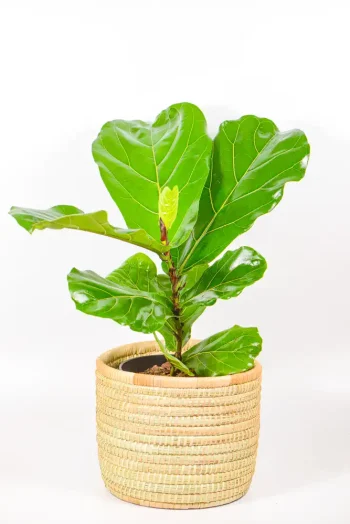






Commonly known as: Fiddle Leaf Fig
Botanical name: Ficus lyrata
The Fiddle Leaf Fig (Ficus lyrata) is one of the most recognisable indoor trees, known for its large, glossy leaves and upright growth habit. When allowed to grow steadily, it develops into a strong, sculptural plant that brings height and structure to a space without feeling cluttered.
Large Fiddle Leaf Figs prefer consistency over constant adjustment. Once placed in the right light and given a predictable watering routine, they tend to remain stable and reliable. Most issues with these plants come from sudden changes — moving them too often, overwatering, or placing them in low-light conditions.
This is a plant that rewards patience. With time, good light, and minimal interference, a Fiddle Leaf Fig becomes a long-term feature plant that anchors a room and grows more impressive as it matures.
Fiddle Leaf Fig Care Guide
Watering – How often should I water it?
Water when the top 3–5 cm of soil feels dry. Fiddle Leaf Figs prefer a regular routine rather than frequent watering. Always allow excess water to drain away fully, as soggy soil is a common cause of root problems.
Light – What light does a Fiddle Leaf Fig need?
Bright, indirect light is essential. Position the plant near a window where it receives plenty of natural light without harsh direct sun. Insufficient light often leads to leaf drop and weak growth.
Humidity – Does it need extra humidity?
Average indoor humidity is generally sufficient. However, very dry air can contribute to brown leaf edges. Keep the plant away from heaters and air conditioners where possible.
Soil – What soil works best?
A free-draining but stable mix is important for healthy root growth. Indoor Potting Soil provides a bark-based structure that drains well while still holding enough moisture to support a larger plant.
Feeding – How should I fertilise it?
Feed during spring and summer using a good dose of Grobest Organic Fertiliser every 2-3 weeks. Consistent, feeding supports steady leaf development without forcing growth. Also consider using the high nitrogen fertilizer like Novatec Soluble Fertilizer.
Repotting – When should a Fiddle Leaf Fig be repotted?
Repot only when the plant is clearly root-bound, usually every 18–24 months. Move up one pot size at a time and keep most of the existing soil around the root ball intact. When repotting, you can mix TerraPlus Natura N and Controlled Release Fertiliser into the fresh potting mix for long-term nutrition.
Pests – What pests should I watch for?
Fiddle Leaf Figs can occasionally attract spider mites or scale, particularly in dry conditions. Regular inspection and early treatment with an insecticidal spray will help prevent infestations.
Temperature – What temperature suits it best?
Ideal temperatures range between 18 °C and 28 °C. Avoid cold drafts and sudden temperature changes, which can trigger leaf drop.
Q: Why are leaves dropping from my Fiddle Leaf Fig?
Leaf drop is usually caused by changes in light, watering routine, or temperature.
Q: Can it be pruned?
Yes. Light pruning helps control height and encourages branching.
Q: Does it like being moved?
No. Once it’s happy in a spot, it’s best to leave it there.
Q: Is it pet-safe?
No. Fiddle Leaf Figs are toxic if ingested and should be kept out of reach of pets.
Be sure to visit and follow us Facebook and Instagram