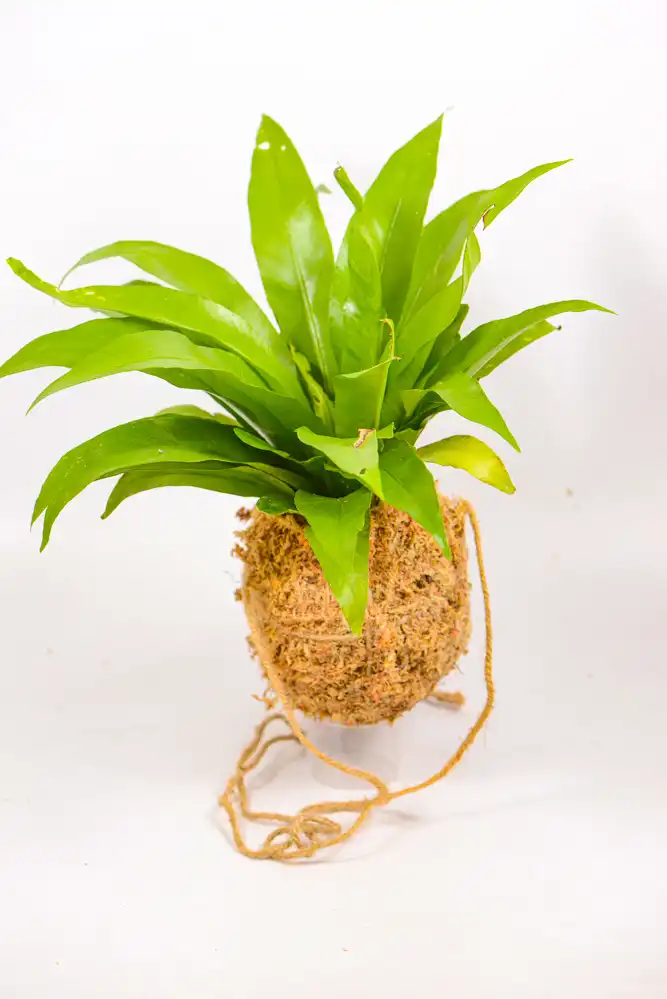
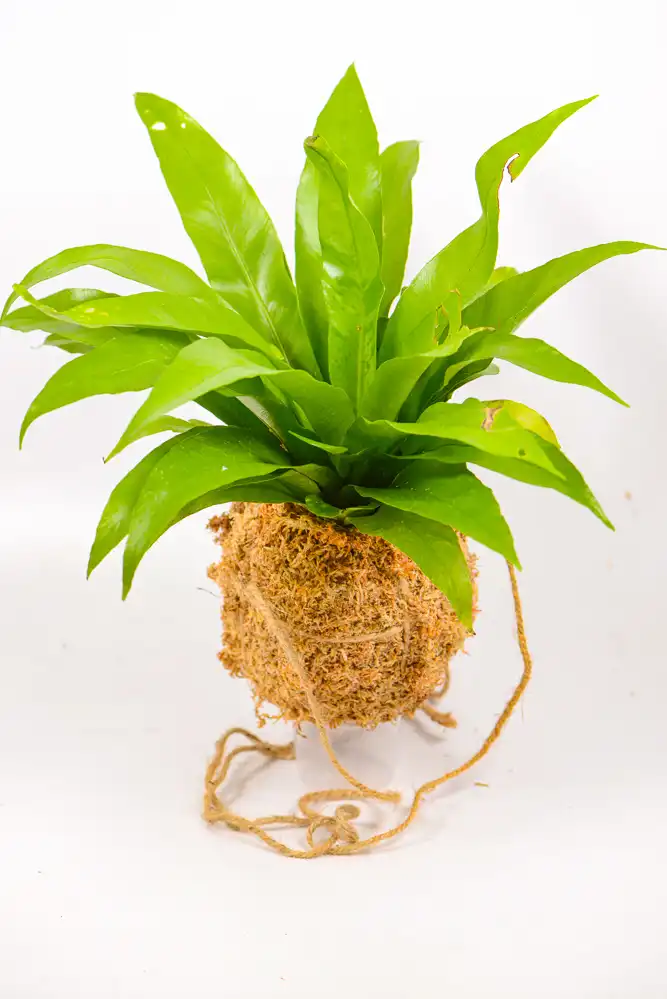
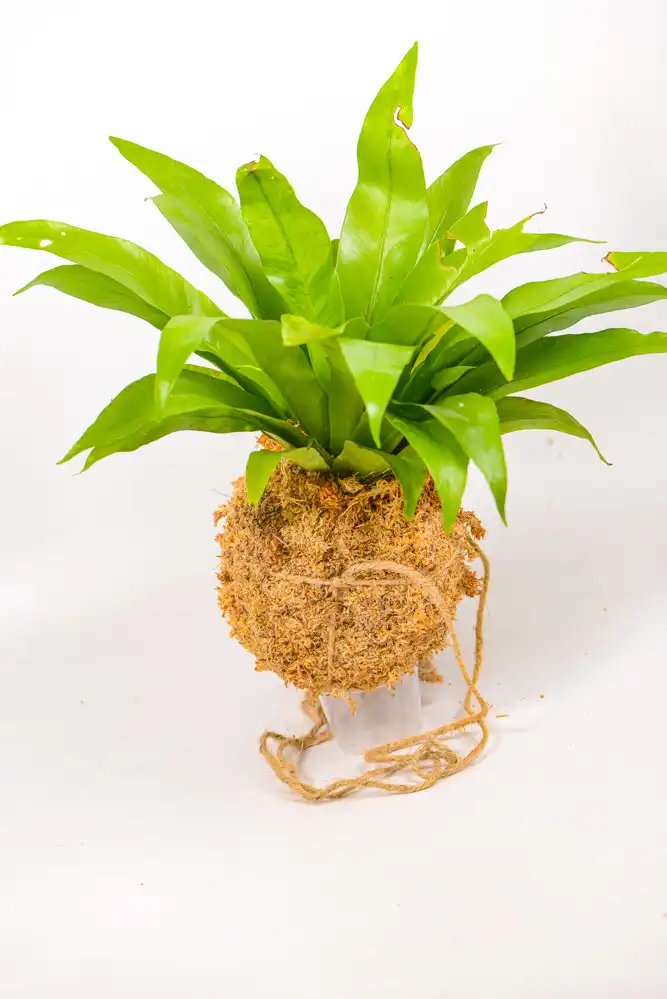
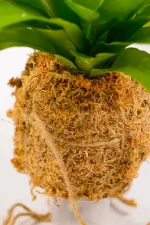
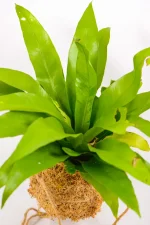
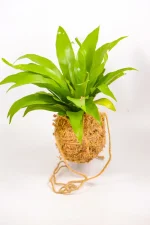
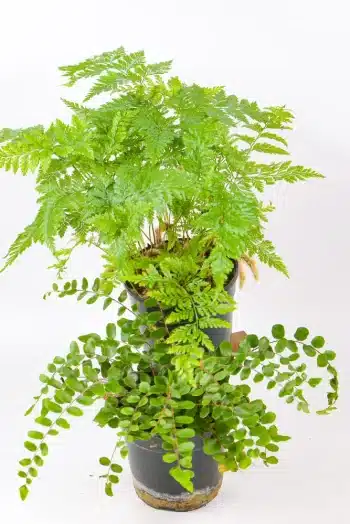
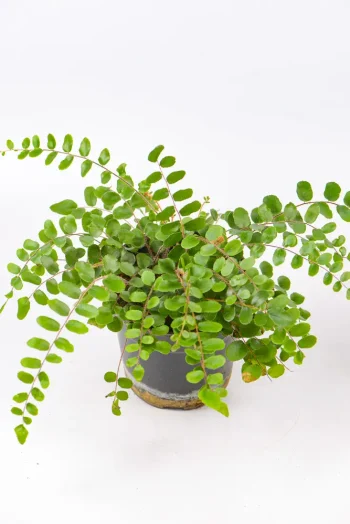
This Kokedama Antiquum features a Bird’s Nest Fern grown into a hand-formed moss ball, creating a calm, organic plant display that works beautifully on a surface or as a hanging feature.
The Kokedama Antiquum combines the soft, rippled foliage of a Bird’s Nest Fern (Asplenium antiquum) with the traditional Japanese kokedama growing style. Instead of a pot, the plant’s roots are wrapped in a compact soil core and finished in sphagnum moss, turning the plant into a natural design element rather than a conventional houseplant.
Bird’s Nest Ferns are particularly well suited to kokedama growing. Their upright rosette shape keeps foliage tidy, while their preference for evenly moist conditions aligns well with the soak-and-drain watering method. The gently crinkled leaves emerge from the centre of the plant, creating a full, bowl-like form that contrasts beautifully with the soft moss exterior.
Displayed on a dish or suspended, a Kokedama Antiquum brings a sense of balance and calm to indoor spaces. It suits areas with good natural light and works especially well in rooms where you want something green and textural without visual clutter.
Kokedama Antiquum Care Guide
Watering – How do I water a fern kokedama?
Water by soaking the moss ball in room-temperature water for 10–15 minutes, then allow it to drain fully before placing it back on display. Watering is typically needed every 5–8 days, depending on temperature and airflow. The moss should feel slightly dry before the next soak.
Light – What light does a Kokedama Antiquum need?
Bright, indirect light is ideal. The fern tolerates medium light but should be protected from direct sun, which can scorch the leaves and dry out the moss too quickly.
Humidity – Does it need higher humidity?
Yes, moderate humidity is important for Bird’s Nest Ferns. Normal indoor humidity often works, but occasional light misting around the plant (not into the crown) helps keep leaf edges from drying out.
Soil – What’s inside the moss ball?
Inside the moss is a moisture-retentive but breathable soil blend that supports the fern’s fine root system. The moss acts as a visual guide — when it looks pale or feels light, it’s usually time to water.
Repotting – What happens when the kokedama outgrows its moss ball?
Kokedamas don’t follow standard repotting schedules. After 12–24 months, the plant can either be refreshed with new moss or transitioned into a pot. If potting up, mix TerraPlus Natura N and Controlled Release Fertiliser into the potting mix to support soil health and long-term nutrition.
Repotting – When should I repot a Maidenhair Fern?
Repot every 12–18 months or once roots fill the pot. Step up only one size and refresh the mix. Add a few Bark Chips to improve aeration and help the roots spread evenly. Handle gently — their root systems are fine and fibrous.
Pests – What pests should I watch for?
Bird’s Nest Ferns are generally trouble-free, but scale or mealybugs may occasionally appear around the leaf bases. Inspect regularly and treat early with an insecticidal spray if needed.
Temperature – What temperature suits it best?
Ideal temperatures range between 18 °C and 26 °C. Keep away from heaters, air conditioners, and cold drafts, which can dry out both the foliage and the moss.
FAQ’s
Q: Can this Kokedama be hung? Yes. It can be displayed on a dish or suspended, depending on your space and preference.
Q: Should I water into the centre of the fern? No. Avoid letting water sit in the crown, as this can cause rot.
Q: Can I convert it to a pot later? Yes. Kokedamas can be planted into a pot once the plant outgrows the moss ball.
Q: Is it pet-safe? Yes. Bird’s Nest Ferns are considered non-toxic to pets.
Be sure to visit and follow us Facebook and Instagram