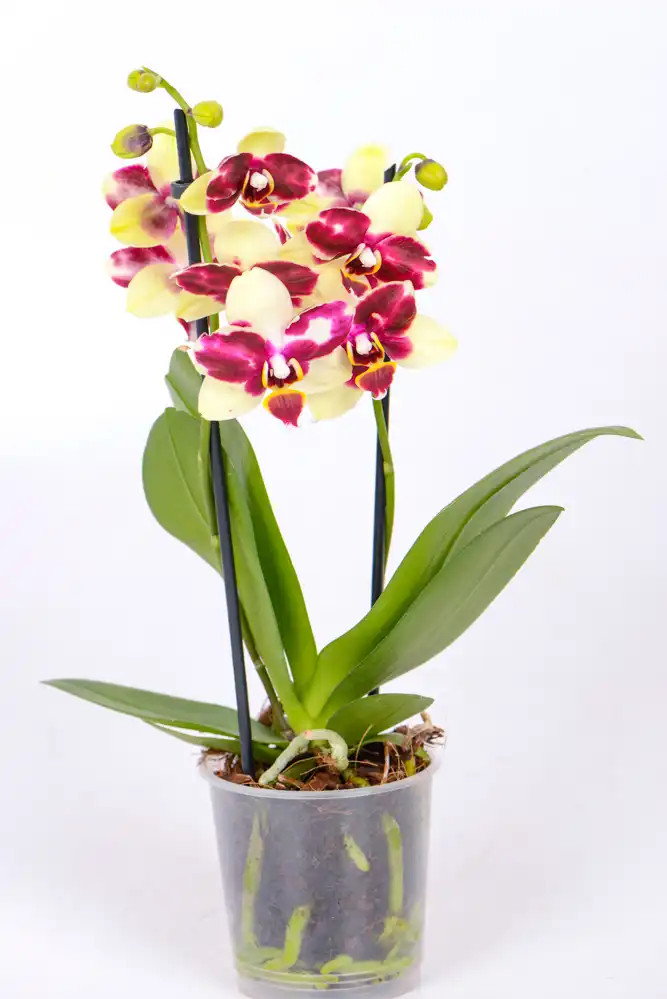
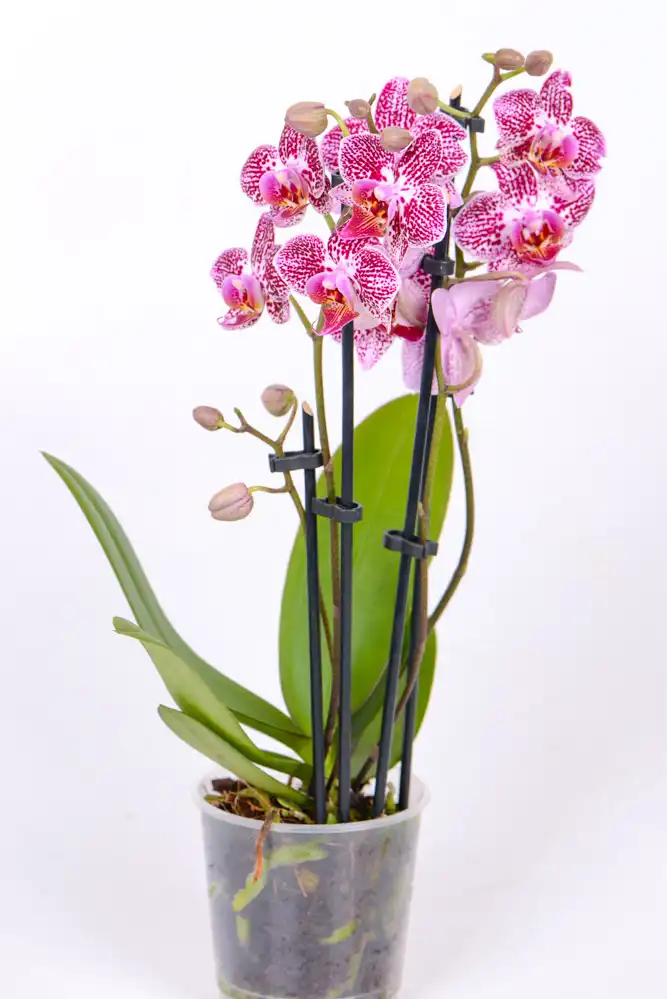
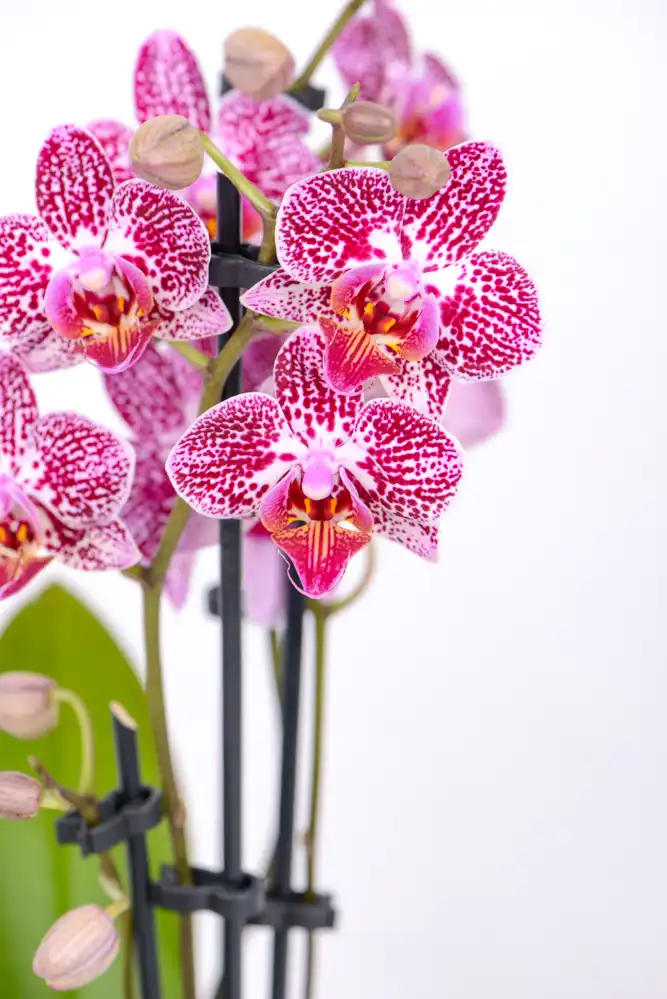
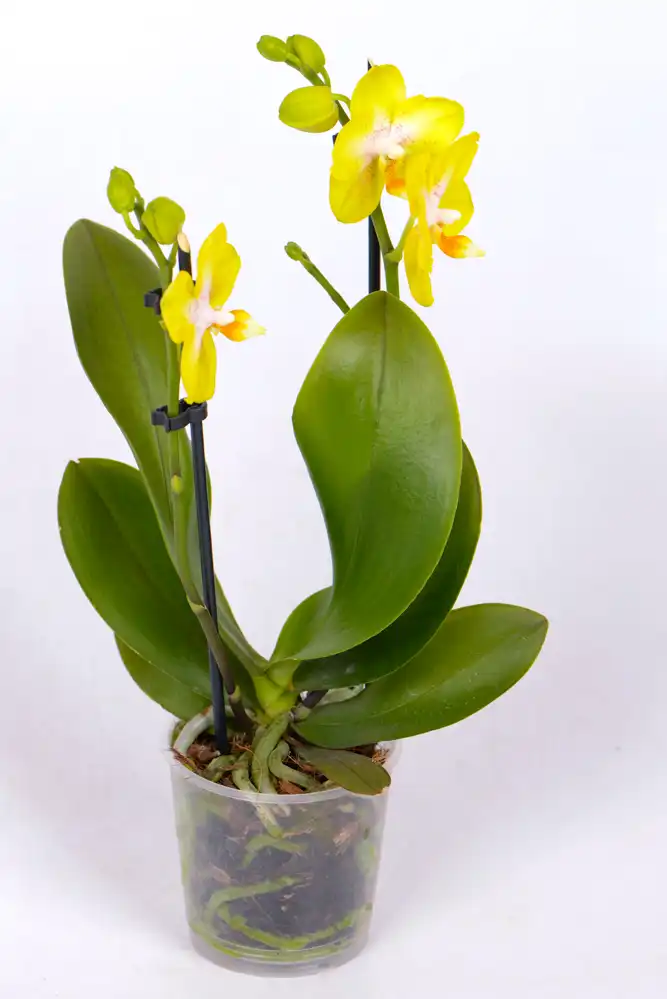
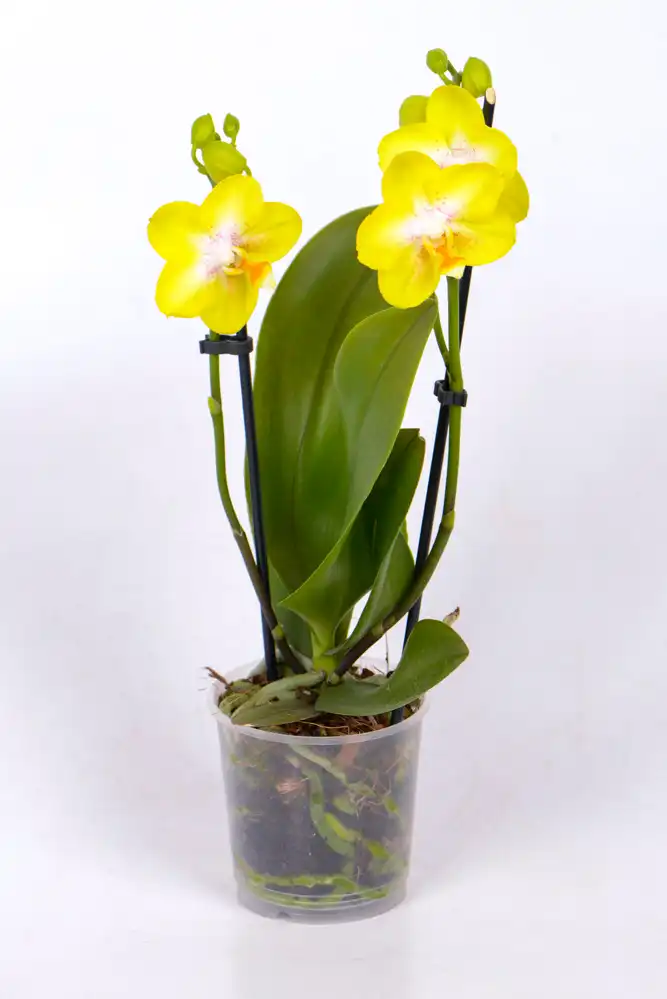
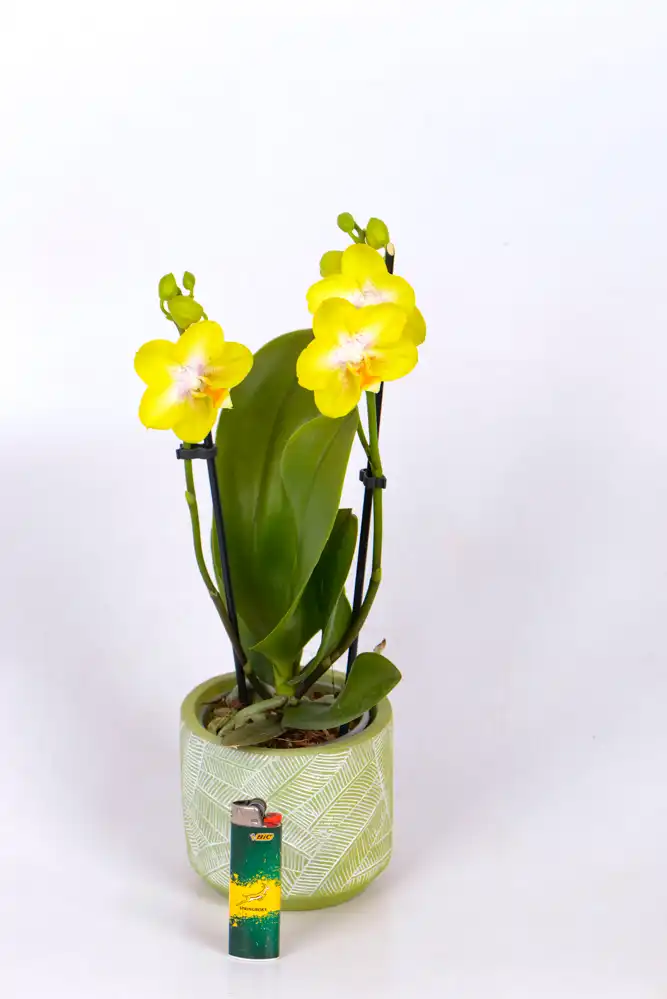
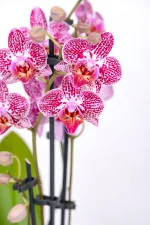
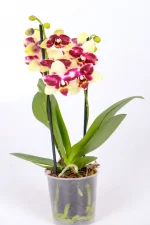
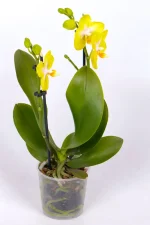
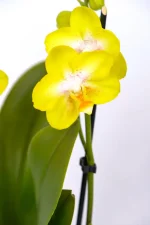
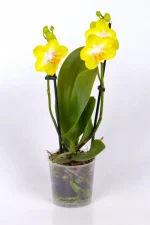
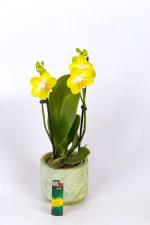

Commonly known as: Medium Orchid | Flowering Orchid Plant | Moth Orchid
Botanical name: Phalaenopsis
Phalaenopsis are some of the longest-flowering plants you can grow indoors, and the Medium Orchid sits neatly between our tiny Micro Orchids and the larger flowering plants in the range.
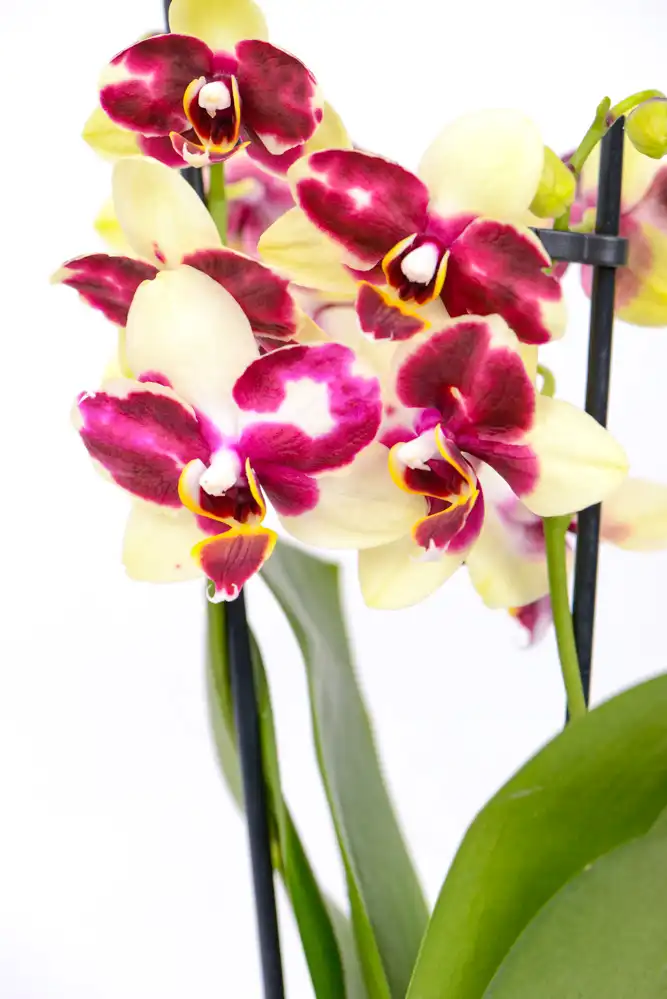
The flowers can last for weeks, while unopened buds continue developing along the stem. With a healthy plant and the right conditions, the entire flowering period can continue for several months.
The flowers are only half of the plant.
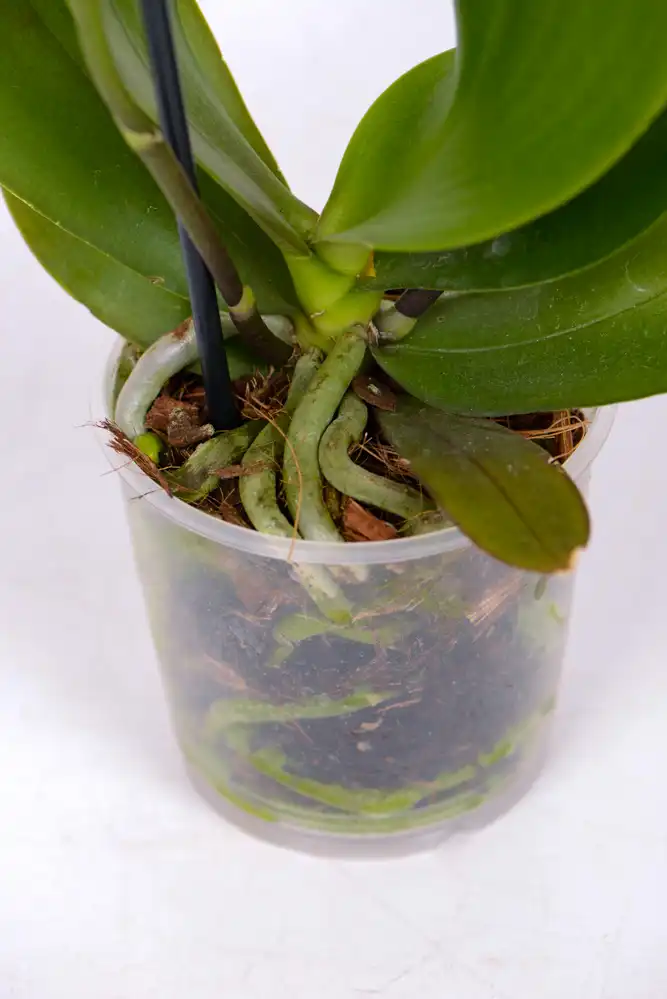
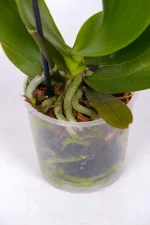
Phalaenopsis are epiphytic orchids, which means they naturally grow attached to trees rather than rooted in soil. Their thick roots absorb moisture while also receiving plenty of air and light. Understanding those roots makes looking after a Phalaenopsis considerably easier.
After flowering, don’t hide the Orchid permanently inside an opaque cover pot. Give the roots light again and concentrate on producing healthy new leaves and roots. This vegetative growth prepares the plant for its next flowering cycle.
A healthy Phalaenopsis isn’t a disposable flowering plant. Look after the roots properly and it can continue growing and flowering again for many years.
Medium Orchid Care Guide

Watering – How often should I water a Micro Orchid?
Allow the Orchid to dry between waterings. Once the roots have changed from green towards silvery-grey and the growing medium has dried, give the plant a thorough watering.
Because Micro Orchids grow in tiny 5cm pots, they’ll generally need checking more frequently than larger Phalaenopsis. There’s simply much less growing medium available to retain moisture.
Always allow water to drain freely afterwards and never leave the pot permanently standing in water.

Light – How much light does a Medium Orchid need?
Give it plenty of bright, indirect natural light. Gentle morning sun is beneficial, but protect the foliage from strong midday and afternoon sun.
Good light becomes particularly important after flowering when the Orchid switches its energy back towards producing roots and leaves.
Cover Pots – Can I keep my Orchid in a ceramic pot?
You can use a decorative cover pot while the Orchid is flowering, provided excess water is never allowed to collect inside it.
However, don’t leave the Orchid hidden inside an opaque cover pot permanently. After flowering, allow it to spend most of its time in the clear growing pot so that the root system receives light.
If the roots begin losing their green colour and becoming persistently white or grey despite being hydrated, check how much light is reaching them.

Dehydration – What should I do if the roots are grey and wrinkled?
If the roots have become noticeably wrinkled and grey, the Orchid is significantly dehydrated.
Submerge the pot and root system in water for up to 24 hours to allow the roots and growing medium to rehydrate properly. Afterwards, remove it from the water and allow it to drain thoroughly.
Healthy hydrated roots should gradually regain a thicker, firmer appearance.
Wrinkled Leaves – What should I do if the Orchid’s leaves are wrinkling?
Wrinkled or heavily dehydrated leaves indicate that the plant has gone considerably further than simply needing its normal watering.
For severe dehydration, submerge the entire plant – pot, roots, base and leaves – in water for up to 24 hours, adding magnesium sulphate (Epsom salts) to the soaking water. Afterwards, remove the Orchid, allow all excess water to drain and make sure water isn’t left trapped around the crown.
This is a recovery treatment for a severely dehydrated Orchid rather than a routine watering method.

Repotting – What should I use to repot my Phalaenopsis?
Never use ordinary potting soil, compost or another dense growing medium.
I recommend our Orchid Mix, which is specifically formulated for Phalaenopsis and provides the balance of moisture retention and airflow their epiphytic roots require.
Be careful with generic commercially packaged “orchid mixes”. Many consist predominantly of large bark pieces. Bark provides excellent airflow, but on its own it retains very little moisture, which can make maintaining adequate hydration considerably more difficult, particularly with a Micro Orchid in a 5cm pot.

Feeding – Should I fertilise my Micro Orchid?
Yes. Regular feeding is particularly useful after flowering when the plant is actively producing new roots and leaves. A healthy root system and strong vegetative growth give the plant the reserves it needs for its next flowering cycle.
One of the best options is to use our Controlled Release Fertilizer which will keep plenty nurtrients flowing months.
Avoid allowing concentrated fertiliser salts to accumulate around the roots. Periodically flush the growing medium thoroughly with clean water.

After Flowering – What should I do with the flower stem?
Phalaenopsis flowers can remain on the plant for several months. Once flowering has finished, you have two options.
The simplest is to cut the old flower stem approximately 2–3cm above its base. The plant can then concentrate on producing fresh roots and leaves before eventually developing another flower spike.
Alternatively, you can experiment with encouraging dormant nodes on the existing flower stem using Keiki Cloning Paste. Depending on the plant and node, this may encourage a secondary flower spike or the development of a keiki.

Airflow – Why is circulation so important?
Phalaenopsis are epiphytes, so airflow is important around both the leaves and the root system.
This is another reason never to plant them into dense potting soil or compost. Their roots need a very open growing medium with plenty of air moving through it.
Good circulation also helps the growing medium dry properly between waterings.

Temperature – What temperatures do Phalaenopsis prefer?
Warm indoor temperatures are ideal. Protect Micro Orchids from very cold drafts and sudden temperature changes. Good airflow is beneficial, but cold air directly against the foliage isn’t.
FAQ’s
Q: Does my Medium Orchid come with a ceramic pot?
No. All of our Orchids come in their clear plastic growing pots only. Ceramic cover pots are excluded. The clear pot allows light to reach the roots and lets you monitor their condition.
Q: Can I choose the flower colour?
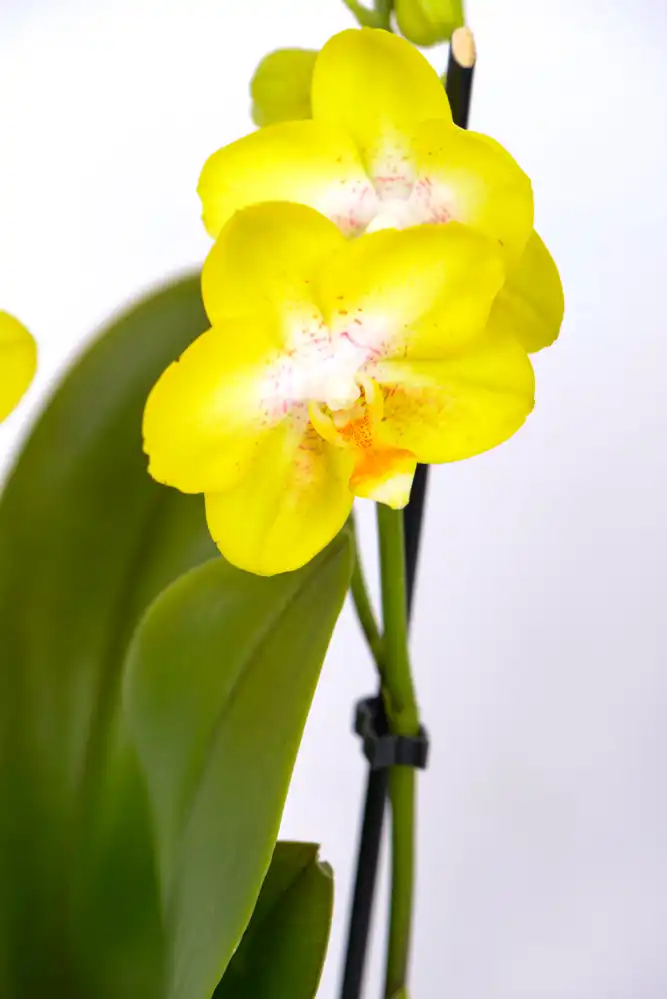
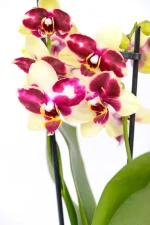
No. We receive different colours and patterns from the grower according to availability, so specific flower colours cannot be guaranteed.
Q: What’s the difference between the Micro and Medium Orchid?
Our Micro Orchids are tiny plants with correspondingly small flowers. The Medium Orchid is a larger Phalaenopsis at approximately 35cm tall, with the larger flowers and foliage you’d expect from a more conventional Phalaenopsis.
Q: Why have my Orchid’s roots turned grey?
Silvery-grey roots normally indicate that they’re dry. If they’re still firm and become green again after watering, they’re healthy. Wrinkled, thin roots indicate more significant dehydration.
Q: Should I cut the flower stem after flowering?
You can cut it approximately 2–3cm above the base and let the plant concentrate on new roots and leaves. Alternatively, you can experiment with Keiki Cloning Paste on a suitable dormant node.
Q: Can I repot my Orchid into normal potting soil?
No. Phalaenopsis roots need excellent airflow and should never sit buried in ordinary potting soil or compost. Use a properly formulated Phalaenopsis Orchid Mix instead.
Q: Will my Orchid flower again?
Absolutely. After flowering, concentrate on strong root and leaf growth. Plenty of light, correct watering, good airflow and regular nutrition prepare the plant for future flowering.
Q: Is Phalaenopsis pet safe?
Phalaenopsis Orchids are generally considered non-toxic to cats and dogs.
Be sure to visit and follow us Facebook and Instagram