Commonly known as: Bill Bailey pitcher plant, tropical pitcher plant
Botanical name: Nepenthes ‘Bill Bailey’
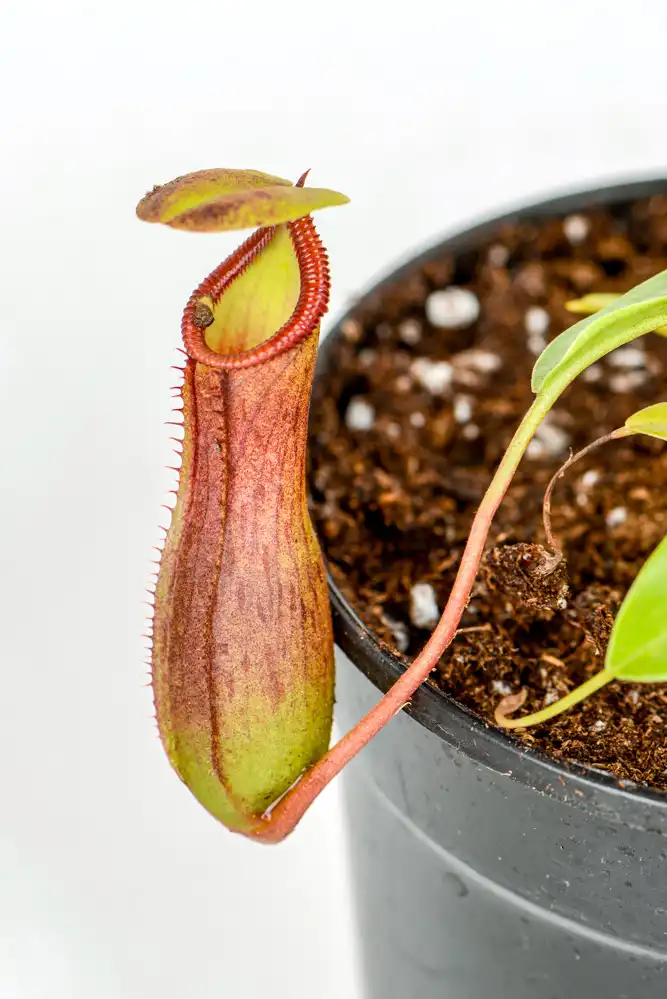
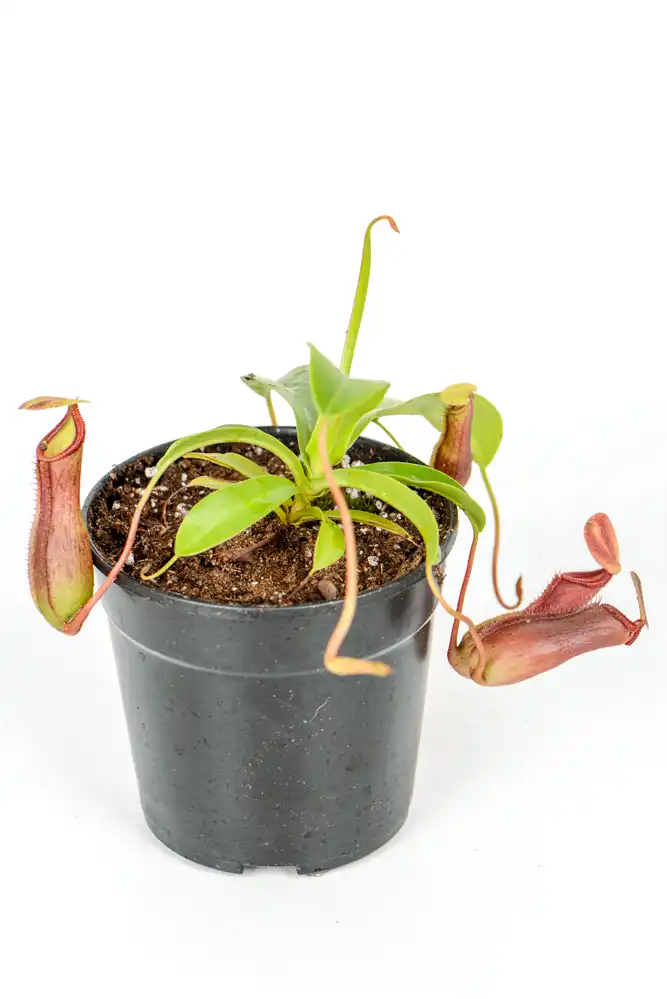
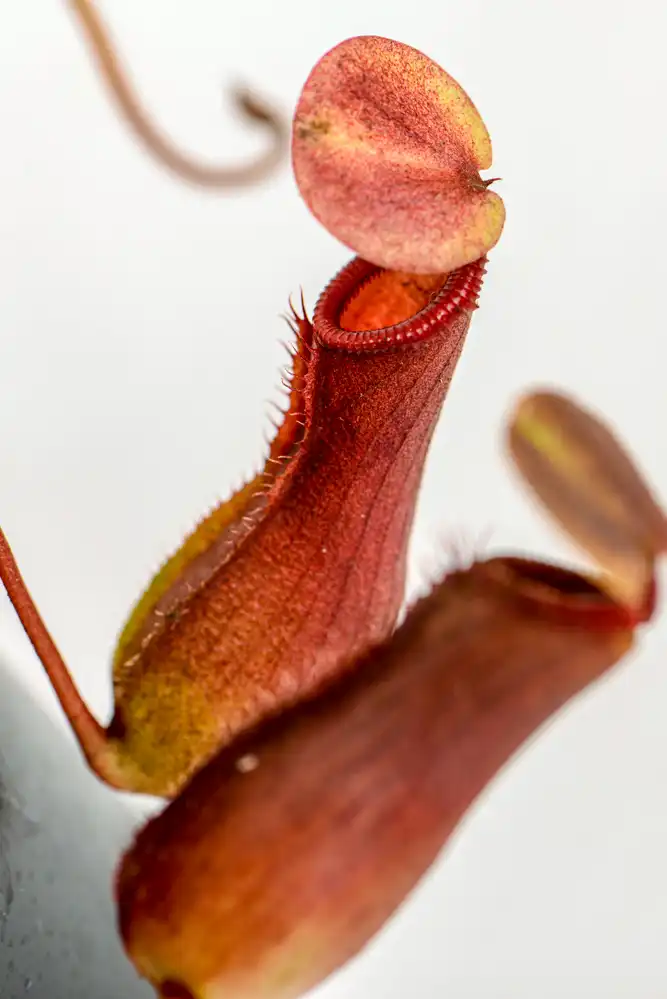
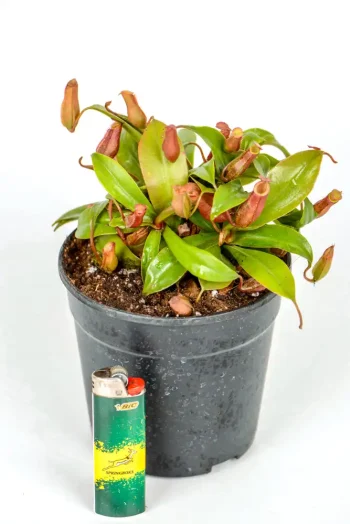
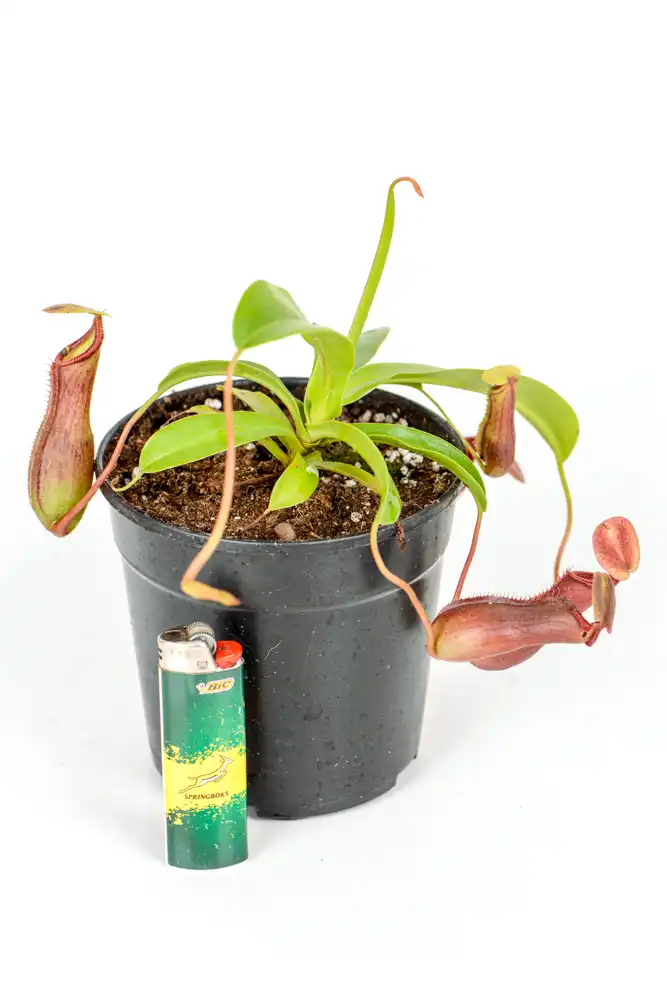
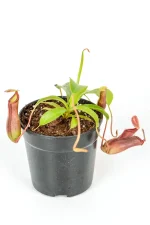
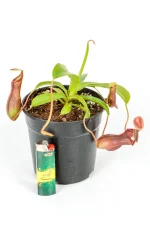
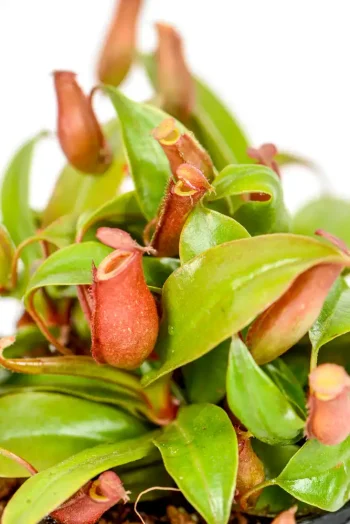
The Nepenthes Bill Bailey is a particularly attractive tropical pitcher plant, with beautifully shaped pitchers that can develop rich shades of red, burgundy and deep maroon.
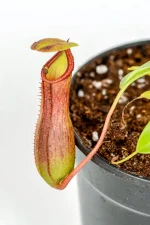
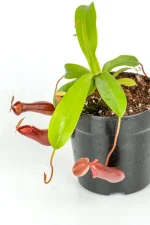
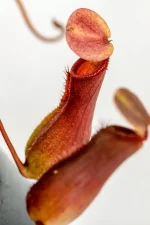
Its pitchers are one of the main reasons this hybrid is so popular. They often develop a rounded lower section with a narrower upper portion, while the rim, known as the peristome, can become especially colourful as the pitcher matures.
Bill Bailey is a hybrid between Nepenthes singalana and Nepenthes ventricosa, combining attractive pitcher development with a relatively adaptable growing habit.
Like other Nepenthes, this plant is carnivorous. The pitchers are modified leaves that attract insects using nectar and colour. Once an insect falls inside, the pitcher contains digestive fluid that helps the plant absorb nutrients.
However, Nepenthes don’t rely on insects for all their energy. They still need plenty of natural light to photosynthesise and produce healthy new growth.
The key to growing Bill Bailey successfully is understanding that Nepenthes enjoy consistent moisture but also need excellent airflow around their roots.
They naturally grow in loose, airy environments rather than dense, permanently waterlogged soil. Keep the growing medium moist, use good-quality low-mineral water and avoid allowing the pot to stand in a saucer of water.
Bright, filtered natural light encourages healthy foliage and colourful pitchers. Gentle morning sunlight is beneficial, while harsh afternoon sun can scorch plants that haven’t acclimatised.
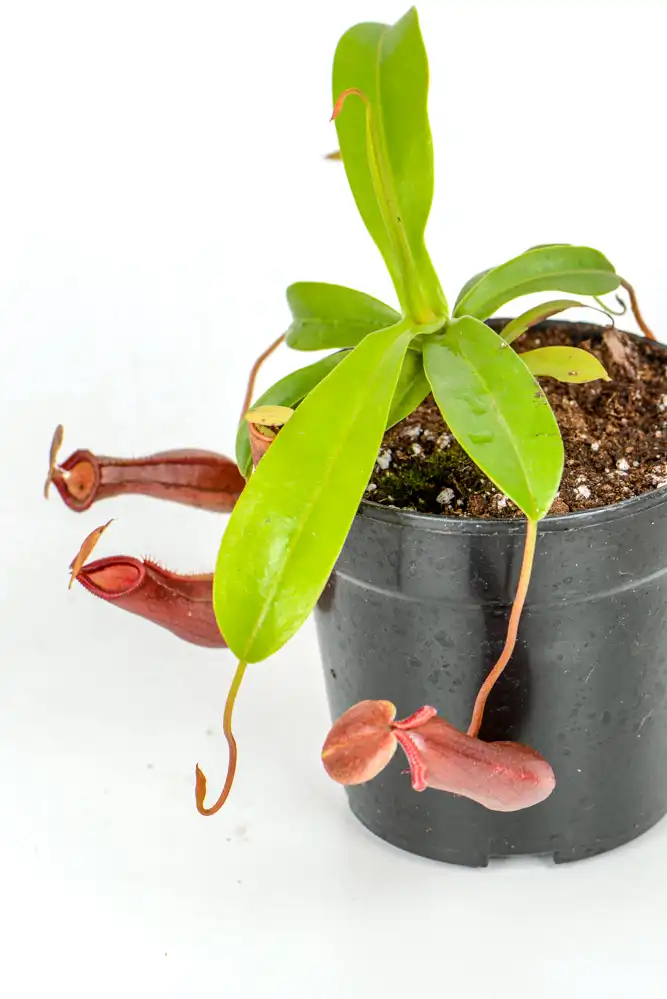
As Bill Bailey matures, it develops longer stems and can eventually begin climbing. New pitchers form from tendrils extending from the ends of the leaves, creating an attractive combination of green foliage and hanging red traps.
With good light, humidity and consistent watering, this is a rewarding carnivorous plant that can continue producing new pitchers throughout the warmer months.
Nepenthes Bill Bailey Care Guide

Water – How often should I water my Nepenthes Bill Bailey?
Nepenthes enjoy consistent moisture but should never sit permanently waterlogged.
Water thoroughly when the surface of the growing medium begins to approach dryness, allowing excess water to drain freely.
The growing medium should remain lightly moist without becoming saturated.
Water quality is particularly important. Use rainwater, reverse-osmosis water or distilled water wherever possible. Nepenthes can be sensitive to mineral and salt accumulation, particularly when grown in pots.
Avoid leaving the plant standing in a tray of water. Unlike some bog-growing carnivorous plants, Nepenthes need plenty of oxygen around their roots.

Light – How much light does Nepenthes Bill Bailey need?
Give it bright, filtered natural light.
A position near a bright window is ideal, particularly where the plant receives gentle morning sunlight.
Good light helps encourage healthy growth and the development of colourful pitchers. However, harsh direct afternoon sun can scorch the foliage, particularly if the plant has been growing under protected conditions.
If your Nepenthes is producing healthy leaves but very few pitchers, insufficient light is one of the first things worth checking.

Humidity – What helps new pitchers develop?
Give the plant humid air and gentle circulation. Keep it out of dry air from heaters and air conditioners. New tendrils that repeatedly shrivel before swelling can be a sign the air is too dry.

Soil – What growing medium should I use?
Nepenthes need a loose, airy, low-nutrient growing medium that retains moisture without becoming compacted.
A mixture of sphagnum peat moss and Perlite is commonly used for Nepenthes.
Our Perlite can help improve drainage and airflow around the roots.
Avoid ordinary potting soil, compost and fertiliser-enriched growing media. These can retain excessive moisture and introduce mineral concentrations that damage sensitive Nepenthes roots.

Feeding – Should I fertilise my Nepenthes Bill Bailey?
Nepenthes naturally obtain additional nutrients by catching insects in their pitchers.
If your plant is growing in an area where insects occasionally enter the pitchers, there’s generally no need to feed it manually.
You can occasionally offer a small, suitable insect to an established pitcher, but avoid overfeeding or placing large amounts of food inside.
Don’t use conventional houseplant fertiliser in the growing medium. Nepenthes have relatively sensitive roots and can be damaged by excessive nutrient concentrations.
Never feed the pitchers meat, cheese or other household food.

Repotting – When should I repot my Nepenthes Bill Bailey?
Nepenthes generally don’t need frequent repotting.
Wait until the growing medium begins breaking down, drainage deteriorates or the plant genuinely needs a larger container.
When repotting, use a fresh, airy Nepenthes-appropriate growing medium and handle the roots carefully.
Avoid unnecessarily disturbing the root system, as Nepenthes roots can be relatively delicate.
A pot with plenty of drainage is essential.

Pests – What should I watch for?
Although Nepenthes catch insects, they’re not immune to pests.
Mealybugs, scale, thrips and spider mites can occasionally affect the foliage and growing points.
Check the undersides of leaves and around fresh growth regularly.
Avoid spraying strong insecticides directly into the pitchers, as the digestive fluid and sensitive tissues can be affected.
If treatment becomes necessary, choose a product suitable for carnivorous plants and test it carefully before treating the entire plant.
Temperature – What temperatures does Nepenthes Bill Bailey prefer?
Bill Bailey generally performs well in intermediate growing conditions, with warm days and somewhat cooler nights.
Daytime temperatures around 20°C–28°C are suitable, while slightly cooler nights can be beneficial.
Protect the plant from frost and prolonged cold conditions, particularly temperatures below approximately 12°C.
Avoid placing it directly in front of heaters or air conditioners, where sudden temperature changes and dry air can interfere with pitcher development.
Frequently Asked Questions
Q: Why are the pitchers on Nepenthes Bill Bailey so red?
The red and burgundy colouring is a natural characteristic of this hybrid. Good natural light generally encourages stronger pigmentation, although individual pitchers can vary in colour as they mature.
Q: Do I need to put insects inside the pitchers?
No. Nepenthes can grow perfectly well without regular manual feeding. They obtain energy through photosynthesis, while insects provide additional nutrients.
Q: Should there be liquid inside the pitchers?
Yes. Healthy pitchers naturally contain digestive fluid that helps break down captured insects. Avoid emptying this fluid unnecessarily.
Q: Can I grow Nepenthes Bill Bailey in a hanging basket?
Absolutely. As the plant matures, its stems can become longer and the pitchers hang naturally from the leaf tendrils. A hanging basket can be an attractive way to display an established plant.
Q: Will my Nepenthes Bill Bailey eventually climb?
Yes. Nepenthes naturally develop longer, vining stems as they mature. You can allow the plant to trail or provide support for upward growth.
Q: Is Nepenthes Bill Bailey pet safe?
Nepenthes are generally regarded as non-toxic to cats and dogs. However, the pitchers and tendrils are delicate, so it’s best to keep the plant away from curious pets that may damage the foliage.
Be sure to visit and follow us Facebook and Instagram