





Commonly known as: XL Rubber Tree Tineke
Botanical name: Ficus elastica ‘Tineke’
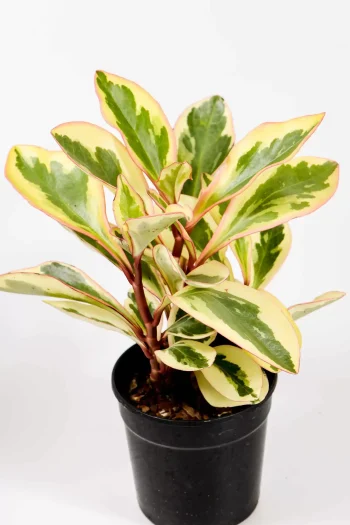
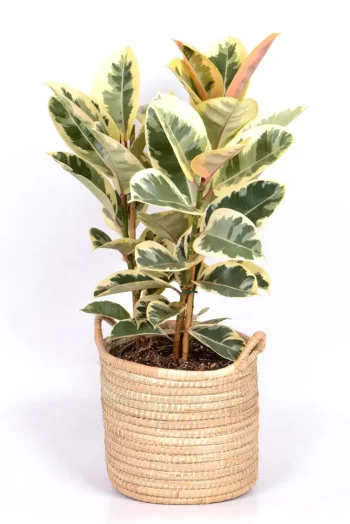
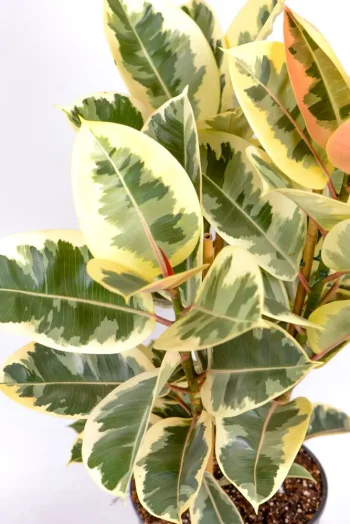
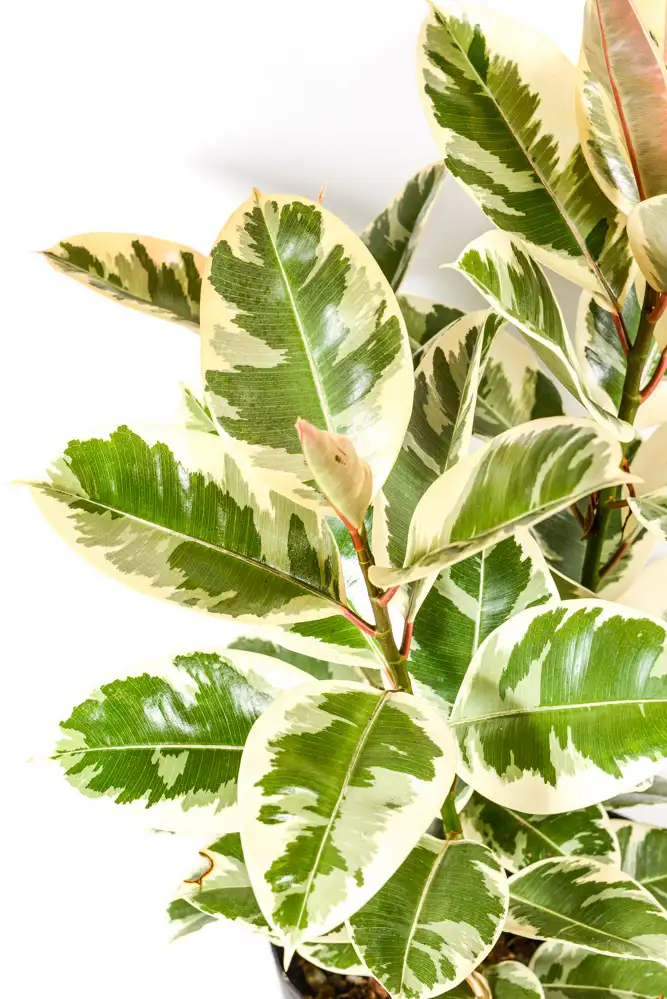
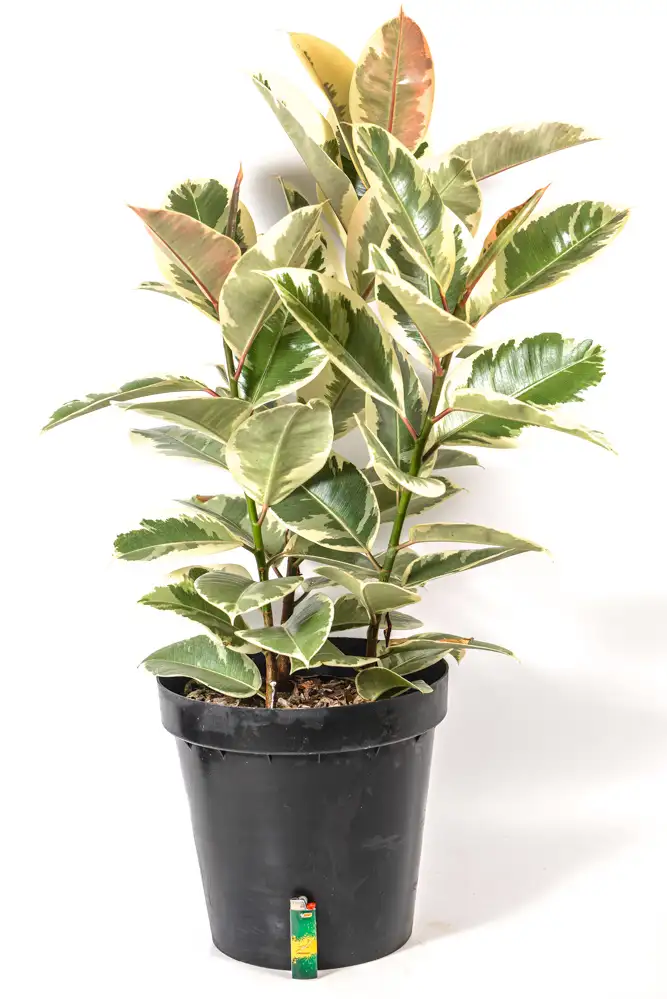
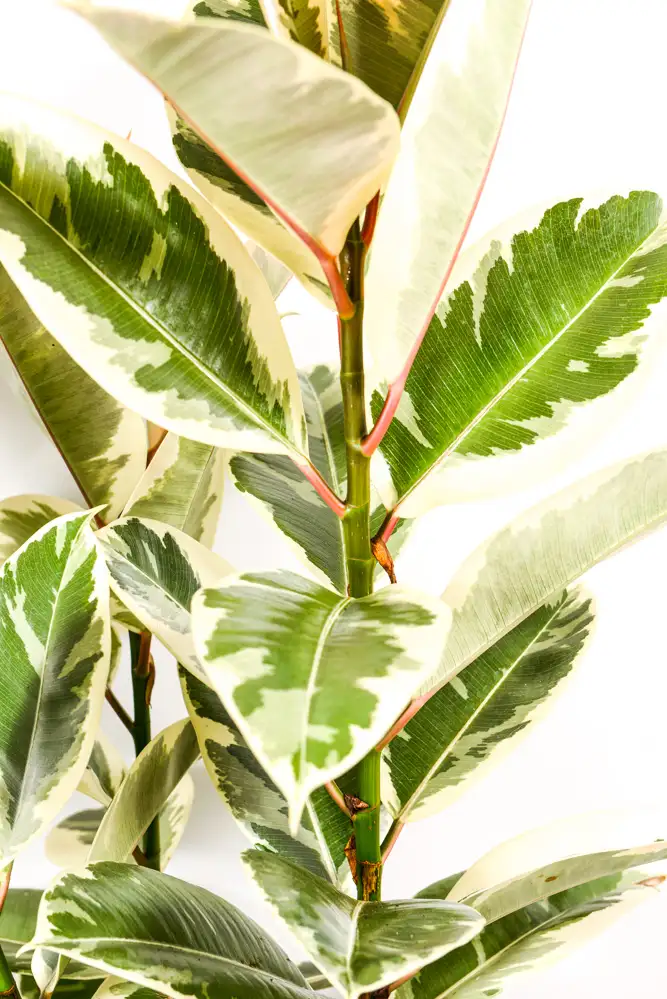
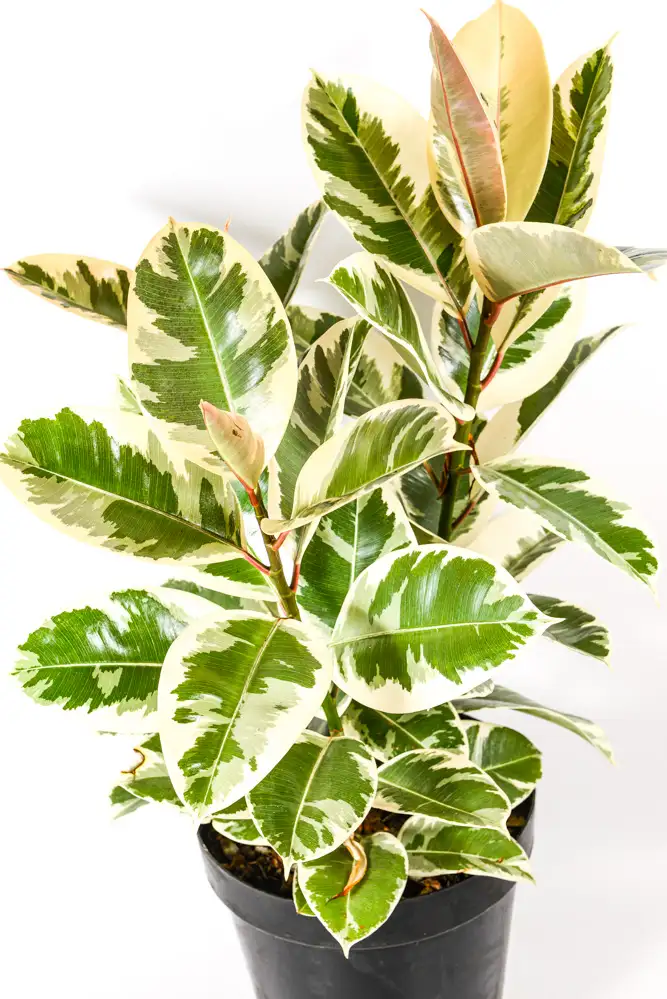
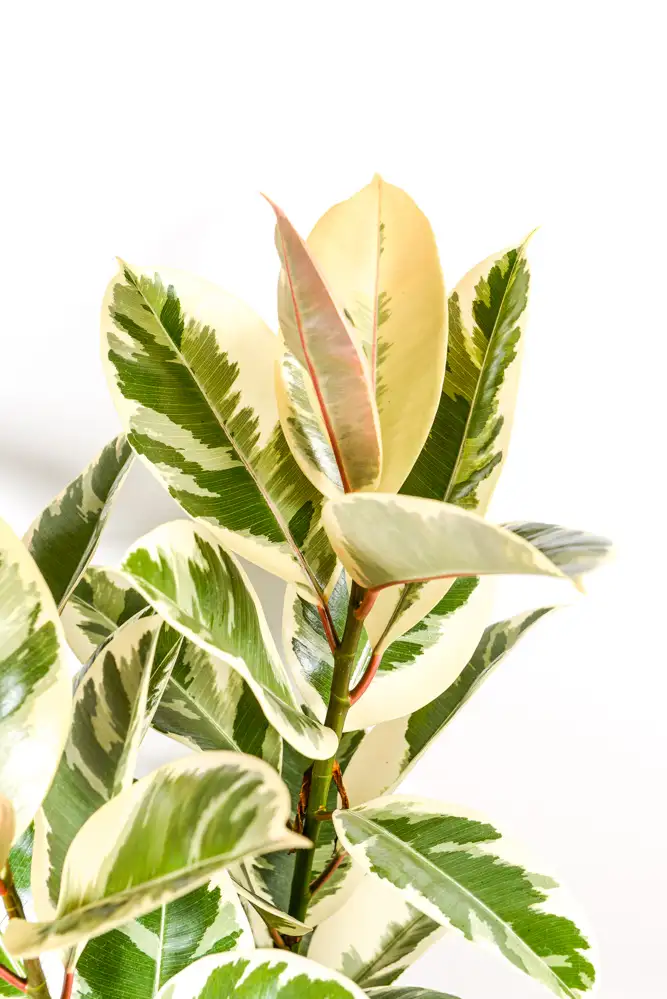
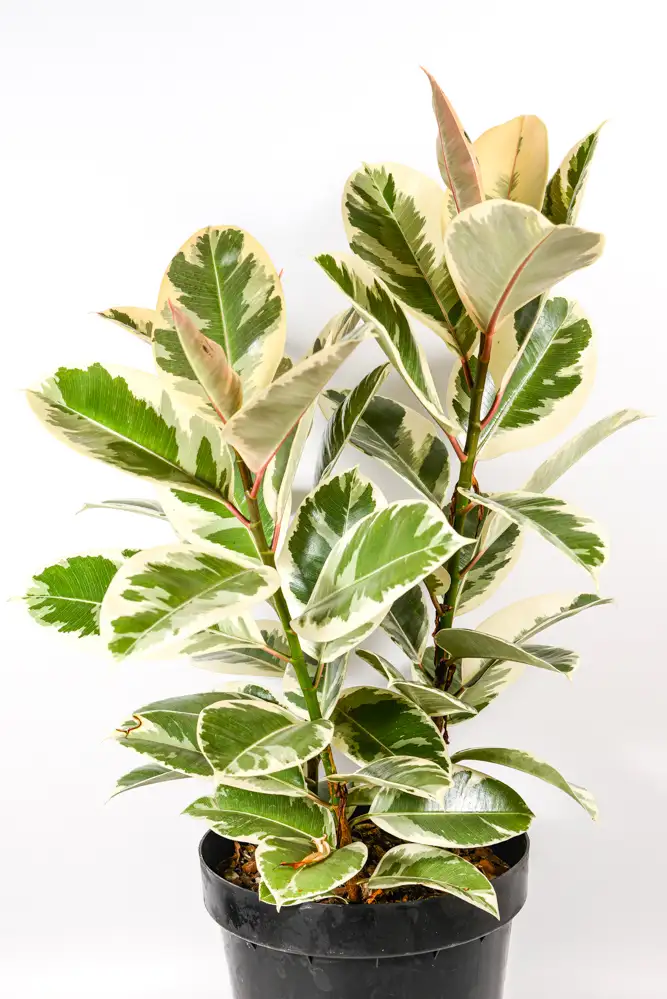
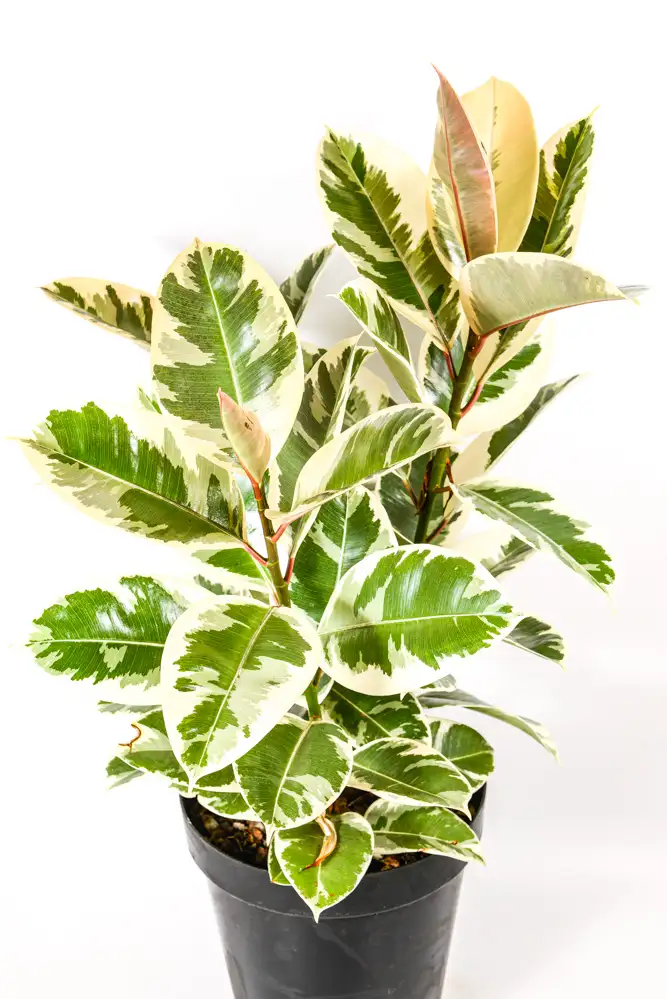
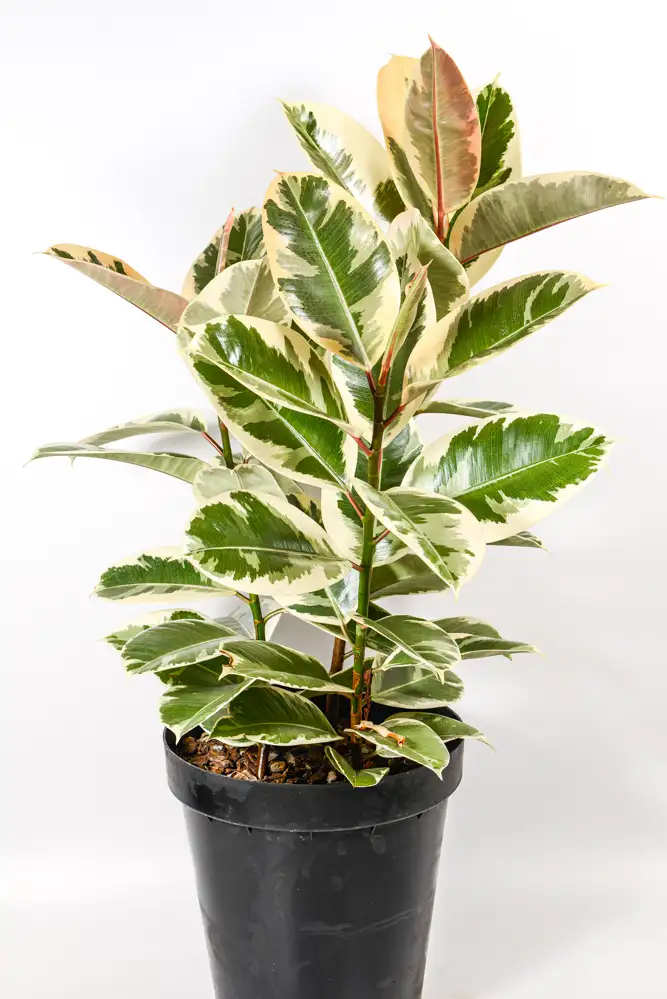
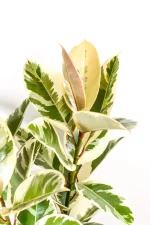
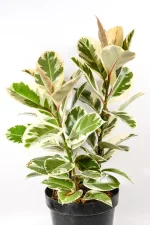
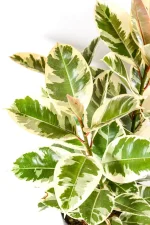
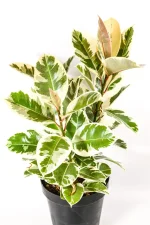
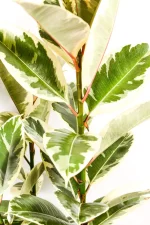
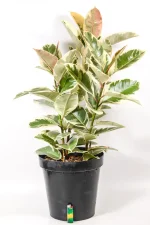
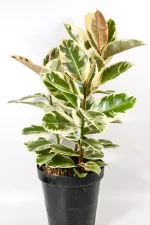
XL Rubber Tree Tineke brings colour and structure into a room through its soft variegated foliage. Each leaf shows a blend of green, cream and pale yellow tones, often with subtle marbling that gives the plant a lighter appearance than darker rubber tree varieties.
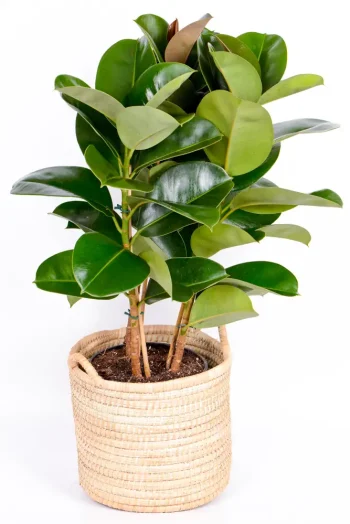
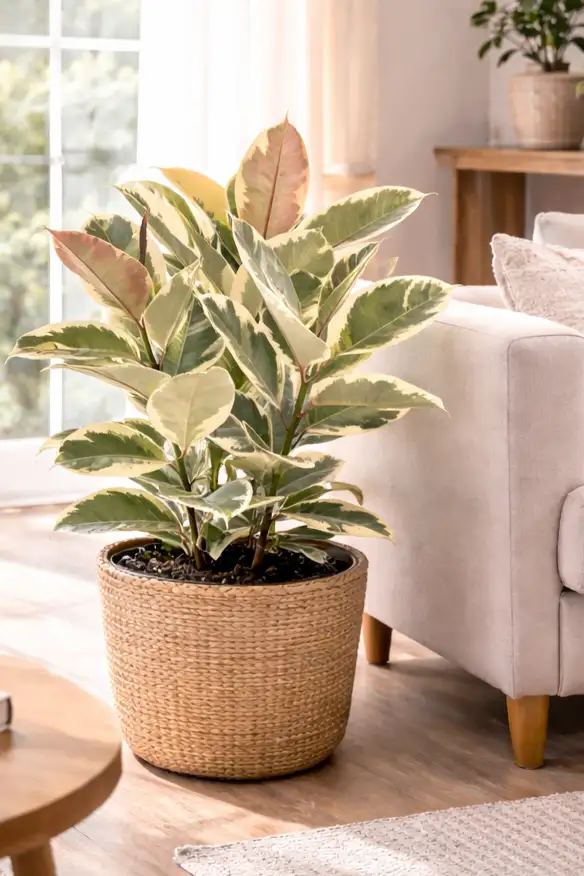
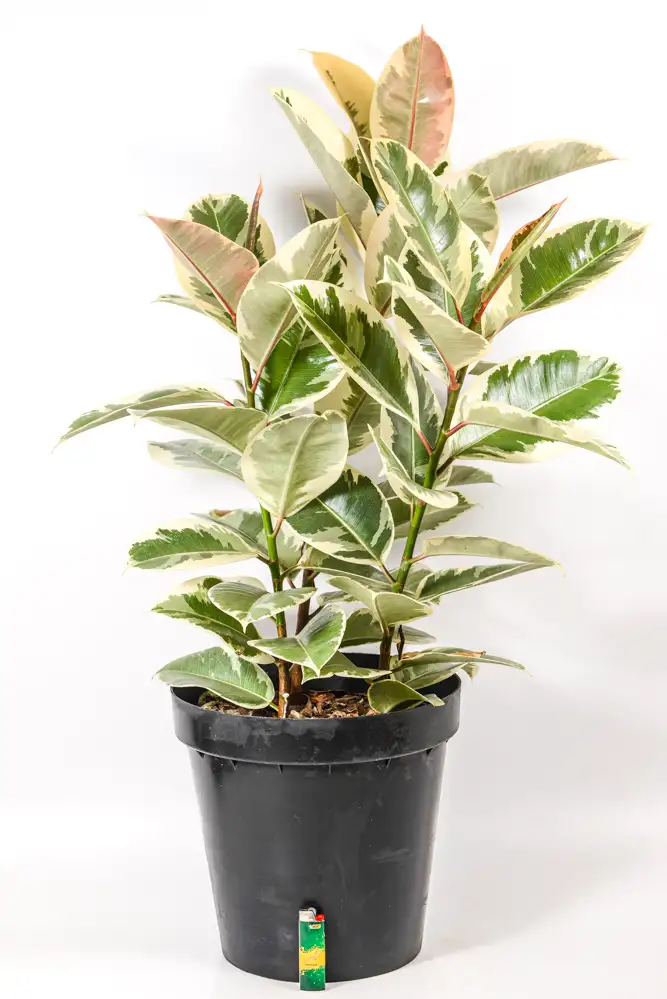
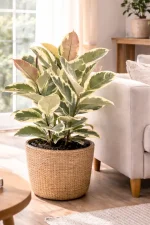
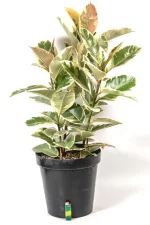
At around 90cm tall in a 30cm pot, these plants already carry presence without overwhelming a space. The upright growth habit keeps the silhouette tidy while the broad leaves create fullness and depth. Tineke works particularly well as a floor plant where its lighter foliage can brighten a room.
Light plays an important role in maintaining strong variegation. Brighter indirect light helps keep the cream and green tones defined. Lower light can encourage greener growth. With steady watering and good drainage, the plant develops firm leaves and continues to grow upward with confidence. Occasional pruning can also encourage branching if a fuller shape is preferred.
XL Rubber Tree Tineke Care Guide
Watering – How often should it be watered?
Water once the top 4–6cm of soil has dried out. Keep the soil evenly moist but never waterlogged. Always allow excess water to drain fully.
Light – What light does XL Rubber Tree Tineke need?
Remember that these are tree so they need as much light as possible. Bright, indirect light works best. Variegated rubber trees need good light to maintain their colour. A position near a bright window with filtered light is ideal. Avoid strong direct afternoon sun.
Humidity – Does it need extra humidity?
Average indoor humidity is sufficient. Keep it away from heaters and cold drafts to prevent leaf stress.
Soil – What soil works best?
Use a structured, well-draining mix. Indoor Potting Soil works well as a base. Improve airflow and drainage by incorporating Perlite and Bark Chips.
Feeding – How should it be fertilised?
Feed during spring and summer with Grobest Organic Fertiliser every 4–6 weeks. For stronger seasonal growth, Novatec Soluble Fertiliser can be used occasionally at reduced strength.
Repotting – When should it be repotted?
Repot every 18–24 months or once roots begin filling the pot. Move up one size only. When repotting, incorporate TerraPlus Natura N and Controlled Release Fertiliser into fresh mix.
Pests – What pests should I watch for?
Inspect leaves and stems for scale and spider mites. Treat early with an insecticidal spray if needed.
Temperature – What temperature suits it best?
Rubber Tree Robusta grows well between 18°C and 28°C. Avoid temperatures below 15°C and sudden environmental changes.
FAQ’s
Q: How is Tineke different from Belize?
Tineke has cream and green variegation, while Belize shows stronger pink tones.
Q: Does variegation fade in low light?
Yes. Brighter indirect light helps maintain stronger colour contrast.
Q: Can I prune it to make it bushier?
Yes. Pruning encourages branching and helps maintain a fuller plant.
Q: Is Rubber Tree Tineke pet-safe?
No. Ficus elastica is toxic if ingested.
Be sure to visit and follow us Facebook and Instagram