





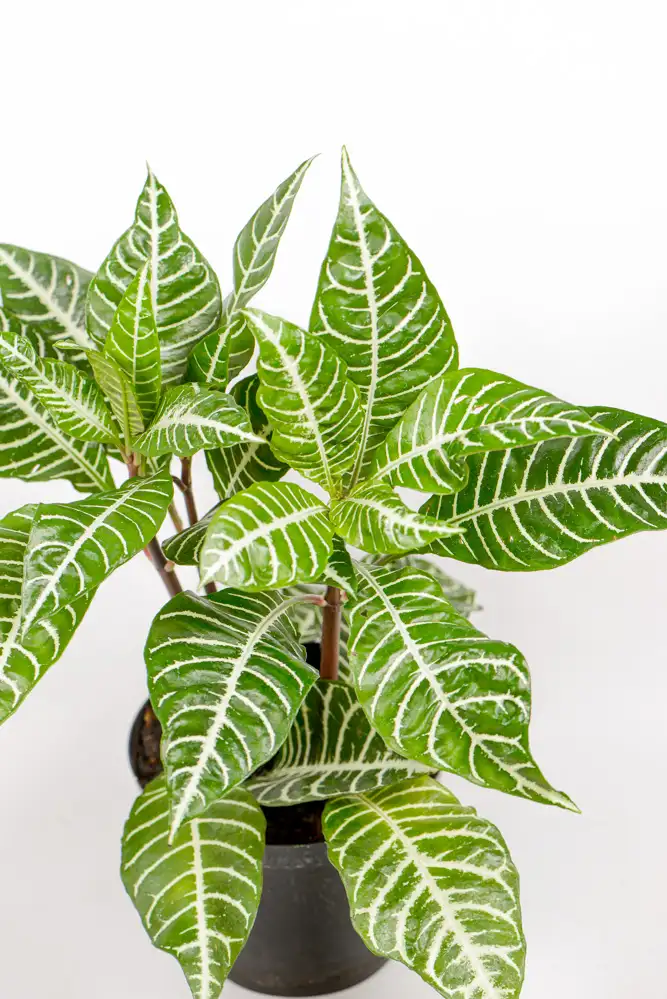
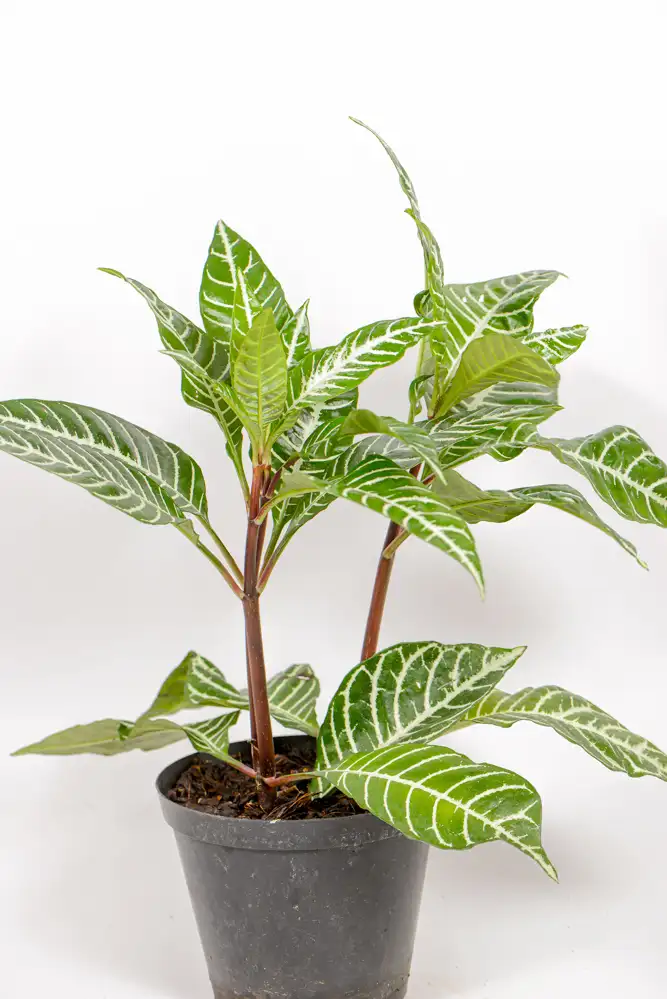
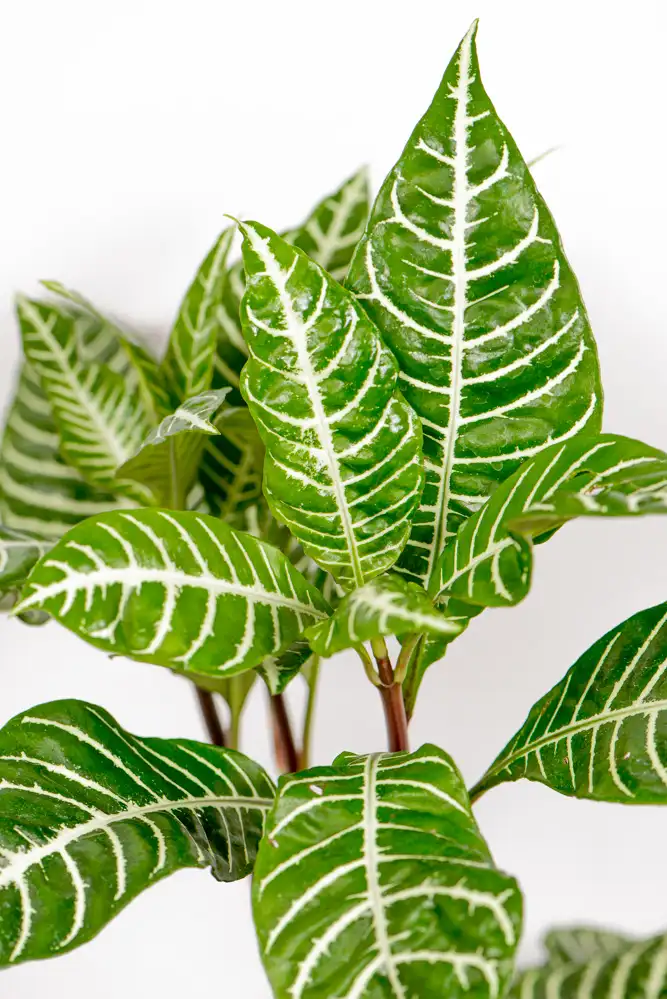
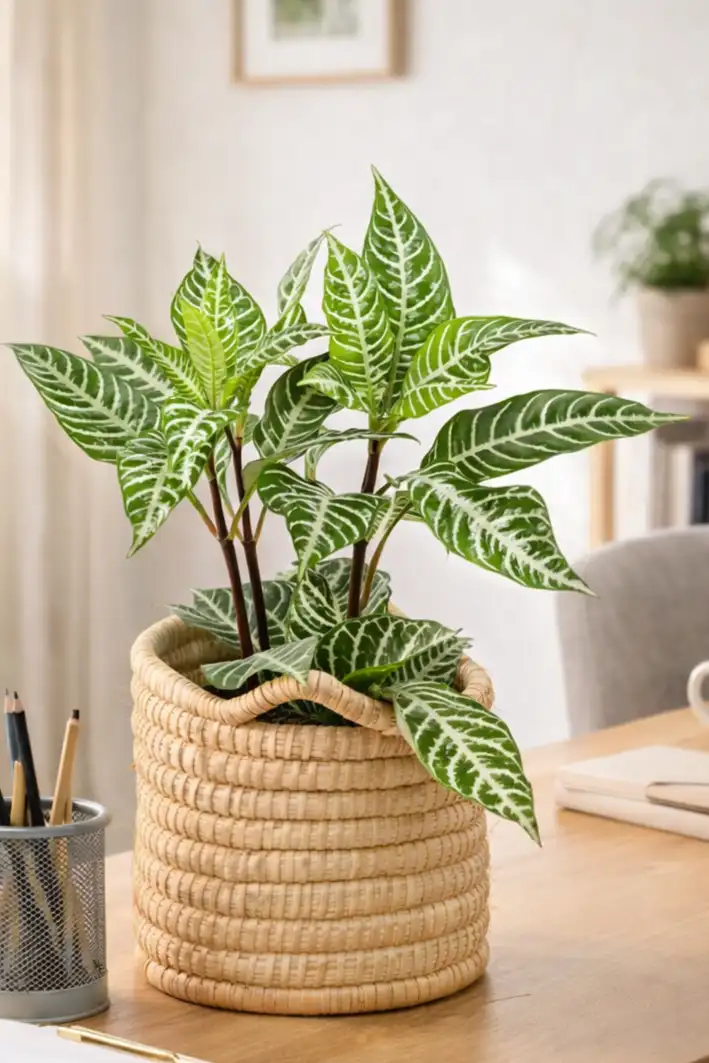
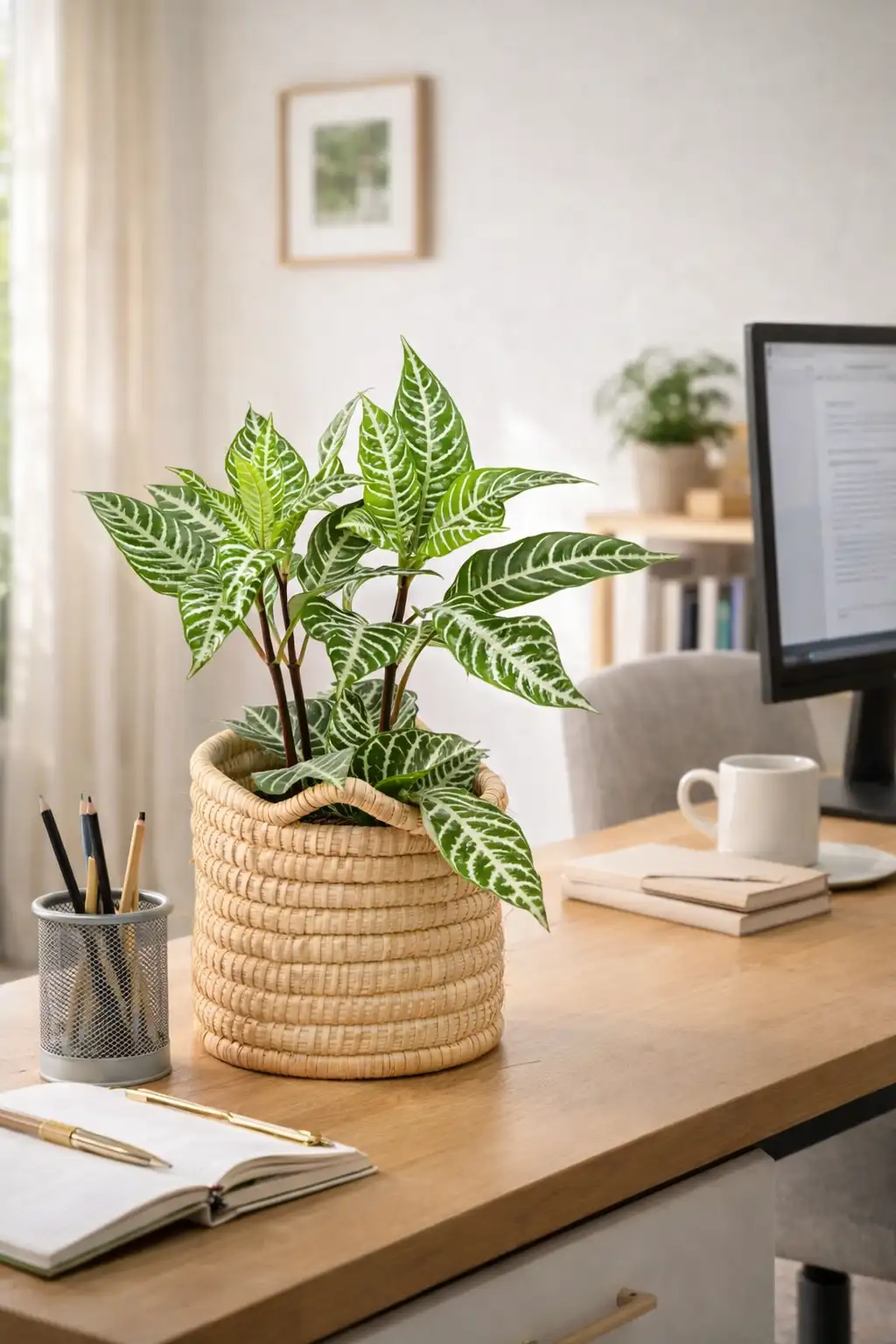
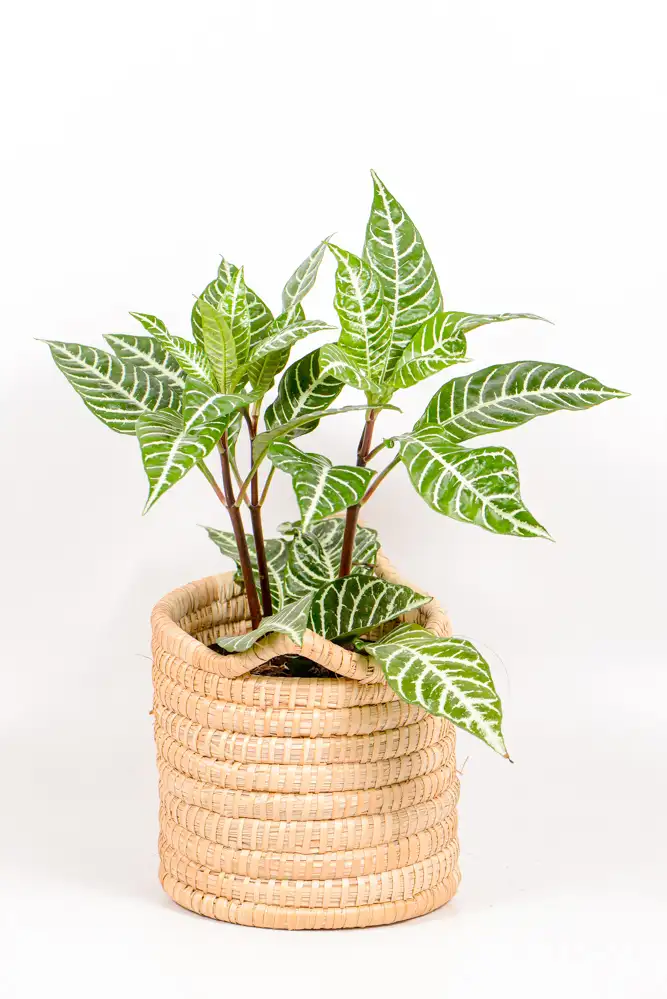
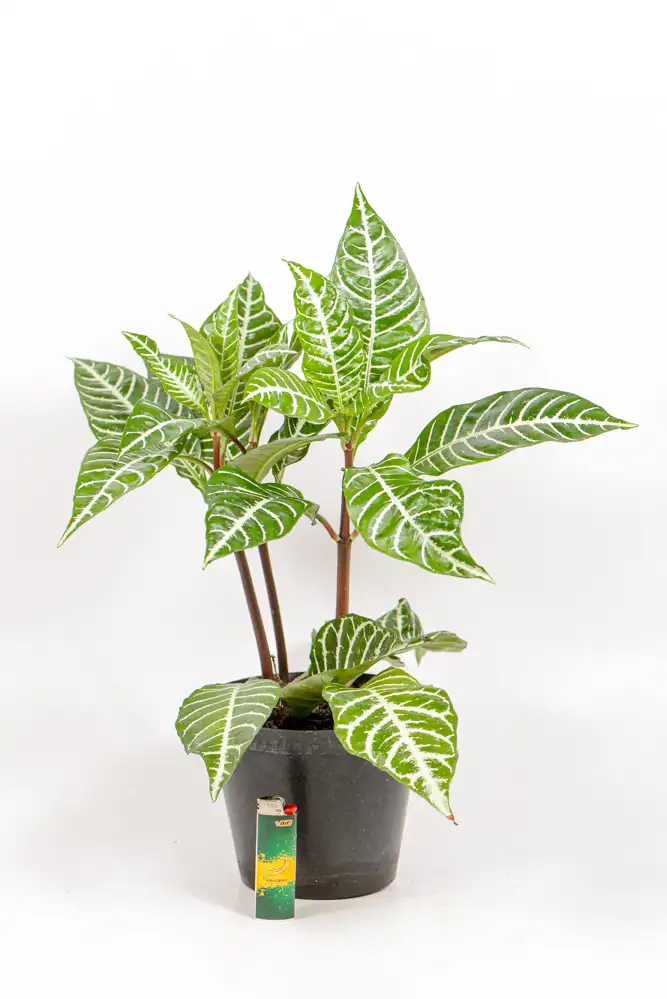
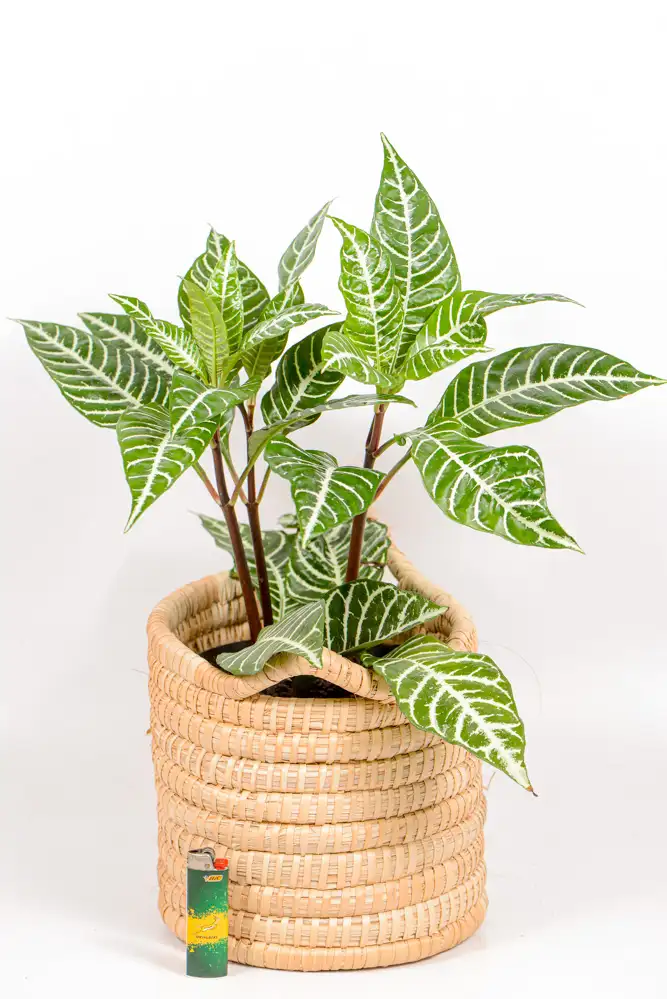
Commonly known as: Zebra Plant
Botanical name: Aphelandra squarrosa
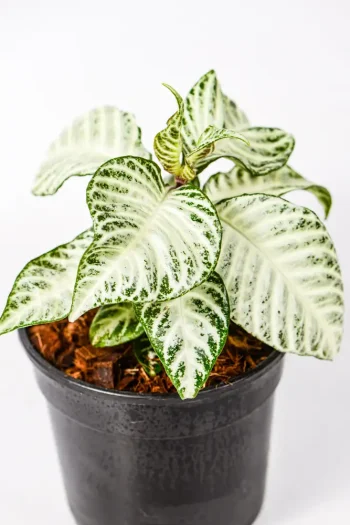
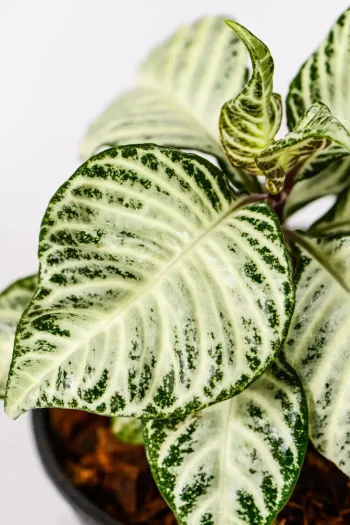
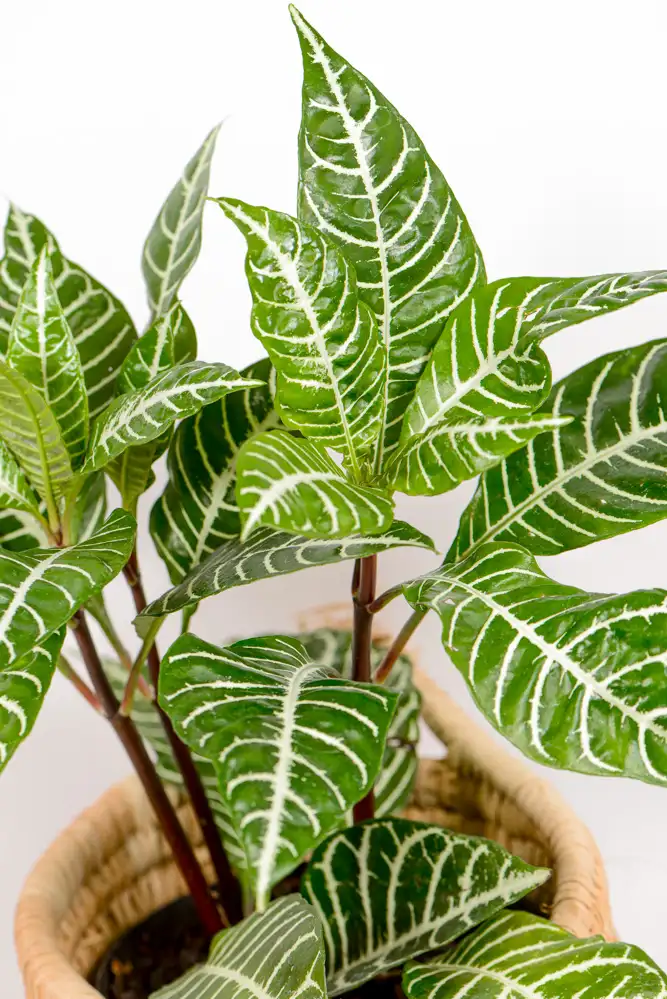
Zebra Plant stands out primarily because of its striking foliage. The broad, glossy leaves display deep green tones intersected by bright white veins, which create a strong striped pattern. As light reflects off the leaf surface, the contrast becomes more defined, and therefore the plant immediately draws attention.
In addition to its bold appearance, this plant grows in a naturally upright and compact habit. Because the stems remain structured, the plant holds its shape well in decorative pots or grouped displays. In a 15cm pot, it already forms a balanced and noticeable presence without taking up excessive space.
Zebra Plant responds best to consistent care. For this reason, steady light, regular watering, and a breathable growing mix help maintain firm leaves and strong colour. Over time, healthy growth encourages a fuller canopy, and therefore the plant develops a denser, more polished look indoors.
Zebra Plant Care Guide
Watering – How often should it be watered?
Water when the top 2–3cm of soil begins to dry. Zebra Plants prefer evenly moist soil; however, they react poorly to soggy conditions. Therefore, allow excess water to drain freely while maintaining consistency.
Light – What light does Zebra Plant need?
Bright, indirect light works best because it preserves strong leaf contrast. However, direct sun can scorch the foliage. In lower light, growth may weaken, and therefore brighter placement improves performance.
Humidity – Does it need extra humidity?
Yes. Zebra Plants prefer moderate to higher humidity. Because dry air can cause leaf edges to brown, stable humidity helps maintain healthy foliage. As a result, bathrooms or grouped plant displays often suit them well.
Soil – What soil works best?
Use a breathable, moisture-retentive mix. Aroid Mix works well because it maintains airflow while holding adequate moisture. Alternatively, use Indoor Potting Soil as a base and improve drainage with Perlite and Bark Chips.
Feeding – How should it be fertilised?
Feed during spring and summer with Grobest Organic Fertiliser every 4–6 weeks. If stronger growth is desired, Novatec Soluble Fertiliser can be used occasionally at a reduced strength. As a result, leaf size and colour intensity often improve.
Repotting – When should it be repotted?
Repot every 12–18 months, or once roots begin to fill the pot. Move up one size only. At repotting time, incorporate TerraPlus Natura N and Controlled Release Fertiliser into the fresh mix to support steady nutrition.
Pests – What pests should I watch for?
Inspect leaves regularly for spider mites and aphids. Because early detection matters, routine checks prevent larger infestations. If needed, treat promptly with an insecticidal spray.
Temperature – What temperature suits it best?
Zebra Plant grows best between 18°C and 27°C. However, temperatures below 15°C can cause stress. Therefore, protect it from cold drafts and sudden changes.
FAQ’s
Q: Why is it called Zebra Plant?
Because the leaves show bold white stripes against dark green foliage.
Q: Is it difficult to care for?
Not necessarily. However, it prefers consistent moisture and humidity, so stable conditions are important.
Q: Can it flower indoors?
Yes. Under good light and care, it may produce bright yellow flower spikes.
Q: Is Zebra Plant pet-safe?
No. Aphelandra squarrosa is considered toxic if ingested and should be kept out of reach of pets.
Be sure to visit and follow us Facebook and Instagram