






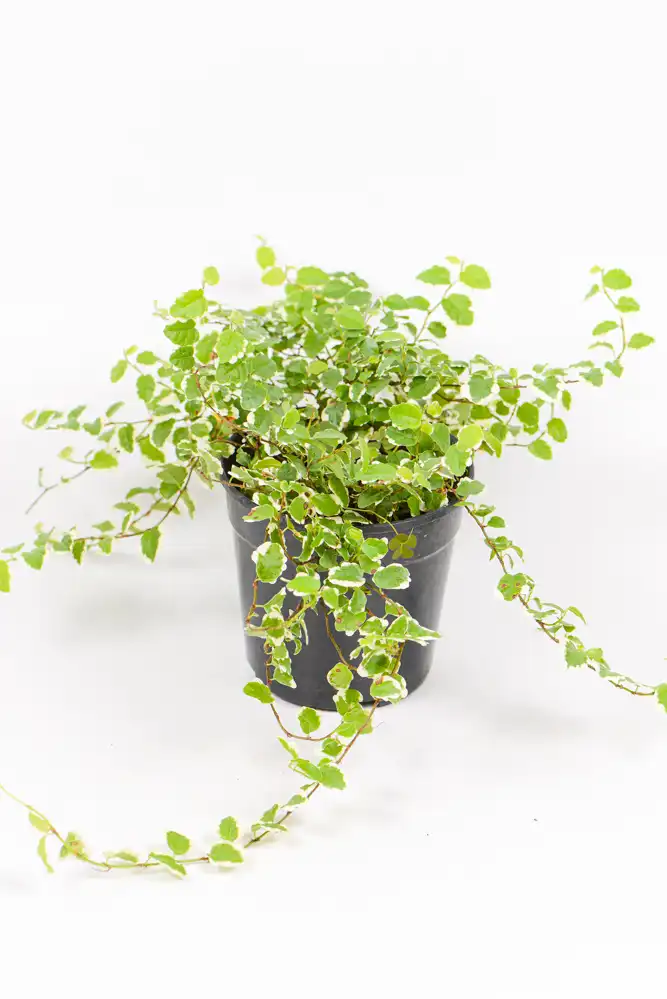

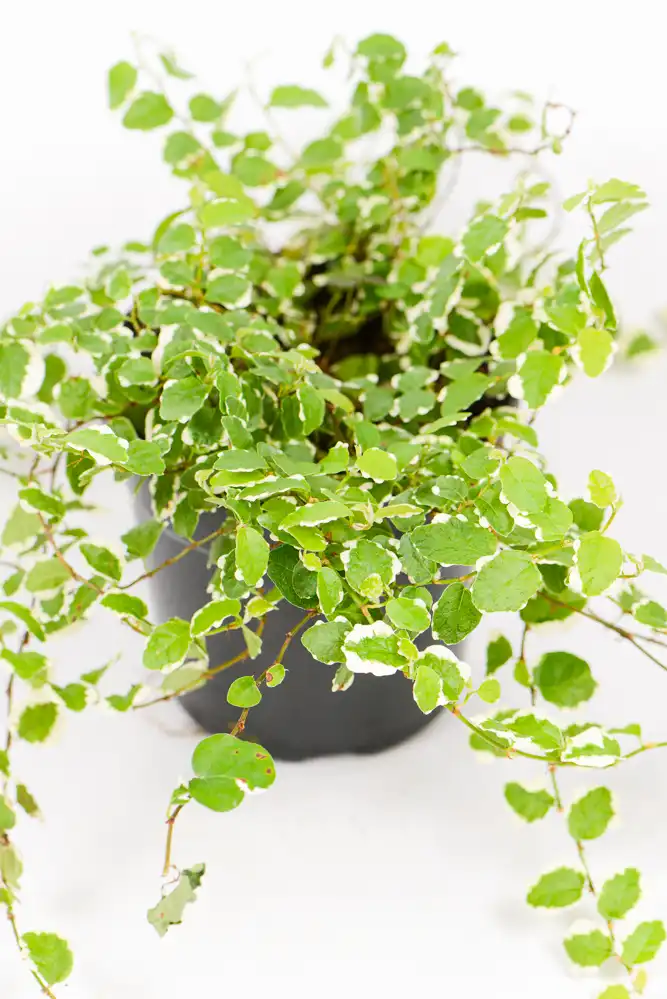


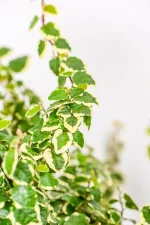




Botanical name: Variegated Ficus Pumila
Commonly known as:Â Variegated Tikky Creeper
If you’re looking for a plant that quickly transforms a space, it’s hard to go past Variegated Ficus Pumila.
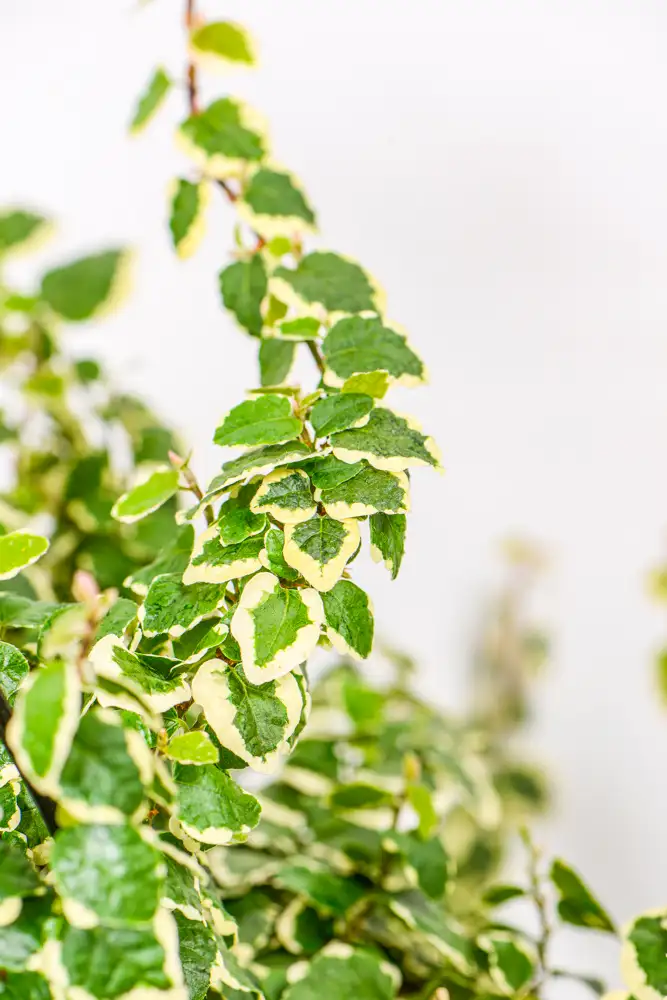
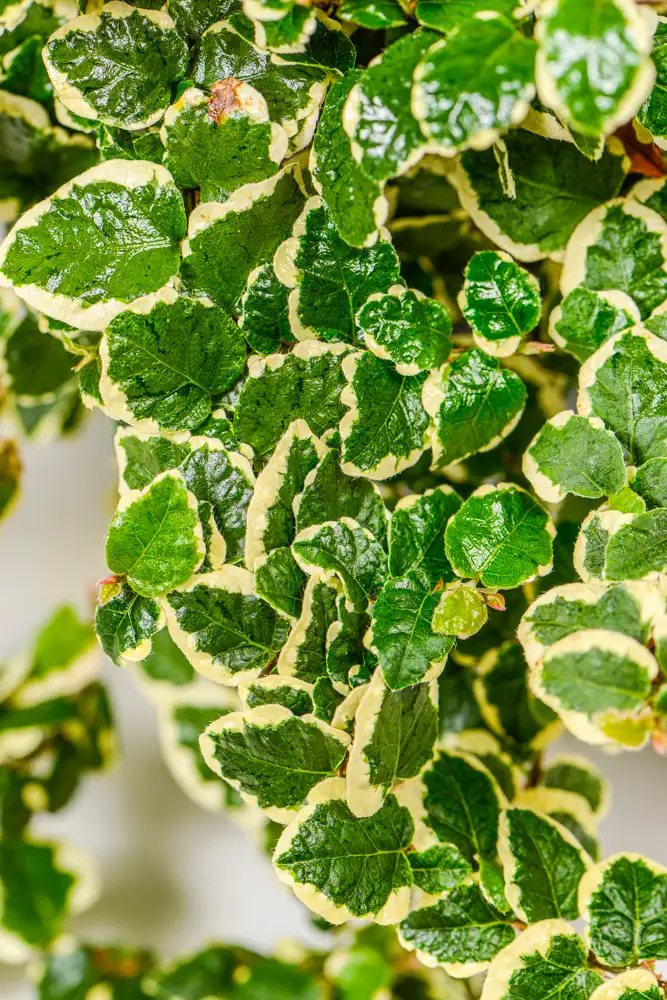
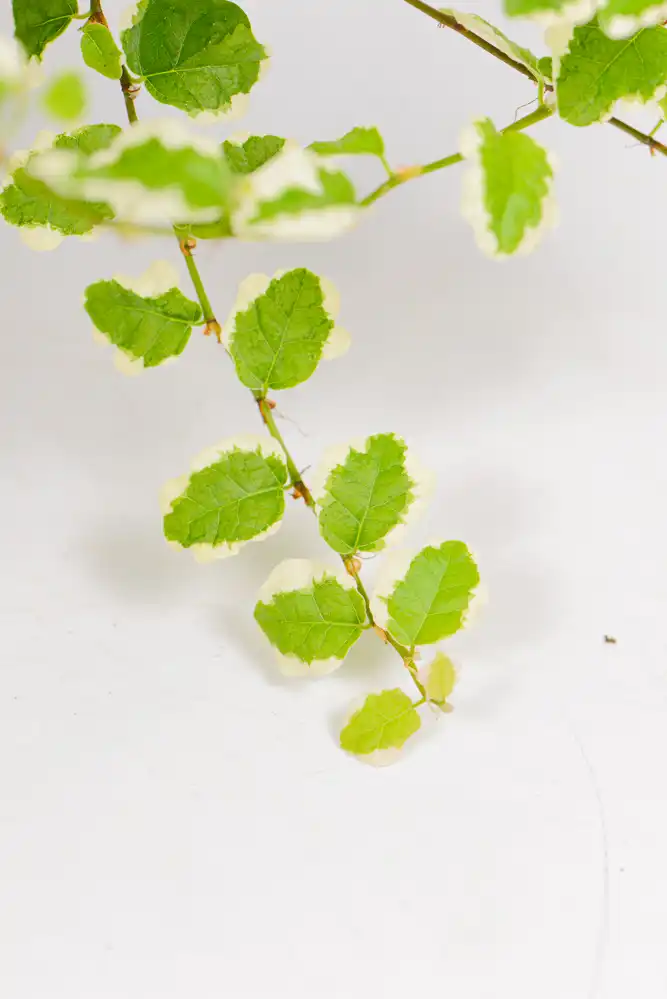
Unlike most Ficus that grow into trees, Ficus pumila is a vigorous climbing vine. Its tiny heart-shaped leaves emerge in shades of green edged with creamy white, creating a soft, textured appearance that instantly brightens shelves, bookcases and plant displays.
In nature, Creeping Fig climbs tree trunks, rocks and walls using thousands of tiny aerial roots. Given the chance, it will happily cover a moss pole, trellis or decorative frame, creating a spectacular wall of living foliage. If left unsupported, it develops long trailing stems that spill beautifully over the edges of pots and hanging baskets.
Although the leaves are small, they are incredibly dense. As the vines mature and branch, they produce a lush curtain of foliage that softens almost any indoor space.
One thing to remember is that this is a fast-growing plant. Regular trimming encourages branching and keeps it looking full and compact. Don’t be afraid to prune it back—it responds by producing even more fresh growth.
Like all Ficus, this plant performs best with plenty of bright light, fresh airflow and regular feeding. Give it the right conditions and you’ll be amazed at how quickly it grows.
Whether you’re creating a living wall, adding greenery to a bookshelf or looking for a beautiful trailing plant, Variegated Ficus Pumila is one of the most versatile indoor plants you can own.
Variegated Ficus Pumila Care Guide
Watering – How often should I water it?
Unlike many Ficus species, Ficus pumila enjoys more consistent moisture.
Allow only the top 2–3cm of the growing medium to dry before watering thoroughly.
Avoid allowing the plant to dry out completely, as the fine root system prefers evenly moist conditions.
Reduce watering slightly during winter.
Light – Where should I place my Variegated Ficus Pumila?
Bright, indirect light is ideal.
The cream variegation needs plenty of light to stay vibrant, although the plant should be protected from harsh afternoon sun.
Lower light is tolerated, but growth slows and the variegation may become less pronounced.
Humidity – Does it need humidity?
Yes.
Variegated Ficus Pumila appreciates moderate to high humidity, which helps keep the foliage lush and prevents crispy leaf edges.
Bathrooms, kitchens and grouped plant displays are often excellent locations.
Soil – What growing medium should I use?
A loose, well-draining growing medium is essential.
I recommend Milled Bark Growing Medium, which provides excellent airflow around the roots while retaining enough moisture for healthy growth.
You can also mix in Perlite for even better drainage.
Feeding – How should I fertilise it?
Because it grows quickly, Ficus Pumila appreciates regular feeding.
Apply Grobest Organic Fertiliser every 4–6 weeks during spring and summer.
For faster growth and denser foliage, feed with Novatec Soluble Fertiliser during the growing season.
Repotting – When should I repot?
Repot every 12–18 months or once the roots begin filling the pot.
Refresh the growing medium using Milled Bark Growing Medium and incorporate TerraPlus Natura N together with Controlled Release Fertiliser.
Pests – What should I look out for?
Watch for spider mites, scale insects and mealybugs, especially if the plant becomes dry or stressed.
Good airflow and regular inspections help prevent problems.
Temperature – What’s the ideal temperature?
Variegated Ficus Pumila grows best between 18°C and 30°C.
Protect it from temperatures below 12°C and avoid cold winter drafts.
FAQ’s
Is Variegated Ficus Pumila a climber or a trailing plant?
Both. It naturally climbs using aerial roots but also looks beautiful trailing from shelves and hanging baskets.
Does it grow quickly?
Yes. Given bright light, regular watering and feeding, it is one of the fastest-growing indoor vines available.
Can I prune it?
Definitely. Regular pruning encourages branching and creates a much fuller, denser plant.
Can it grow on a moss pole?
Yes. In fact, climbing allows the plant to develop stronger growth and a thicker covering of foliage.
Is it pet safe?
No. Like other Ficus species, it produces a milky sap and should be kept away from pets and young children if ingested.
Be sure to visit and follow us Facebook and Instagram