





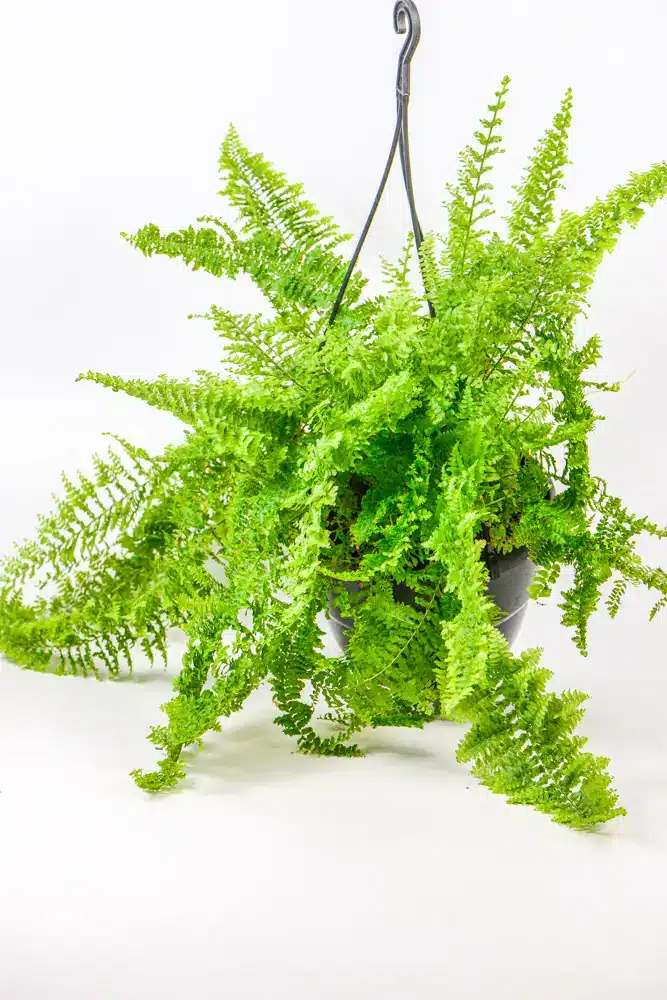
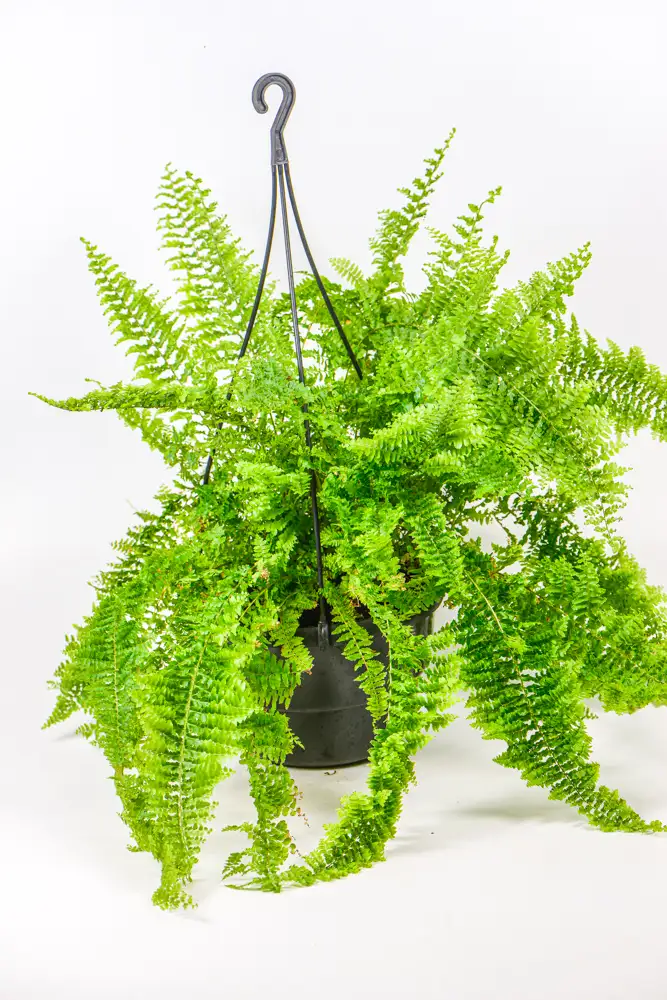
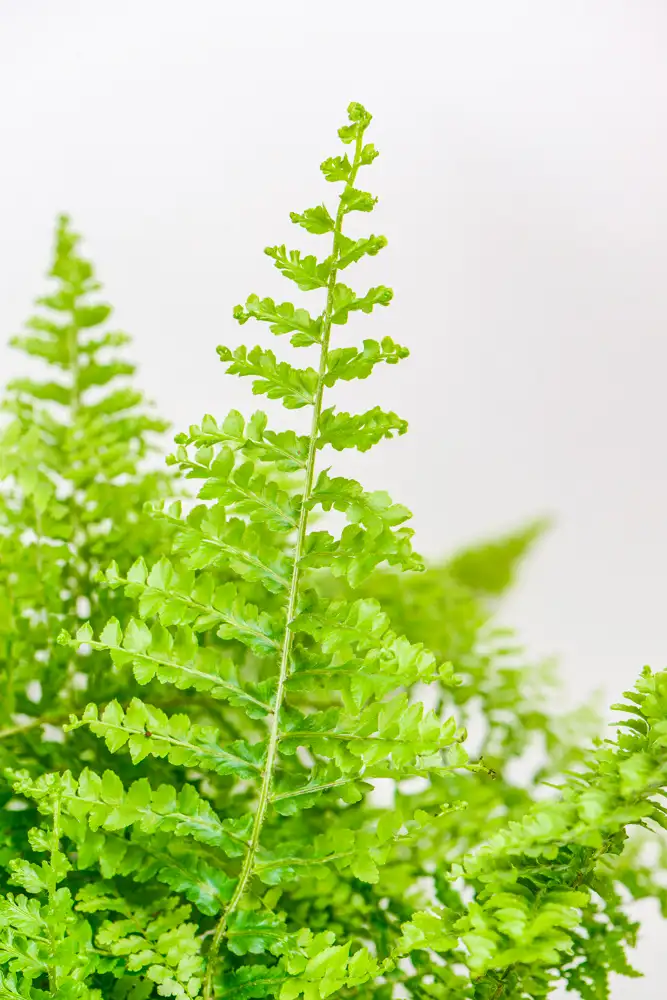
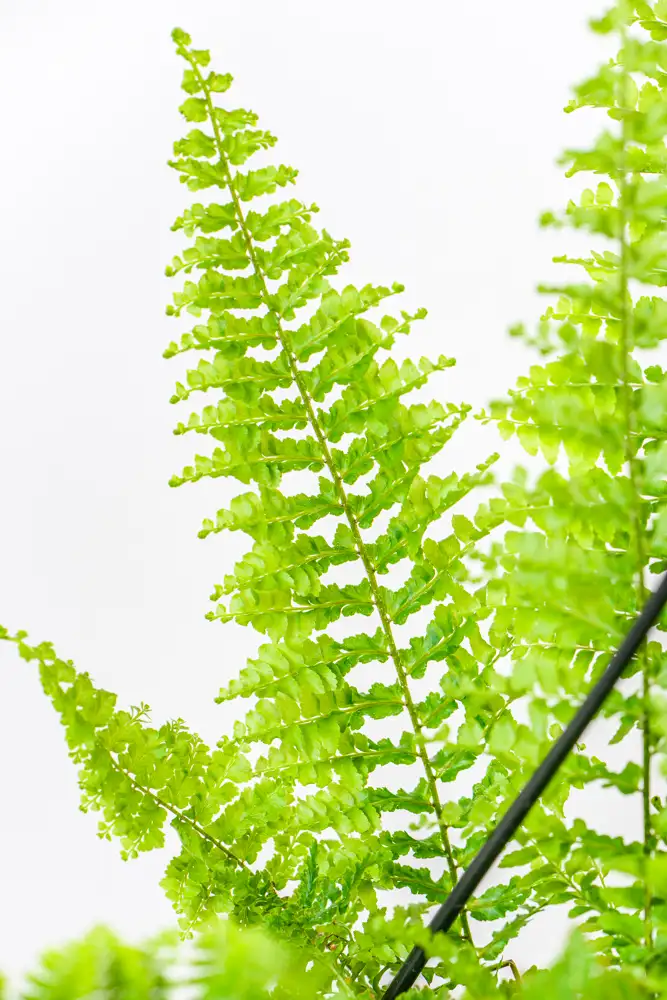
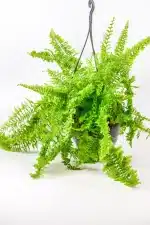
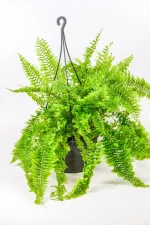
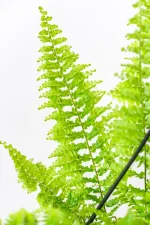
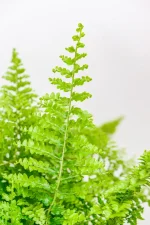
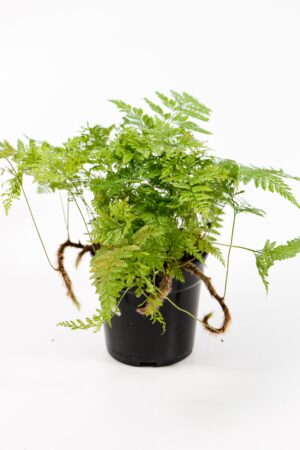
Commonly known as: Boston Fern
Botanical name: Nephrolepis exaltata
A Boston Fern is a classic indoor plant with soft, arching fronds and a naturally full shape. It’s a great choice for adding greenery to a space without needing constant attention, as long as it’s kept evenly watered and out of harsh sun. These plants are grown in a 20 cm hanging basket and work well hung up or placed on a shelf, where the fronds can trail and soften the space around them.
Boston Fern Care Guide
Watering – How often should I water a Boston Fern?
Keep the soil evenly moist, but not soggy. Water when the top 2–3 cm of soil begins to dry out. Hanging baskets tend to dry faster than floor pots, so check moisture regularly. Never allow the plant to dry out completely.
Light – What light does a Boston Fern need?
Bright, indirect light is ideal. Boston Ferns tolerate medium light but should be protected from direct sun, which can scorch the fronds and cause browning. Gentle morning light is usually fine.
Humidity – Does a Boston Fern need humidity?
Yes. Boston Ferns appreciate moderate to higher humidity. Average indoor humidity is often sufficient, but in dry homes, occasional misting around the plant or placing it in a naturally more humid room can help keep fronds healthy.
Soil – What soil works best?
Use a moisture-retentive but free-draining mix. Indoor Potting Soil works well, especially when combined with a small amount of Perlite to improve drainage while still holding moisture.
Feeding – How should I fertilise a Boston Fern?
Feed lightly during spring and summer using a diluted dose of Grobest Organic Fertiliser every 4–6 weeks. Avoid strong fertilisers, as ferns are sensitive to salt build-up.
Repotting – When should a Boston Fern be repotted?
Repot every 12–18 months, or when roots begin to crowd the basket. Move up one size only and retain some of the existing soil around the root ball. At repotting time, you can mix TerraPlus Natura N and Controlled Release Fertiliser into the fresh potting mix to support long-term growth.
Pests – What pests should I watch for?
Boston Ferns are generally pest-resistant, but dry conditions can encourage spider mites. Regularly check the undersides of fronds and treat early with an insecticidal spray if needed.
Temperature – What’s the ideal temperature range?
Keep between 16 °C and 26 °C. Avoid drafts, heaters, or cold windowsills. Steady, mild warmth keeps growth consistent and fronds fresh.
FAQ’s
Q: Why are the frond tips turning brown?
This is usually due to dry air, underwatering, or inconsistent moisture.
Q: Can a Boston Fern be placed outdoors?
Yes, in warm weather and bright shade, but protect it from direct sun and cold.
Q: Does it need pruning?
Removing old or damaged fronds helps keep the plant looking tidy and encourages fresh growth.
Q: Is it pet-safe?
Yes. Boston Ferns are considered non-toxic to pets.
Be sure to visit and follow us Facebook and Instagram