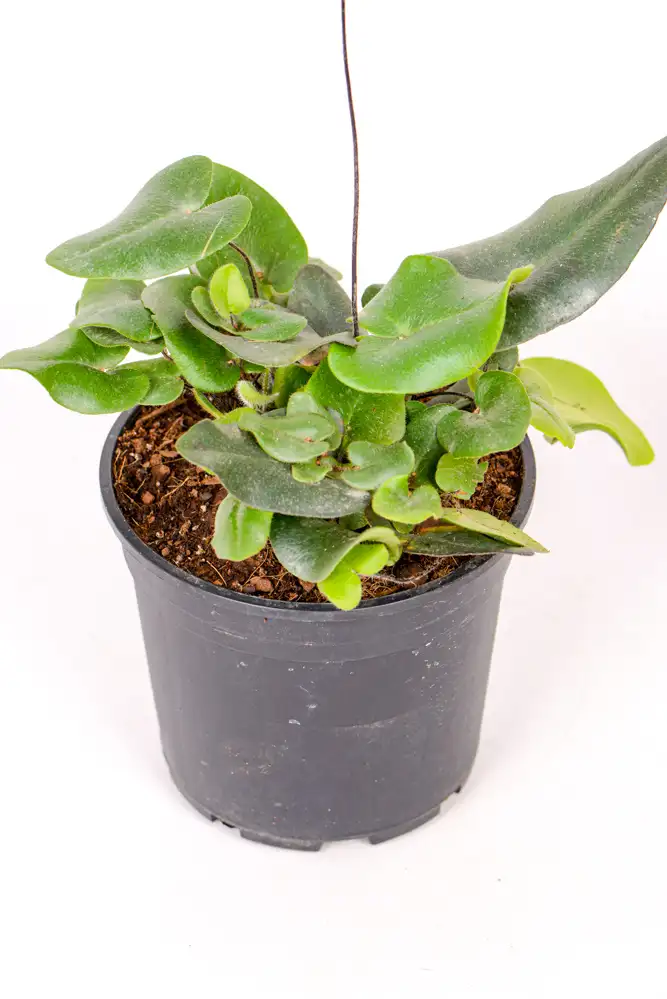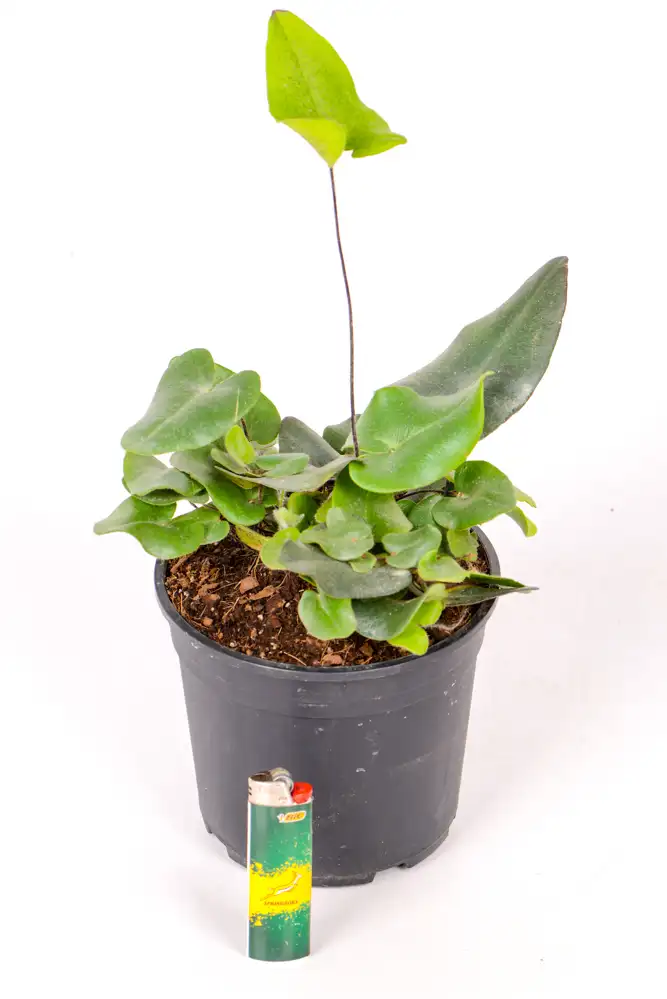
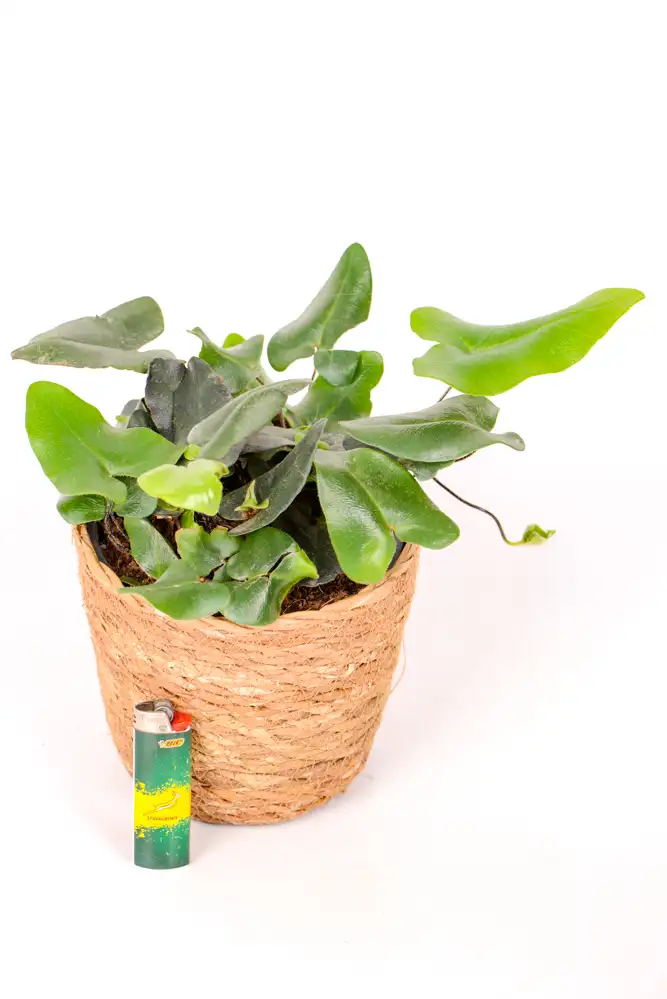
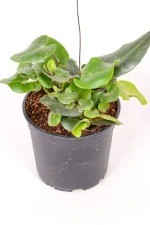
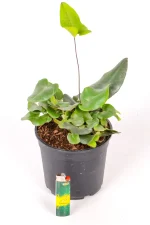
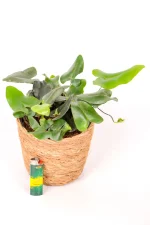
Commonly known as: Heart Leaf Fern
Botanical name: Hemionitis arifolia (Also classified as Parahemionitis arifolia.)
The Heart Leaf Fern is one of those plants that catches your attention because it doesn’t immediately look like a fern.
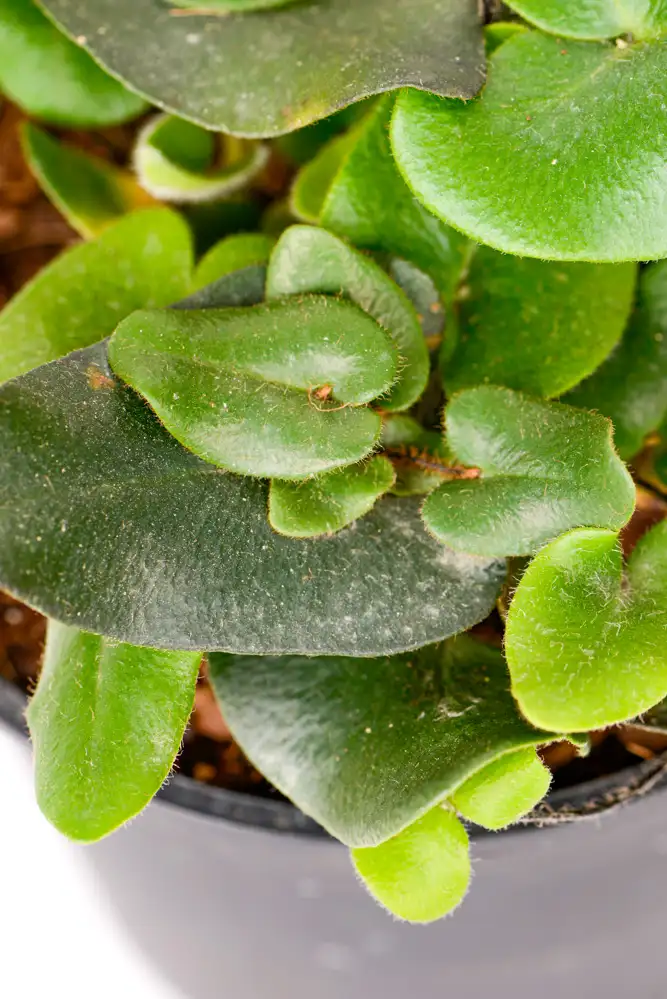
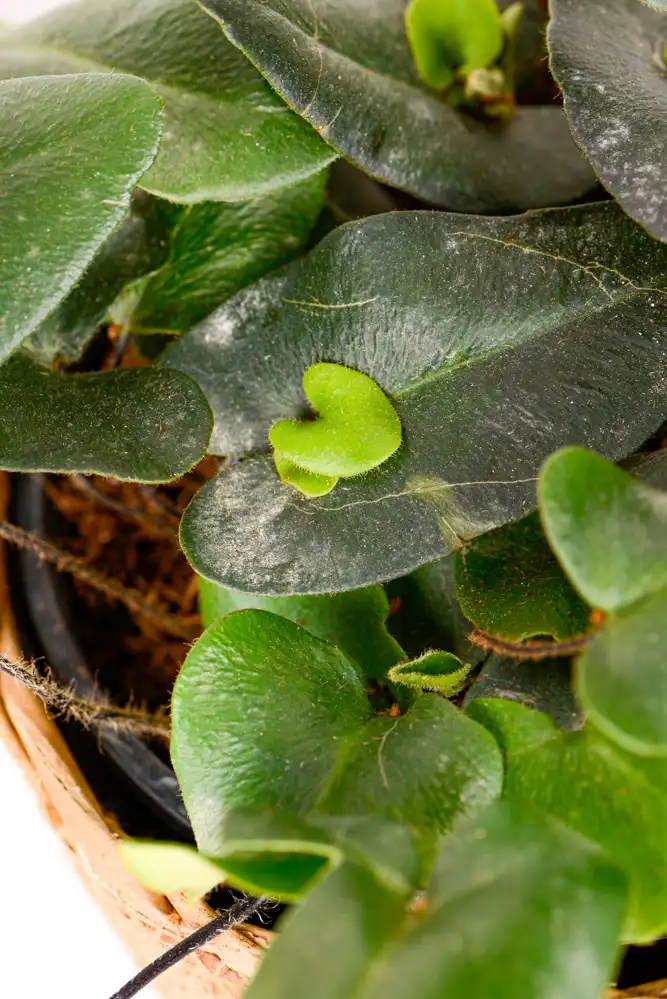
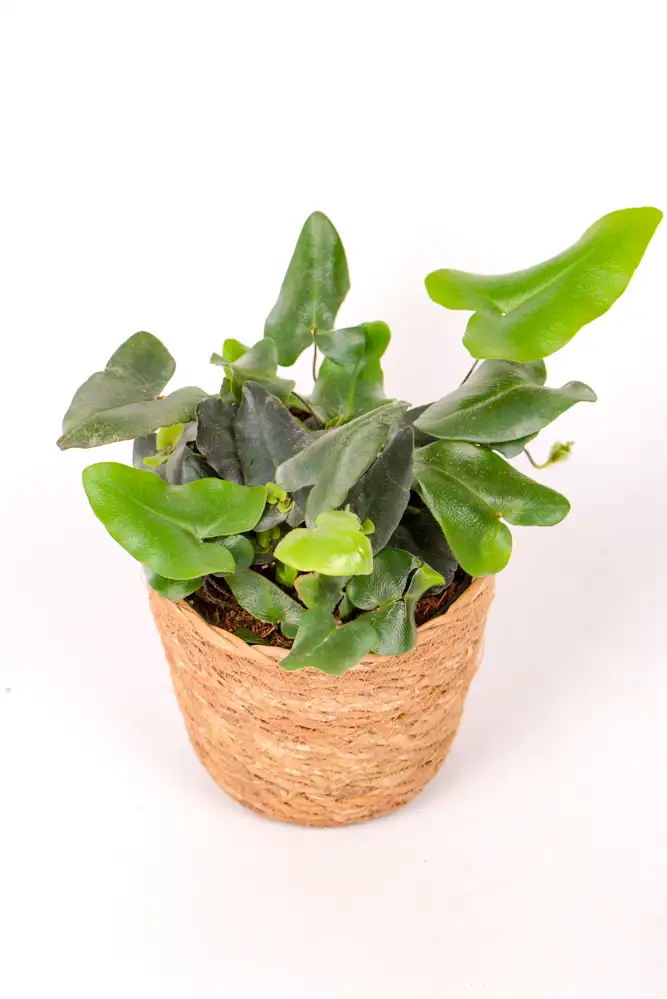
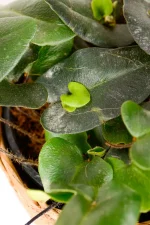
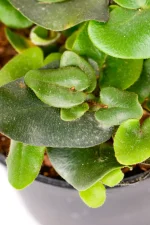
Instead of the usual feathery fronds, Hemionitis arifolia produces distinctive heart-shaped leaves with a beautiful glossy green finish. Each leaf sits on a slender, almost black stem, creating a lovely contrast against the foliage.
The leaves have a slightly leathery texture, and their rounded, heart-shaped appearance gives the plant a particularly neat and delicate character.
Native to tropical parts of Asia, the Heart Leaf Fern naturally grows in warm, humid environments where it receives filtered light and consistent moisture.
It’s a relatively compact fern, making it particularly well suited to a shelf, side table or plant stand near a bright window.
Although its foliage looks quite different, its care requirements are very much those of a tropical fern. Consistent moisture and humidity are particularly important.
This isn’t a plant that appreciates drying out completely. Keep the growing medium lightly and evenly moist, provide plenty of humidity and avoid exposing it to harsh direct sunlight.
With the right conditions, fresh heart-shaped leaves will continue emerging from the centre of the plant, gradually creating a fuller clump.
One particularly interesting feature is that the Heart Leaf Fern produces two slightly different types of fronds. Some focus on photosynthesis, while others carry the spores used for reproduction.
It’s a fascinating little fern with plenty of character, especially when you take a closer look at its unusual foliage.
Heart Leaf Fern Care Guide

Water – How often should I water my Heart Leaf Fern?
The Heart Leaf Fern enjoys consistently moist growing conditions.
Keep the growing medium evenly moist without allowing it to become waterlogged. Check the surface regularly and water when it begins to feel slightly dry.
Don’t allow the entire root ball to dry out completely. Heart Leaf Ferns have relatively delicate root systems, and extended dry periods can quickly affect their foliage.
Water thoroughly, allow the excess to drain away and avoid leaving the pot standing in water.
During winter, watering may become less frequent, but the growing medium should still remain lightly moist.

Light – Where should I place my Heart Leaf Fern?
Give it bright, indirect natural light.
A position near an east-facing window is ideal, where the plant can enjoy gentle morning light without exposure to harsh afternoon sun.
The leaves can scorch in strong direct sunlight, particularly during summer.
Avoid very dark positions, as insufficient light will slow growth and reduce the production of fresh foliage.

Humidity – Does a Heart Leaf Fern need high humidity?
Yes! Humidity is one of the most important parts of keeping this fern happy.
Heart Leaf Ferns naturally grow in humid tropical environments and appreciate humidity levels around 60% or higher.
A bright bathroom with good natural light can be an excellent position.
You can also use a humidifier or group plants together to help create a more humid environment.
Avoid placing the plant directly in front of air conditioners, heaters or fans that continuously blow dry air across the foliage.
Soil – What growing medium should I use?
Heart Leaf Ferns prefer a growing medium that retains moisture while allowing excess water to drain freely.
I recommend Milled Bark Growing Medium with a little Perlite to improve drainage and aeration.
The aim is to keep the roots consistently hydrated without leaving them sitting in dense, soggy growing medium.
Avoid overly chunky mixtures that dry out too quickly.

Feeding – Should I fertilise my Heart Leaf Fern?
Yes, but feed moderately.
Heart Leaf Ferns don’t need heavy fertilising. A balanced fertiliser during active growth will help maintain healthy foliage and encourage fresh leaves.
Grobest Organic Fertiliser is a good option for gentle, regular feeding.
Alternatively, use Novatec Soluble Fertiliser at a diluted concentration during the warmer growing months.
Avoid excessive fertiliser, as ferns can be sensitive to salt accumulation around their roots.

Repotting – When should I repot my Heart Leaf Fern?
Heart Leaf Ferns have relatively delicate roots, so don’t rush to repot them.
Allow the plant to establish properly in its current container. Once the roots have filled the pot, move it into a container just one size larger.
Use fresh growing medium and handle the root system gently.
Avoid unnecessarily disturbing the roots or removing all the existing growing medium.

Pests – What pests should I watch for?
Heart Leaf Ferns can occasionally attract mealybugs, scale and spider mites, particularly when conditions become too dry.
Check the undersides of the leaves and around the base of the plant regularly.
Good humidity, consistent watering and adequate airflow help maintain healthy foliage.
If you need to treat pests, be careful with stronger chemical sprays, as fern foliage can be sensitive. Always check that a product is suitable for ferns before applying it.

Temperature – What temperatures does a Heart Leaf Fern prefer?
Heart Leaf Ferns prefer warm, stable temperatures of approximately 18°C–27°C.
Protect them from cold drafts, sudden temperature changes and temperatures below about 15°C.
During a cold Gauteng winter, keep the plant away from chilly windows at night.
Warmth, humidity and consistent moisture will encourage the healthiest growth.
FAQ’s
Q: Why does my Heart Leaf Fern have heart-shaped leaves instead of typical fern fronds?
That’s one of the defining characteristics of Hemionitis arifolia. Its naturally smooth, heart-shaped foliage makes it quite unusual among commonly grown indoor ferns.
Q: What are the brown markings underneath my Heart Leaf Fern’s leaves?
They may be spores! Mature fertile fronds develop spore-producing structures on their undersides. These are a natural part of the fern’s reproductive cycle and don’t need to be removed.
Q: Why are the edges of my Heart Leaf Fern turning brown?
Low humidity and inconsistent moisture are common causes. Check that the growing medium isn’t drying out completely and that the plant isn’t exposed to dry air from heaters or air conditioners.
Q: Can I keep my Heart Leaf Fern in a bathroom?
Absolutely. A bathroom with good natural light can be an excellent location because the additional humidity suits this tropical fern particularly well.
Q: Will my Heart Leaf Fern grow very large?
No. It’s naturally a compact fern, generally remaining relatively small while gradually producing additional leaves and developing into a fuller clump.
Q: Is the Heart Leaf Fern safe for pets?
Heart Leaf Ferns are generally regarded as non-toxic to cats and dogs. However, it’s still best to discourage pets from chewing the foliage.
Be sure to visit and follow us Facebook and Instagram