Botanical name: Alocasia Amazonica
Commonly known as:
- Alocasia Amazonica
- African Mask Plant
- African Mask Alocasia
- Elephant Ear Plant
Alocasia Amazonica is one of the most recognisable Alocasias, and it’s easy to see why.
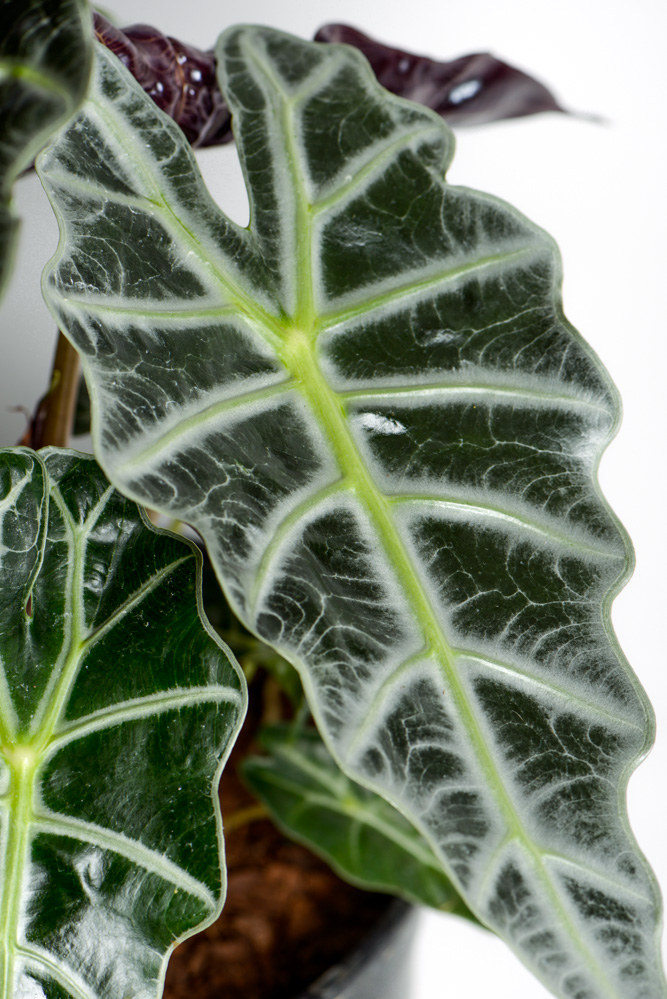
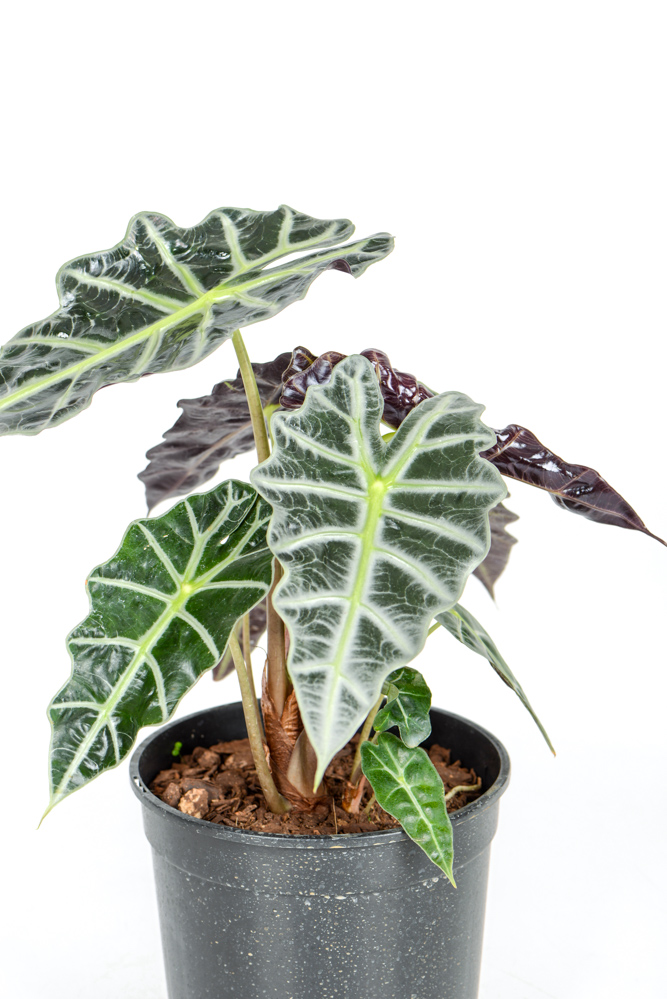
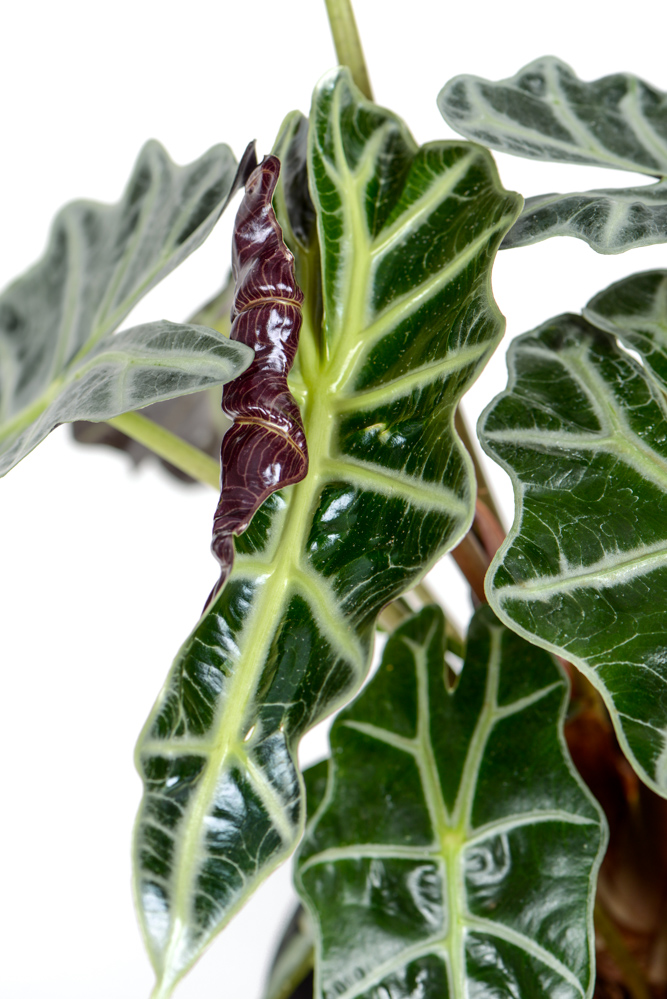
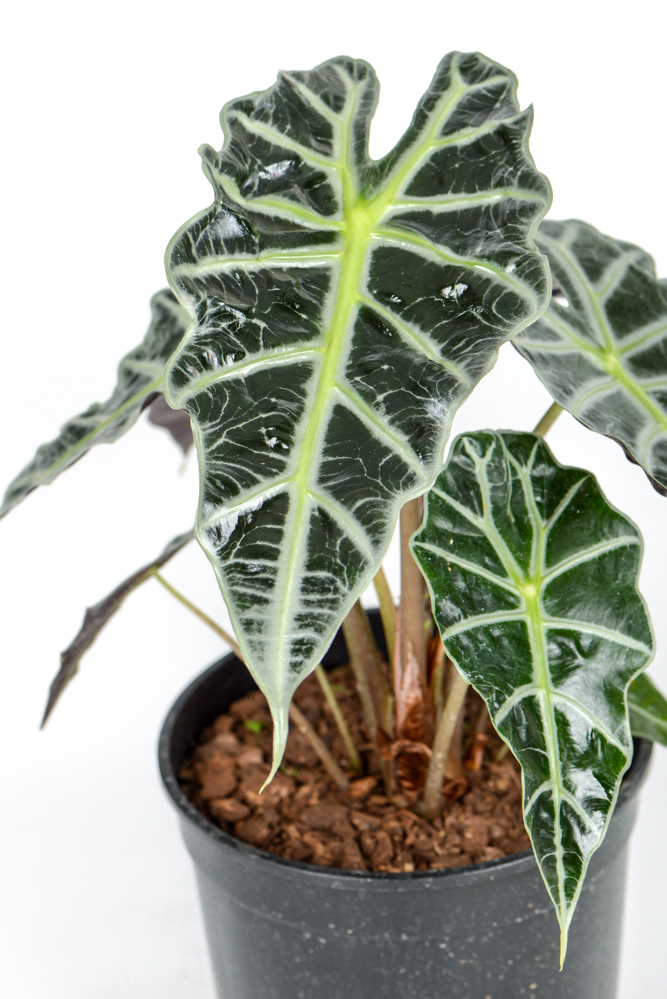
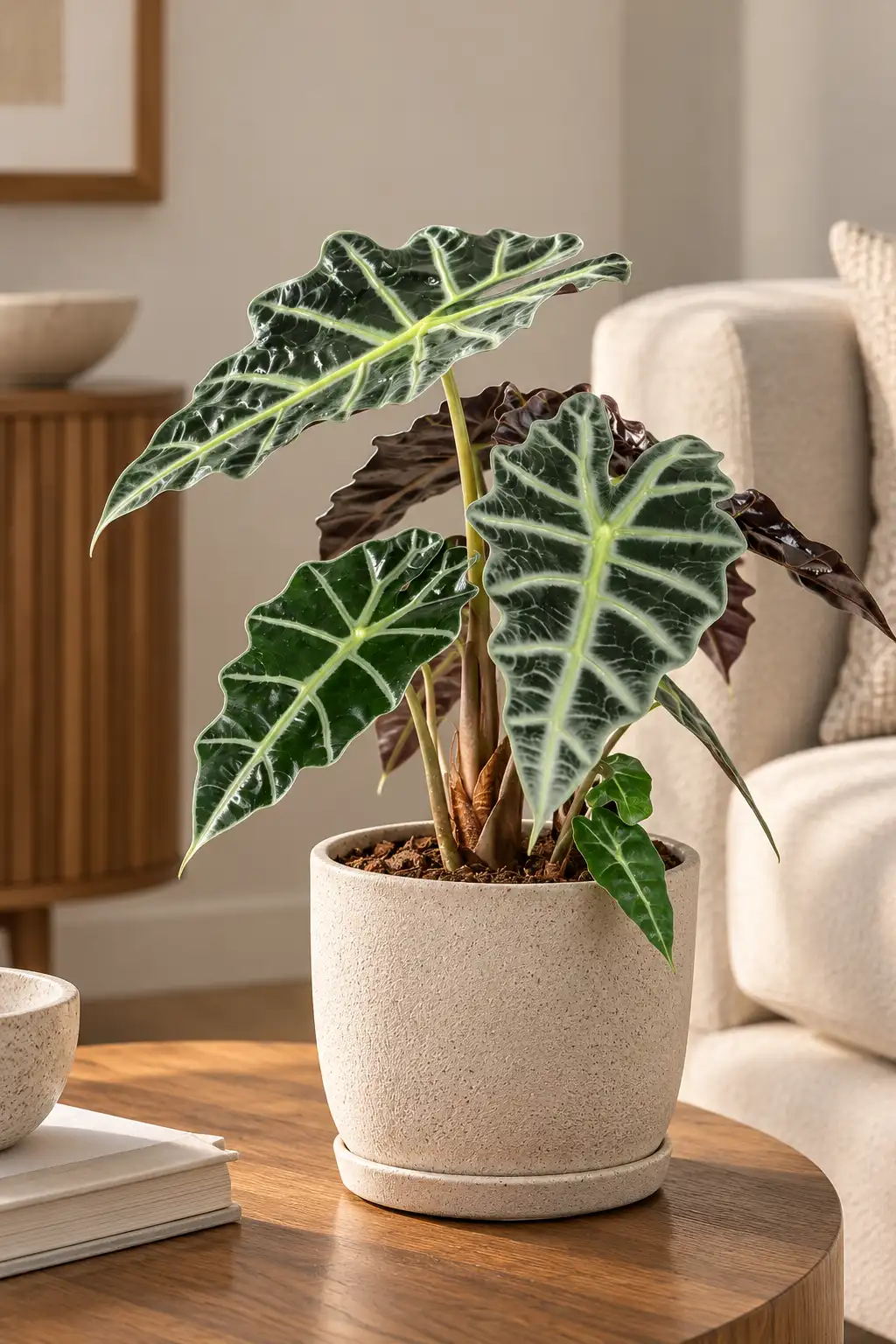
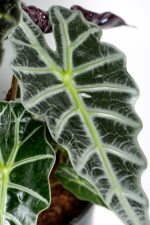
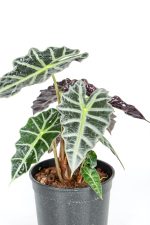
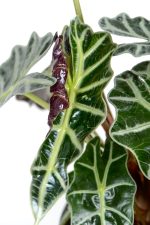
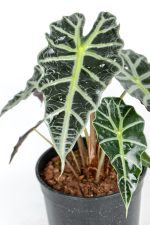
Its large, arrow-shaped leaves have a rich, dark green surface with prominent silver-white veins running through the foliage. The leaf margins have a distinctive wavy appearance, while the undersides often carry a deep purple-green colouring.
Each leaf grows on a long, upright petiole that emerges from the base of the plant. As new leaves develop, the plant gradually builds a fuller canopy, with fresh foliage often appearing lighter before deepening in colour.
Our Large Alocasia Amazonica plants stand approximately 40–50cm tall in 23cm pots, making them a good size for side tables, plant stands and bright areas where you can properly appreciate the unusual leaves.
Although the name suggests otherwise, Alocasia Amazonica doesn’t originate from the Amazon rainforest. It’s a cultivated hybrid, developed from tropical Asian Alocasia species.
Like other Alocasias, Amazonica grows from an underground corm that stores energy and supports fresh growth. During warm weather, a healthy plant can produce new leaves regularly, particularly when it receives good light and consistent nutrition.
Watering is one of the most important parts of growing this plant successfully.
Alocasias appreciate consistent moisture while actively growing, but their roots need plenty of oxygen. Keep the growing medium lightly moist without allowing it to remain permanently saturated.
Bright, indirect light is equally important. Good natural light supports stronger stems, larger leaves and healthy growth, while harsh afternoon sunlight can damage the foliage.
Regular feeding also makes a noticeable difference. Alocasias use plenty of nutrients while producing their large leaves, and a well-fed plant can grow surprisingly quickly during the warmer months.
With good light, consistent watering and a warm position, Alocasia Amazonica is a rewarding indoor plant that continues producing fresh foliage throughout the growing season.
Large Alocasia Amazonica Care Guide

Water – How often should I water my Alocasia Amazonica?
Keep the growing medium evenly moist without allowing it to become waterlogged.
Water thoroughly once the upper few centimetres begin to dry, then allow the excess water to drain freely.
Alocasias don’t enjoy repeatedly drying out completely, particularly while they’re actively producing new leaves. However, keeping the roots constantly saturated can quickly lead to root and corm rot.
During winter, reduce watering as growth slows. Always check the growing medium before watering rather than following a fixed weekly schedule.

Light – Where should I place my Alocasia Amazonica?
Give it plenty of bright, indirect natural light.
A position near a large window is ideal, particularly where it receives filtered light throughout the day. Gentle morning sun is beneficial, but avoid prolonged direct afternoon sunlight.
Good light encourages stronger stems, larger leaves and more frequent new growth.
Avoid dark corners. Insufficient light can cause weak, stretched growth and reduce the plant’s ability to maintain its foliage.

Humidity – Does Alocasia Amazonica need high humidity?
Alocasia Amazonica appreciates moderate to high humidity, particularly while new leaves are developing.
Aim for humidity around 60% where practical, although established plants can adapt to normal household conditions.
A bright bathroom with good natural light can work particularly well. You can also group plants together or use a humidifier during very dry weather.
Good airflow remains important, so avoid keeping the plant in permanently damp, stagnant conditions.

Soil – What growing medium should I use?
Alocasia Amazonica needs an open growing medium that retains moisture while allowing plenty of oxygen around the roots.
I recommend Aroid Mix, which provides the drainage and aeration Alocasias need.
You can incorporate additional Perlite or Bark Chips if you’d like to improve airflow through the growing medium.
Avoid dense, compacted mixtures that remain wet for extended periods.

Feeding – How should I fertilise my Alocasia Amazonica?
Alocasias are hungry plants, particularly during periods of active growth.
Regular feeding helps support larger leaves, stronger stems and the steady production of fresh foliage.
Controlled Release Fertiliser provides balanced, convenient nutrition consistently over time.
Grobest Organic Fertiliser is another excellent option for regular feeding, while Novatec Soluble Fertiliser works particularly well when you want to push strong, active growth.
Reduce feeding during colder months if the plant has slowed down considerably.
Repotting – When should I repot my Alocasia Amazonica?
Don’t rush to repot a newly purchased Alocasia.
Allow the plant to continue growing until its roots have properly filled the existing container. When repotting becomes necessary, move up by one sensible pot size.
Spring and summer are ideal because the plant can establish into the fresh growing medium while actively growing.
Handle the roots and underground corm carefully, and avoid burying the crown too deeply.

Pests – What should I watch for?
Spider mites and thrips are the main pests worth watching for on Alocasia Amazonica.
Spider mites often gather underneath the leaves, while thrips may damage fresh growth before the leaves have completely opened.
Check the undersides of the foliage regularly and pay particular attention to new leaves.
Mealybugs and scale can also occasionally appear around the stems and leaf joints.
Keeping the foliage clean and maintaining good airflow will help with early detection.

Temperature – What temperatures does Alocasia Amazonica prefer?
Alocasia Amazonica grows best in warm conditions around 18°C–28°C.
Protect it from temperatures below approximately 15°C, particularly when the growing medium is wet.
During a cold Gauteng winter, keep the plant away from chilly windows at night and reduce watering as growth slows.
FAQ’s
Q: Why does my Alocasia Amazonica sometimes lose an older leaf when a new one appears?
Alocasias may naturally retire an older leaf while producing fresh growth, particularly when the plant is young or its root system is still developing. Good light and regular feeding help support a larger number of leaves as the plant matures.
Q: Why are the leaves on my Alocasia Amazonica drooping?
Check the growing medium first. Both excessive dryness and waterlogged roots can cause drooping. Also check that the plant receives enough natural light and isn’t exposed to cold conditions.
Q: Can Alocasia Amazonica produce baby plants?
Yes. Healthy plants can develop additional corms beneath the growing medium. These may eventually produce new shoots around the main plant.
Q: Why are the new leaves lighter green than the older ones?
Fresh Alocasia leaves often emerge lighter and softer. As they mature, the foliage hardens and develops its characteristic deep green colouring and prominent veins.
Q: Is Alocasia Amazonica pet safe?
No. Alocasias contain insoluble calcium oxalate crystals that can cause irritation if chewed or eaten. Keep them away from pets and small children.
Be sure to visit and follow us Facebook and Instagram