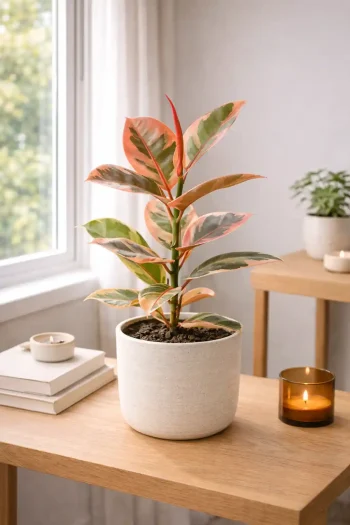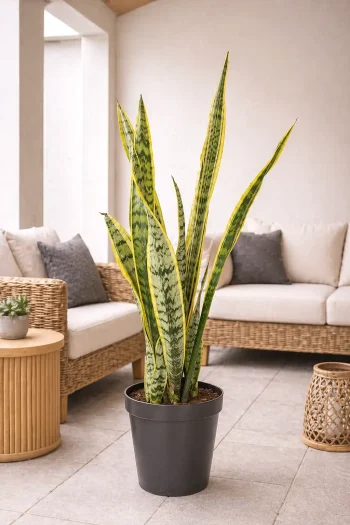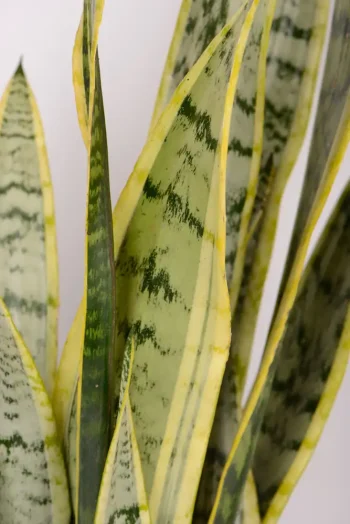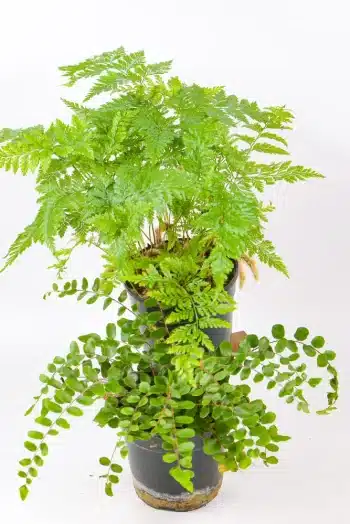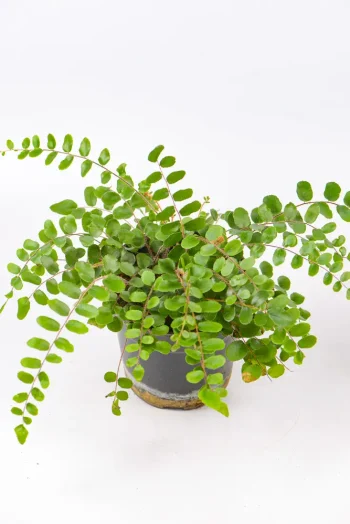





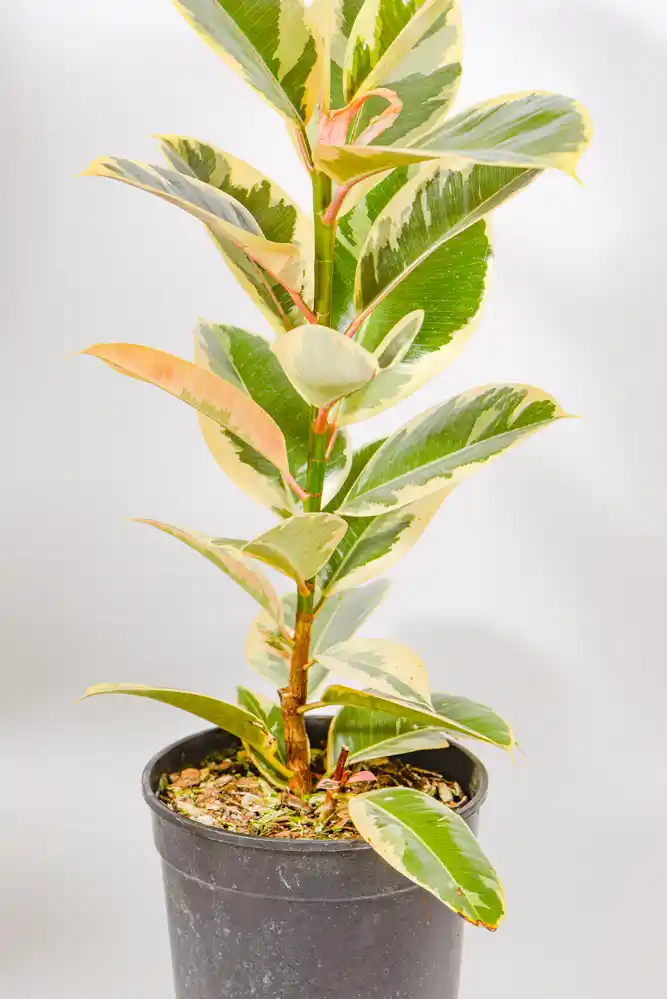
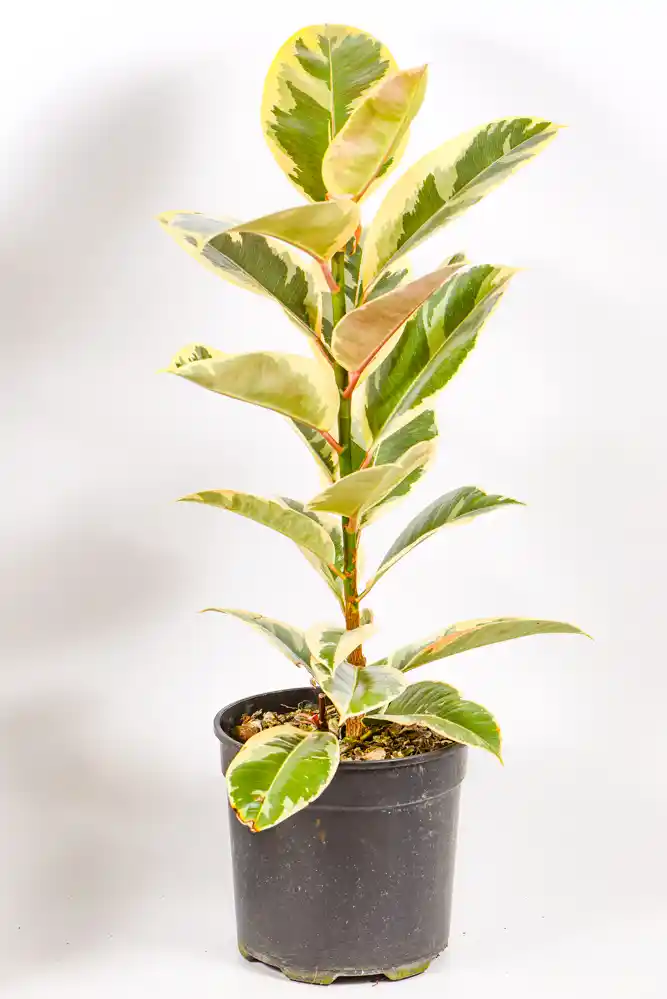
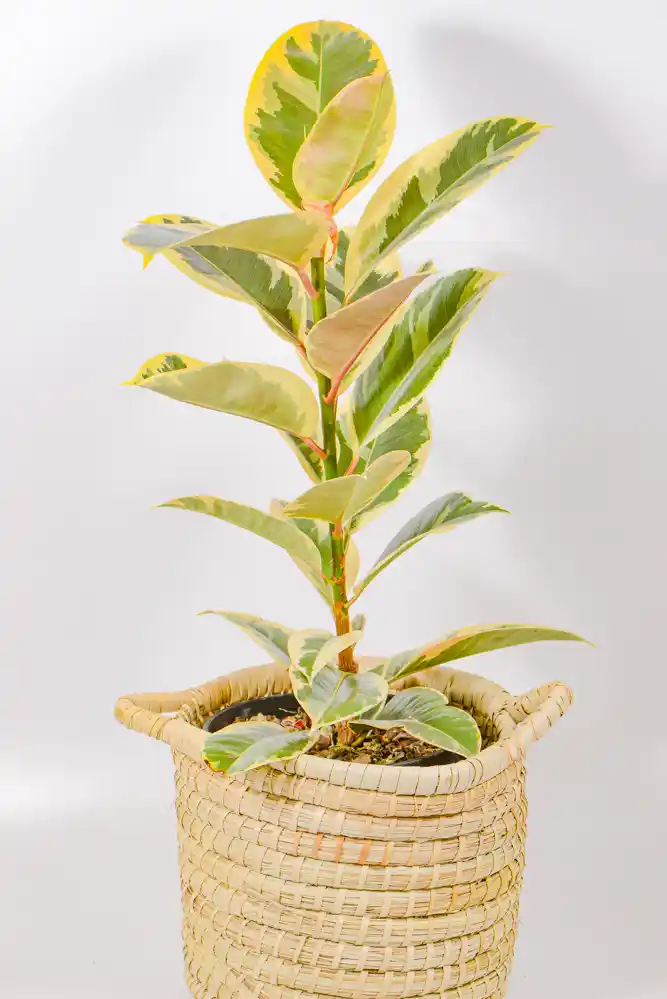
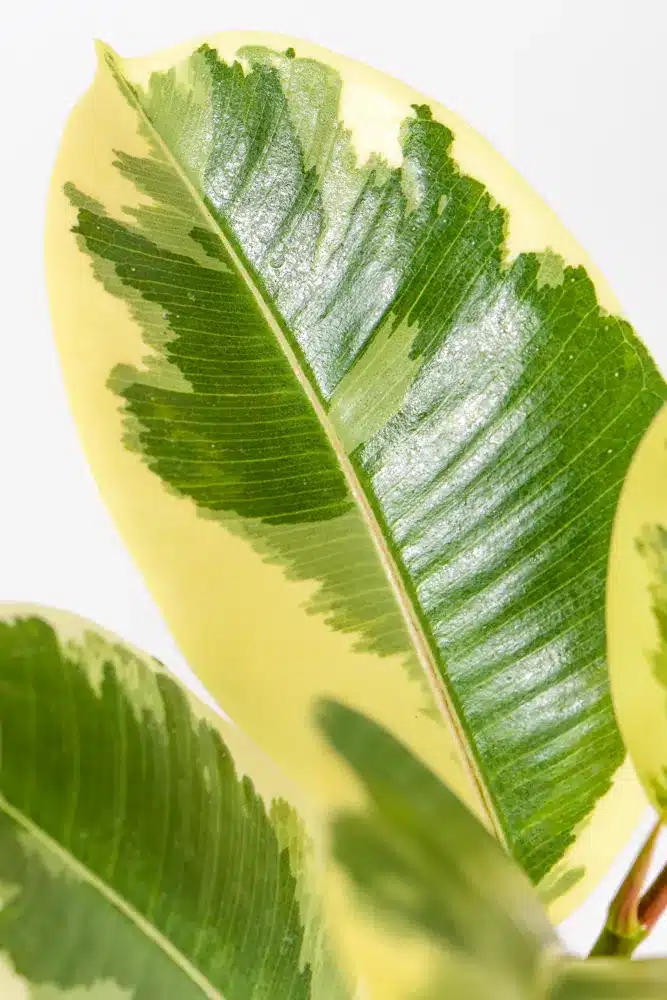
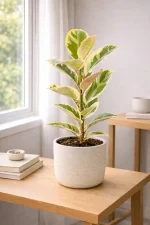
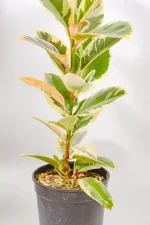
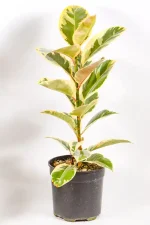
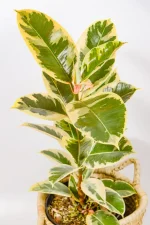
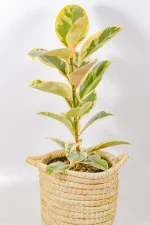
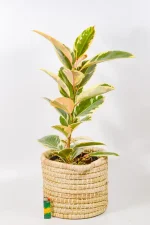

Commonly known as: Large Rubber Tree Tineke
Botanical name: Ficus elastica ‘Tineke’
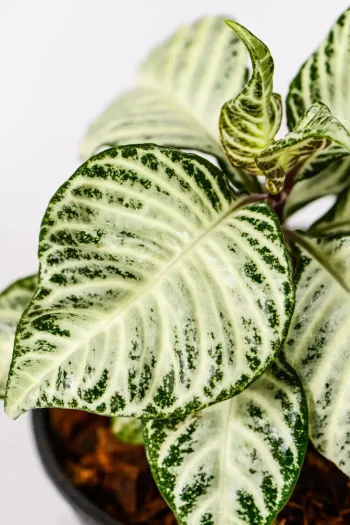
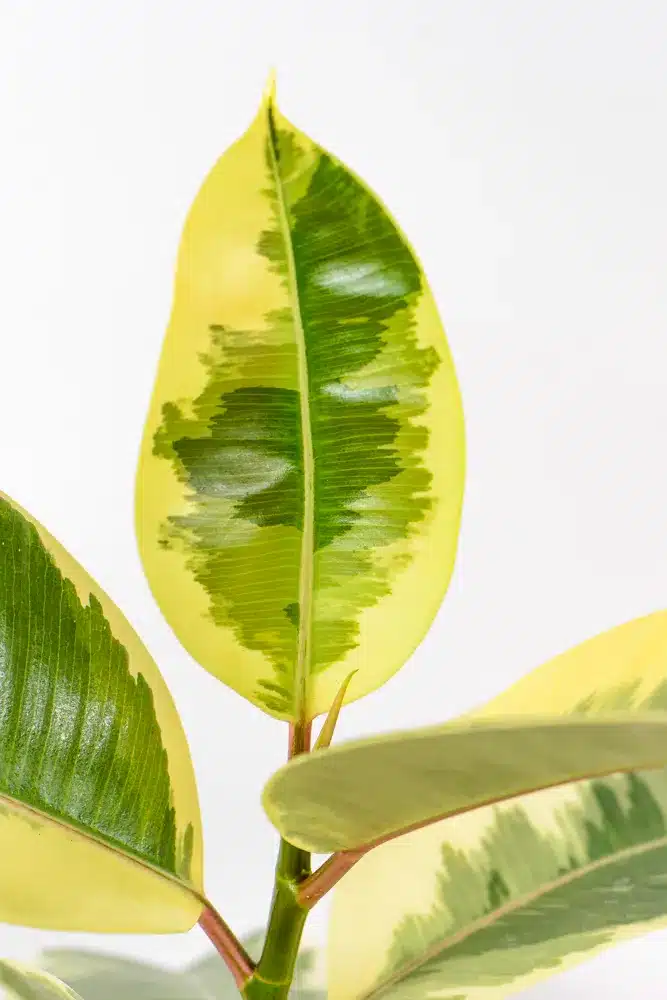
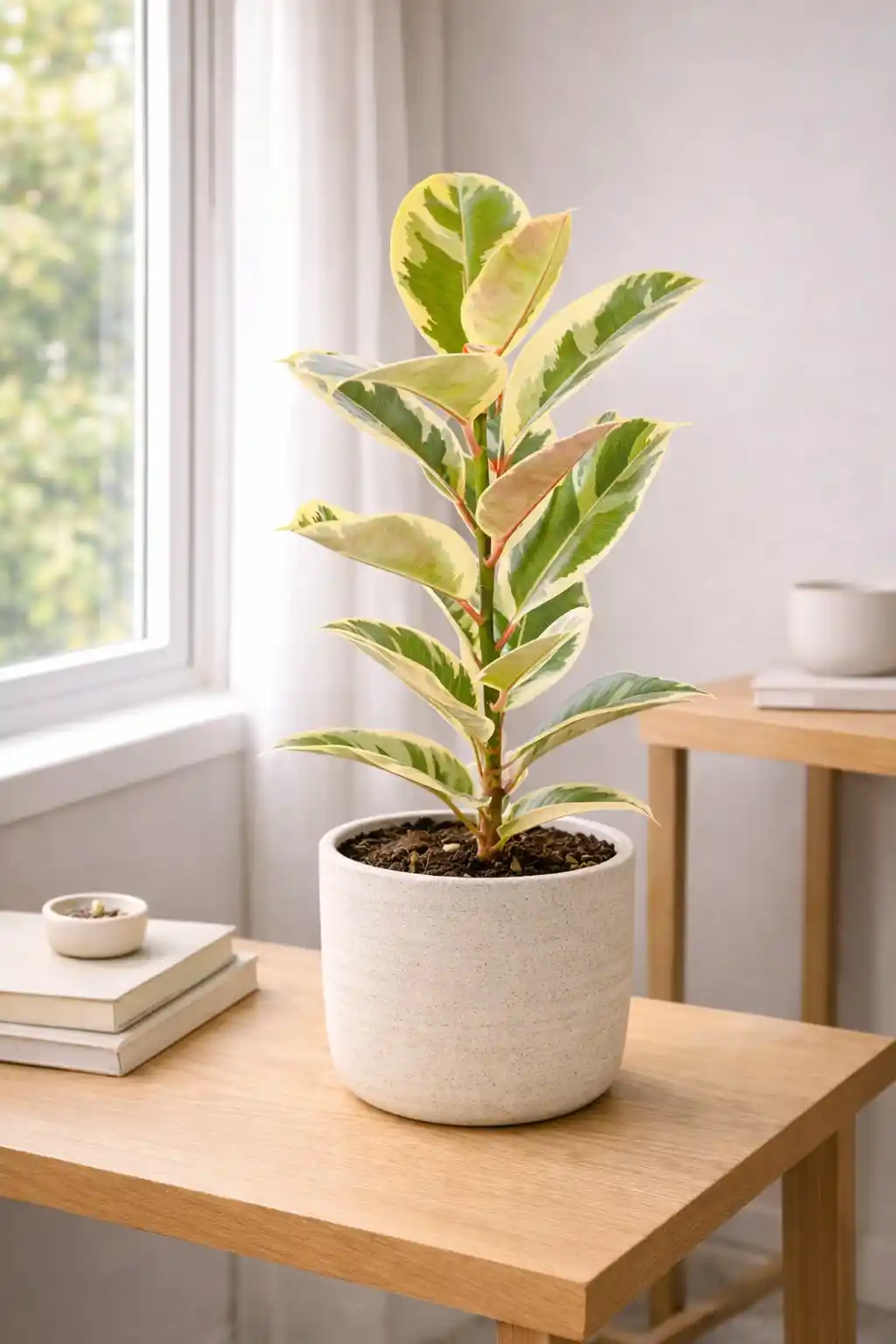
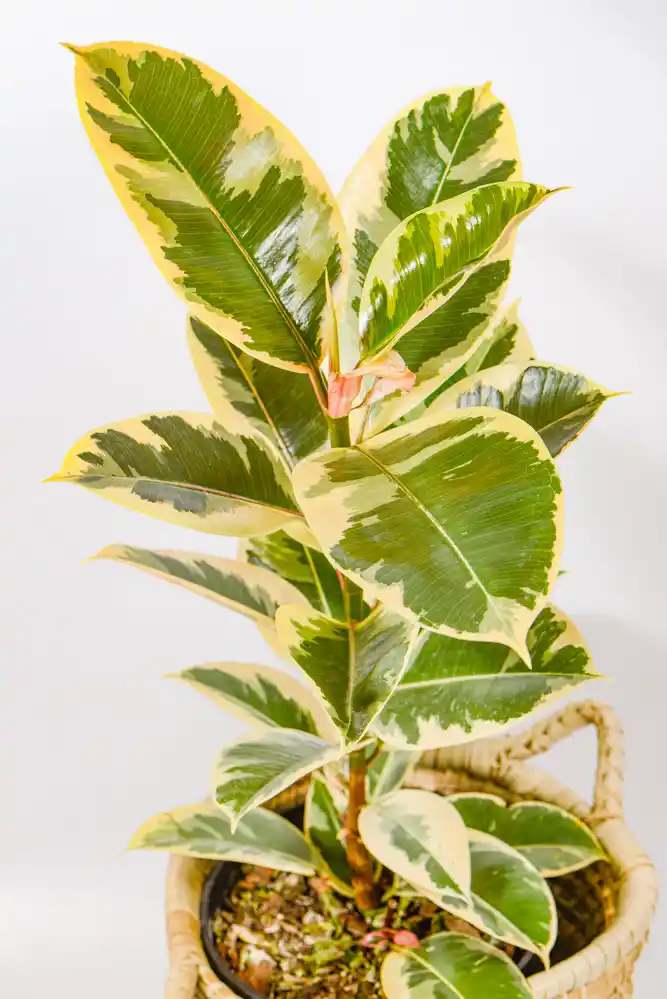
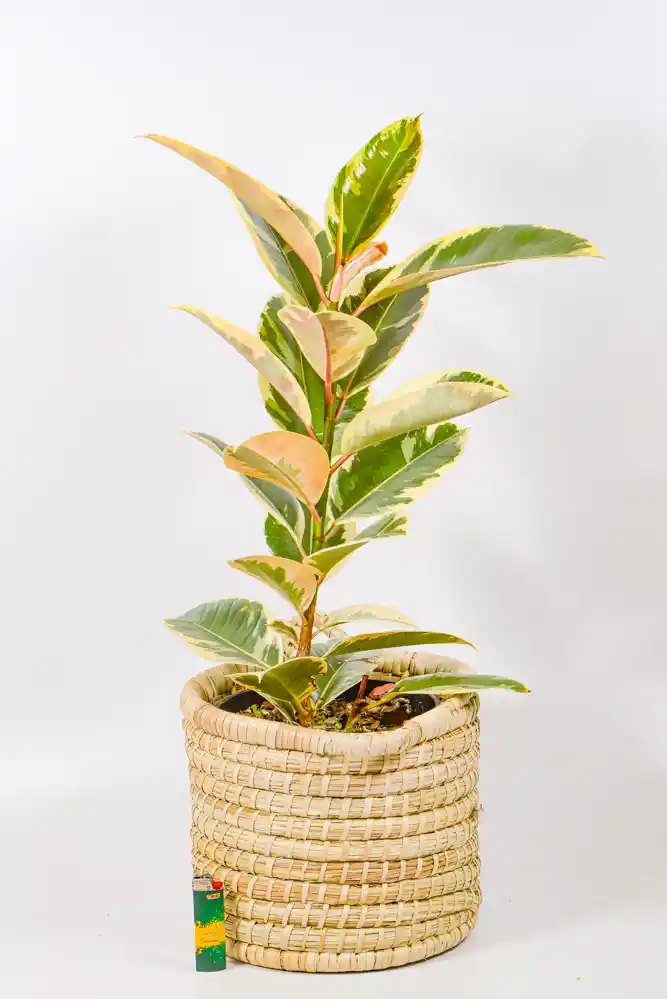
Tineke is one of the most recognisable rubber tree varieties thanks to its clean, high-contrast foliage. Each leaf carries a balanced mix of green and cream, giving the plant a fresh, structured look.
It grows at a moderate pace and responds best to stable conditions. Once positioned in good light and watered sensibly, Tineke tends to remain reliable and low maintenance.
Large Rubber Tree Tineke Care Guide
Watering – How often should Rubber Trees be watered?
Water when the top 3–5 cm of soil feels dry. Rubber Trees prefer drying slightly between waterings and do not tolerate constantly wet soil.
Light – What light do Rubber Trees need?
Bright, indirect light is ideal. Variegated varieties benefit from brighter conditions, while green forms tolerate slightly lower light. Avoid harsh direct sun.
Humidity – Do they need humidity?
Average indoor humidity is sufficient. Avoid placing plants near heaters or air conditioners.
Soil – What mix is best for Maidenhair Ferns?
For optimal drainage and healthy roots, use our Aroid Mix, or make your own by combining Indoor Potting Soil and Perlite. The goal is a soft, moisture-holding mix that drains easily and stays airy.
Feeding – How should Rubber Trees be fertilised?
These plants do enjoy a good supply of fertilizer. Feed during spring and summer using Grobest Organic Fertiliser every 2-3 weeks.
For stronger leafy growth, Novatec Soluble Fertiliser can be used occasionally.
Repotting – When should they be repotted?
Repot every 12–18 months or once roots fill the pot. Step up only one size and refresh the mix. Add a few Bark Chips to improve aeration and help the roots spread evenly. Handle gently — their root systems are fine and fibrous.
Pests – What pests should I watch for?
They’re fairly pest-resistant but may occasionally attract aphids or scale. Wipe affected areas gently and use an insecticidal spray if needed. Clean the leaves with a soft mist or damp cloth now and then to remove dust.
Temperature – What’s the ideal temperature range?
Keep between 16 °C and 26 °C. Avoid drafts, heaters, or cold windowsills. Steady, mild warmth keeps growth consistent.
Q: Are Rubber Trees easy to care for?
Yes, very. They adapt well to indoor environments and are forgiving of occasional neglect.
Q: Why are my Rubber Tree’s leaves dull or drooping?
It’s often from overwatering or too little light. Let the soil dry slightly and move it to a brighter spot.
Q: How fast do Rubber Trees grow indoors?
They grow steadily, producing new leaves every few weeks in spring and summer. With time, they can reach ceiling height indoors.
Q: Can I prune my Rubber Tree to control its size?
Absolutely. Trim tall stems in spring to maintain shape and encourage side branching.
Be sure to visit and follow us Facebook and Instagram