





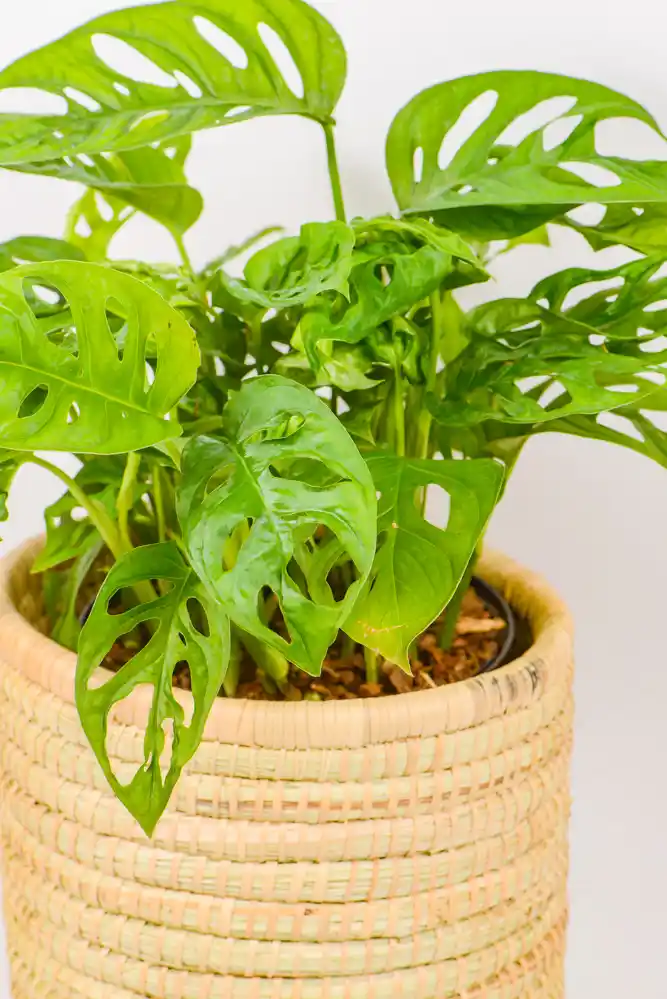
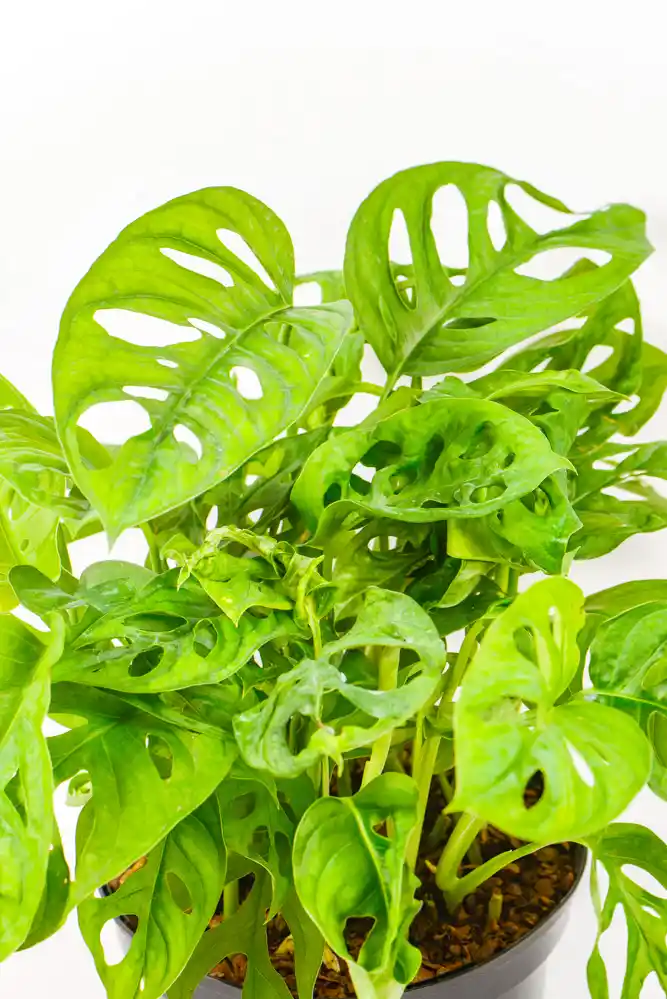
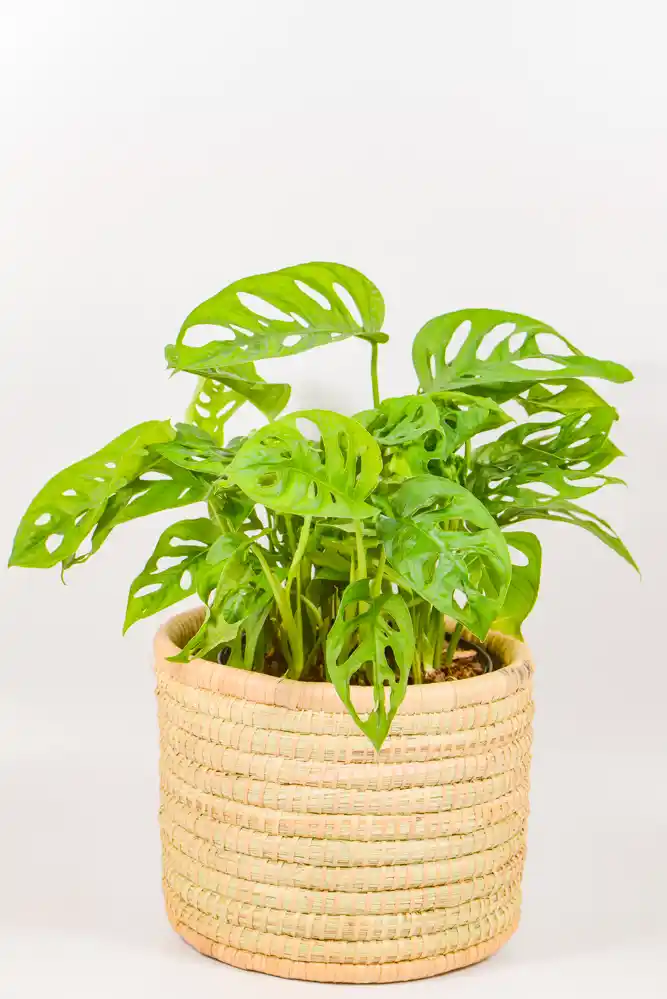
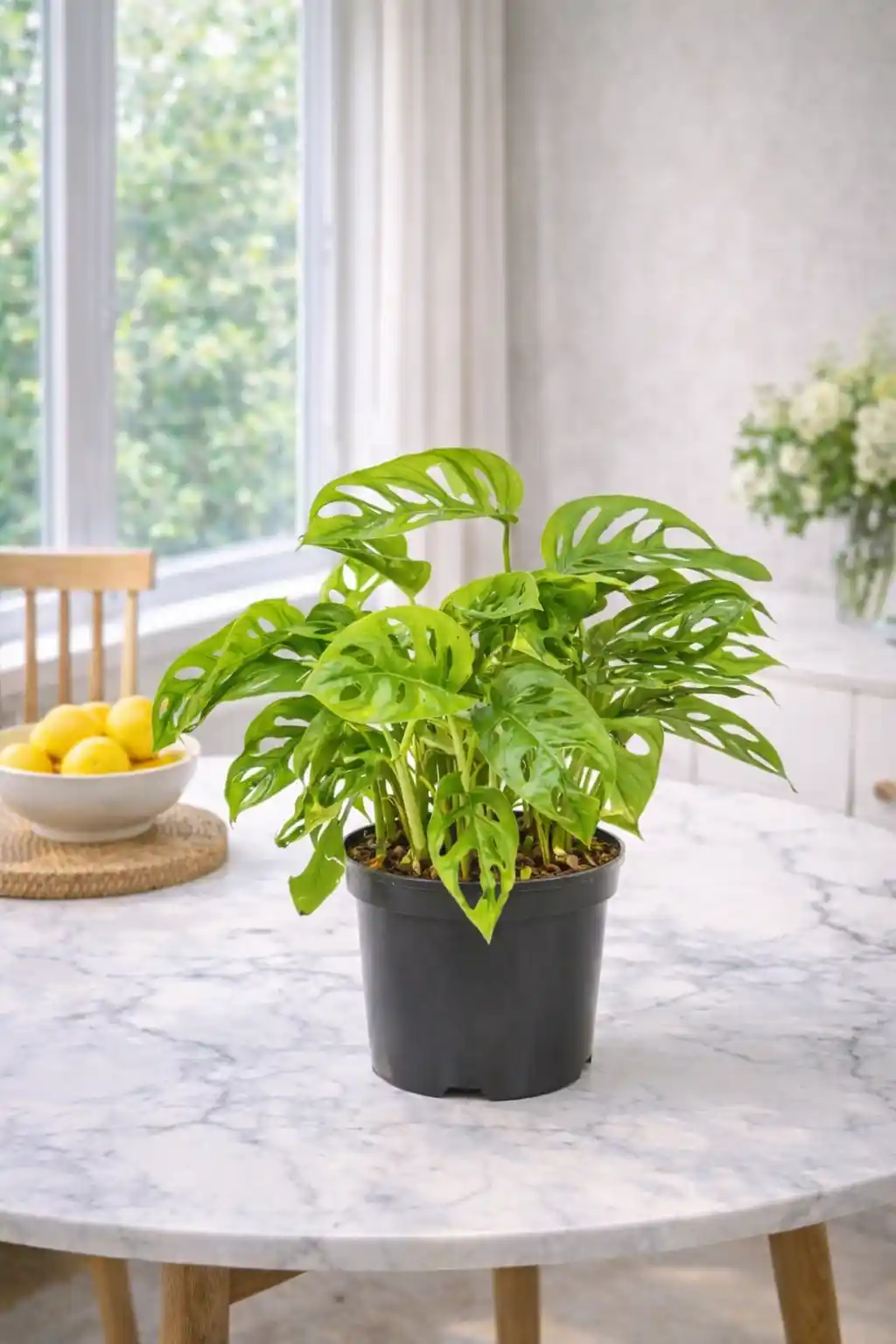
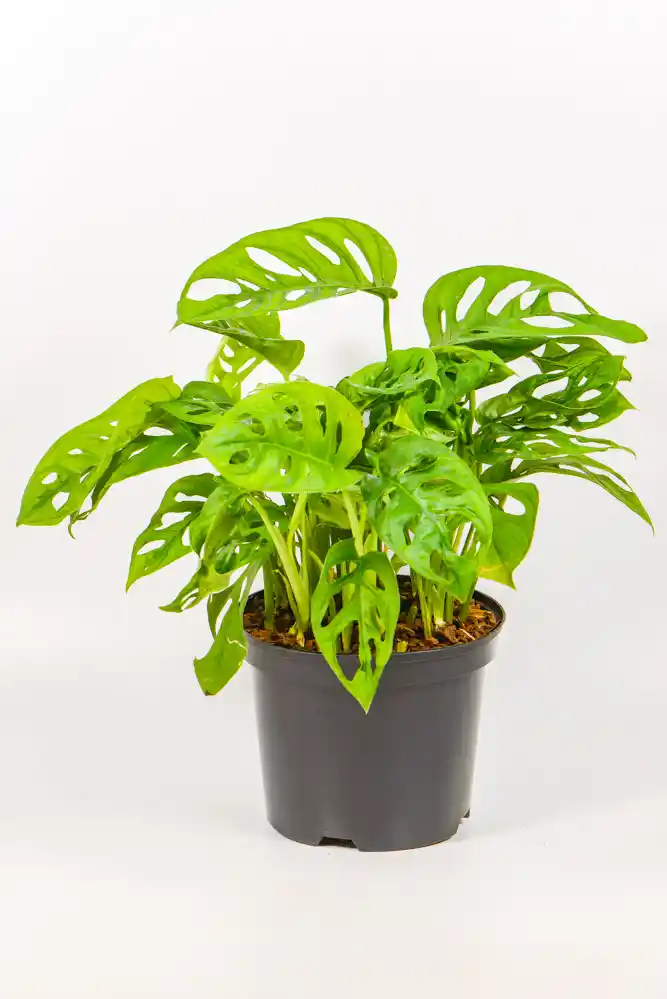
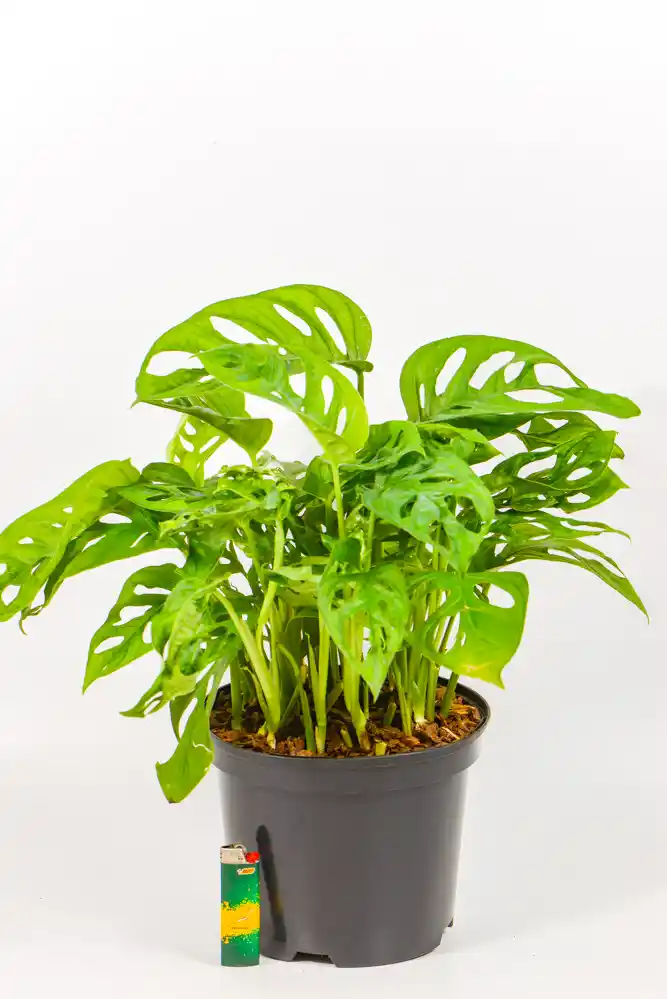
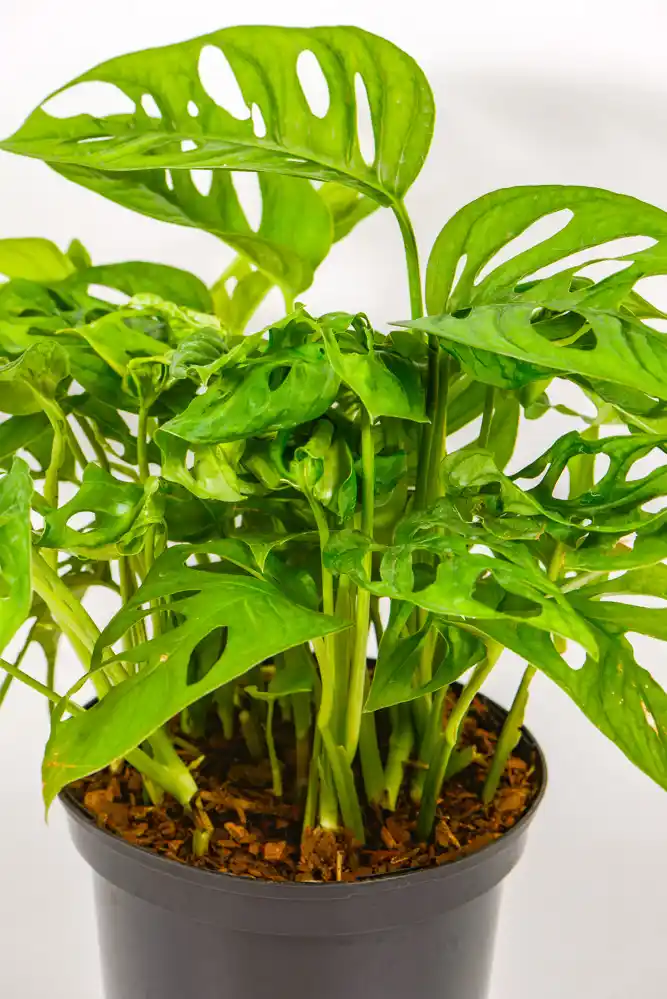

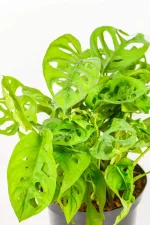
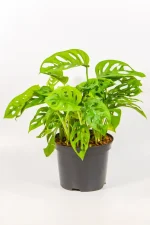
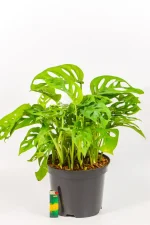
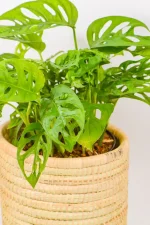
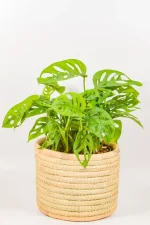


Botanical name: Monstera adansonii
Commonly known as: Swiss Cheese Vine
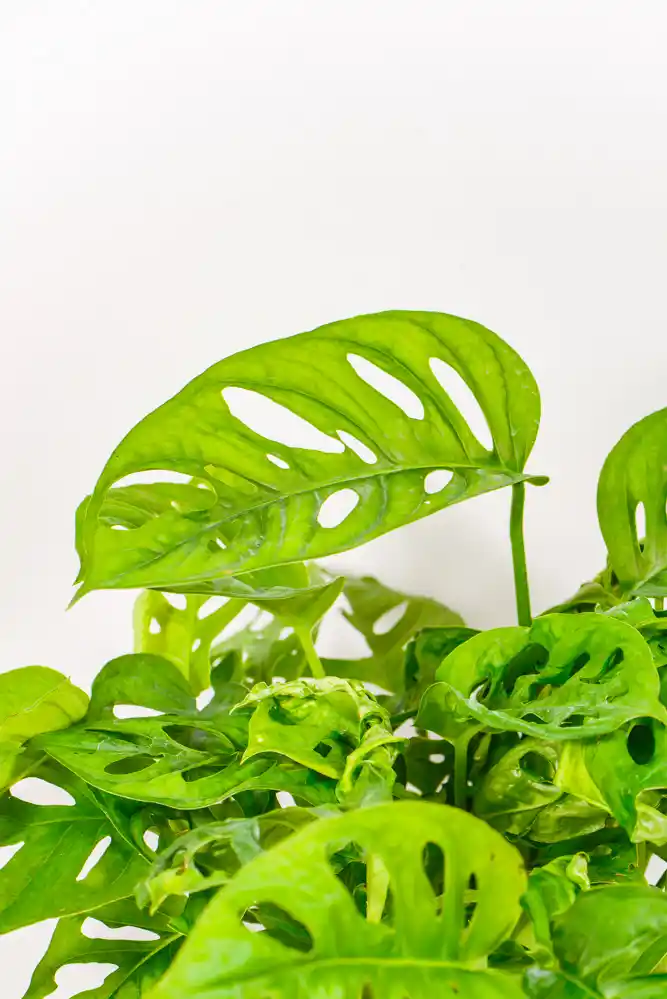
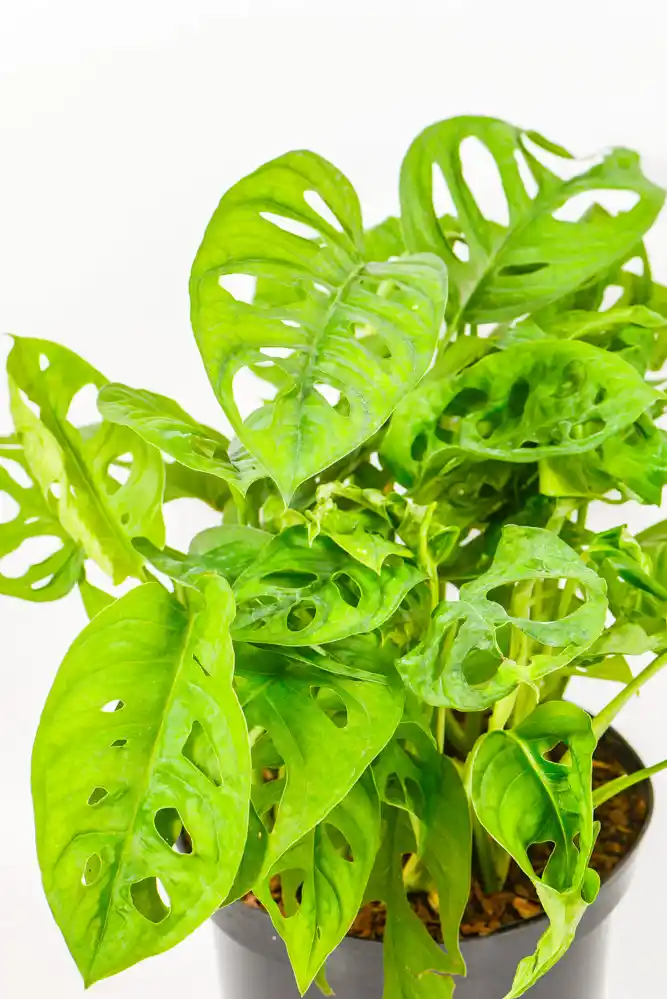
Monstera adansonii is loved for its soft, perforated leaves and flexible growth habit. Unlike larger monsteras, this species stays lighter and more informal, with leaves that develop natural holes as the plant matures. The result is a plant that feels lush without becoming overwhelming.
This plant grows quickly under the right conditions and responds well to support. When allowed to climb, leaf size often increases and the foliage becomes more dramatic. Left to trail, it creates a cascading effect that works well on shelves, plant stands, or hanging displays.
Monstera adansonii prefers consistency rather than constant adjustment. Once placed in good light and watered sensibly, it becomes a reliable, easygoing plant that fills space naturally over time.
Monstera Adansonii Care Guide
Watering – How often should I water it?
Water when the top 3–4 cm of soil feels dry. Monstera adansonii prefers evenly moist soil but does not tolerate being waterlogged. Always allow excess water to drain away fully.
Light – What light does Monstera adansonii need?
Bright, indirect light is ideal. It can tolerate medium light, but growth will slow and leaf perforations may be less pronounced. Avoid direct sunlight, which can scorch the leaves.
Humidity – Does it need humidity?
Average indoor humidity is sufficient, but slightly higher humidity encourages healthier growth and larger leaves. It adapts well to most homes without extra effort.
Soil – What mix is best for Maidenhair Ferns?
For optimal drainage and healthy roots, use our Aroid Mix, or make your own by combining our Indoor Potting Soil and Perlite. The goal is a soft, moisture-holding mix that drains easily and stays airy.
Feeding – How should I fertilise my Northern Maidenhair Fern?
Feed lightly once a month during spring and summer with a gentle Organic Fertiliser. For longer-term nutrition, mix in a small amount of Controlled Release Fertiliser in early spring. Skip feeding in winter.
Repotting – When should Monstera adansonii be repotted?
Repot every 12–18 months, or when the roots clearly fill the pot. Move up one pot size at a time and retain most of the existing soil around the root ball. When refreshing the mix, Indoor Potting Soil can be combined with Perlite and Bark Chips for better structure and airflow.
Pests – What pests should I watch for?
Monstera adansonii is generally pest-resistant, but spider mites or mealybugs can appear if the plant is stressed. Regular checks and early treatment with an insecticidal spray will keep issues under control.
Temperature – What temperature suits it best?
Ideal temperatures range between 18 °C and 28 °C. Protect the plant from cold drafts and sudden temperature changes.
FAQ’s
Q: Can Monstera adansonii climb?
Yes. It naturally climbs and benefits from a pole or support, which often leads to larger leaves.
Q: Why are my leaves not developing holes?
This is usually due to low light or young growth. Brighter indirect light encourages perforation.
Q: Is it suitable for beginners?
Yes. It’s forgiving, fast-growing, and easy to maintain.
Q: Is it pet-safe?
No. Monstera plants are toxic if ingested and should be kept out of reach of pets.
Be sure to visit and follow us Facebook and Instagram