





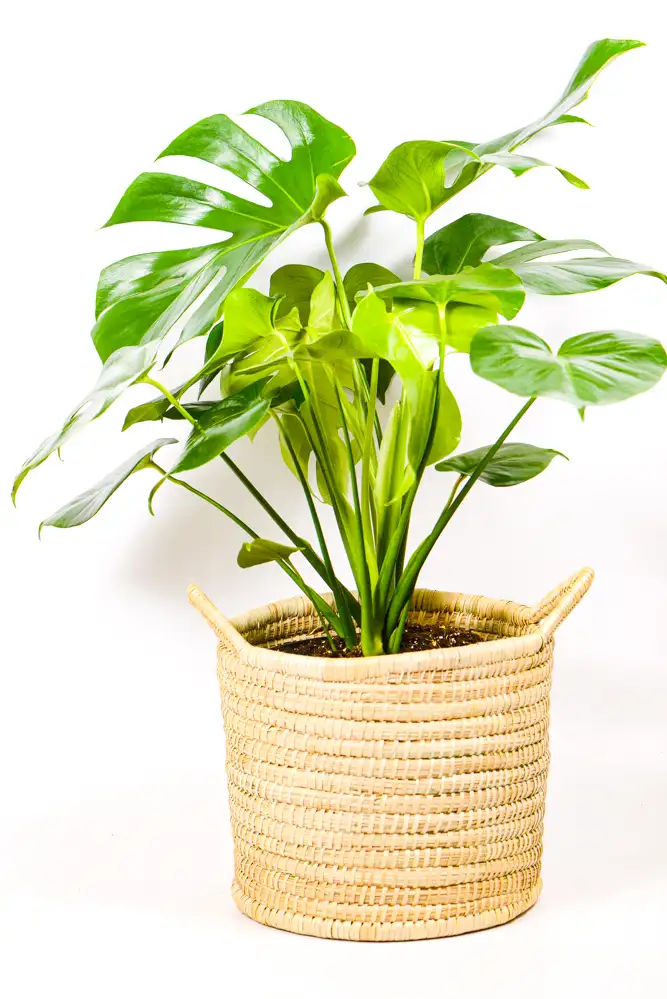
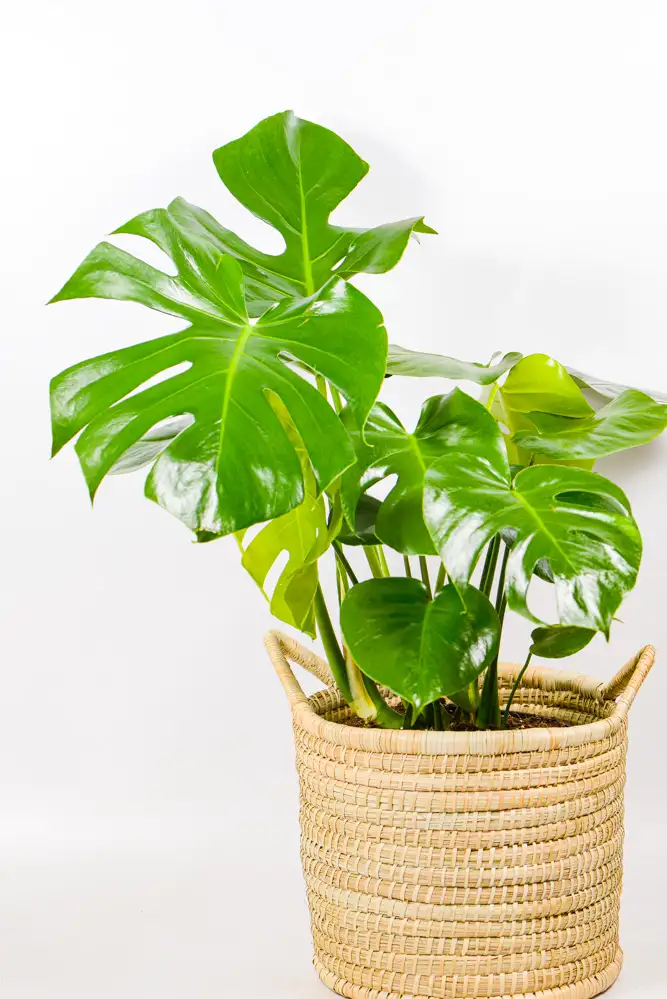
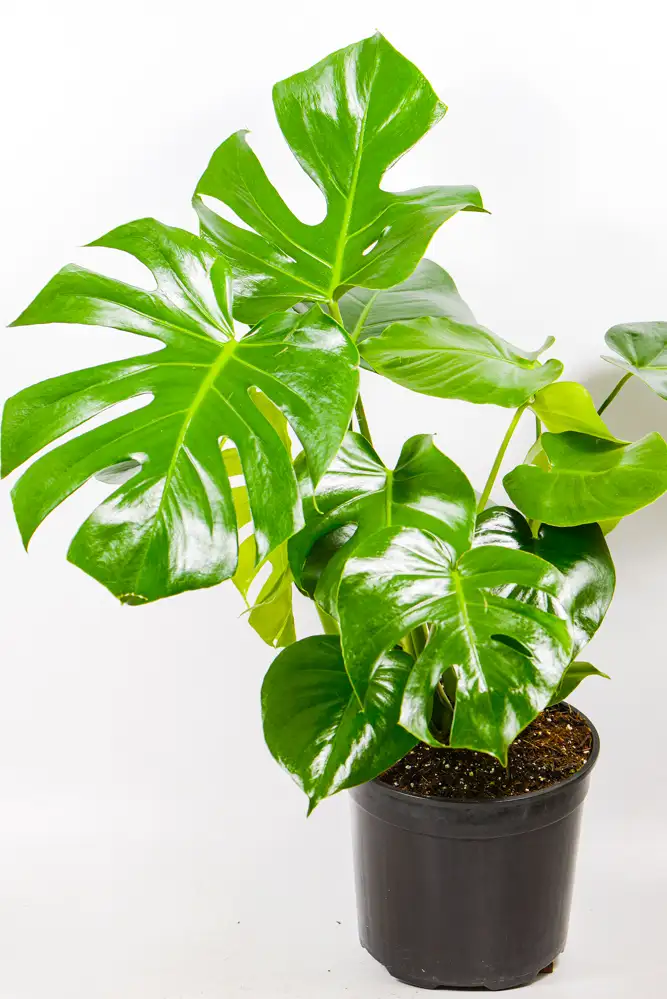
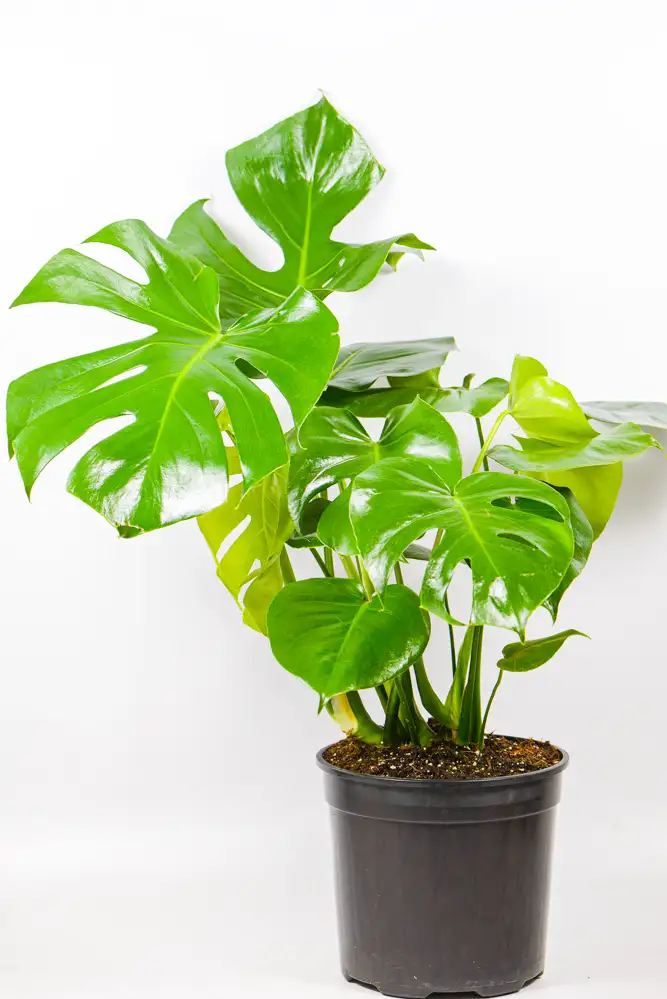
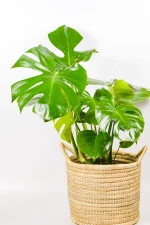

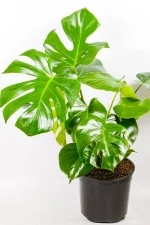
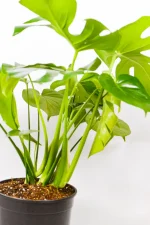
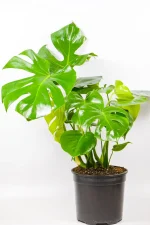
Botanical name: Monstera deliciosa XL
Commonly known as: Swiss Cheese Plant, Delicious Monster
Monstera deliciosa is one of the most recognisable indoor plants, valued for its dramatic leaf shape and reliable growth. As the plant matures, the leaves develop deep splits and perforations, giving it the bold look it’s known for.
In this XL form, Monstera deliciosa brings immediate presence to a room while still offering long-term interest as it continues to grow. It naturally wants to climb, and when given support such as a moss pole, the leaves tend to increase in size and structure.
Despite its tropical appearance, Monstera deliciosa is a forgiving and adaptable plant. It responds best to consistency rather than fuss — steady light, sensible watering, and minimal disturbance. When those basics are in place, it becomes a long-lived indoor plant that anchors a space without feeling high-maintenance.
Monstera Deliciosa XL Care Guide
Watering – How often should I water it?
Water when the top 4–5 cm of the mix feels dry. Monstera deliciosa prefers evenly moist soil but does not tolerate waterlogged conditions. Always allow excess water to drain away fully.
Light – What light does Monstera deliciosa need?
Bright, indirect light is ideal. Good light encourages stronger growth and better leaf development. It tolerates medium light, but growth may slow and leaves may become smaller. Avoid harsh direct sun.
Humidity – Does it need humidity?
Average indoor humidity is usually sufficient. Slightly higher humidity can support larger leaves, but good airflow is more important than constant moisture.
Soil – What soil works best?
A free-draining, airy mix is essential. Our premixed Aroid Mix is well suited and provides excellent structure for healthy roots. Alternatively, you can create your own blend using our Indoor Potting Soil as a solid base, then incorporate Perlite and Bark Chips to improve aeration and keep the root zone healthy.
Feeding – How should I fertilise it?
Feed during spring and summer using Grobest Organic Fertiliser every 4–6 weeks. For more vigorous leafy growth, Novatec Soluble Fertiliser can be used occasionally at a low dilution.
Repotting – When should Monstera deliciosa be repotted?
Repot every 18–24 months, or once the plant becomes clearly root-bound. Move up one pot size and keep most of the existing soil intact around the roots. When repotting, you can incorporate TerraPlus Natura N together with Controlled Release Fertiliser into the fresh mix.
Pests – What pests should I watch for?
Thrips, spider mites, and mealybugs can occasionally appear. Regular inspection and early treatment with an insecticidal spray will prevent infestations from spreading.
Temperature – What temperature suits it best?
Ideal temperatures range between 18 °C and 28 °C. Protect from cold drafts and avoid temperatures below 15 °C, which can slow growth.
Q: Will an XL Monstera keep growing?
Yes. With good light and support, it will continue to produce larger leaves.
Q: Does it need a moss pole?
It’s not essential, but a moss pole encourages stronger growth and larger leaves.
Q: Is Monstera deliciosa suitable for beginners?
Yes. It’s one of the easier large indoor plants to care for.
Q: Is it pet-safe?
No. Monsteras are toxic if ingested and should be kept out of reach of pets.
Be sure to visit and follow us Facebook and Instagram