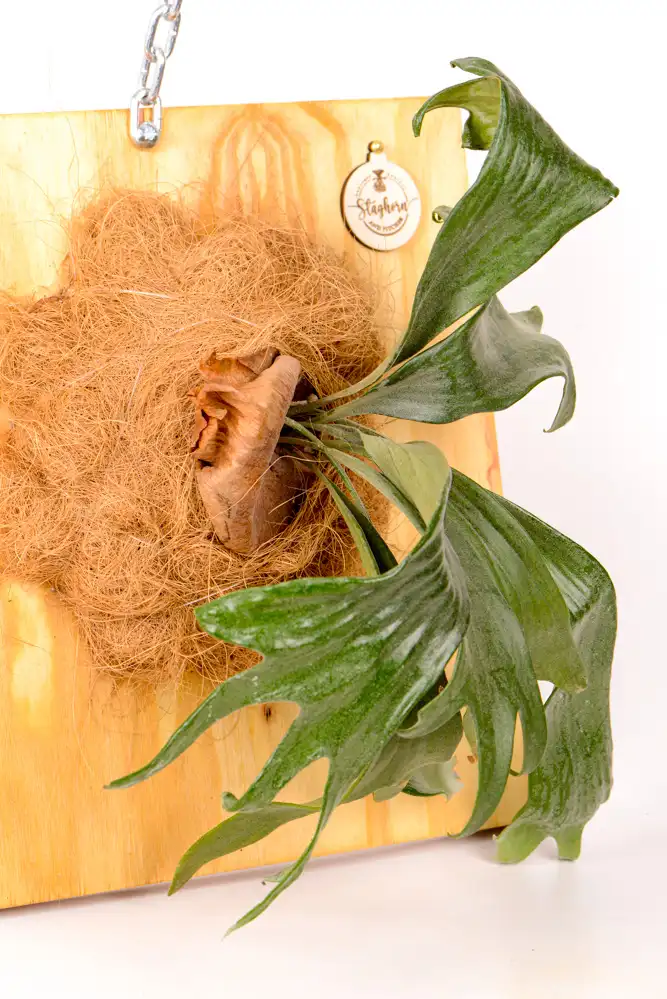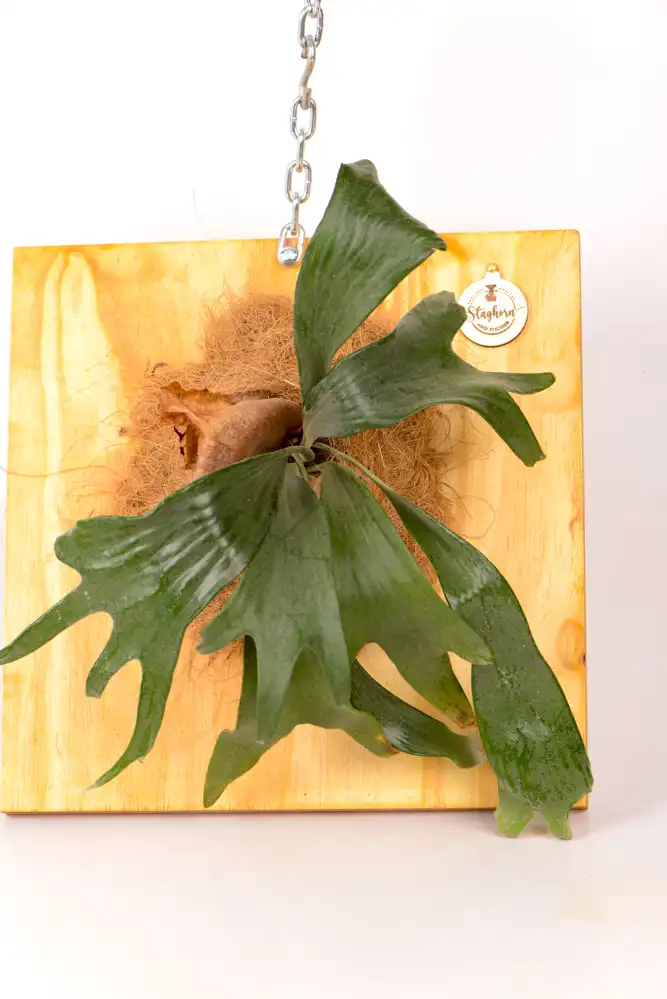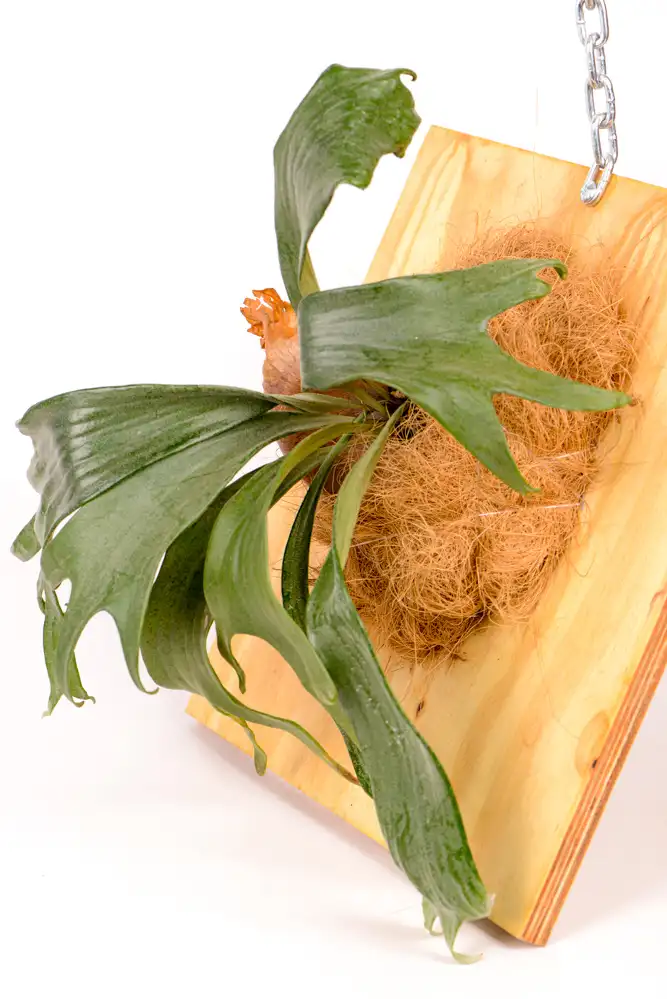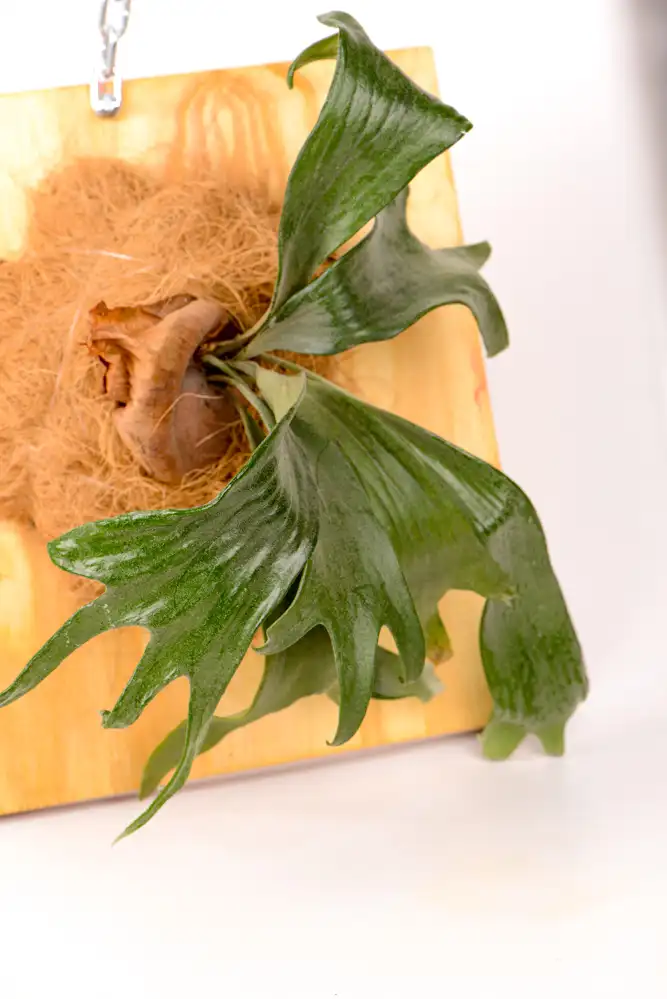
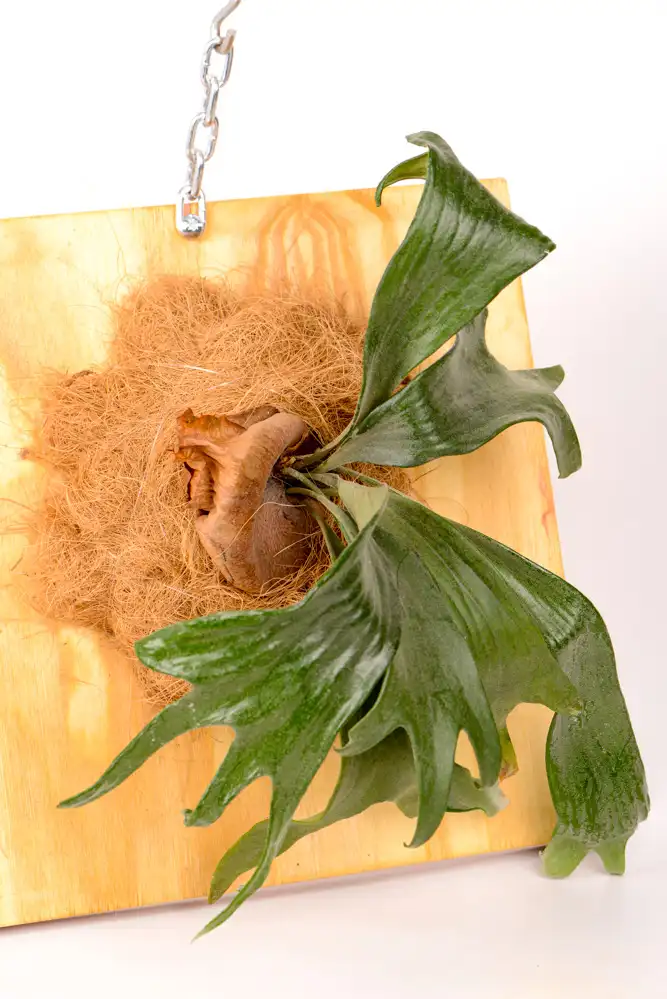
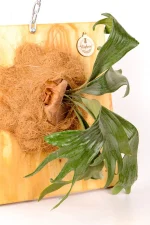
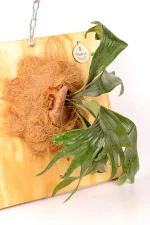
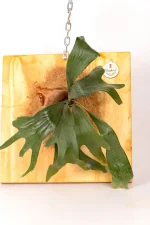
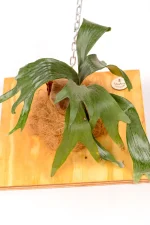
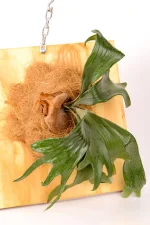
Botanical name: Platycerium ‘Mount Lewis’.
Commonly known as:
- Staghorn Mount Lewis
- Mount Lewis Staghorn Fern
- Mount Lewis Elkhorn Fern
- Platycerium Mt. Lewis
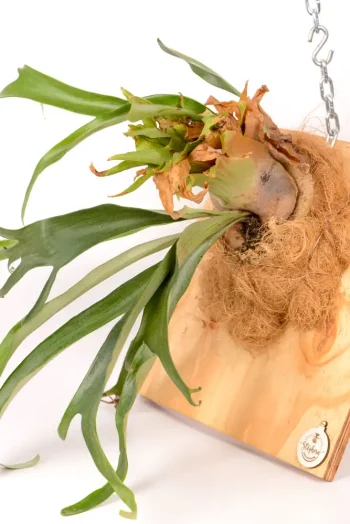
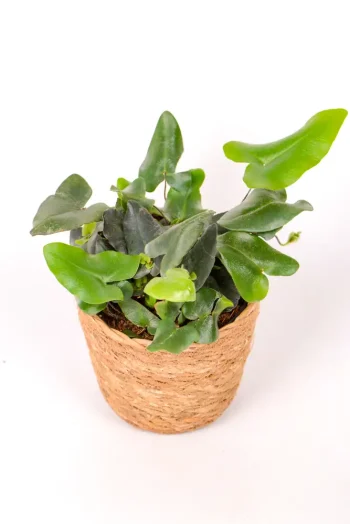
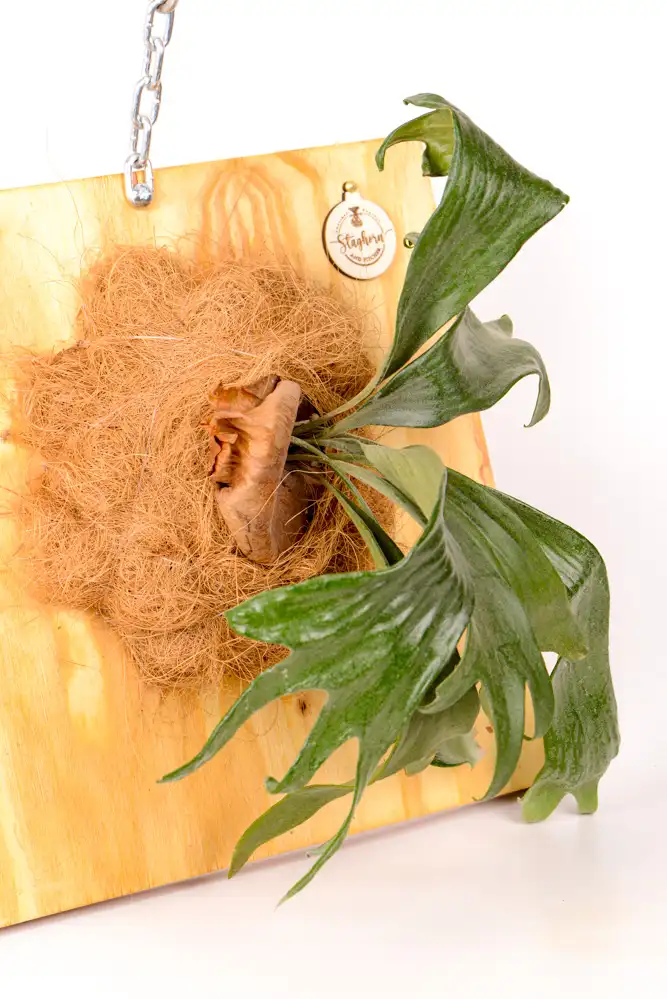
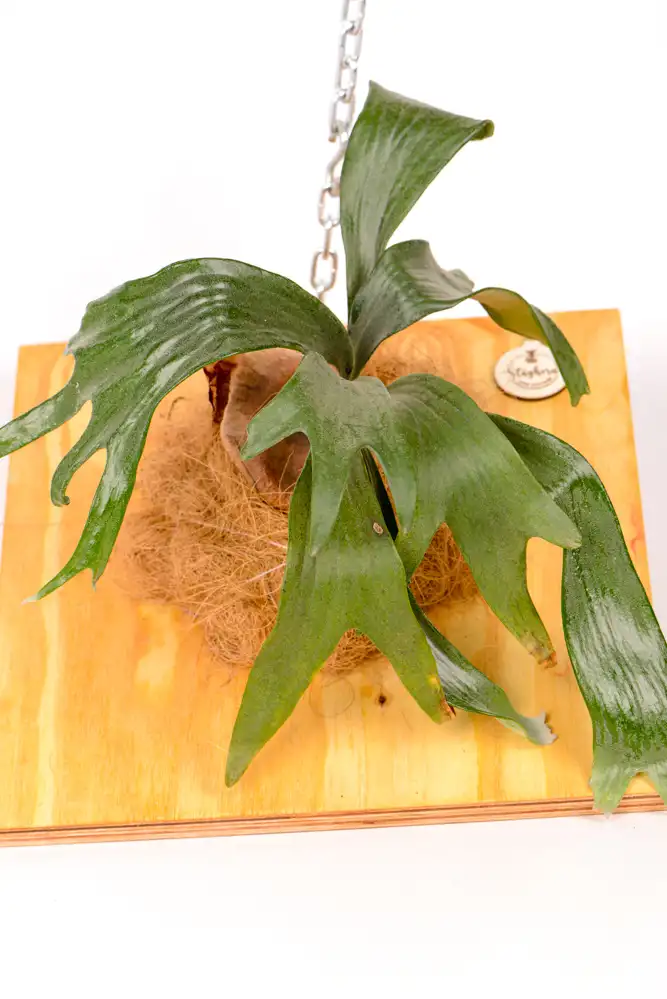
Platycerium Mount Lewis is a fern to give a little space and enjoy as it develops. Its branching antler fronds create an open, sculptural shape, while the shield fronds build up around the base of the plant.
Mount Lewis takes its name from the Australian locality associated with this distinctive form. It is particularly interesting for its divided fronds and prominent veins, although leaf shape can vary between plants and as they mature.
These specimens are supplied mounted on 40 × 40cm boards. The board dimensions describe the mount rather than the spread of the fern. As it grows, the fronds can extend beyond the edges, so allow room around the display.
Staghorn ferns are epiphytes: their roots use a supporting surface rather than needing a conventional pot of garden soil. A mount shows off that growth habit and makes it easy to appreciate both types of frond.
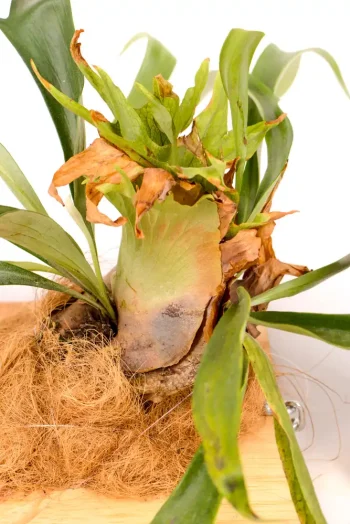
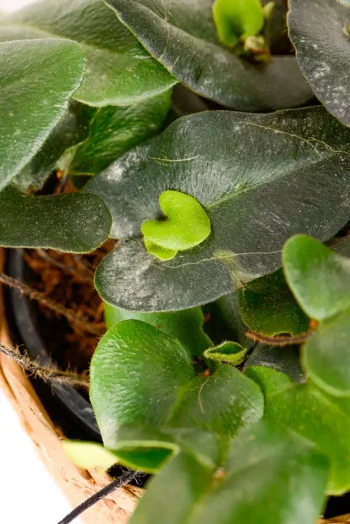
The rounded shield fronds protect the root area. They begin green and gradually become brown and papery as they age, forming a useful layer beneath new growth. Leave these older shields in place.
Choose a bright room or a sheltered patio with filtered light and gentle air movement. Water the root area thoroughly, let it drain, and check the mounting medium before watering again. With space to grow and the right balance of moisture and airflow, Mount Lewis makes a beautiful feature for a fern collection.
Platycerium Mount Lewis Care Guide

Water – How should I water my mounted Platycerium Mount Lewis?
Soak the root area and coir medium thoroughly, then let the board drain before hanging it back up. A light spray over the fronds alone may not wet the roots properly.
Check how damp the material behind the shields feels and how heavy the mount is. Allow it to dry partially between waterings without leaving the plant dry for long periods. Adjust for heat, airflow and season rather than using a fixed timetable.

Light – Where should I hang my Mount Lewis?
Give it bright, filtered natural light. A sheltered patio or a position near a bright indoor window can work well.
Protect it from harsh midday and afternoon sun. If introducing gentle morning sunshine, do so gradually. Deep shade is less suitable for steady growth.

Humidity – Does Mount Lewis need high humidity?
It appreciates moderate to higher humidity with good airflow. Avoid a sealed, constantly damp space.
In dry rooms, a humidifier can help, but correct watering of the mount remains essential. Keep the fern away from direct blasts of hot air or air conditioning.
Growing Medium – What should sit behind the shield fronds?
This fern is already mounted, so there is no need to transfer it into ordinary potting soil. Its roots need a moisture-holding but airy mounting medium, such as suitable long-fibre sphagnum moss.
When remounting eventually becomes necessary, avoid tightly compressing the root area or covering the growing point. Preserve the established root mass wherever possible.

Feeding – How should I fertilise my Mount Lewis?
Feed moderately during active growth. A soluble fertiliser can be applied when watering the mount, using the product’s instructions for ferns and the chosen application method.
Novatec Soluble Fertiliser is an option from our range; check the label for the appropriate dilution. Do not apply concentrated fertiliser to dry roots, and reduce feeding when growth slows.

Remounting – When will my Mount Lewis need a larger board?
There is no need to remount immediately. Allow the fern to establish on its current board.
Consider a larger support when the plant outgrows the available space or the board and fixings deteriorate. Keep the root ball and shields intact as far as possible, and avoid fastening across soft new fronds. Check the hanging point can support the fully watered mount.
Pests – What should I watch for?
Inspect for scale and mealybugs, particularly around sheltered crevices and the base of the fronds.
Do not confuse regular brown spore patches on mature antler fronds with pests. If treatment is necessary, choose a product labelled as suitable for ferns and test cautiously; delicate fronds can be damaged by unsuitable sprays.

Temperature – What conditions suit Mount Lewis?
A warm, sheltered position suits it best. Protect the plant from frost, cold draughts and sudden temperature extremes.
During a cold Gauteng winter, move an exposed mount to a protected position and check moisture carefully. A cool mount dries more slowly and should not remain saturated.
Extra Care – Leave the shield fronds and leaf coating alone
Brown, papery shields are part of a healthy staghorn fern. Do not peel them off to tidy the plant: they protect the root area and form the base for new layers.
The soft coating on the antler fronds is also natural. Avoid polishing, scrubbing or using leaf-shine products. Handle fresh growth gently when moving or watering the board.
FAQs
Q: Does the 40 × 40cm measurement refer to the plant?
No. It is the size of the mounting board. The fronds may extend beyond it, and individual plants vary.
Q: Can I keep Mount Lewis indoors?
Yes, provided the room offers useful natural light and airflow. Remove the board for watering and let it drain before returning it to the wall.
Q: Why is the rounded frond at the base turning brown?
Older shield fronds naturally become brown and papery. Leave them in place. A soft, wet or foul-smelling base needs closer inspection.
Q: Are the brown patches under the antler fronds a disease?
Defined brown patches on mature fertile fronds may be spore-producing areas. These are a normal part of fern reproduction.
Q: Can I grow it outside?
A sheltered, frost-free position with filtered light can work. Protect it from strong sun, drying wind and cold winter conditions.
Q: Should I remove it from the board and put it in a pot?
No need. The mounted display suits its epiphytic growth habit. Focus on watering the root area properly and providing suitable light.
Be sure to visit and follow us Facebook and Instagram