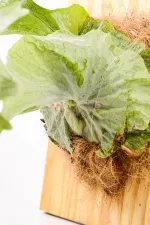
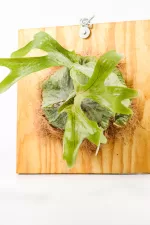
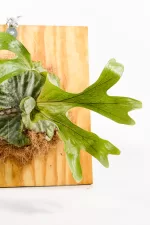
Platycerium Superbum
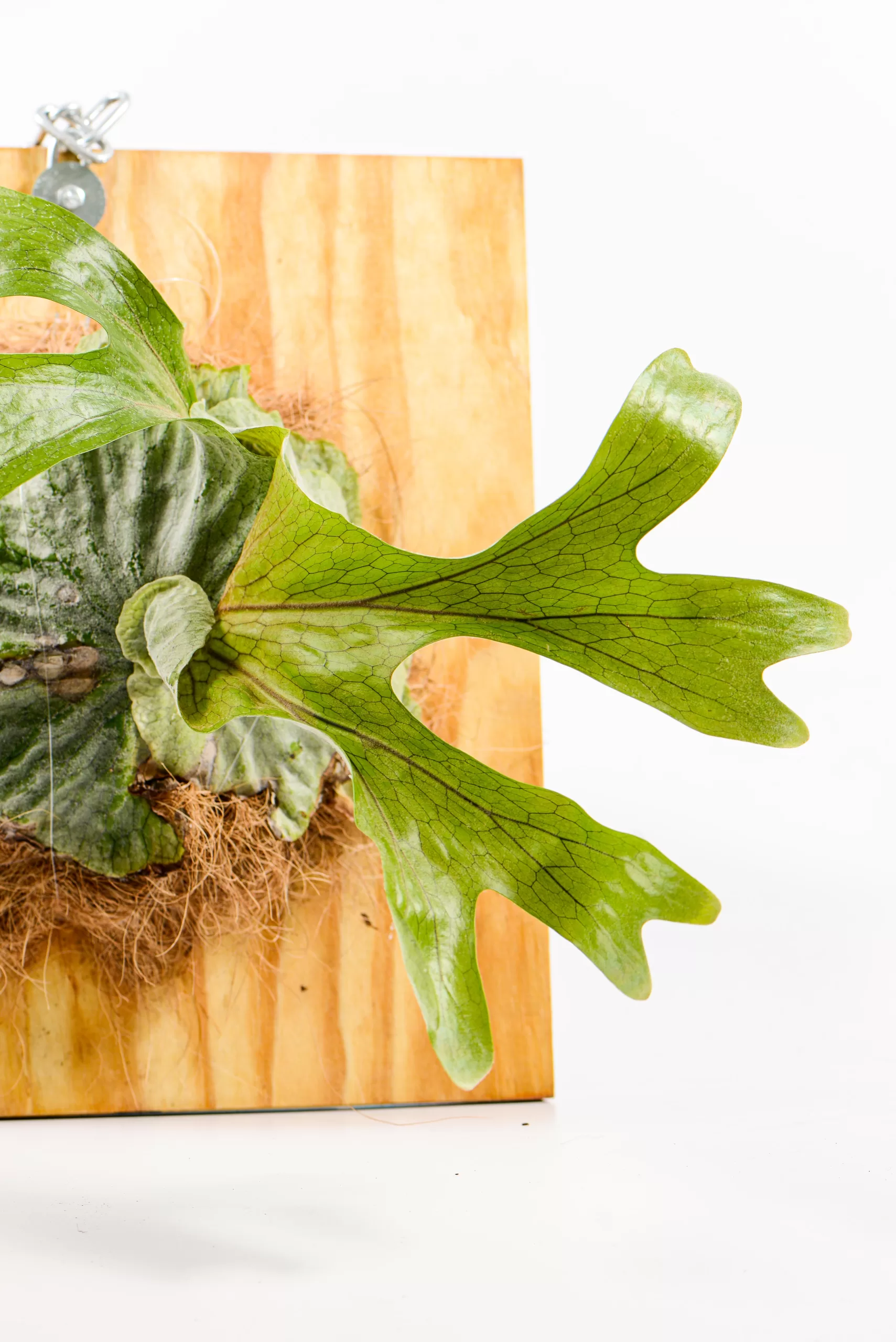
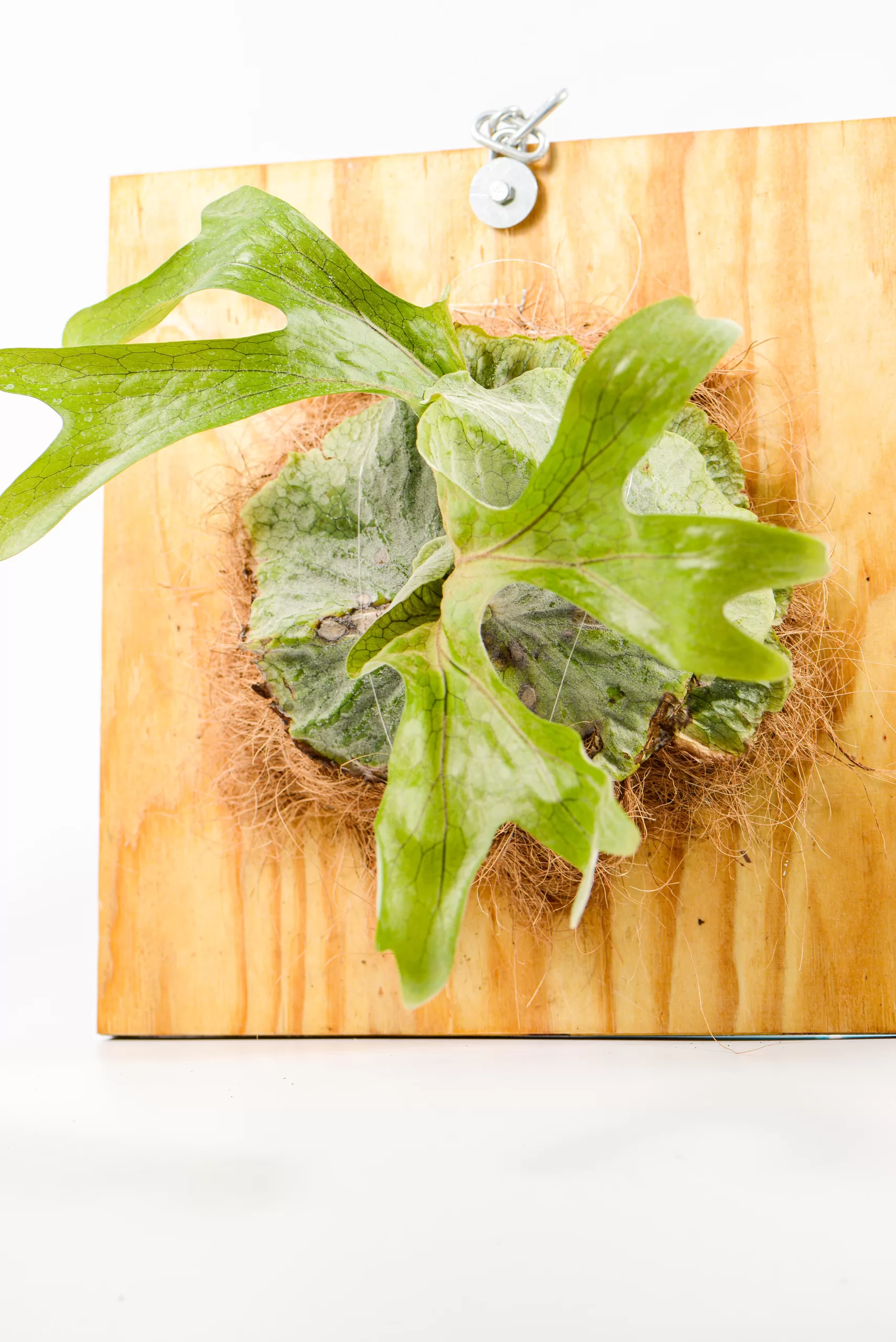
The Platycerium superbum is the king of the staghorns — known for its broad shield fronds and long, cascading fertile fronds that resemble antlers. Each plant is hand-mounted onto a 40 × 40 cm treated wooden board, creating a natural display that looks as if it’s growing right out of the wall.
Native to the rainforests of northern Australia, this fern attaches itself to trees and absorbs moisture from the air. Mounted staghorns are low-maintenance once established and become more impressive each year.
Being epiphytic (not parasitic), they use trees/mounts only for support, and not as nutrients.
Platycerium Superbum Care Tips
💧 Watering – How often should I water a mounted Platycerium?
Water about once a week in warm months and every 10–14 days in cooler weather. Remove the mount from the wall, soak the entire back briefly, and allow excess water to drain before re-hanging. In humid weather, you can mist the shield fronds lightly between soakings.
☀️ Light – Where should I hang my staghorn fern?
Provide bright, indirect light — filtered sun under a patio roof or near a bright indoor window is ideal. Too much direct sun can scorch the fronds, while deep shade can slow growth.
💨 Humidity – Does the Platycerium superbum need high humidity?
It appreciates moderate to high humidity, though it adapts well to most indoor conditions. In very dry homes, a regular misting helps maintain those lush, green fronds.
🌱 Mounting & Substrate – What’s inside the mount?
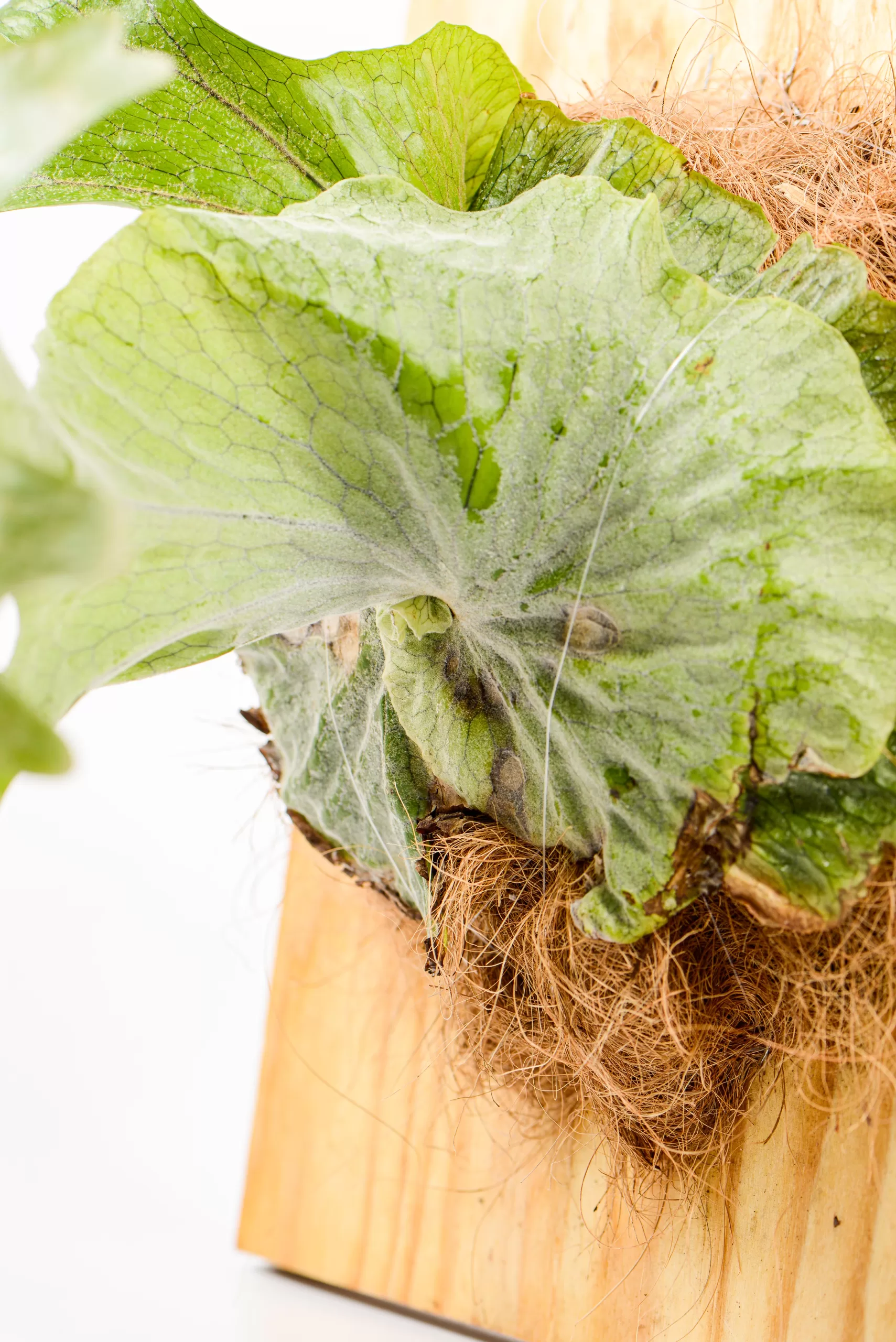
The fern’s roots sit in a small bed of coco coir and then their potting mix which they have been growing in for these past few years. They fixed securely to the treated wooden board. Over time, the shield fronds will grow to cover the board completely. The 40 × 40 cm size provides ample space for growth and long-term display.
🌿 Feeding – How should I fertilise a mounted staghorn fern?
During the warmer months, feed once a month with a diluted Organic Fertiliser or a gentle liquid seaweed tonic. You can also tuck a small amount of Controlled Release Fertiliser into the top of the Staghorn for steady nutrients. Avoid fertilising in winter.
🪴 Repotting – Does a mounted Platycerium ever need repotting?
Not in the usual sense — but after several years, if it outgrows its mount, you can remount it onto a larger board. Otherwise, it’s happy to stay right where it is.
🐛 Pests – What should I watch for?
Keep an eye out for scale insects hiding behind the fronds. If found, gently wipe them off and use an insecticidal spray. Wiping the board and fronds occasionally keeps it healthy and pest-free.
🌡️ Temperature – What’s the best temperature range?
Ideal temperatures range from 18 °C – 28 °C. Avoid frost, freezing drafts, or extremely dry heat. Under stable indoor or patio conditions, it’ll flourish year-round.
Commonly known as:
Large Rubber Tree Range / Rubber Plant
Botanical name:
Ficus elastica
The Ficus elastica has long been a design favourite — clean lines, glossy foliage, and a sculptural form that thrives indoors. Our Large Rubber Tree range offers four distinct personalities:
Robusta: Classic deep green leaves with a polished, timeless look.
Abidjan: Rich burgundy-green leaves for darker, moodier tones.
Ruby: A vibrant mix of pink, cream, and green — perfect for colour lovers.
Tineke: Cream and sage variegation for softer, elegant contrast.
Each grows upright with thick, leathery leaves and a hardy nature that forgives the occasional missed watering. These 19cm pot specimens are large enough to make an impression but easy to manage indoors.
FAQ’s
Q: Can I grow a staghorn fern indoors?
Yes. They grow beautifully indoors in bright, indirect light with regular watering and humidity. HOWEVER, they will thrive outside with natural air flow.
Q: How do I water a mounted staghorn without making a mess?
Simply take it to the sink or garden, soak it thoroughly with a gentle spray from a hose pipe, let it drain, then hang it back once dripping stops.
Q: Will it damage my wall?
No — as long as it’s mounted on a treated board and allowed to dry between waterings, it’s safe to hang on most surfaces.
Q: Does it need soil?
No. The roots attach to the moss and absorb nutrients and moisture through the fronds — just like in nature.
Be sure to visit and follow us Facebook and Instagram