





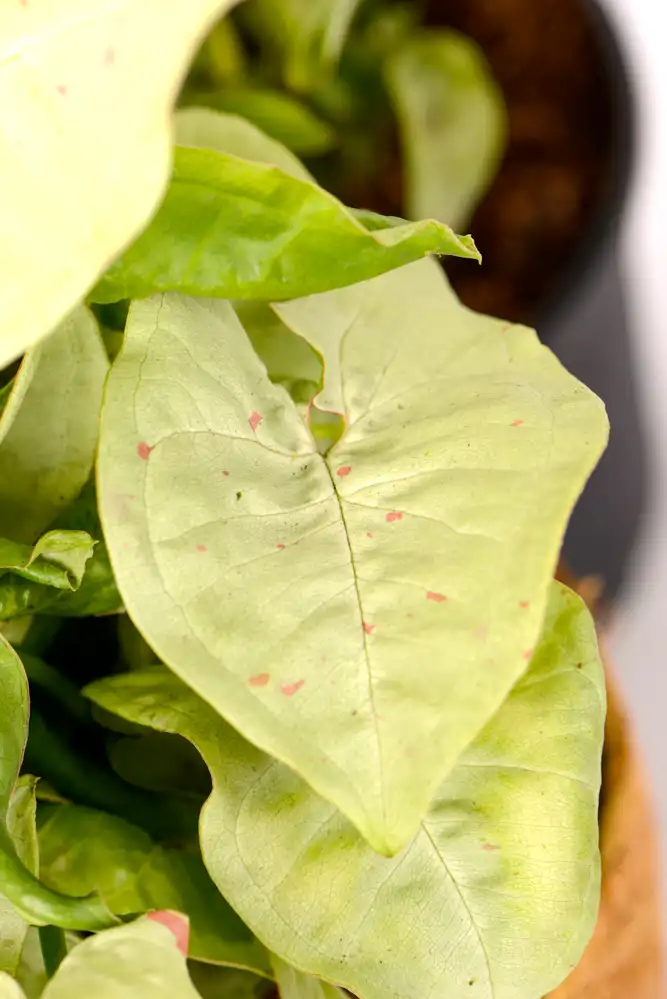
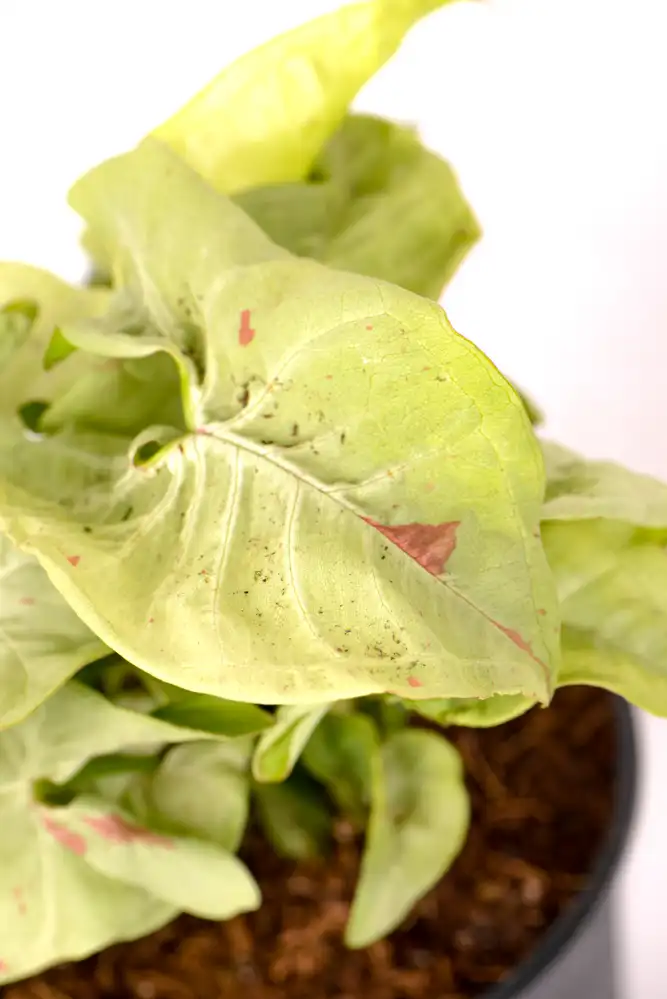
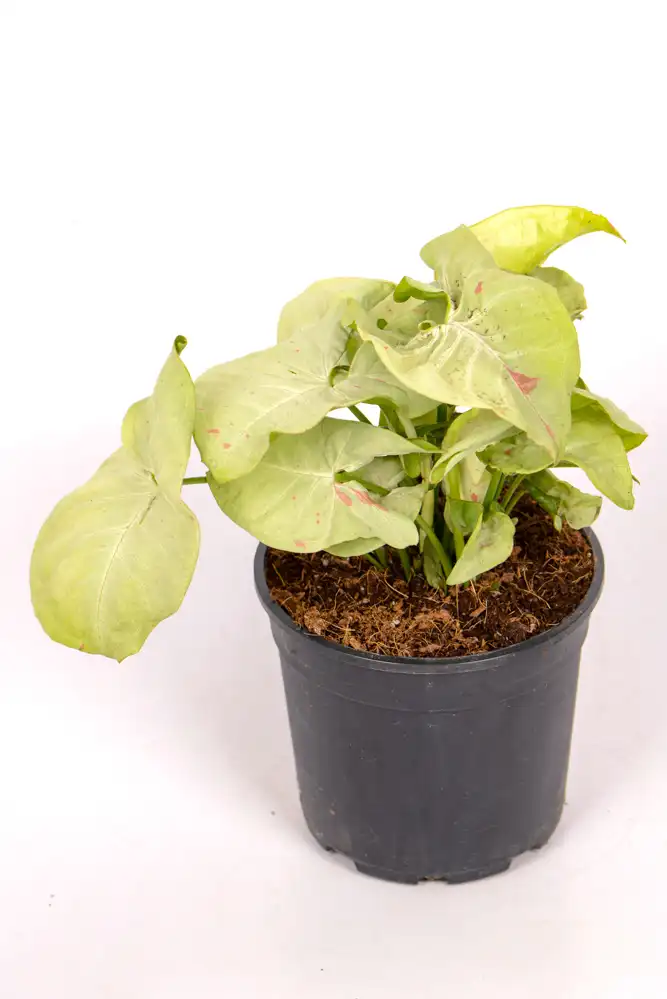
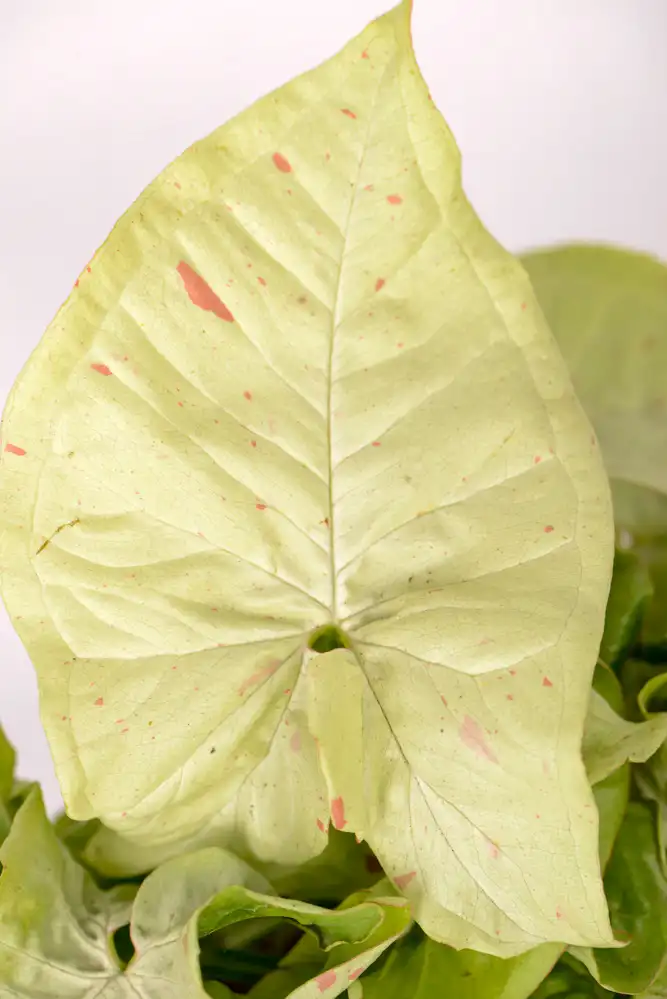
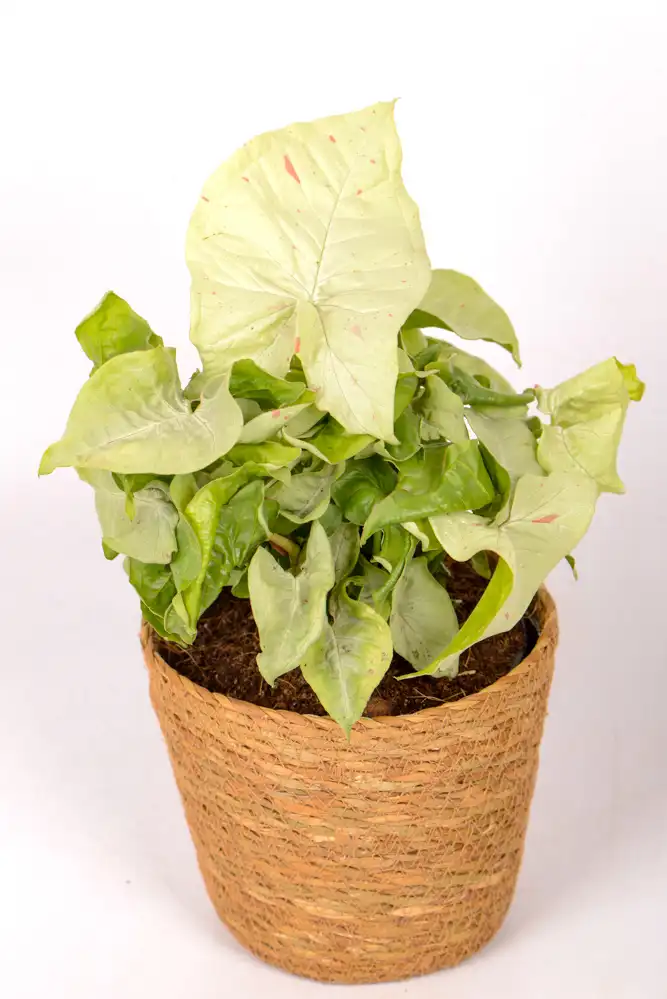
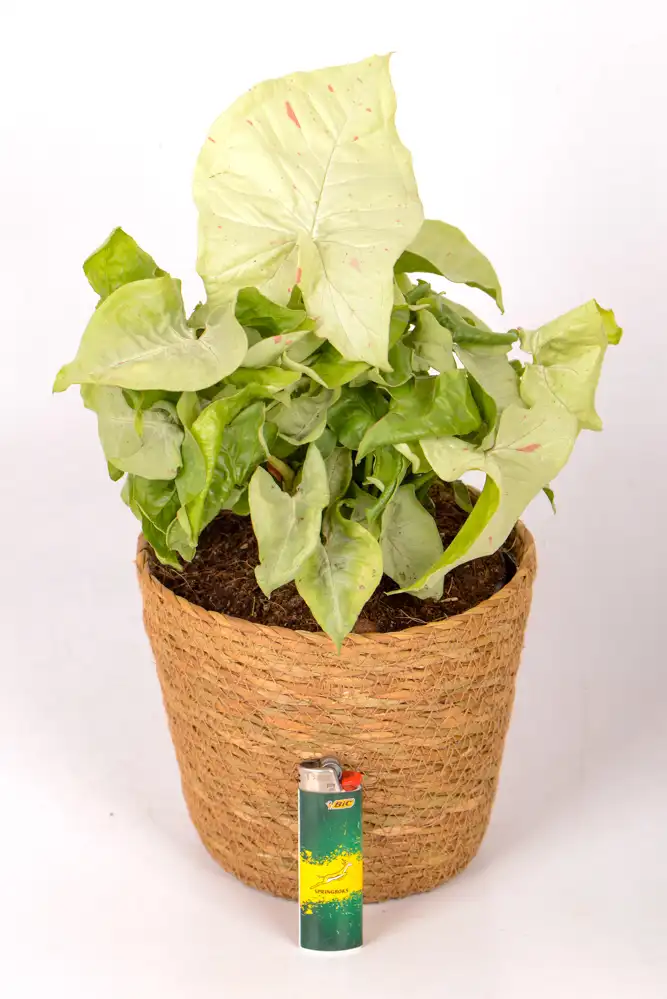
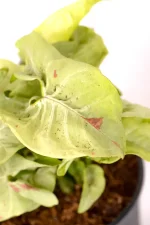
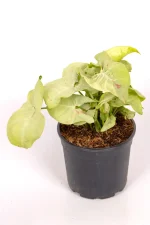
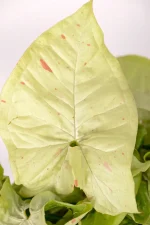

The Syngonium Confetti gets its name from the little pink markings scattered across its soft green foliage – almost as though someone has flicked pink paint over the leaves.
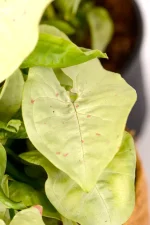
The amount and placement of pink varies naturally from leaf to leaf. Some may have a handful of fine speckles, while others develop larger pink splashes or patches, so fresh growth is always worth watching.
Like other Syngoniums, young Confetti leaves have that distinctive arrowhead shape. As the plant matures, its growth becomes more vigorous and the leaves can gradually develop a more divided shape.
Confetti is an easy indoor plant when you get the basics right. Give it bright, indirect light to support good colour and compact growth. It doesn’t want to sit permanently wet, but it also isn’t a plant I’d allow to become bone dry repeatedly.
As it gets older, you can let the stems trail or give them support and encourage the plant upwards. Syngoniums are natural climbers, and providing support allows them to show off their more mature growth.
Regular feeding during active growth will keep fresh leaves coming, while occasional pruning is an easy way to encourage a fuller, bushier plant.
Commonly known as:Â Â Syngonium Confetti |Â Pink Confetti Syngonium |Â Arrowhead Plant
Botanical name: Syngonium podophyllum ‘Confetti’
Syngonium Confetti Care Guide
Water – How often should I water my Syngonium Confetti?
Keep the growing medium evenly moist without keeping it soggy.
Water thoroughly once the upper layer starts to dry, then let the excess drain away. Syngoniums don’t enjoy sitting in water, but repeated extended dry-outs can leave the foliage drooping and the leaf edges damaged.
Check the growing medium with your finger rather than following a rigid weekly watering schedule.
Light – How much light does Syngonium Confetti need?
Give it plenty of bright, indirect natural light.
Good light helps maintain strong growth and encourages the best colouring in the leaves. Gentle morning sun is generally fine, but protect the foliage from harsh, prolonged midday sun that could scorch it.
If growth becomes stretched with large gaps between the leaves, move the plant closer to a good natural light source.
Humidity – Does Syngonium Confetti like humidity?
Yes. Syngoniums appreciate moderate to higher humidity, particularly during hot, dry weather.
That said, you don’t need to turn your house into a greenhouse. Normal household conditions are usually perfectly manageable, especially when the plant has consistent watering and good airflow.
Soil – What growing medium should I use?
Syngonium is an aroid, so it enjoys a loose growing medium with plenty of air around the roots.
Our Aroid Mix is ideal. It provides the balance of moisture retention, drainage and root aeration that Syngoniums enjoy.
Avoid dense potting media that compact around the roots and remain waterlogged.
Feeding – Should I fertilise my Syngonium Confetti?
Definitely. Syngoniums are active growers when conditions are good and respond very well to regular feeding.
Controlled Release Fertiliser provides balanced, convenient nutrition consistently over time.
If you’d like to push strong, active growth, Novatec Soluble Fertiliser is an excellent option.
Repotting – When should I repot my Syngonium?
Wait until the roots have properly filled the current pot before moving it up.
Choose one sensible pot size larger rather than placing it into a dramatically oversized container. Fresh Aroid Mix and a pot with good drainage will give the roots everything they need to continue growing.
Pests – What should I watch for?
Spider mites, thrips and mealybugs are worth keeping an eye out for.
Check the undersides of the leaves and around fresh growth regularly. Catching pests early makes them considerably easier to deal with.
Temperature – What temperatures does Syngonium Confetti prefer?
Warm indoor conditions around 18°C–28°C suit it very well.
Protect it from cold drafts and very low winter temperatures. Growth naturally slows when conditions become cooler, so the growing medium will usually take longer to dry between waterings.
FAQ’s
Q: Will every leaf have the same amount of pink?
No, and that’s part of the fun with Confetti. The amount and pattern of pink naturally varies from leaf to leaf, with some showing fine speckles and others developing larger splashes.
Q: Why is my Syngonium Confetti producing less pink?
Check the light. Move it into a brighter position with plenty of indirect natural light. Good light generally produces stronger growth and helps the plant show its best colouring.
Q: Can I prune Syngonium Confetti?
Absolutely. Pruning longer stems is an easy way to keep the plant compact and encourage bushier new growth.
Q: Can I propagate the pieces I prune off?
Yes. Take a stem cutting that includes at least one node. The node is where new roots and growth develop, so a leaf on its own won’t produce a new plant.
Q: Is Syngonium Confetti pet safe?
No. Syngoniums contain calcium oxalate crystals and can cause irritation if chewed, so keep them away from pets and small children who may eat the foliage.
Be sure to visit and follow us Facebook and Instagram