






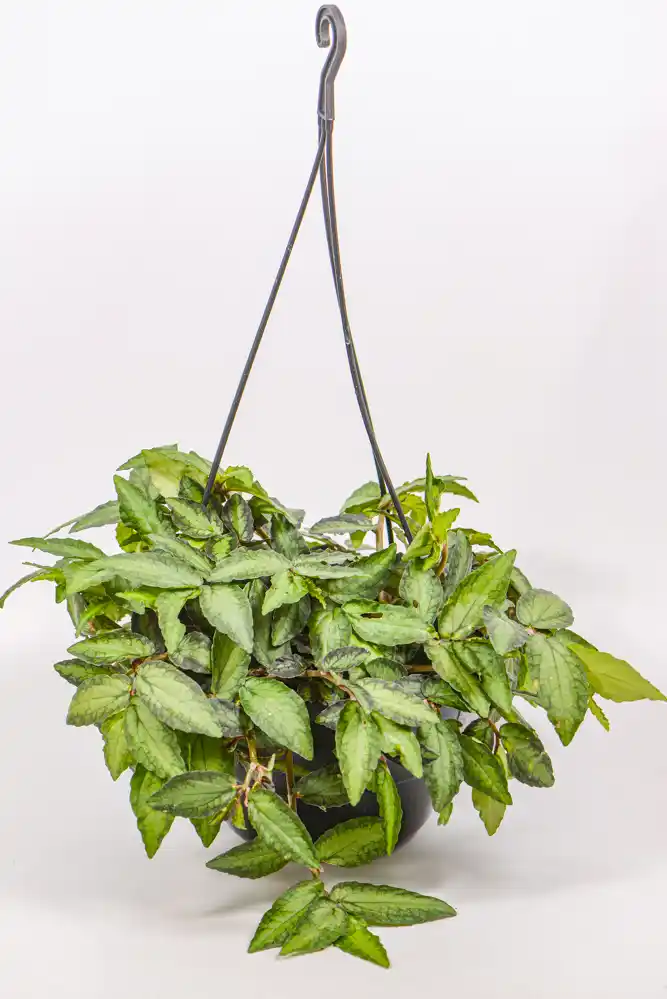
Commonly known as:Â Watermelon Pellionia / Watermelon Begonia
Botanical name:Â Pellionia repens
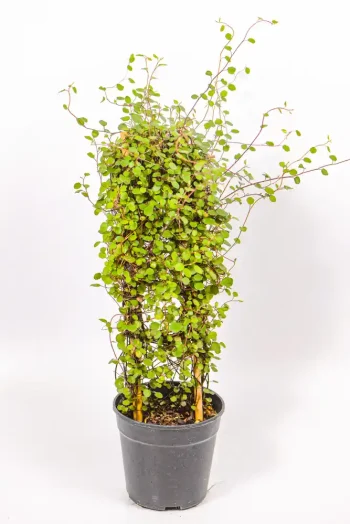
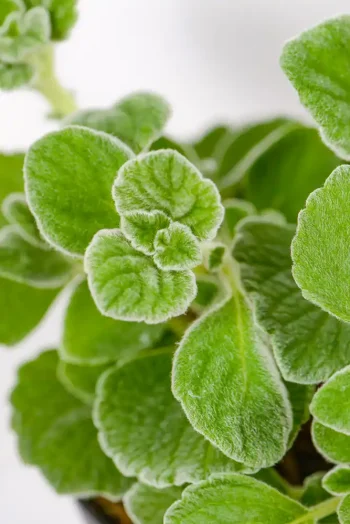
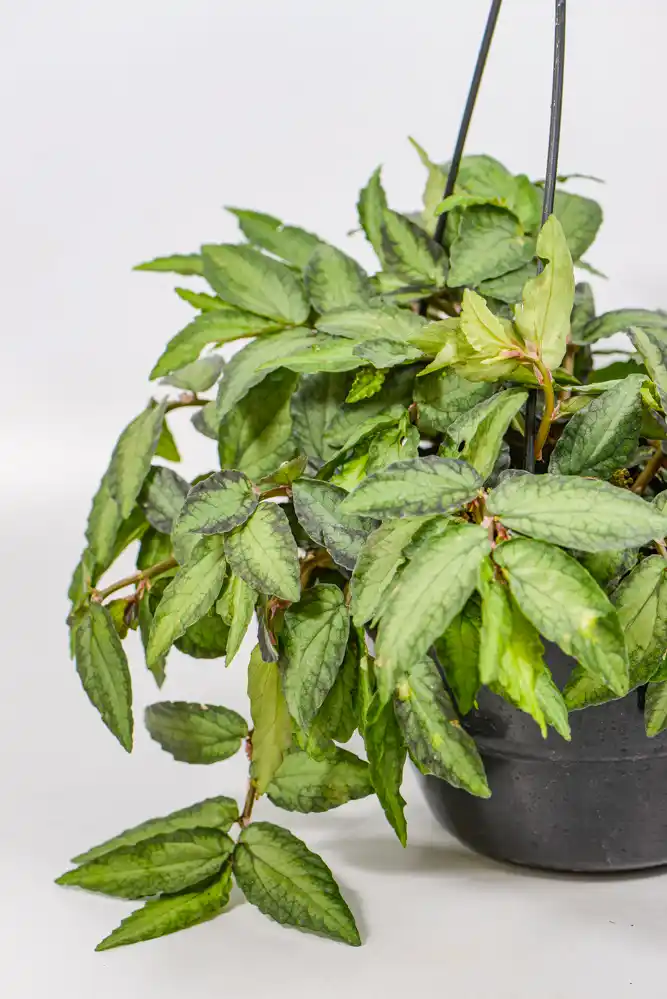
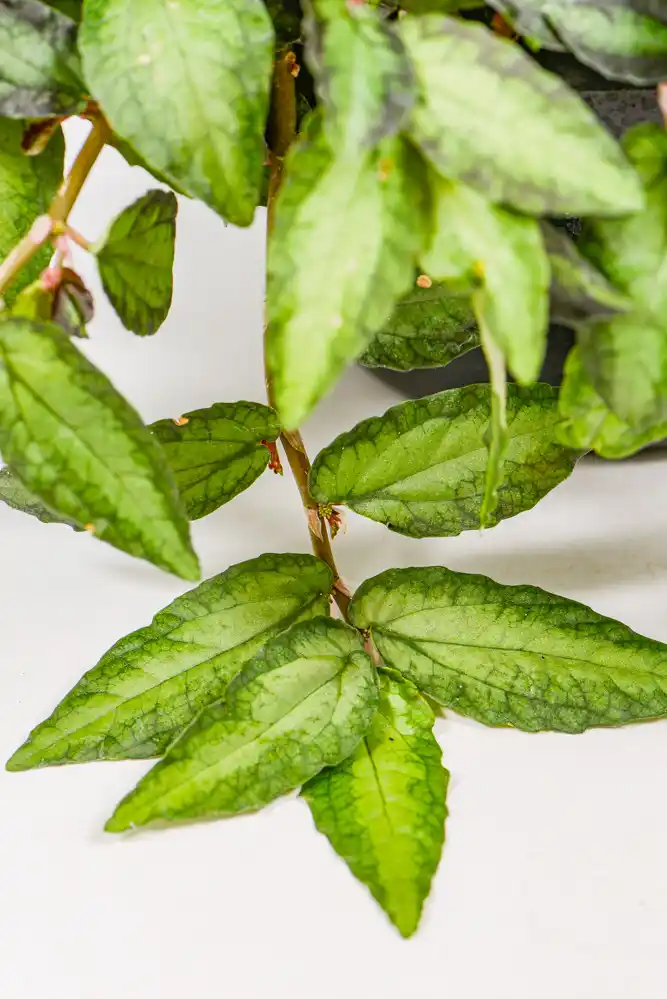
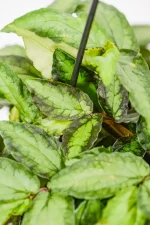
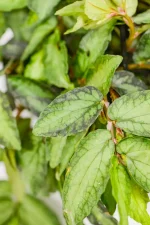
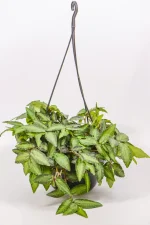
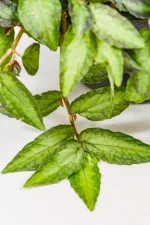
The Pellionia repens — often called Watermelon Pellionia or Watermelon Begonia — is a tropical trailing plant with small, textured leaves marked in shades of silver, olive, and dark green. The stems creep and spill beautifully over the edge of the pot, creating a dense, soft curtain of foliage. These 23 cm hanging baskets are already full and ready to display.
Despite its exotic appearance, the Watermelon Pellionia is surprisingly easy to care for and adapts well to indoor living when given good light and consistent moisture.
Watermelon Pellionia Care Guide
Watering – How often should I water a Watermelon Pellionia?
Keep the soil evenly moist but never waterlogged. Water when the top 2–3 cm of soil feels slightly dry — usually once a week in warm weather, a bit less in winter. Avoid letting it dry out completely, as the fine leaves can crisp quickly. Good drainage is essential.
Light – What kind of light does it prefer?
Bright, indirect light keeps the colours rich and growth dense. It tolerates lower light but may lose some of its silvery tones. Avoid direct sunlight, which can scorch the patterned leaves.
Humidity – Does it like humidity?
Yes, moderate to high humidity helps it thrive. Bathrooms, kitchens, or patios with gentle airflow are ideal. If kept indoors, mist occasionally or group it with other plants to maintain a humid microclimate.
Soil – What’s the best soil mix for a Pellionia?
For optimal drainage and healthy roots, use our Aroid Mix, or make your own using Barks Unlimited Potting Soil combined with Perlite. The mix should hold gentle moisture while staying light and airy.
Feeding – How often should I fertilise it?
Feed monthly during spring and summer using a mild Organic Fertiliser. For slow, steady nutrition, mix a small amount of Controlled Release Fertiliser into the soil at the start of the season. Pause feeding during winter dormancy.
Repotting – When should I repot a Watermelon Pellionia?
Repot every year or when roots reach the edge of the pot. Step up only one size and refresh the mix. Add a few Bark Chips to improve airflow and support trailing growth. Trim back longer stems occasionally to encourage bushiness.
Pests – What pests should I watch for?
They’re generally trouble-free, but mealybugs or spider mites may appear if air is too dry. Wipe the leaves gently and use an insecticidal spray if needed. Keeping humidity up helps prevent issues.
Temperature – What’s the ideal temperature range?
Between 18 °C and 28 °C is ideal. Avoid cold drafts, sudden temperature swings, or exposure to frost. Consistent warmth keeps the foliage lush and vibrant.
FAQ’s
Q: Why are the leaves fading or losing colour?
Likely not enough light. Move it to a brighter spot with filtered light.
Q: Can I grow it outdoors?
Yes, in a shaded or semi-shaded patio area protected from direct sun and frost.
Q: How can I make it fuller?
Trim back leggy stems — they’ll reshoot from the base and thicken quickly.
Q: Is it pet-friendly?
Yes, it’s considered non-toxic to cats and dogs.
Be sure to visit and follow us Facebook and Instagram