






Botanical name: Cissus discolor
Commonly known as: Rex Begonia Vine, Begonia Vine
Growth habit: Tendril climber; supplied with a moss pole.
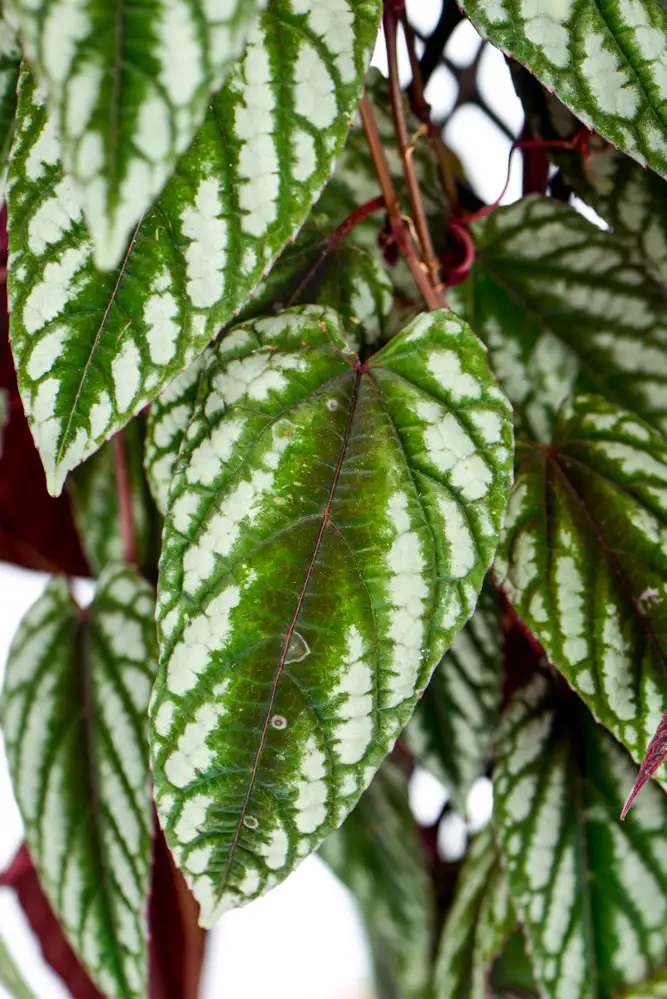
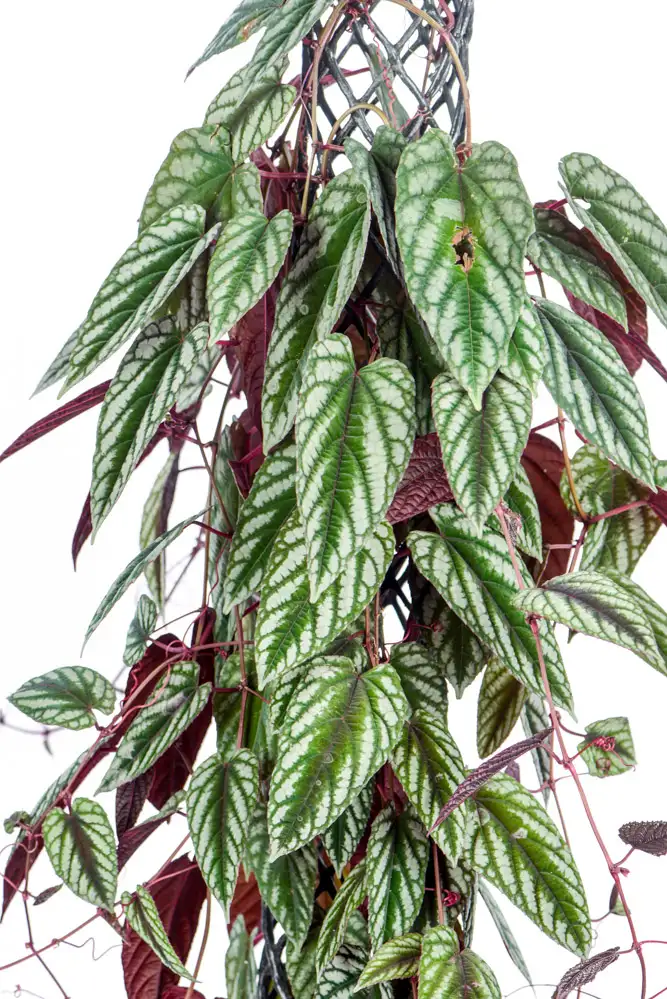
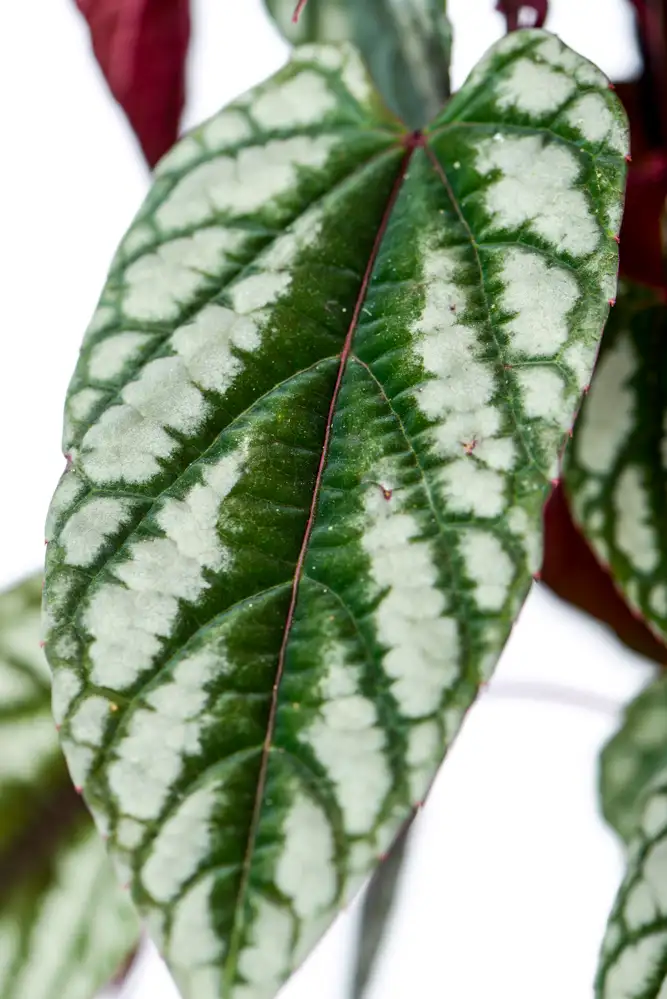
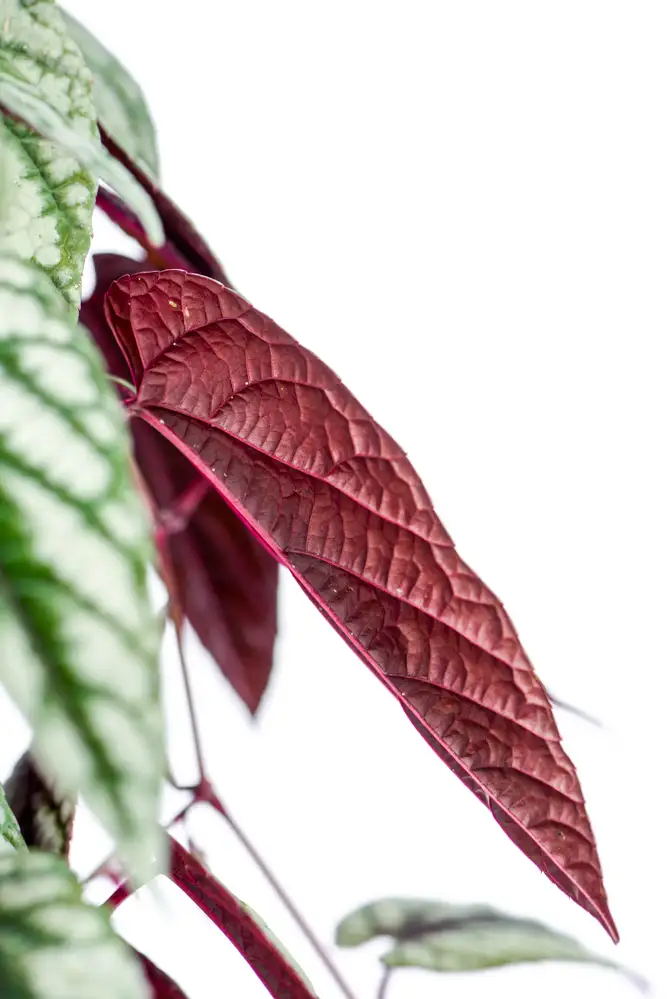
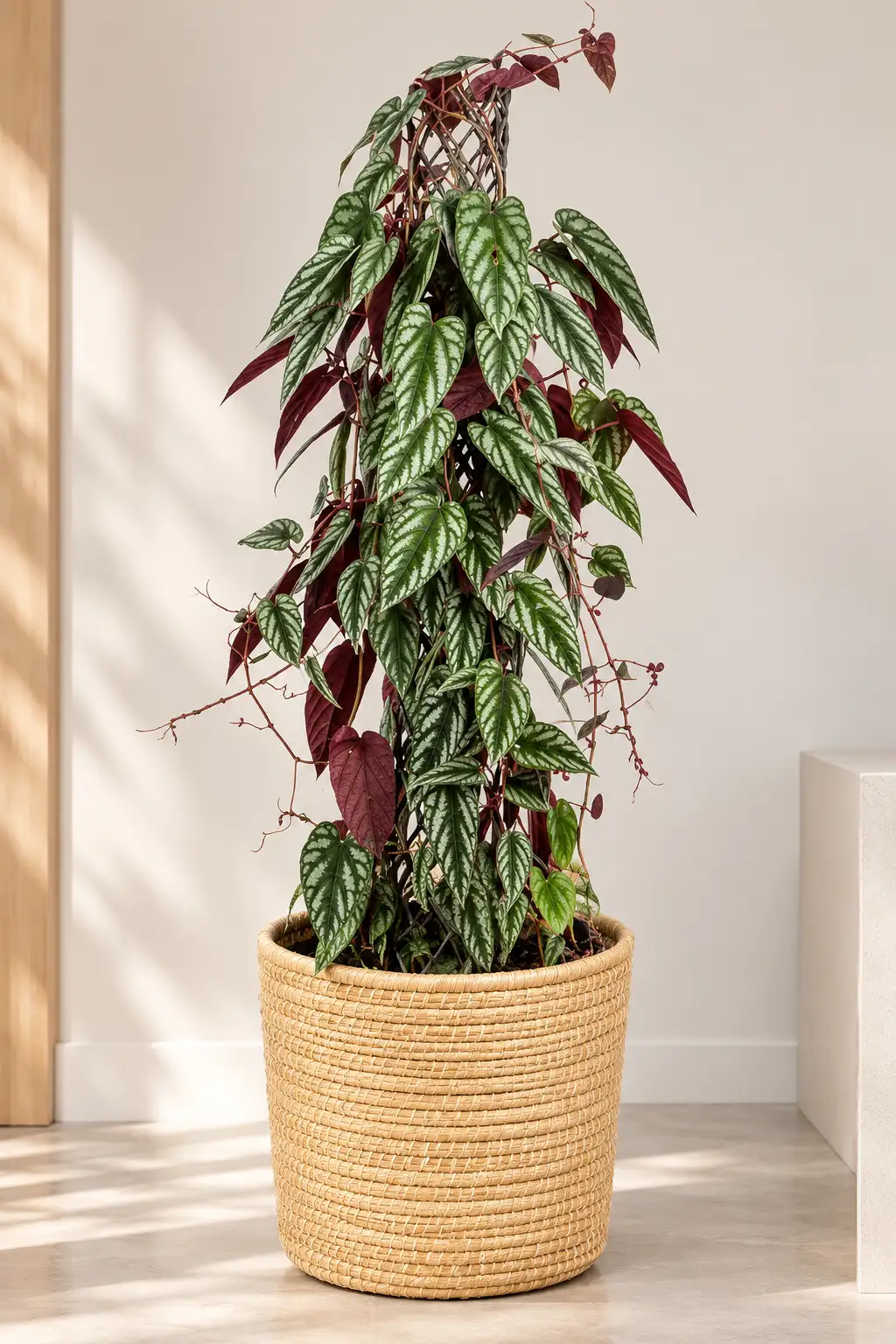
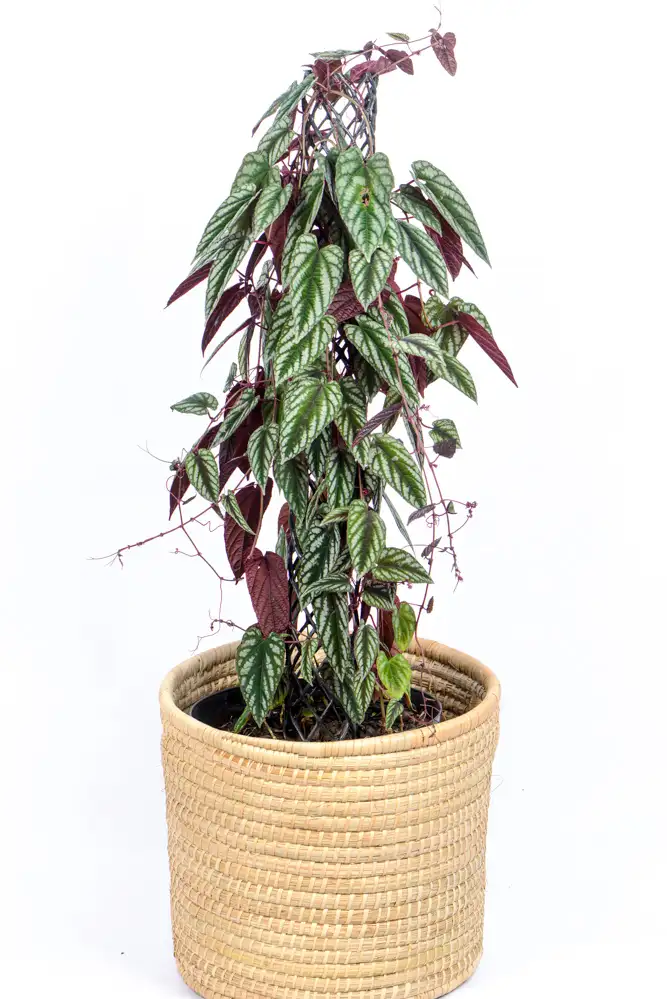
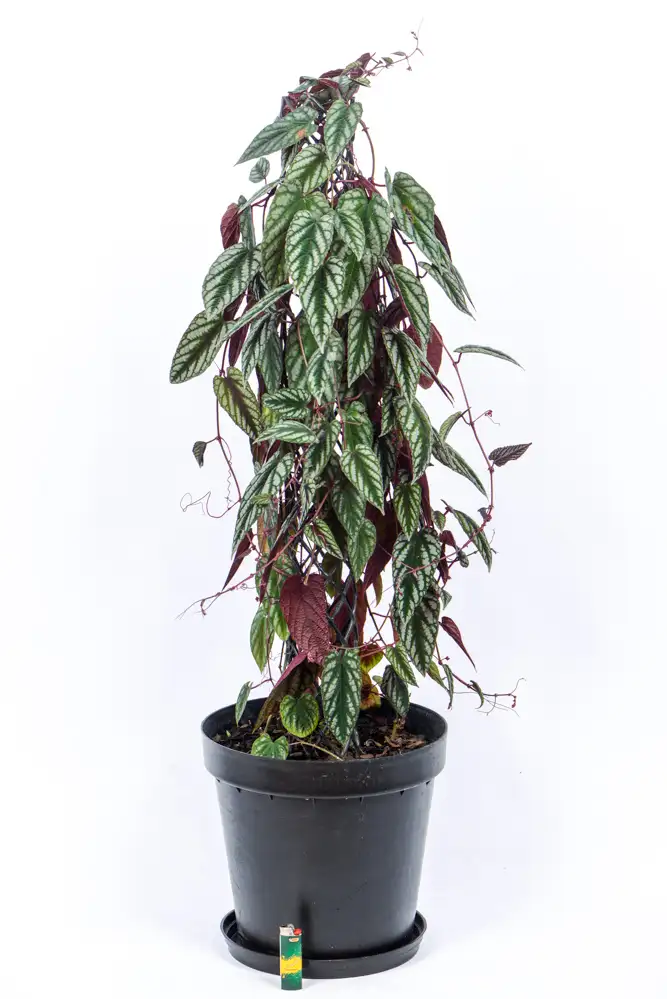
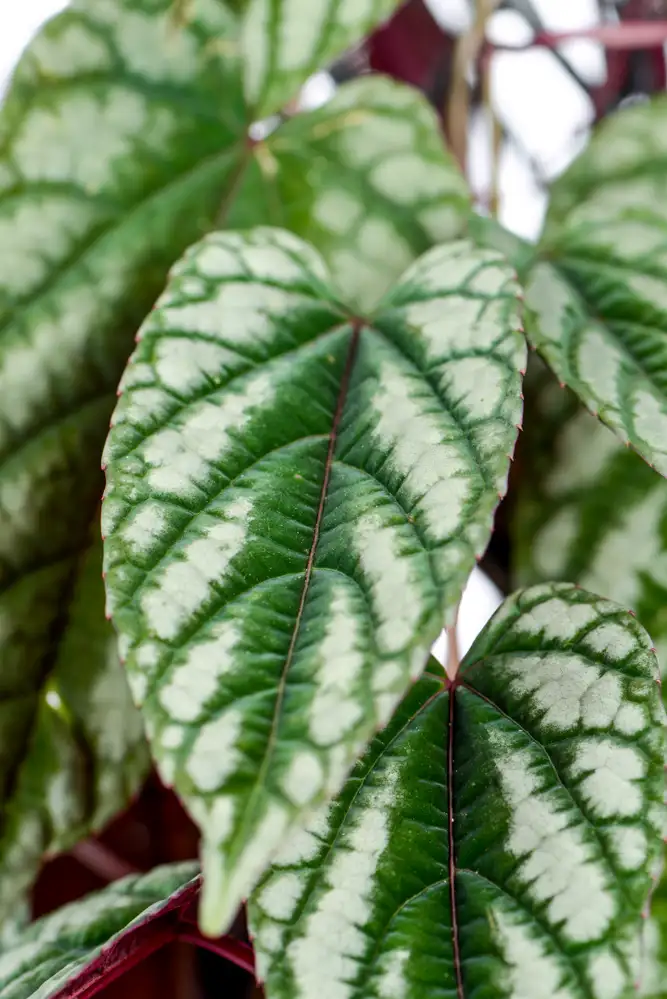
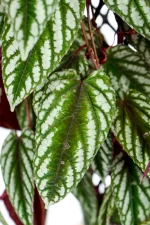
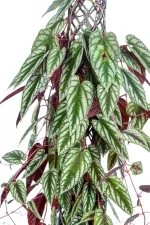
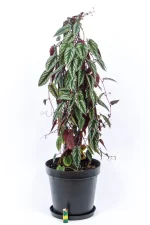
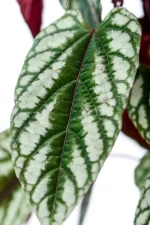
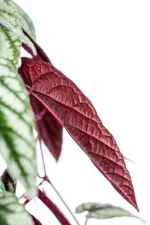
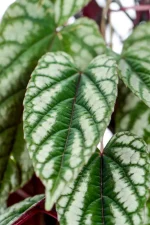
XL Cissus Discolor brings an intricate foliage pattern to a full-height climbing display. Its elongated, heart-shaped leaves combine deep green with silvery markings, while the undersides and stems introduce rich red to burgundy tones.
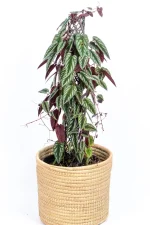
These plants are supplied in 30cm pots with a moss pole and stand approximately 1m tall. The larger size offers immediate presence, with a support already included for the developing vines.
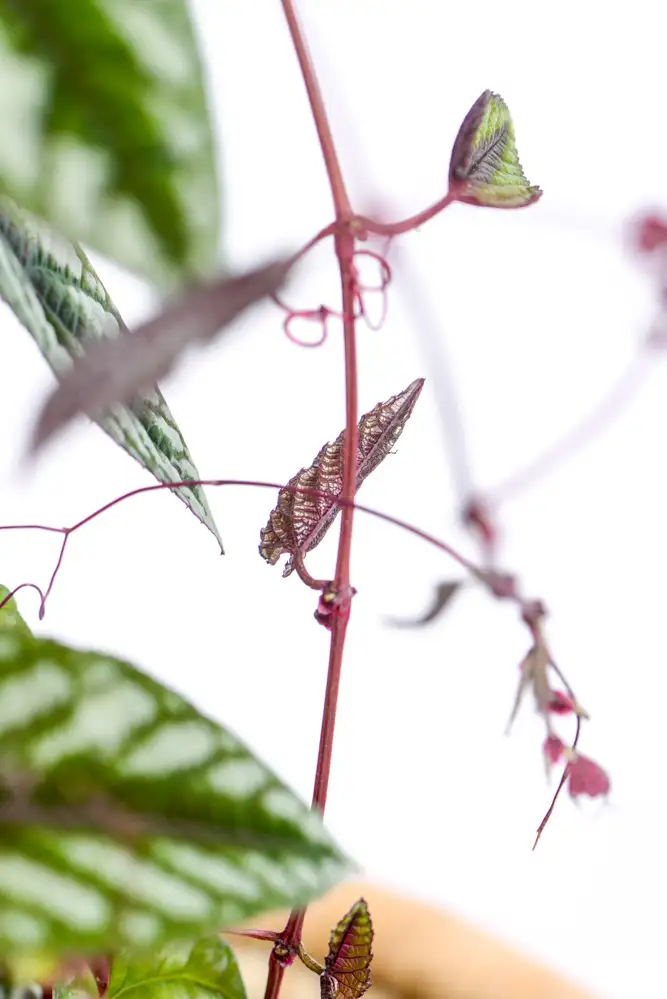
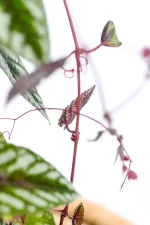
Often called the Rex Begonia Vine because of its patterned leaves, Cissus Discolor belongs to the grape family, Vitaceae. It climbs with tendrils, so guide fresh growth towards the pole as the stems extend.
Give it a warm, sheltered position within 1m of a bright north-facing window, with a sheer curtain preventing direct sun from hitting the foliage. Leave enough room around the pole for new leaves to open and for the pattern to be seen clearly.
It pairs beautifully with plain green foliage, where the silver pattern and burgundy reverse can stand out. A consistent supply of moisture, freely draining mix and protection from cold help keep this tropical climber looking its best.
XL Cissus Discolor Care Guide
Water – How should I water my XL Cissus Discolor?
Water when the top layer of mix begins to dry, while some moisture remains below. Check more than one spot in the 30cm pot, then water evenly across the surface until excess drains out.
Empty the saucer or outer pot. Avoid both a constantly saturated rootball and letting the entire pot become bone dry. The moss pole and potting mix can dry at different rates.
Light – Where should I place Cissus Discolor?
Place it within 1m of a bright north-facing window, with a sheer curtain keeping direct sun off the leaves. A large, well-lit east-facing window with direct rays screened is another option.
Keep the foliage in view of the window rather than behind furniture. Protect it from hot afternoon sun, which can damage the delicate patterned leaves.
Humidity – What conditions help the foliage stay healthy?
Choose a comfortably humid room with gentle airflow. Keep the plant away from drying heaters and air-conditioner outlets. In very dry homes, a humidifier can help maintain steadier conditions.
Avoid enclosing the foliage in still, damp air or keeping it continually wet.
Soil – What mix suits Cissus Discolor?
I recommend Milled Bark Growing Medium as the growing medium for an airy, freely draining root zone.
Keep some moisture around the roots without leaving the 30cm pot saturated. Use drainage holes, and check the rootball separately from the moss pole.
Feeding – When should I fertilise Cissus Discolor?
I recommend Novatec Soluble Fertilizer, a high-nitrogen fertiliser that supports leafy growth.
For organic feeding, choose TerraPlus Natura N or Grobest Organic Fertilizer. Controlled Release Fertilizer is another option for a gradual nutrient supply.
Feed during active spring and summer growth and ease back when growth slows. Follow the chosen product’s label rate and application method. Apply soluble feed to a moist rootball, and avoid combining several products at full rates.
Repotting – When will it need a larger pot?
Repot when the roots have filled the container or the plant has become difficult to water evenly because it is rootbound. Choose one pot size larger with drainage holes.
Support the vines and pole while handling the rootball. Make sure the pole remains stable after repotting.
Pests – What should I check for?
Inspect leaf undersides and stem joints for spider mites and mealybugs. Isolate affected plants and choose a treatment labelled for the pest and ornamental foliage, testing a small area first.
Handle the leaves gently during inspection.
Temperature – How warm should I keep Cissus Discolor?
Keep it in a warm room, preferably above 15°C, with protection from cold draughts and frost. Avoid sudden changes in temperature.
Reduce watering as growth and drying slow in cooler weather.
Extra Care – Guide new vines onto the moss pole
Arrange extending stems gently around the support, using loose ties where needed. Avoid pulling on attached tendrils. Trim overlong shoots with clean tools if the display needs shaping.
FAQs
What size is supplied?
A substantial plant in a 30cm pot with a moss pole, approximately 1m tall.
Is it a begonia?
No. Its common name refers to the decorative foliage; it is a Cissus in the grape family.
Does it keep climbing?
Yes. Guide new stems onto the support and extend or replace the support as needed.
Are the burgundy undersides normal?
Yes. The contrasting underside is part of its characteristic appearance.
Be sure to visit and follow us Facebook and Instagram