





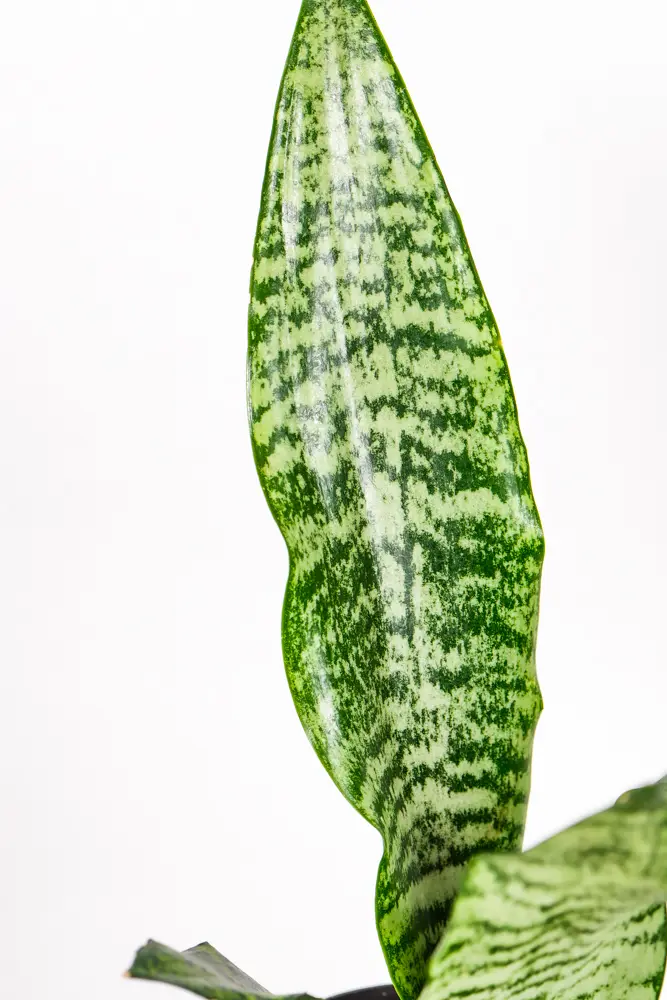
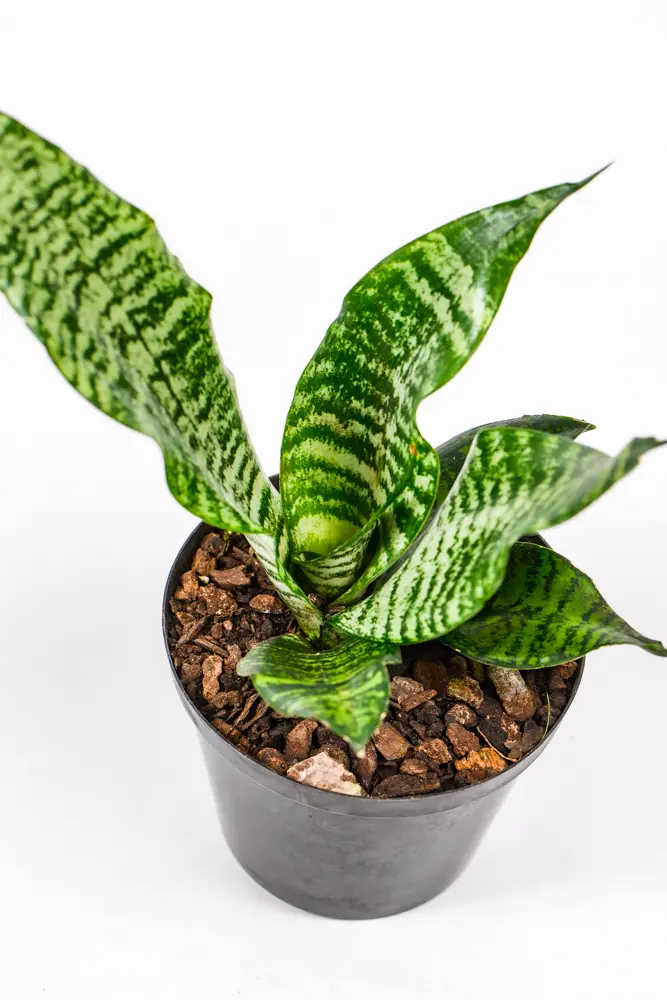
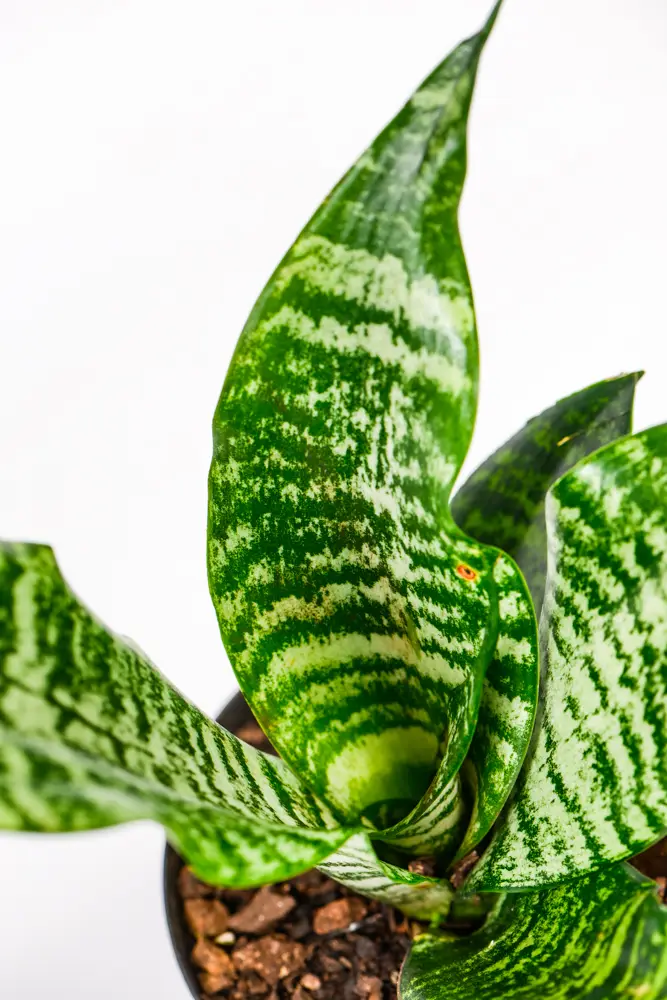

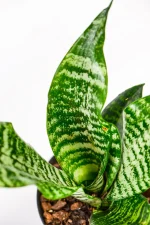
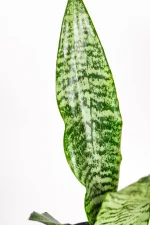
Commonly known as: Green Snake Plant, Mother-in-law’s Tongue
Botanical name: Sansevieria trifasciata
The Green Snake Plant is known for its resilience and clean, architectural look. Its stiff, upright leaves grow slowly but steadily, creating a neat form that suits modern interiors, offices, and low-traffic areas where plants need to be dependable.
This plant is particularly forgiving when it comes to light and watering, making it a popular choice for beginners as well as experienced plant owners who want something uncomplicated. Once settled, it prefers to be left alone rather than constantly adjusted or repotted.
Snake Plants are also well suited to indoor environments where conditions aren’t always ideal. They tolerate dry air, irregular watering, and fluctuating light far better than most houseplants, while still maintaining their strong, upright presence.
Green Snake Plant Care Guide
Watering – How often should I water it?
Allow the potting mix to dry out completely between watering. Snake Plants store moisture in their leaves and are far more tolerant of underwatering than overwatering. Always avoid leaving the pot standing in water.
Light – What light does a Green Snake Plant need?
Snake Plants adapt to a wide range of light conditions, from bright indirect light to lower-light areas. While they grow faster in brighter positions, they remain healthy even in less-than-ideal light.
Humidity – Does it need humidity?
No. Average to dry indoor humidity is perfectly suitable. This plant does not require misting or added humidity.
Soil – What soil works best?
Excellent drainage is essential. Our premixed Aroid Mix is well suited and prevents excess moisture around the roots. Alternatively, you can use our Indoor Potting Soil as a base and incorporate Perlite and Bark Chips to further improve aeration.
Feeding – How should I fertilise it?
Feed lightly during spring and summer using Grobest Organic Fertiliser every 6–8 weeks. Alternatively, Novatec Soluble Fertiliser can be used occasionally at a low dilution.
Repotting – When should a Snake Plant be repotted?
Snake Plants prefer to be slightly root-bound. Repot every 2–3 years, or only when roots begin to push against the pot. Move up one pot size and keep most of the existing soil intact. When repotting, you can incorporate TerraPlus Natura N together with Controlled Release Fertiliser into the fresh mix.
Pests – What pests should I watch for?
Snake Plants are rarely affected by pests. Mealybugs can occasionally appear. Early treatment with an insecticidal spray is usually sufficient.
Temperature – What temperature suits it best?
Ideal temperatures range between 15 °C and 30 °C. Protect from frost and prolonged exposure to temperatures below 10 °C.
FAQ’s
Q: Is the Green Snake Plant suitable for beginners?
Yes. It’s one of the easiest indoor plants to care for.
Q: How fast does it grow?
Growth is slow to moderate, especially indoors.
Q: Can it tolerate low light?
Yes, although growth will be slower.
Q: Is it pet-safe?
No. Snake Plants are toxic if ingested and should be kept out of reach of pets.
Be sure to visit and follow us Facebook and Instagram