



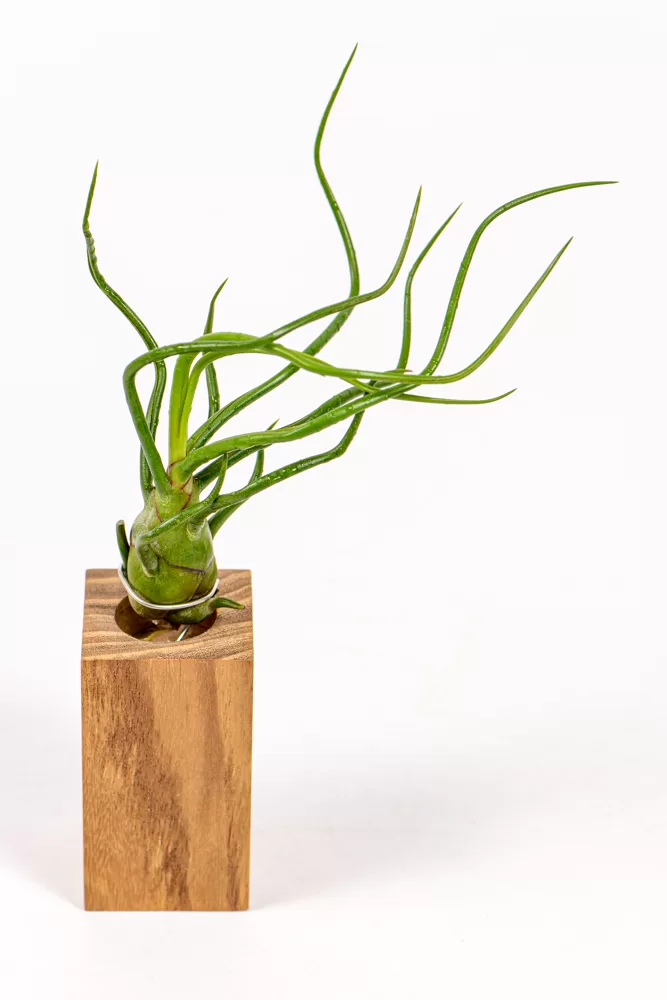
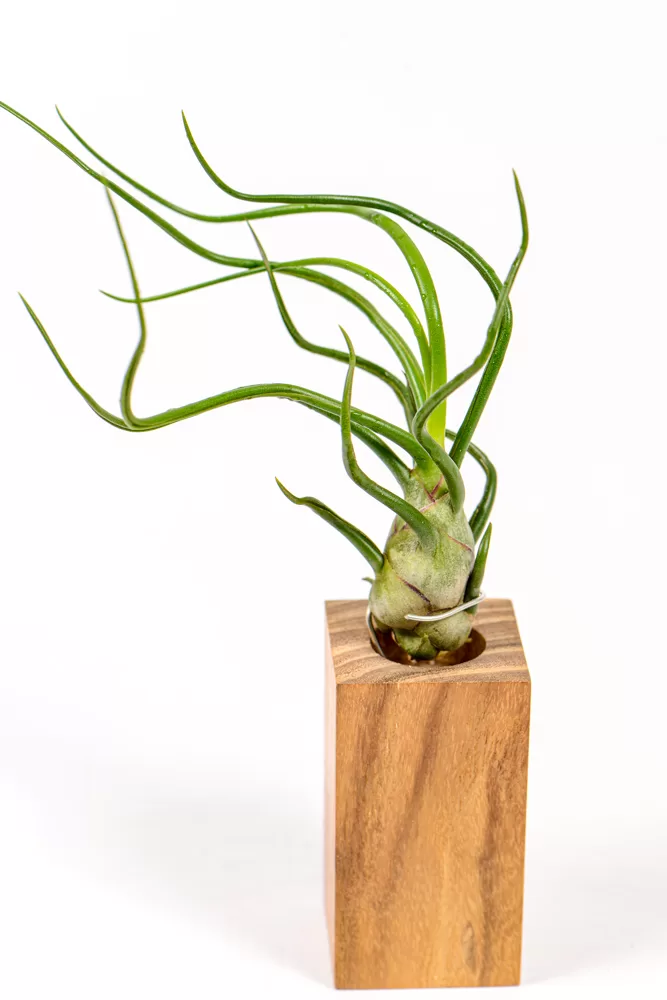
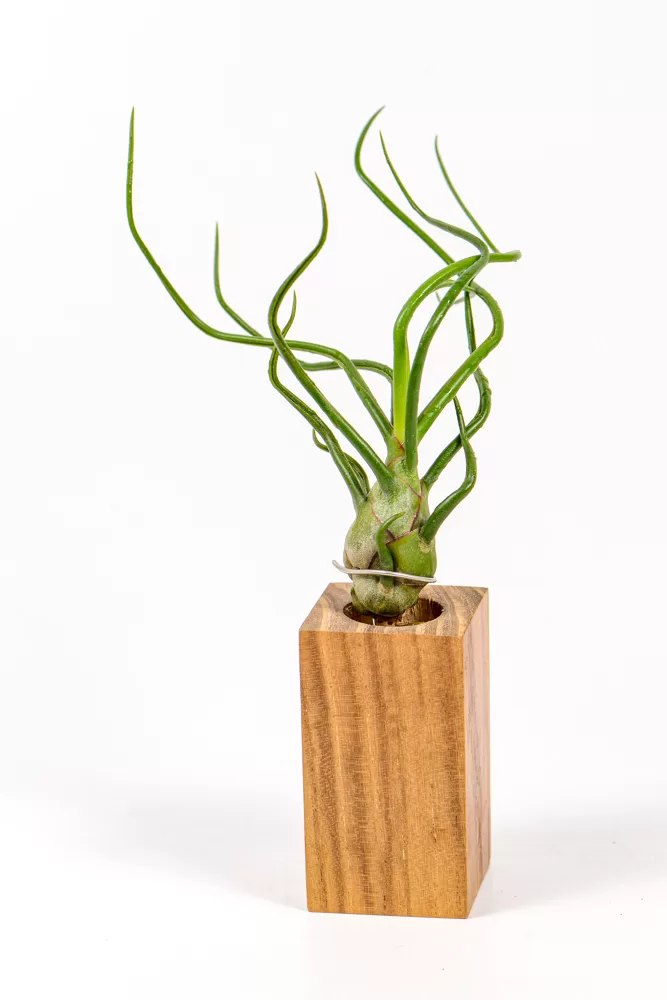

Commonly known as: Airplant Tillandsia Bulbosa
Botanical name: Tillandsia Bulbosa
Tillandsias are fascinating plants because they grow without traditional soil. Instead of relying on roots for nutrition, they absorb moisture and nutrients directly through specialised leaf structures. This makes them versatile for display, provided their natural airflow requirements are respected.
Light plays an important role in maintaining healthy growth. Airplants prefer bright, indirect light and should never be placed in harsh direct sun. Strong sunlight dries them out quickly and can cause leaf damage. Indoors, a well-lit room near a window with filtered light works well.
Watering is simple but must be consistent. Tillandsias require weekly watering, either by soaking them in room-temperature water for 20–30 minutes or by thoroughly misting them several times a week. After watering, excess water must be shaken off, and the plant should dry completely within 24hrs. This drying period is essential because prolonged moisture around the base leads to rot.
Air circulation is critical. Tillandsias should never be kept in closed glass containers, even those with holes in the front. Restricted airflow causes moisture to stagnate, which quickly leads to decline. Open displays, mounted pieces, or well-ventilated settings are always better choices.
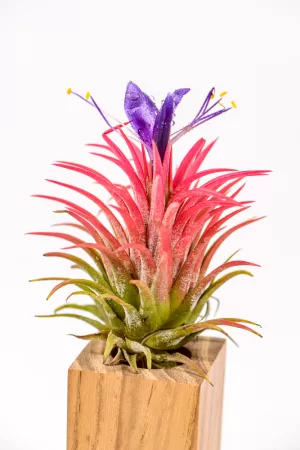
Many Tillandsias “blush” before flowering, meaning their leaves intensify in colour just prior to bloom. However, not every plant will arrive in flower. Blushing and flowering occur naturally when the plant is mature and conditions are favourable.
Airplant Tillandsia Bulbosa Care Guide
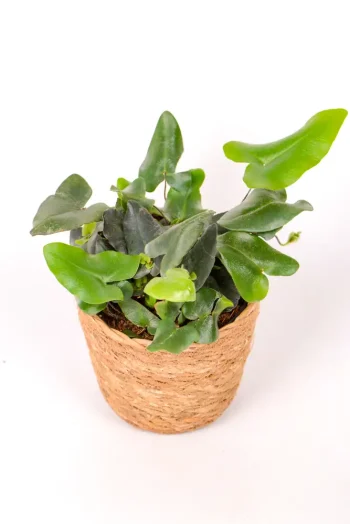
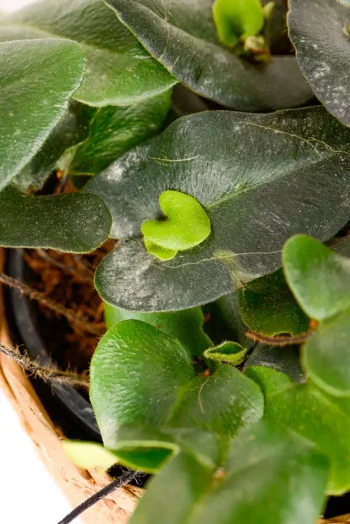
Watering – How often should I water a Northern Maidenhair Fern?
Keep the soil consistently moist, never dry or waterlogged. Check every few days — if the top feels slightly dry, water thoroughly until it runs through the base. These ferns love humidity, so a quick mist between waterings helps prevent crispy tips.
Watering – How often should they be watered?
Water weekly by soaking for 20–30 minutes or misting thoroughly several times a week. After watering, shake off excess water and ensure the plant dries fully within 24hrs.
Airflow – Why is airflow so important?
Tillandsias require strong airflow to stay healthy. Never keep them in closed glass containers, even those with small openings. Poor airflow traps moisture and causes rot.
Do they need soil?
No. Tillandsias grow without soil and absorb moisture through their leaves.
Feeding – Should they be fertilised?
Feed once a month during the growing season using Grobest Organic Fertiliser diluted to quarter strength. You can alternate with Novatec Soluble Fertiliser at very low concentration to support growth and flowering.
Temperature – What temperature suits them best?
They grow best between 18°C and 28°C. Avoid cold drafts and temperatures below 10°C.
FAQ’s
Q: Why is my air plant turning brown at the base?
This usually indicates rot caused by insufficient drying or poor airflow.
Q: Do air plants really flower?
Yes. Many Tillandsias blush before flowering, although not all plants will be in bloom when received.
Q: Can I keep my air plant in a glass terrarium?
Only if the container is fully open and allows strong airflow. Closed glass containers are not suitable.
Q: Do they need weekly watering even in winter?
Yes, although frequency may reduce slightly depending on humidity. Drying within 24hrs remains essential.
Be sure to visit and follow us Facebook and Instagram