





Commonly known as: Alocasia Black Velvet | Elephant Ear Black Velvet
Botanical name: Alocasia reginula
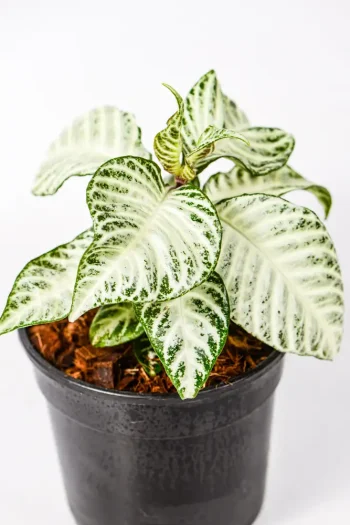
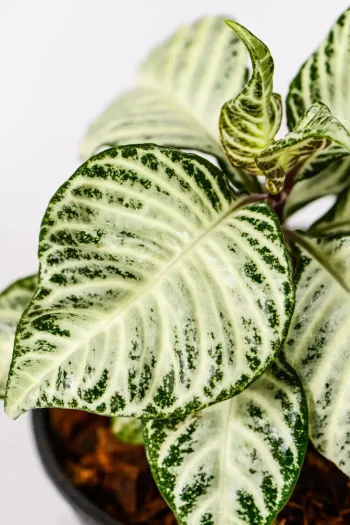
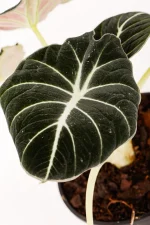
Alocasia Black Velvet stands out for its texture and contrast rather than its size. The leaves are thick and velvety, with a deep green tone that appears almost black in certain light. Bright white veins run sharply across the surface, creating a strong, defined pattern.
This is a smaller-growing Alocasia, which makes it easier to place while still offering high visual impact. Each leaf is broad and structured, sitting upright on short stems that keep the plant compact and balanced.
The matte surface of the leaves absorbs light rather than reflecting it, which gives the plant a softer, more refined appearance compared to glossy foliage plants. This makes it particularly effective when paired with brighter or shinier leaves.
With stable conditions and consistent care, the plant produces new leaves from the centre. As it matures, it develops a fuller, layered look while maintaining its compact form.
Alocasia Black Velvet Care Guide
Watering – How often should it be watered?
Water when the top 3–5cm of soil begins to dry out. Keep the soil evenly moist but not waterlogged. Alocasias prefer consistent moisture without extremes.
Light – What light does Alocasia Black Velvet need?
Bright, indirect light works best. Good light helps maintain strong leaf colour and supports steady growth. Avoid direct sun, as it can damage the leaves.
Humidity – Does it need extra humidity?
Yes, moderate to higher humidity helps maintain leaf quality and prevents browning edges. Stable humidity supports better overall growth.
Soil – What soil works best?
Use a chunky, breathable mix that supports root health. Aroid Mix works particularly well. Alternatively, use Indoor Potting Soil with Perlite and Bark Chips.
Feeding – How should it be fertilised?
Feed during the growing season with Grobest Organic Fertiliser every 4–6 weeks. For stronger growth, Novatec Soluble Fertiliser can be used.
Repotting – When should it be repotted?
Repot every 12–18 months or when the roots begin filling the pot. Move up one size only. When repotting, incorporate TerraPlus Natura N and Controlled Release Fertiliser into fresh mix.
Pests – What pests should I watch for?
Spider mites and thrips are the most common pests. Regular inspection and early treatment with an insecticidal spray helps prevent issues.
Temperature – What temperature suits it best?
Alocasia Black Velvet grows well between 18°C and 28°C. Avoid temperatures below 15°C and protect from cold drafts.
FAQ’s
Why are the leaves so dark?
The deep colour comes from the dense leaf tissue and velvet texture.
Is it difficult to care for?
It requires consistent conditions, but remains manageable with stable light and watering.
Does it stay small?
Yes. It remains compact compared to larger Alocasia varieties.
Is it pet-safe?
No. Alocasia species are toxic if ingested.
Be sure to visit and follow us Facebook and Instagram