





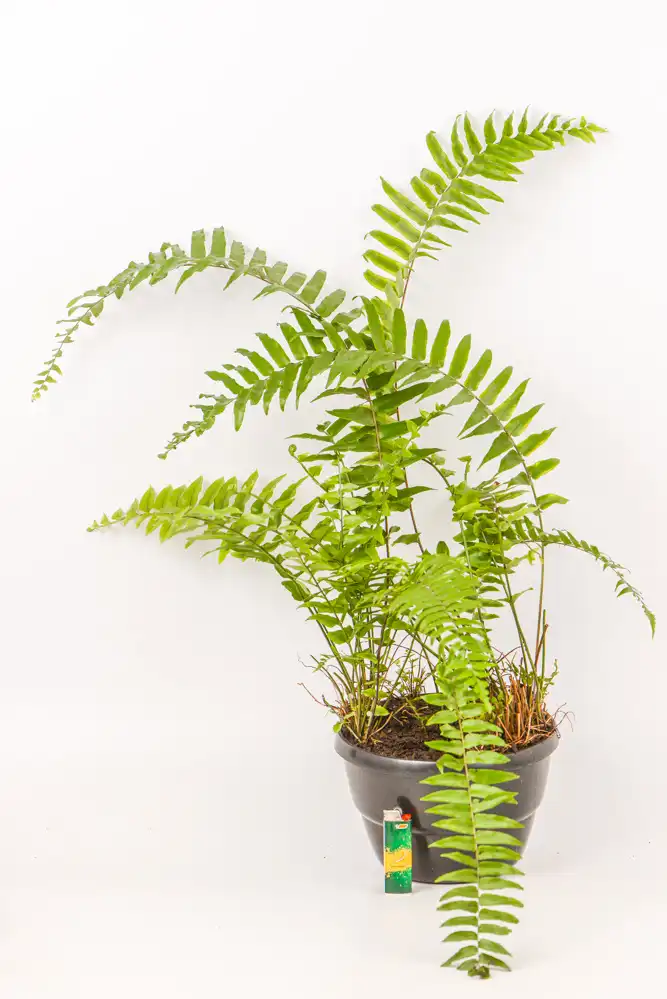
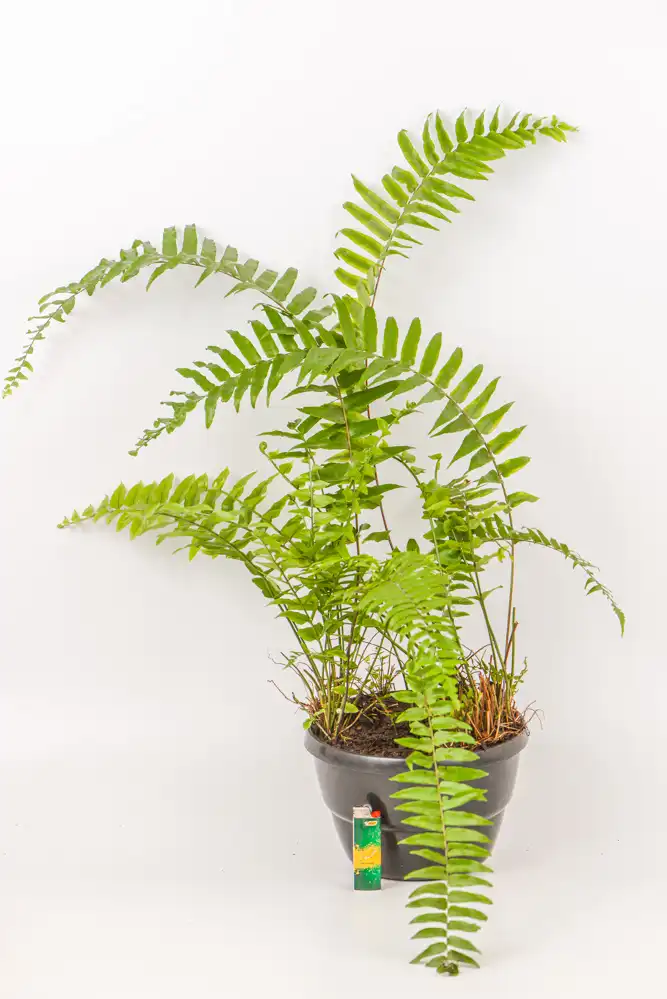
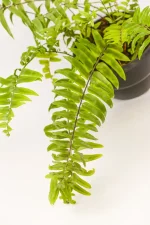
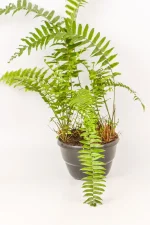
Commonly known as: Giant Sword Fern
Botanical name: Nephrolepis biserrata
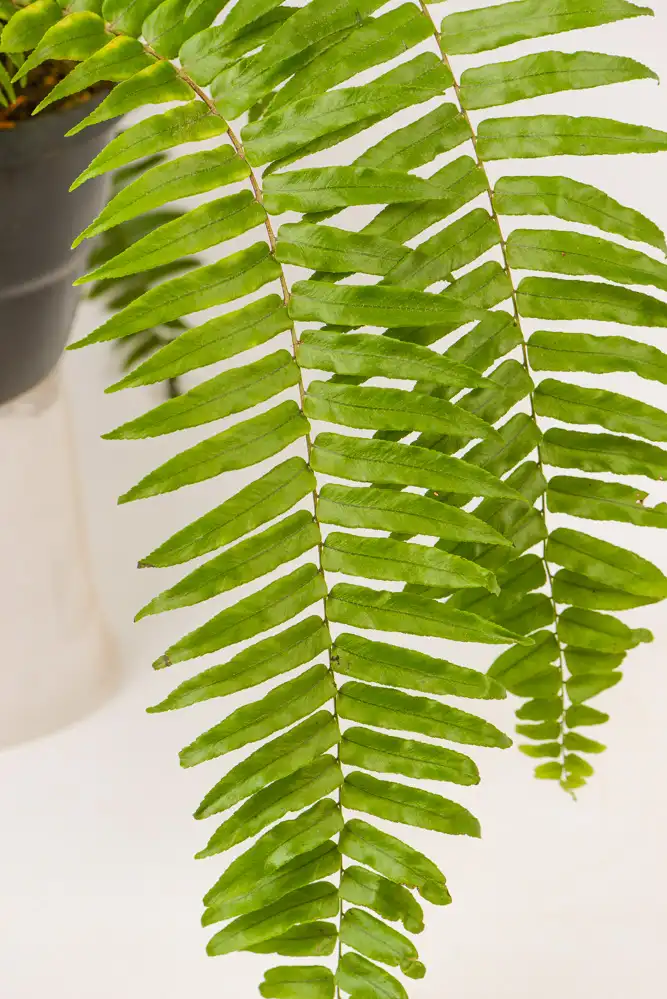
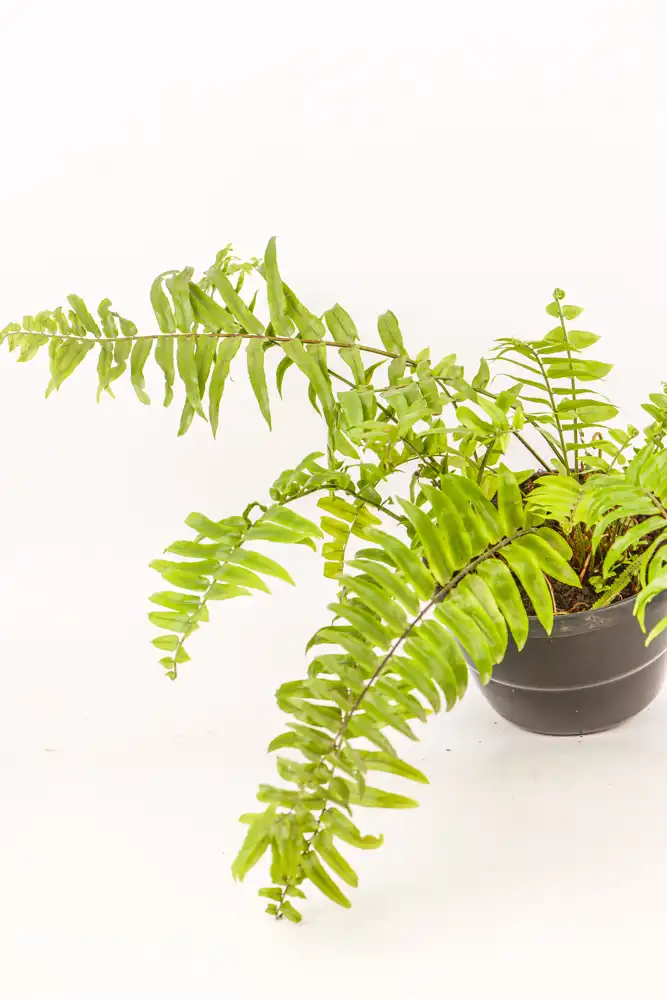
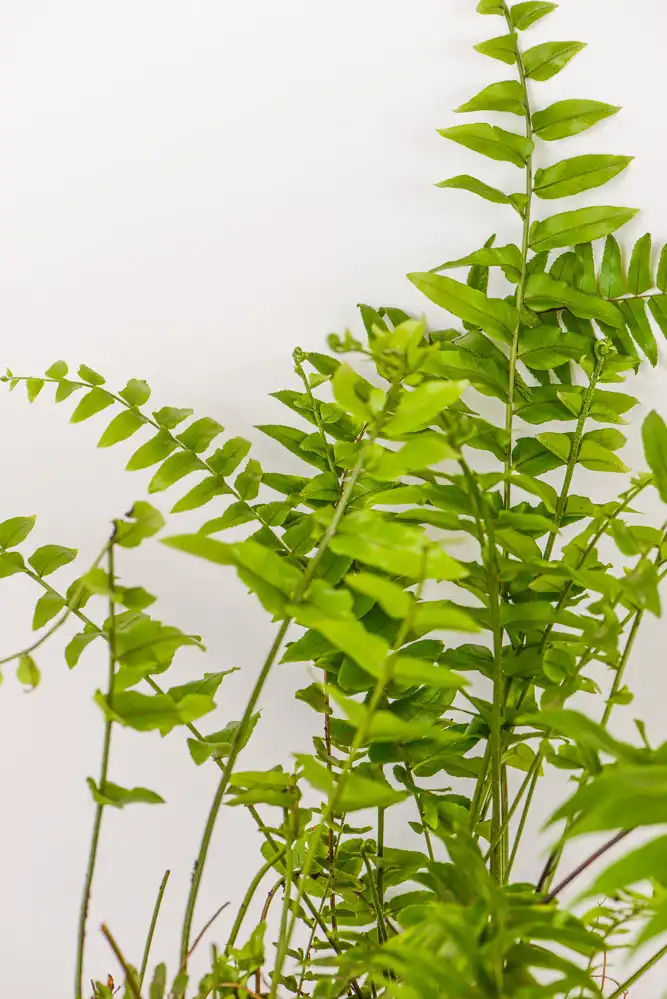
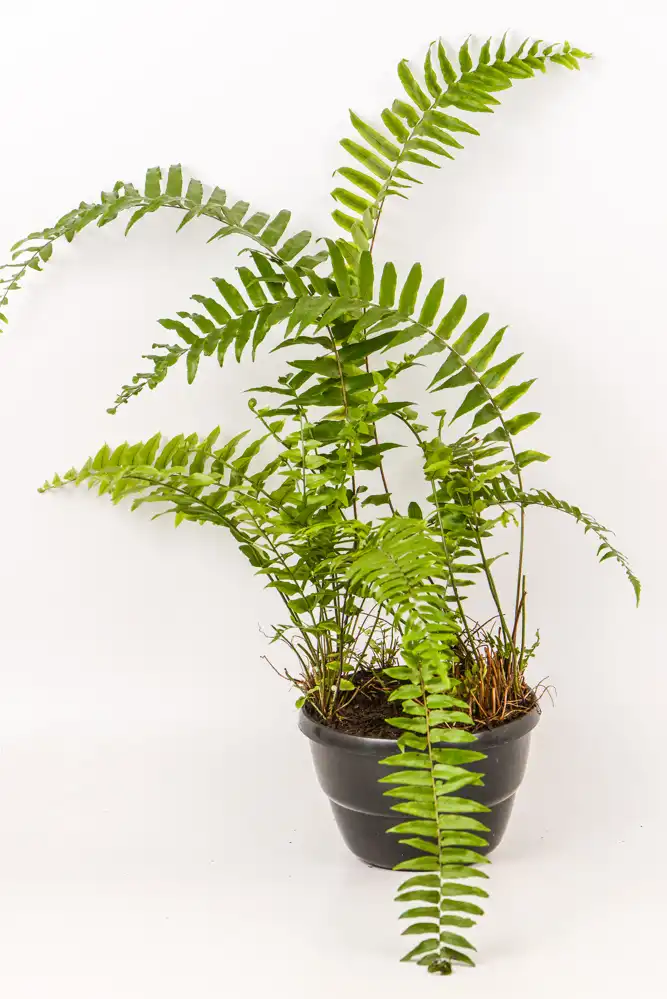
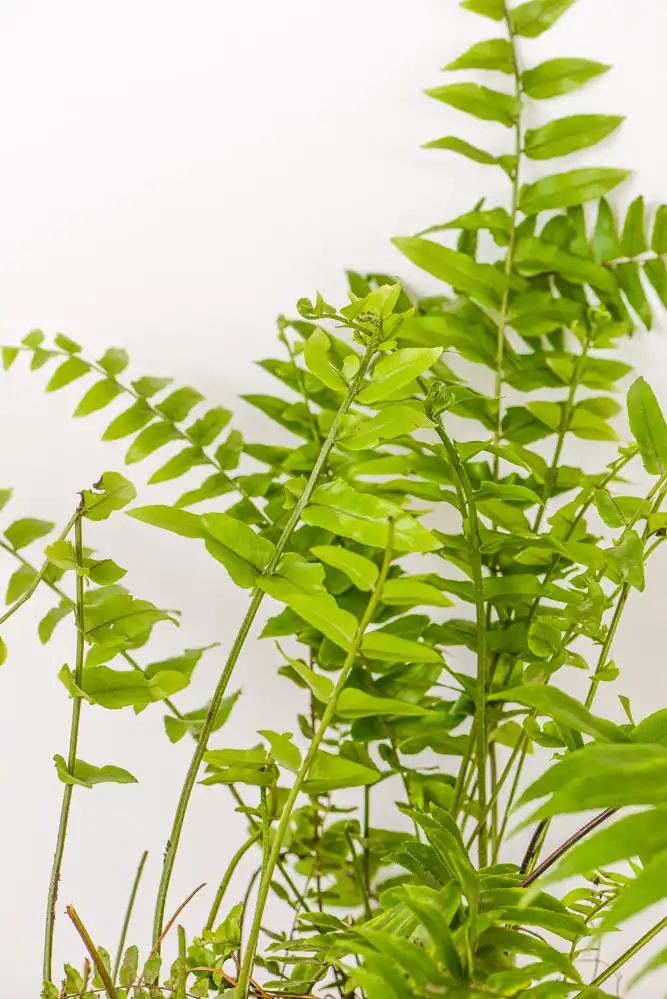
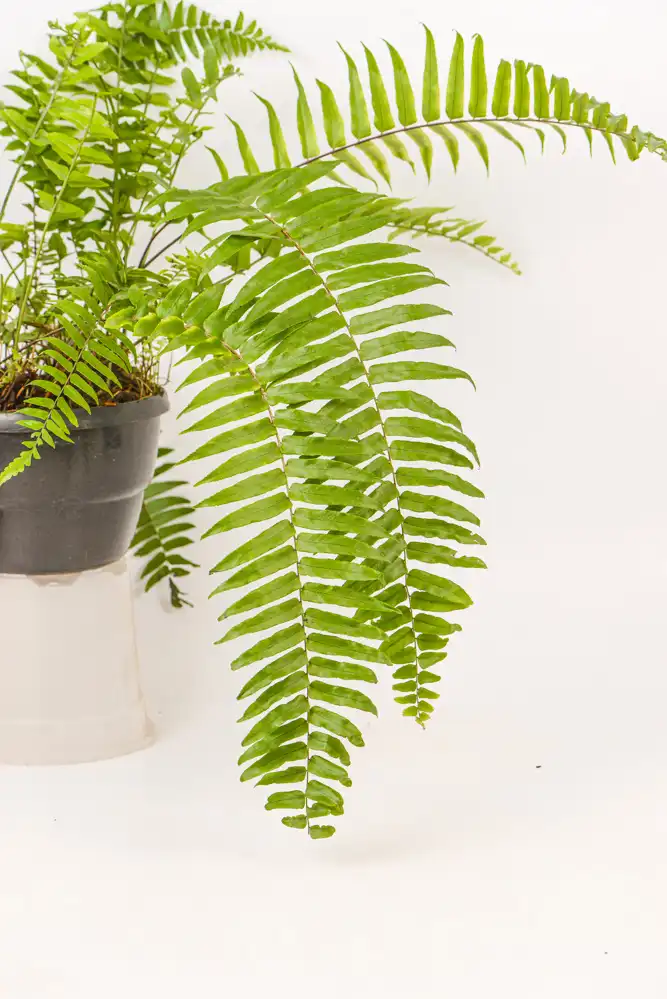
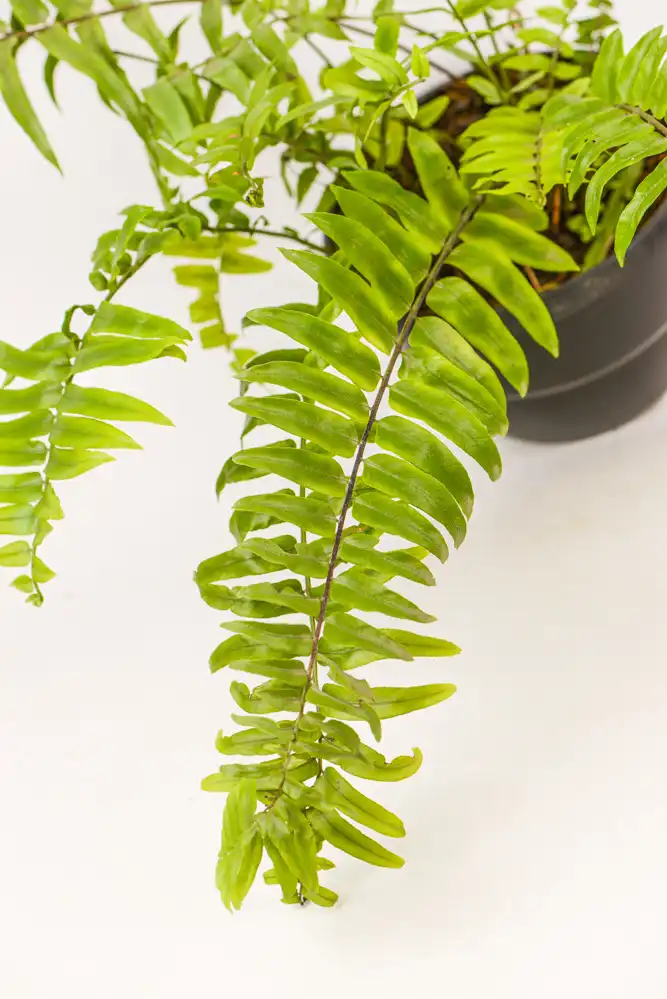
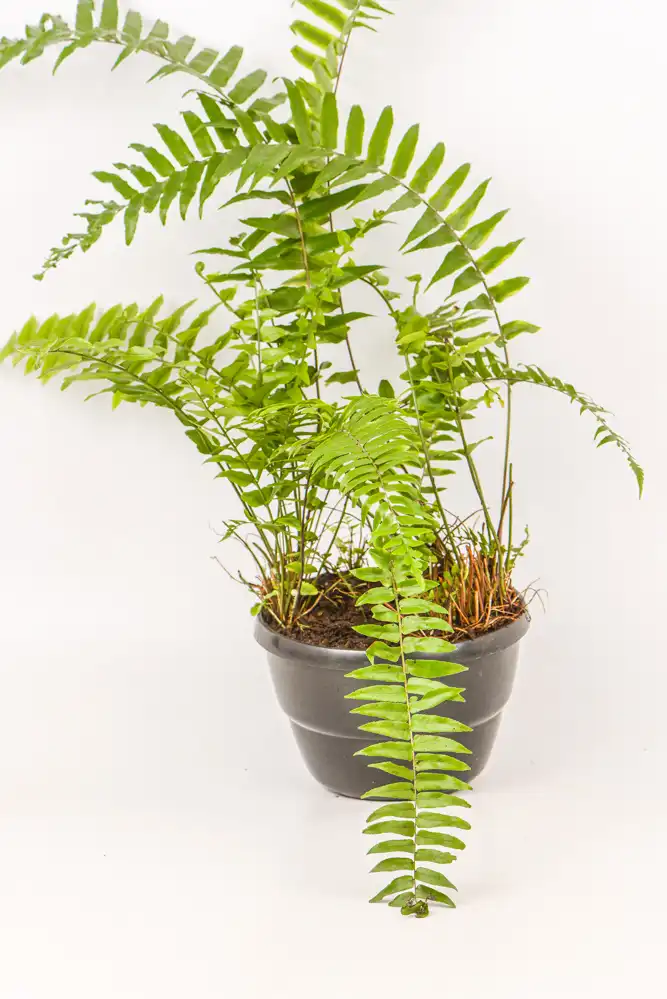
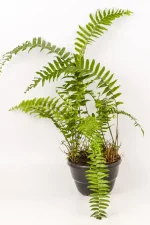
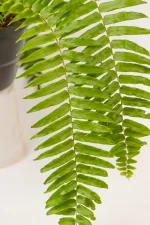
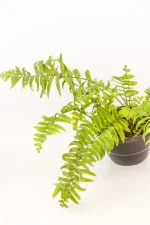
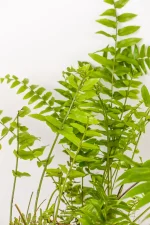
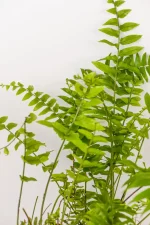
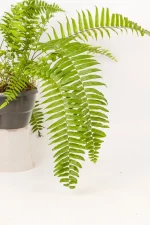
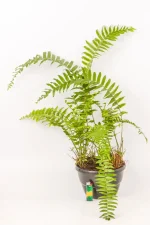
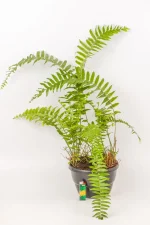
Giant Sword Fern is all about fullness and movement. The long, arching fronds extend outward and begin to cascade naturally, creating a layered, flowing shape. As the plant matures, the fronds become longer and more pronounced, giving it a softer and more established look.
In a 20cm hanging basket, these plants already show strong density. The growth comes from the centre and pushes outward evenly, which keeps the plant balanced rather than sparse. When placed slightly elevated, the fronds can fall freely and create a more natural display.
This fern responds well to consistent care. It prefers steady moisture and does not enjoy drying out completely. When its basic needs are met, it produces fresh fronds regularly and maintains a full appearance. Over time, it becomes even denser as new growth fills in from the centre.
Giant Sword Fern works well in bright indoor spaces where a softer, more natural texture is needed. It pairs easily with structured plants and helps break up harder lines in a room.
Giant Sword Fern Care Guide
Watering – How often should it be watered?
Keep the soil evenly moist. Water when the top 2–3cm begins to dry out. Hanging baskets tend to dry out faster, so check regularly. Avoid letting the plant dry out completely, as this can cause fronds to brown and drop.
Light – What light does Giant Sword Fern need?
Bright, indirect light works best. It can tolerate slightly lower light, but growth may slow and the plant may lose some fullness. Avoid direct sun, as it can scorch the fronds.
Humidity – Does it need extra humidity?
Yes, Giant Sword Fern prefers moderate to higher humidity. Dry air can cause browning tips. Bathrooms, kitchens or grouped plant areas usually provide better conditions.
Soil – What soil works best?
Use a moisture-retentive but well-draining mix. Indoor Potting Soil works well as a base. Improve structure by adding Perlite and Bark Chips to maintain airflow.
Feeding – How should it be fertilised?
Feed during the growing season with Grobest Organic Fertiliser every 2–3 weeks. For stronger growth and fuller fronds, Novatec Soluble Fertiliser can be used as a high nitrogen and growth booster
Repotting – When should it be repotted?
Repot every 12–18 months or when the basket becomes crowded. Move up one size only. When repotting, incorporate TerraPlus Natura N and Controlled Release Fertiliser into fresh mix.
Pests – What pests should I watch for?
Mielie bugs can appear in dry conditions. Regular checks and early treatment with an insecticidal spray will keep this fern in tip top shape.
Temperature – What temperature suits it best?
Giant Sword Fern grows well between 16°C and 26°C. Avoid temperatures below 12°C and protect it from cold drafts.
FAQ’s
How big does Giant Sword Fern get?
With the right conditions, it can grow quite large, with long cascading fronds extending well beyond the pot.
Why are the tips turning brown?
This usually happens due to inconsistent watering and allowing it to dry out too much.
Can it grow outdoors?
Yes, in a sheltered frost-free area with bright shade.
Is it pet-safe?
Yes. Most Nephrolepis ferns are considered non-toxic to pets.
Be sure to visit and follow us Facebook and Instagram