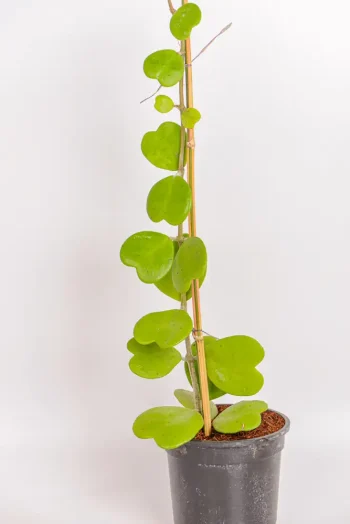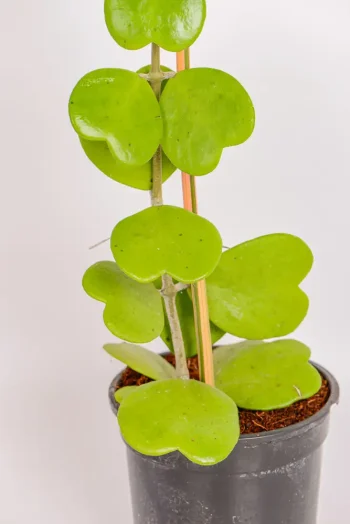



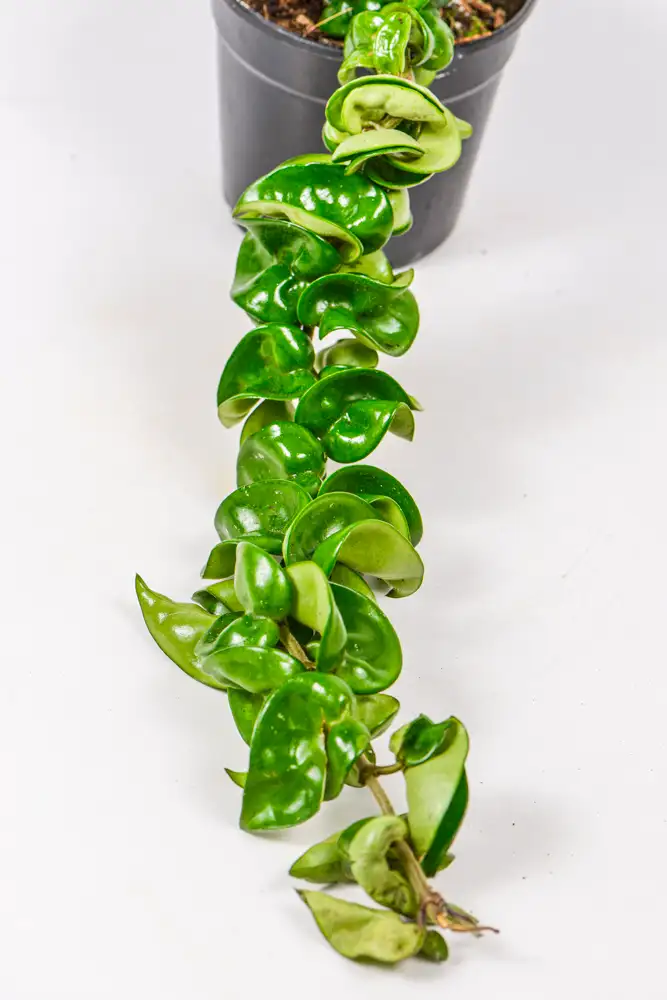
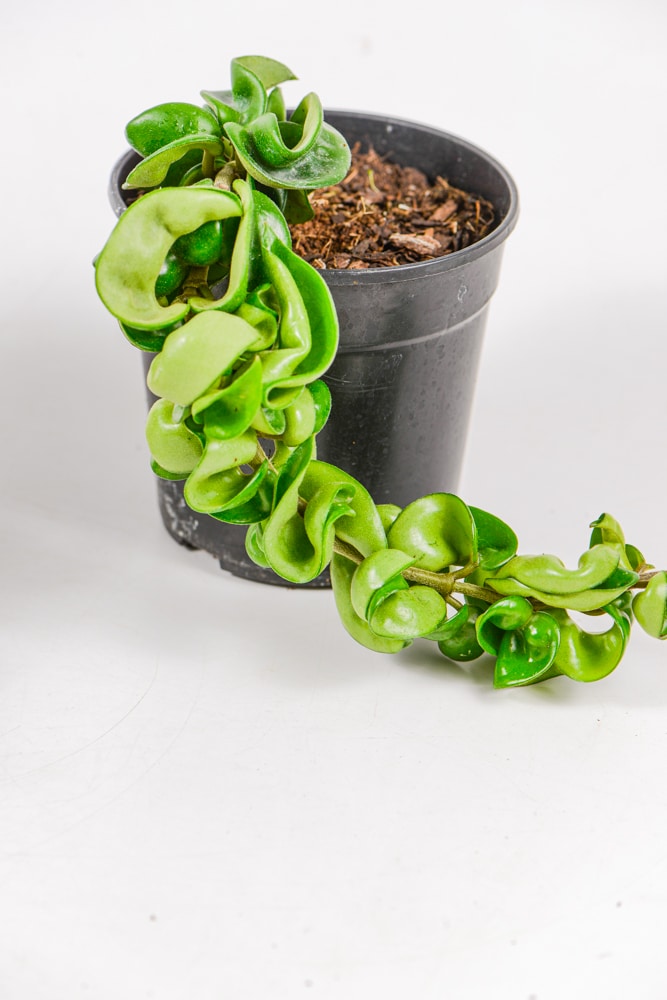
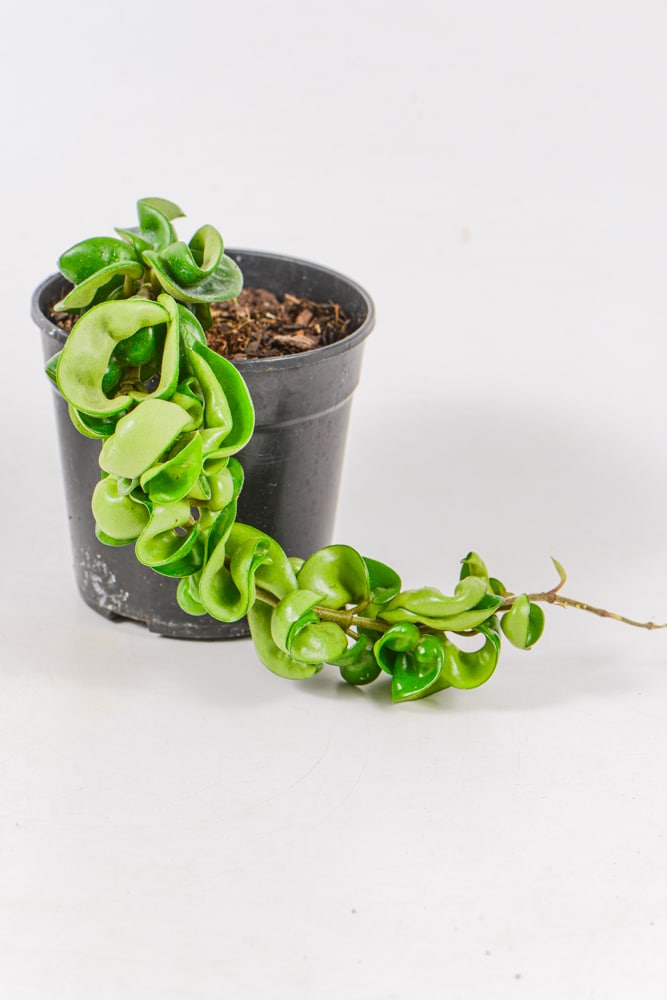
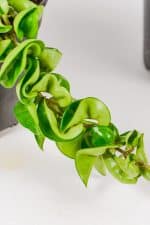
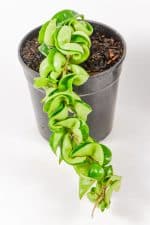
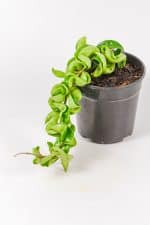
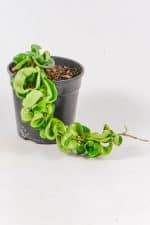
Commonly known as: Hoya Compacta, Hindu Rope Plant, Wax Plant
Botanical name: Hoya carnosa ‘Compacta’
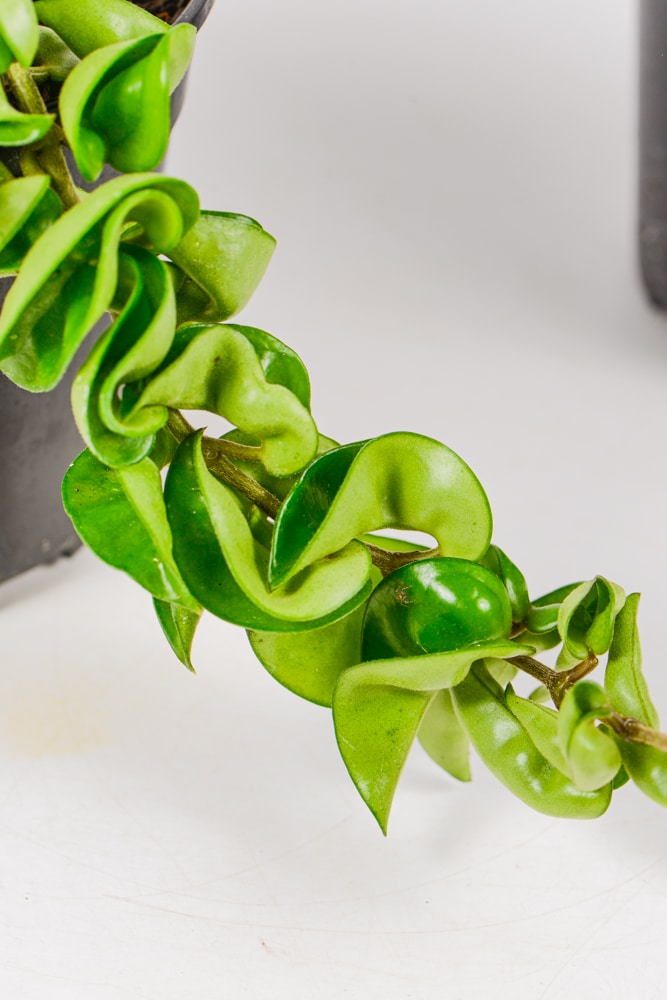
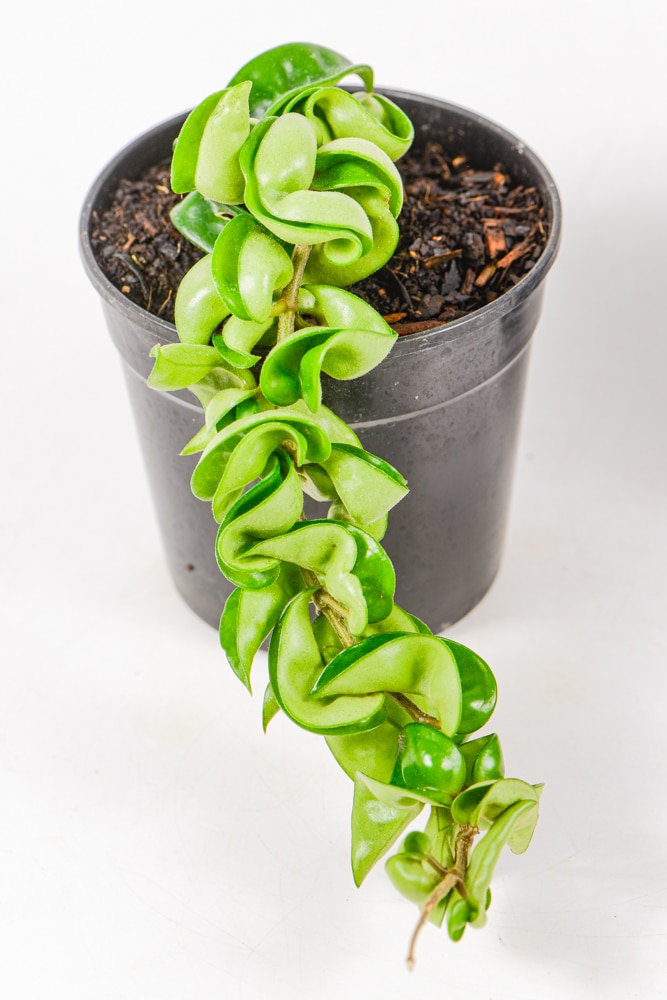
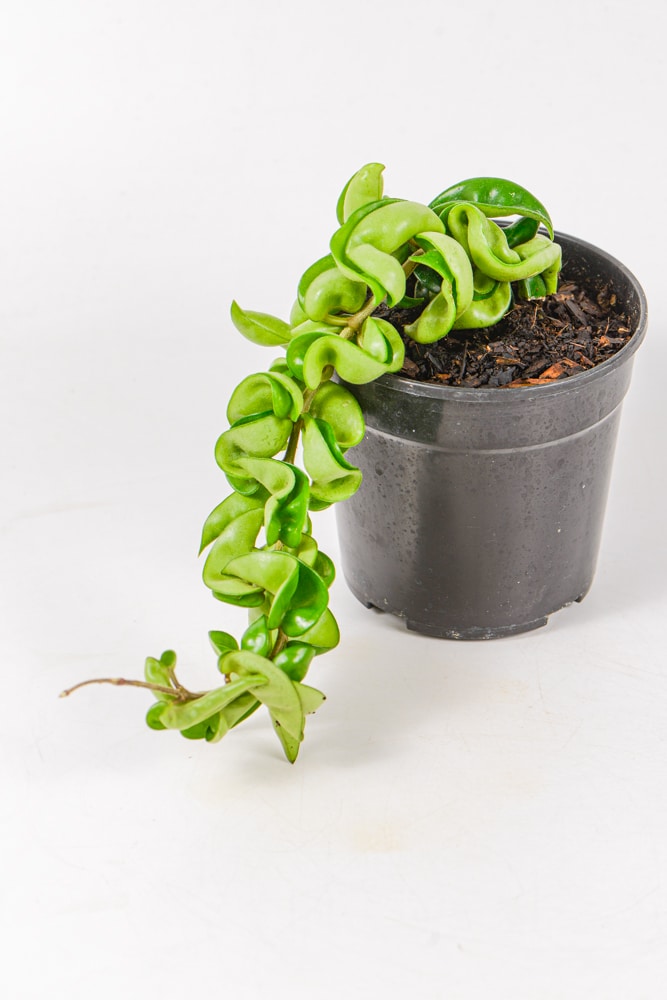
Hoya compacta is grown primarily for its unusual foliage rather than fast growth. The tightly curled, waxy leaves grow along trailing stems, creating a dense, textured look that feels more like a living sculpture than a typical houseplant.
Although slow to establish, Hoya compacta is a long-lived and dependable plant once settled. It prefers stable conditions and does best when left undisturbed, making it a good option for someone who enjoys low-intervention plant care. Over time, mature plants may produce clusters of star-shaped, fragrant flowers, though flowering depends on age, light, and consistency.
This plant naturally grows as an epiphyte, which explains its preference for airflow around the roots and well-draining growing media. It’s particularly well suited to hanging baskets where water drains freely and the trailing stems can develop without being handled too often.
Hoya Compacta Care Guide
Watering – How often should I water it?
Allow the potting mix to dry out almost completely between watering. Hoya compacta stores moisture in its thick leaves and is far more tolerant of underwatering than overwatering. Always let excess water drain away fully.
Light – What light does Hoya compacta need?
Bright, indirect light is ideal. Good light supports compact growth and encourages flowering on mature plants. Avoid harsh direct sun, which can scorch the leaves.
Humidity – Does it need humidity?
Average indoor humidity is sufficient. While it tolerates higher humidity, good airflow is more important than misting or constant moisture.
Soil – What soil works best?
A free-draining, airy mix is essential. Our premixed Aroid Mix is well suited and supports healthy root airflow. Alternatively, you can create your own blend using our Indoor Potting Soil as a base, then incorporate Perlite and Bark Chips to improve drainage and prevent compaction.
Feeding – How should I fertilise it?
Feed lightly during spring and summer using Grobest Organic Fertiliser every 6–8 weeks. For additional support during active growth, Novatec Soluble Fertiliser can be used occasionally at a low dilution.
Repotting – When should Hoya compacta be repotted?
Hoya compacta prefers to be slightly root-bound. Repot only every 2–3 years, or when roots are clearly filling the pot. Move up one pot size only and keep most of the existing soil intact. When repotting, you can incorporate TerraPlus Natura N together with Controlled Release Fertiliser into the fresh mix.
Pests – What pests should I watch for?
Mealybugs are the most common issue, often hiding in the leaf folds. Regular inspection and early treatment with an insecticidal spray will prevent infestations from spreading.
Temperature – What temperature suits it best?
Ideal temperatures range between 18 °C and 28 °C. Keep warm in winter and protect from temperatures below 15 °C, which can slow growth and cause leaf drop.
FAQ’s
Q: Is Hoya compacta slow growing?
Yes. Growth is slow but steady, especially indoors.
Q: Will it flower?
Mature plants may flower when given enough light and consistency.
Q: Can it be pruned?
Yes, but avoid removing old flower spurs as Hoyas bloom from the same points.
Q: Is it pet-safe?
No. Hoyas are considered mildly toxic if ingested.
Be sure to visit and follow us Facebook and Instagram