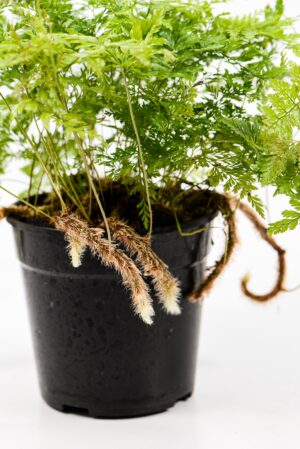






Commonly known as: Spider Plant hanging basket | Hen and Chicken
Botanical name: Chlorophytum comosum
Spider Plant Hanging Basket brings both fullness and movement into a space. The long, arching leaves form a natural fountain shape, while the striped green and white foliage keeps the look clean and defined.
At this size, the plant is already well established. The 20cm hanging basket allows the foliage to spread and fall naturally, creating a balanced, full shape from the start. As it continues to grow, it produces long stems with small plantlets that begin to trail below the main plant.
These trailing offsets are what give Spider Plants their layered, cascading look. Over time, the plant becomes more dynamic as the stems lengthen and the number of plantlets increases.
Because it grows from the centre and continues producing new shoots, the plant becomes denser rather than thinning out. With good light and consistent watering, it quickly develops into a full hanging display.
This is a plant that works in almost any indoor setting. It softens shelves, fills vertical space, and adds movement without requiring constant care.
Spider Plant Hanging Basket Care Guide
Watering – How often should it be watered?
Water when the top 3–5cm of soil has dried out. Spider Plants prefer slightly consistent moisture but tolerate short dry periods. Ensure excess water drains fully.
Light – What light does Spider Plant need?
Bright, indirect light works best, although Spider Plants adapt well to medium and lower light conditions. Brighter light helps maintain stronger striping and encourages faster growth.
Humidity – Does it need extra humidity?
Average indoor humidity is sufficient. It adapts well to normal household conditions and does not require misting.
Soil – What soil works best?
Use a well-draining mix that retains some moisture. Indoor Potting Soil works well as a base. Improve drainage with Perlite and Bark Chips.
Feeding – How should it be fertilised?
Feed during the growing season with Grobest Organic Fertiliser every 4–6 weeks. For stronger growth and more plantlets, Novatec Soluble Fertiliser can be used.
Repotting – When should it be repotted?
Repot every 12–18 months or when the roots become crowded. Spider Plants develop thick roots and can become root-bound. Move up one size only. When repotting, incorporate TerraPlus Natura N and Controlled Release Fertiliser.
Pests – What pests should I watch for?
Occasional aphids or spider mites may appear. Treat early if needed.
Temperature – What temperature suits it best?
Spider Plants grow well between 18°C and 28°C. Avoid temperatures below 10°C.
FAQ’s
What are the small plants hanging down?
These are plantlets that can be left for display or propagated.
Does it grow quickly?
Yes. With good light and feeding, it produces fast, steady growth.
Can it grow in low light?
Yes, although growth may slow and become less dense.
Is it pet-safe?
Yes. Spider Plants are generally considered non-toxic.
Be sure to visit and follow us Facebook and Instagram