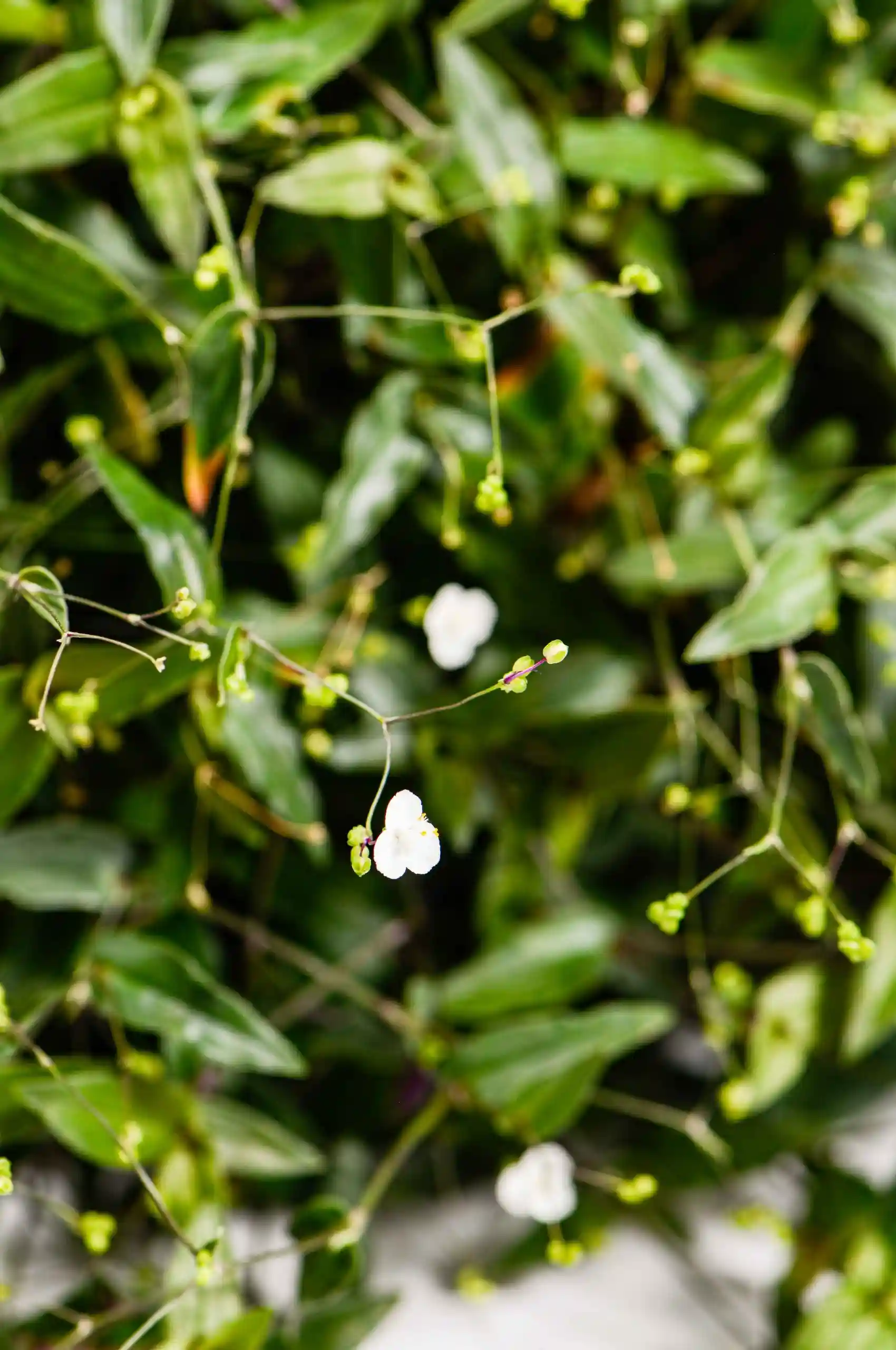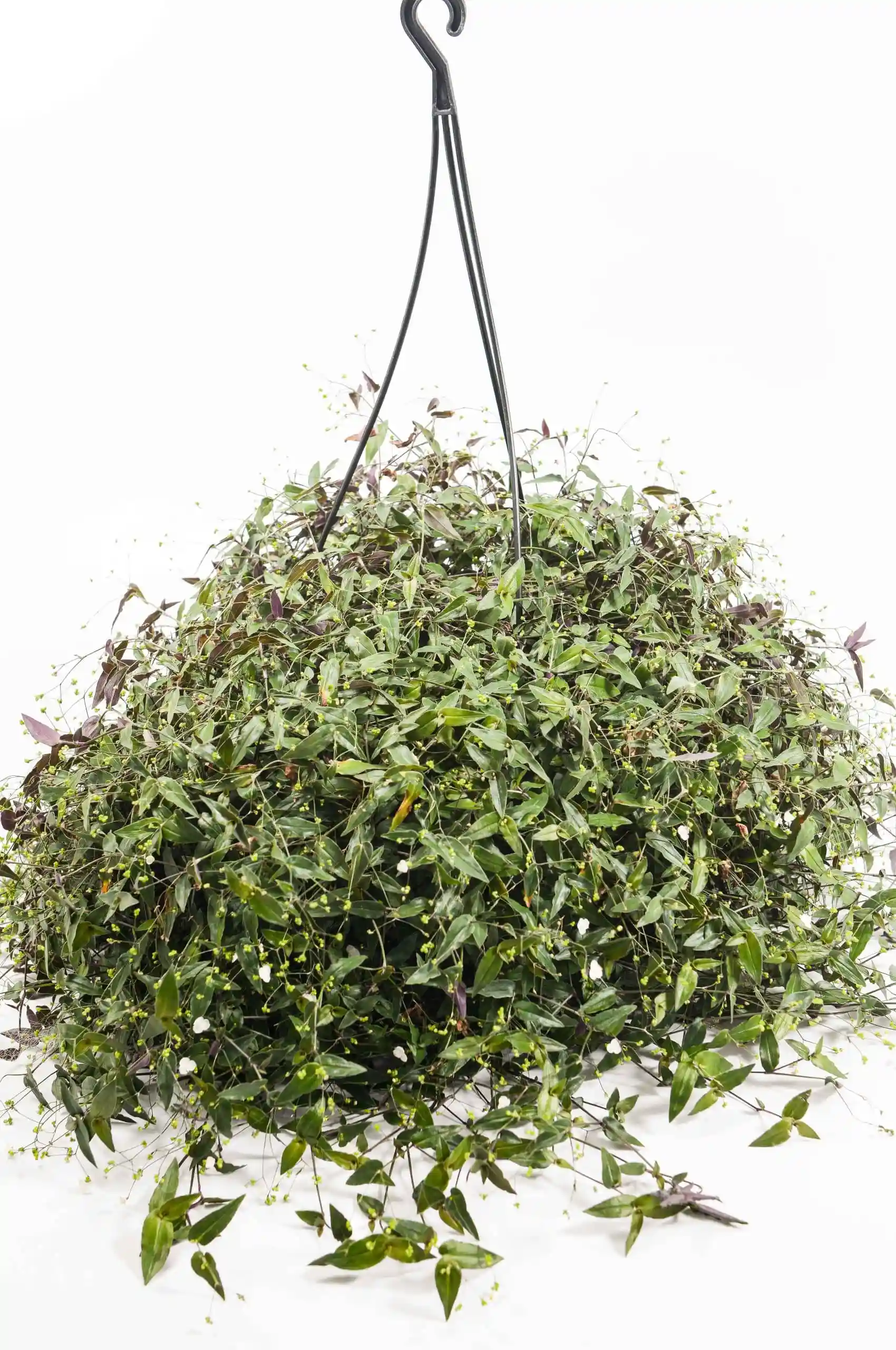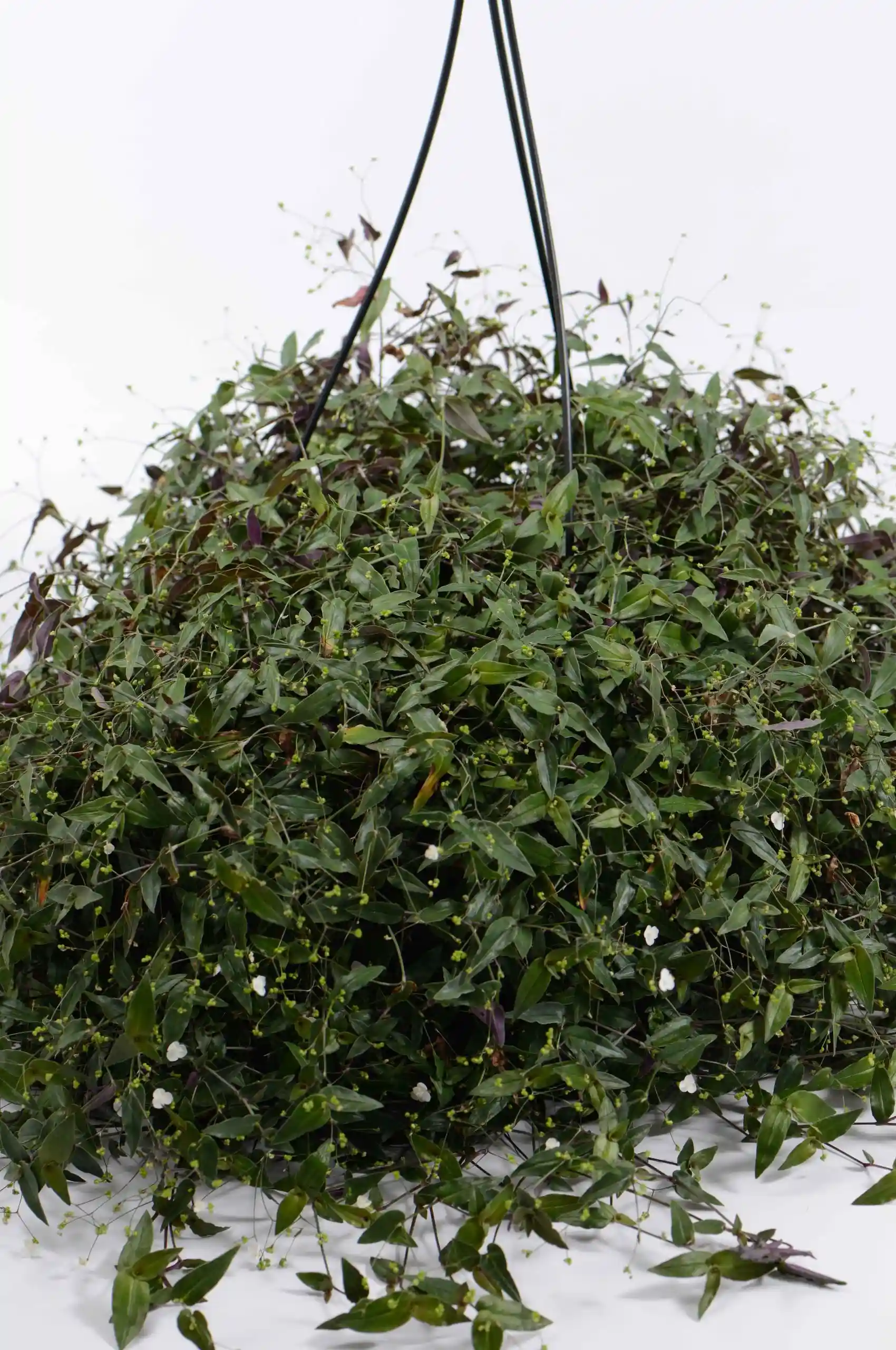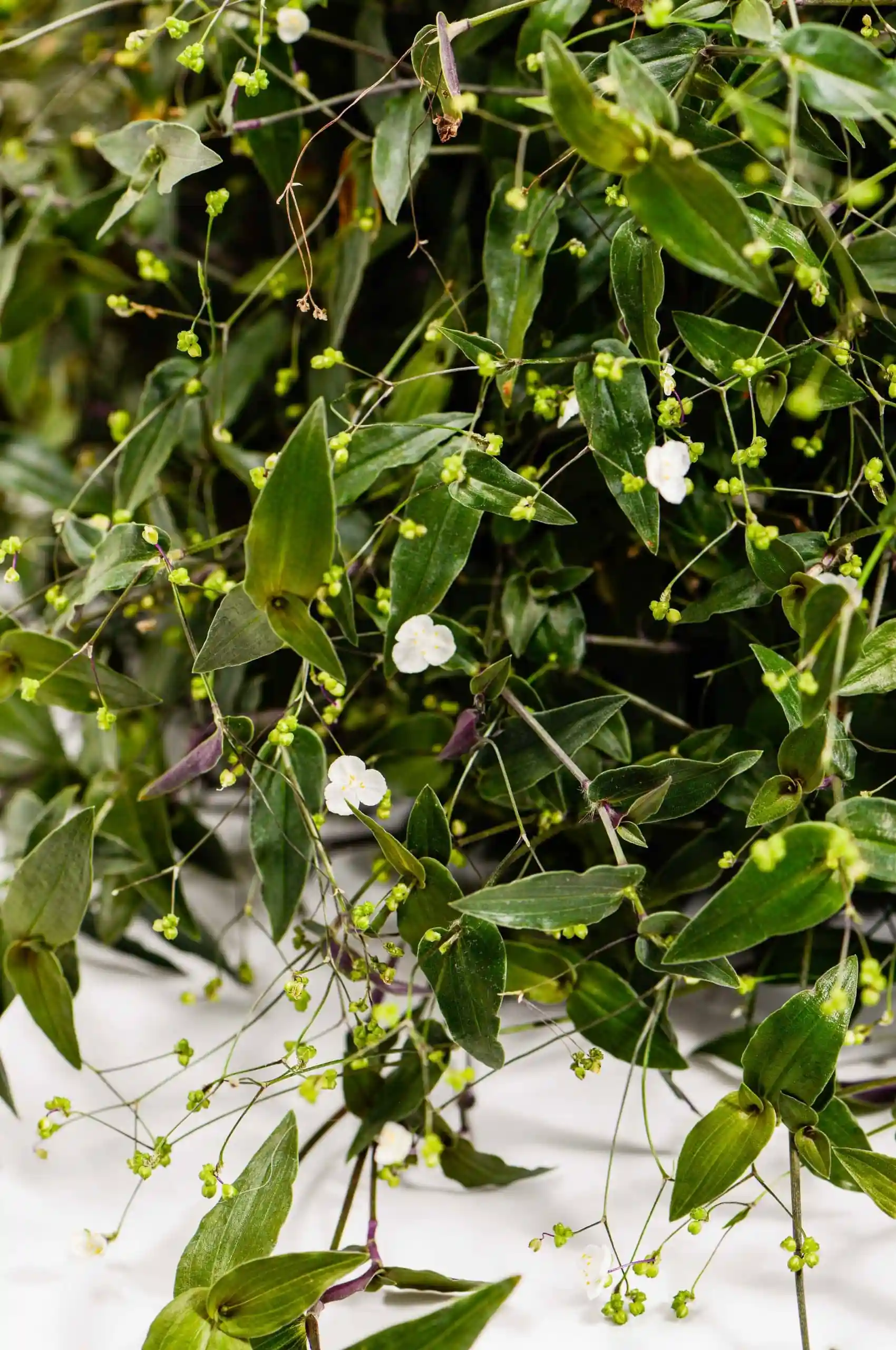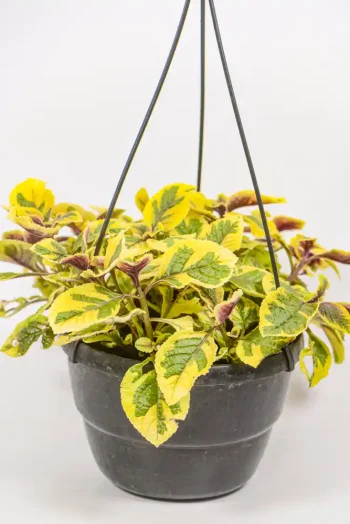
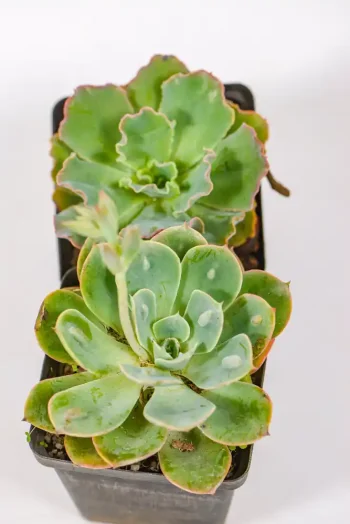







Commonly known as: Tradescantia Bridal Veil / Bridal Veil Plant
Botanical name: Tradescantia multiflora (syn. Gibasis geniculata)
The Tradescantia Bridal Veil is one of those plants that always looks graceful, no matter where it hangs. Its fine, cascading stems form a lush curtain of small green leaves, often dotted with delicate white blooms throughout the year. This makes it a favourite for bright kitchens, bathrooms, and patios where it can trail naturally and catch soft light.
Although it looks delicate, this variety is surprisingly hardy. It grows quickly, responds well to trimming, and adapts easily to different light levels — which makes it a brilliant choice for both beginners and collectors who enjoy a bit of easy greenery.
Tradescantia Bridal Veil Care Guide
Watering – How often should I water a Bridal Veil plant?
Keep the soil lightly moist but never soggy. Water when the top 2–3 cm feels dry to the touch, which is usually once a week in warm weather. In cooler months, let it dry a little more between waterings. Good drainage helps prevent the roots from sitting in water.
Light – What light does a Tradescantia Bridal Veil prefer?
Bright, indirect light is best. Too little light can make the growth sparse and leggy, while too much direct sun may scorch the fine leaves. A covered patio or east-facing window is ideal.
Humidity – Does it need humidity?
It enjoys normal household humidity but grows even better with a little extra moisture in the air. Mist lightly now and then, especially in dry indoor conditions or during summer heat.
Soil – What mix works best for a Bridal Veil?
For optimal drainage and healthy roots, use our Aroid Mix, or make your own by combining Barks Unlimited Potting Soil with Perlite. The mix should stay light and airy while retaining gentle moisture.
Feeding – How often should I fertilise it?
Feed monthly during spring and summer with our balanced Organic Fertiliser. To encourage even growth, you can add a touch of Controlled Release Fertiliser at the start of the season. Pause feeding in winter.
Repotting – When should I repot or prune it?
Repot every 12–18 months or when the plant becomes root-bound. Move it to a slightly larger pot and refresh the soil. Trim back long or uneven stems — this keeps it neat and encourages fuller regrowth. Adding Bark Chips to the mix can also help with aeration.
Pests – Are there any pests to watch for?
Bridal Veils are generally easygoing, but in very dry air you might notice spider mites or aphids. Wipe the leaves gently and use an insecticidal spray if needed. Regular misting and airflow help prevent infestations.
Temperature – What’s the best range for this plant?
Between 18 °C and 28 °C is ideal. Avoid cold drafts or frost, as the fine stems can be damaged by sudden chills.
FAQ’s
Q: How can I make my Bridal Veil fuller?
Pinch back the tips regularly — this encourages new shoots and denser growth.
Q: Why is my plant dropping leaves?
That’s often from overwatering or low light. Adjust conditions and it will recover quickly.
Q: Can I grow it outdoors?
Yes, in bright, shaded areas protected from frost. It trails beautifully over pots or baskets.
Q: Is it safe for pets?
Yes — it’s considered non-toxic to cats and dogs.