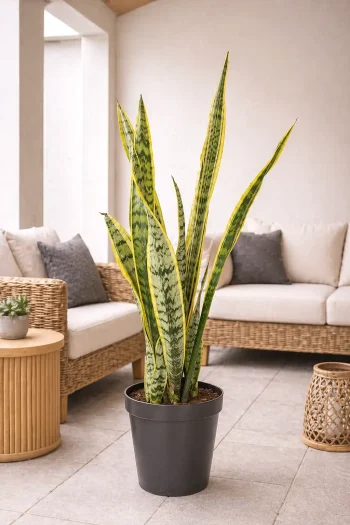







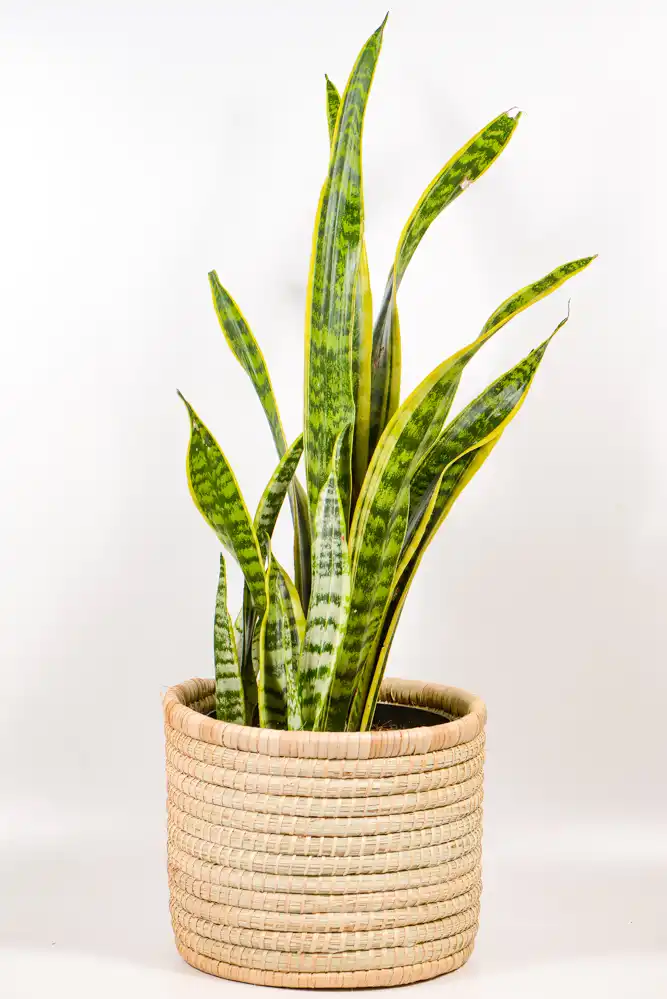
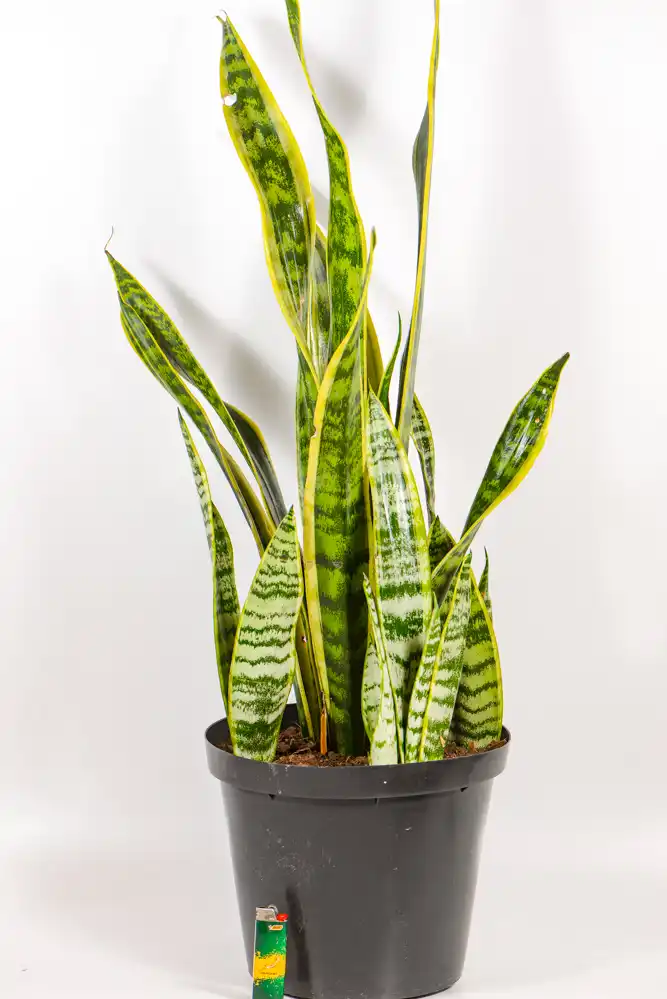
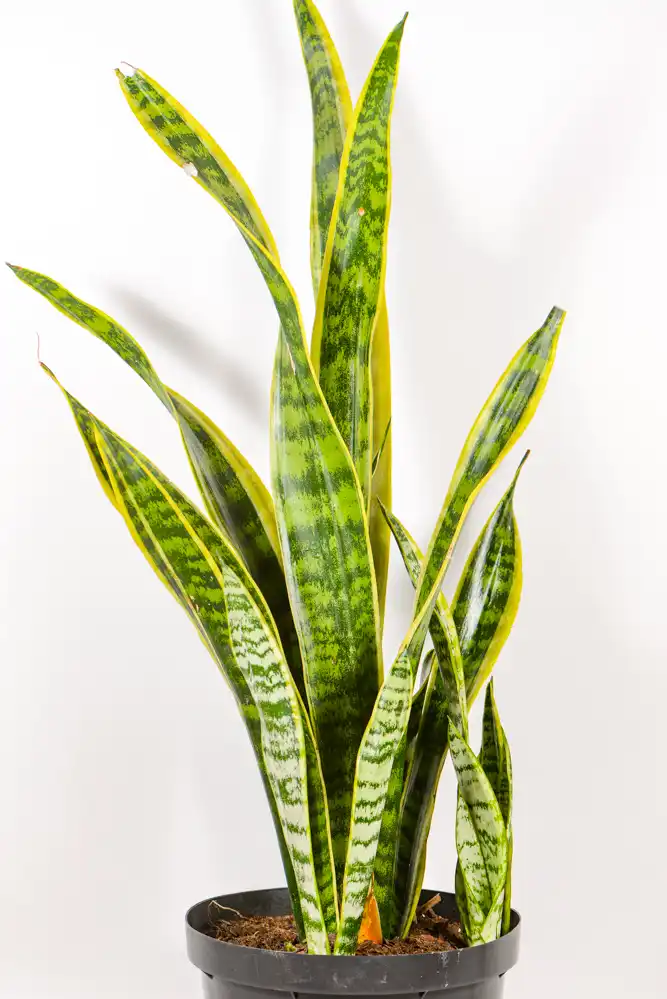
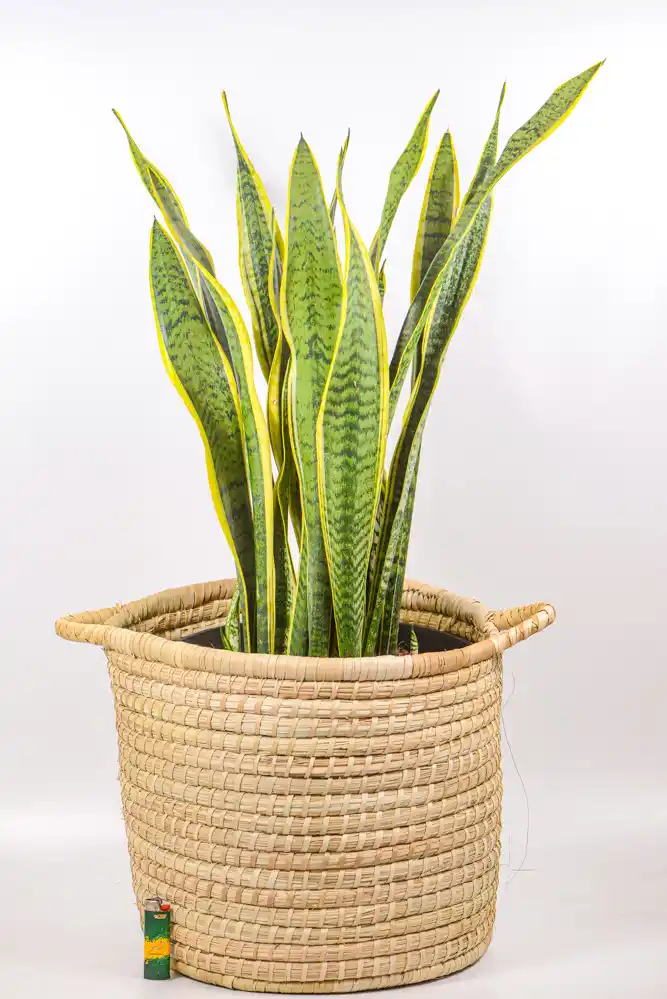
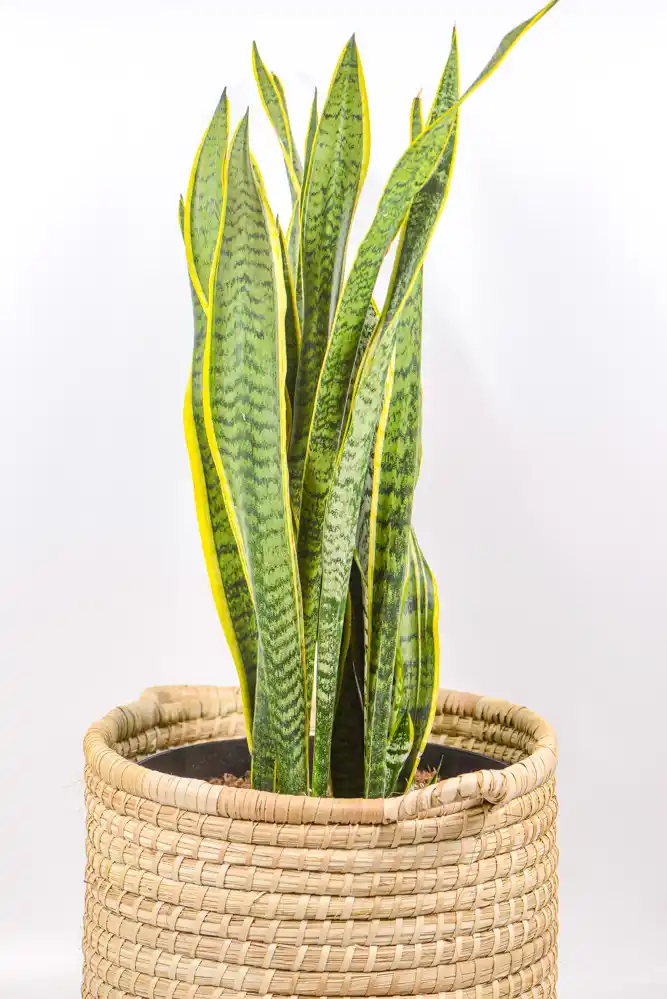
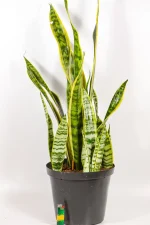
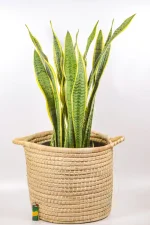
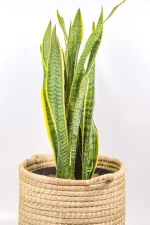
Commonly known as: XL Snake Plant ‘Laurentii’ / Mother-in-Law’s Tongue
Botanical name: Sansevieria trifasciata ‘Laurentii’
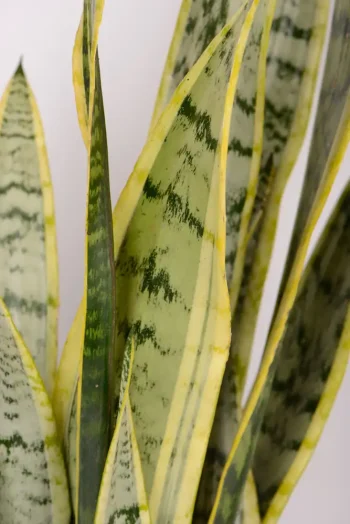
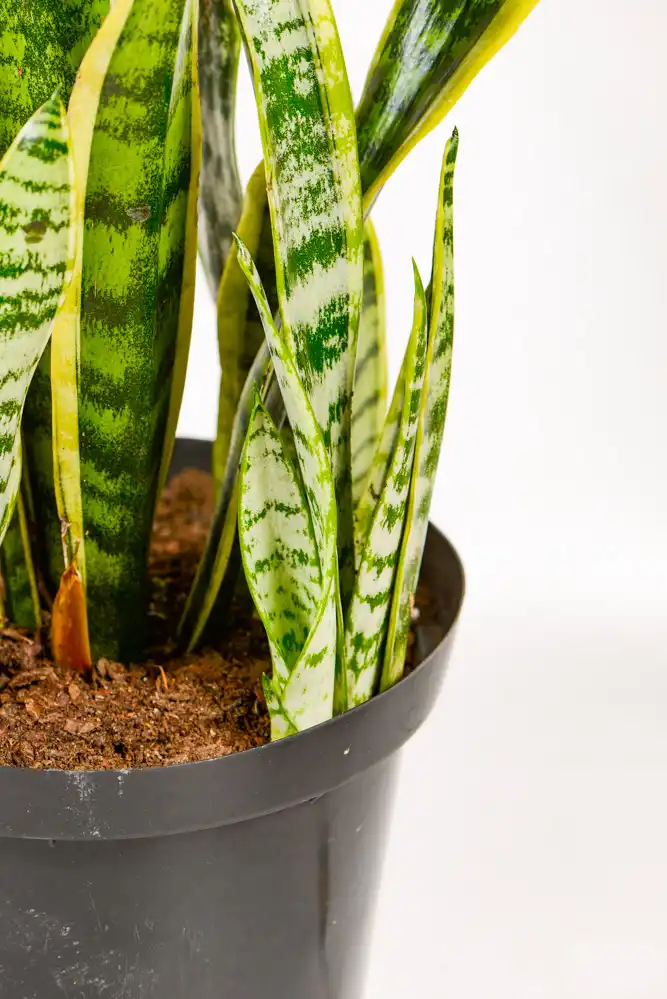
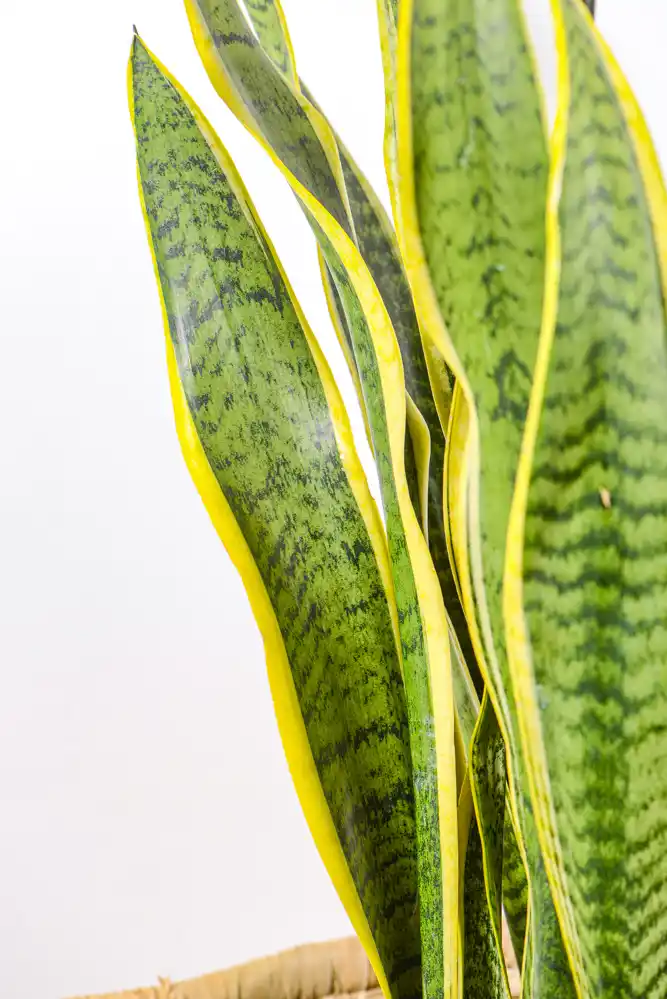
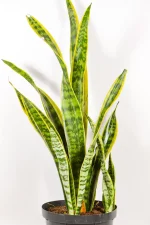
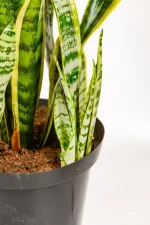
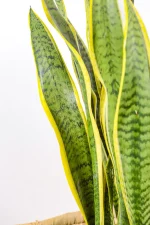
The Sansevieria trifasciata ‘Laurentii’ is the definition of effortless greenery. With tall, upright leaves edged in gold and mottled with deep green, it brings instant structure to any space. These large 25cm pots are well-rooted and full — perfect for bright corners, office reception areas, or bedrooms that need an easy-care plant with strong visual appeal.
Tough, drought-tolerant, and air-purifying, the Snake Plant fits both modern interiors and natural-style homes.
XL Snake Plant Laurentii Care Guide
Watering – How often should I water a Snake Plant?
Less is best. Water only when the soil is completely dry — roughly every 2–3 weeks in summer and even less in winter. Overwatering is the quickest way to lose a Snake Plant, so make sure any excess drains freely and the roots never sit in water.
Light – What kind of light does a Snake Plant need?
It adapts to almost any light, from bright indirect light to low-light corners. For best colour and faster growth, choose bright, filtered light. Direct afternoon sun can mark the leaves, but morning sun is fine.
Humidity – Does the Snake Plant need humidity?
Not at all. It tolerates normal indoor air and even dry conditions. Just keep it away from heating vents or cold drafts for best results.
Soil – What soil mix works best for Snake Plants?
For optimal drainage and healthy roots, use our Aroid Mix, or make your own using Barks Unlimited Potting Soil combined with Perlite. A gritty, free-draining mix prevents root rot and keeps the plant stable in its pot.
Feeding – How often should I fertilise a Snake Plant?
Feed lightly once every 6–8 weeks in spring and summer using a mild Organic Fertiliser. A small dose of Controlled Release Fertiliser at the start of the growing season keeps it ticking over. Skip feeding in winter.
Repotting – When should I repot a large Snake Plant?
Every 2–3 years or when the roots start pushing against the pot. Choose a container one size larger and refresh the soil. You can also divide mature clumps into smaller pots. Add a few Bark Chips for airflow and stability.
Pests – Are Snake Plants pest-resistant?
Yes, but keep an eye out for mealybugs or spider mites in very dry conditions. Wipe leaves occasionally with a damp cloth to remove dust and discourage pests.
Temperature – What’s the ideal temperature range?
Between 18 °C and 30 °C. Protect from frost or prolonged cold below 12 °C. Indoors, it handles normal household temperatures effortlessly.
FAQ’s
Q: Is the Snake Plant safe for pets?
No, it’s mildly toxic if chewed, so keep out of reach of curious pets.
Q: Why are the leaves wrinkling or bending?
That usually means it’s thirsty. Water thoroughly, then let it dry out again completely.
Q: Can it live in low light?
Yes — it’s one of the best low-light plants around. Growth slows, but the colour stays strong.
Q: Does it really clean the air?
Yes, NASA research shows Snake Plants filter common indoor toxins while producing oxygen at night.
Be sure to visit and follow us Facebook and Instagram