





Sale!

Giant Snake Plant Laurentii

Original price was: R950.00.Current price is: R750.00.

-21%

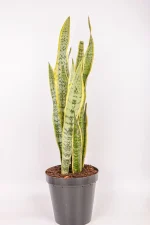
Giant Snake Plant Laurentii is a tall, architectural indoor plant with upright green leaves edged in yellow. These plants stand at approximately 90cm – 1.2m tall. Supplied in a black 30cm pot, it forms a strong vertical accent and suits modern interiors, offices, and low-maintenance spaces. This variety tolerates a wide range of light conditions, from bright indirect light to lower light areas, and requires infrequent watering once established. An easy-care plant well suited to indoor environments.

In stock

Add to Cart
Giant Snake PLant Laurentii in a living room
Giant Snake Plant Laurentii
R950.00 Original price was: R950.00.R750.00Current price is: R750.00.
Less than 5 items left!
Giant Snake PLant Laurentii in a living room
Giant Snake Plant Laurentii
R950.00 Original price was: R950.00.R750.00Current price is: R750.00.
Questions? Send it to us!
Name

Commonly known as: Giant Snake Plant ‘Laurentii’ / Mother-in-Law’s Tongue

Botanical name: Sansevieria trifasciata ‘Laurentii’

Giant Snake Plant Laurentii at this size delivers immediate presence. Standing up to 1.2m tall in a 30cm pot, it brings strong vertical height without taking up unnecessary space. The upright leaves rise cleanly from the base, creating a dense, structured form that works naturally as a floor plant.

The foliage is sharply defined. Deep green centres are edged with bold yellow margins, giving each leaf clear contrast and a consistent, balanced look across the plant. At this scale, the pattern becomes more pronounced, making the plant feel more intentional rather than decorative.

The growth habit keeps everything contained. Leaves grow tightly together, forming a solid cluster that holds its shape over time. As new shoots develop from the base, the plant becomes fuller without losing its vertical form.

This size works particularly well where height is needed but floor space is limited. It anchors a corner, sits comfortably next to furniture, and adds structure without spreading outwards.

Despite its scale, the care remains simple. The thick leaves store moisture, allowing the plant to handle irregular watering and adapt to a wide range of indoor light conditions. With minimal input, it continues to maintain its form and presence.

This is a plant that does its job without complication — strong, reliable, and built around structure.

Giant Snake Plant Laurentii Care Guide

Water logo

Watering – How often should I water a Snake Plant?

Less is best. Water only when the soil is completely dry — roughly every 2–3 weeks in summer and even less in winter. Overwatering is the quickest way to lose a Snake Plant, so make sure any excess drains freely and the roots never sit in water.

Light logo

Light – What kind of light does a Snake Plant need?

It adapts to almost any light, from bright indirect light to low-light corners. For best colour and faster growth, choose bright, filtered light. Direct afternoon sun can mark the leaves, but morning sun is fine.

Humidity logo

Humidity – Does the Snake Plant need humidity?

Not at all. It tolerates normal indoor air and even dry conditions. Just keep it away from heating vents or cold drafts for best results.

Soil Logo

Soil – What soil mix works best for Snake Plants?

For optimal drainage and healthy roots, use our Aroid Mix, or make your own using Barks Unlimited Potting Soil combined with Perlite. A gritty, free-draining mix prevents root rot and keeps the plant stable in its pot.

Fertilizing logo

Feeding – How often should I fertilise a Snake Plant?

Feed lightly once every 6–8 weeks in spring and summer using a mild Organic Fertiliser. A small dose of Controlled Release Fertiliser at the start of the growing season keeps it ticking over. Skip feeding in winter.

Repotting logi

Repotting – When should I repot a large Snake Plant?

Every 2–3 years or when the roots start pushing against the pot. Choose a container one size larger and refresh the soil. You can also divide mature clumps into smaller pots. Add a few Bark Chips for airflow and stability.

Pest image

Pests – Are Snake Plants pest-resistant?

Yes, but keep an eye out for mealybugs or spider mites in very dry conditions. Wipe leaves occasionally with a damp cloth to remove dust and discourage pests.

Temerature image

 Temperature – What’s the ideal temperature range?

Between 18 °C and 30 °C. Protect from frost or prolonged cold below 12 °C. Indoors, it handles normal household temperatures effortlessly.

FAQ’s

Q: Is the Snake Plant safe for pets?
No, it’s mildly toxic if chewed, so keep out of reach of curious pets.

Q: Why are the leaves wrinkling or bending?
That usually means it’s thirsty. Water thoroughly, then let it dry out again completely.

Q: Can it live in low light?
Yes — it’s one of the best low-light plants around. Growth slows, but the colour stays strong.

Q: Does it really clean the air?
Yes, NASA research shows Snake Plants filter common indoor toxins while producing oxygen at night.

Be sure to visit and follow us Facebook and Instagram