





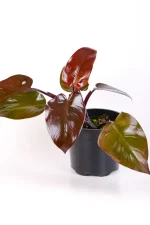

Commonly known as: Philodendron Royal Queen | Dark Leaf Philodendron | Royal Queen Philo
Botanical name:Â Philodendron Royal Queen
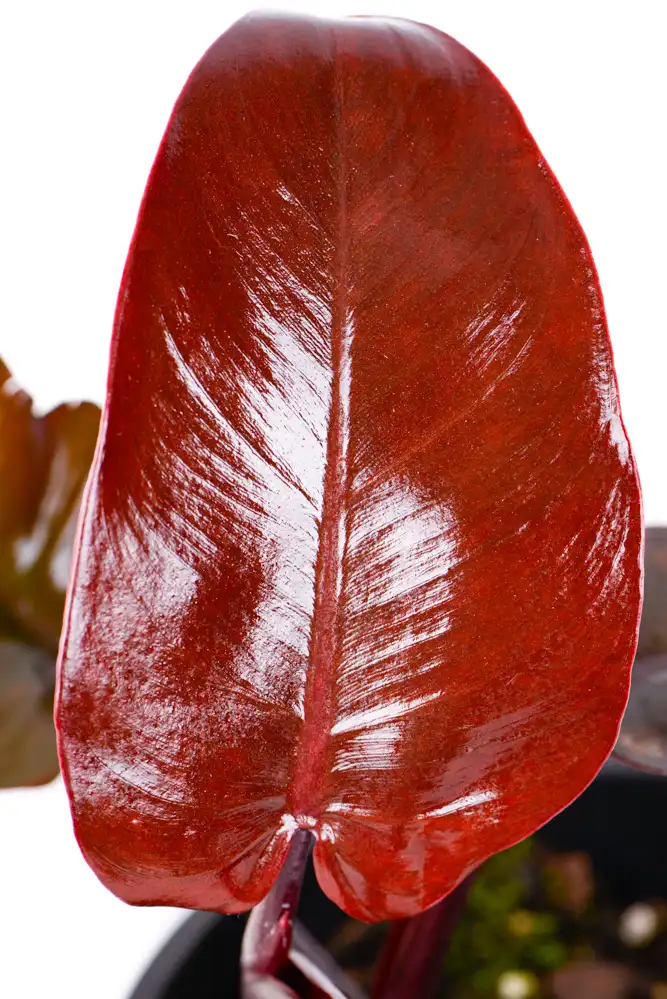
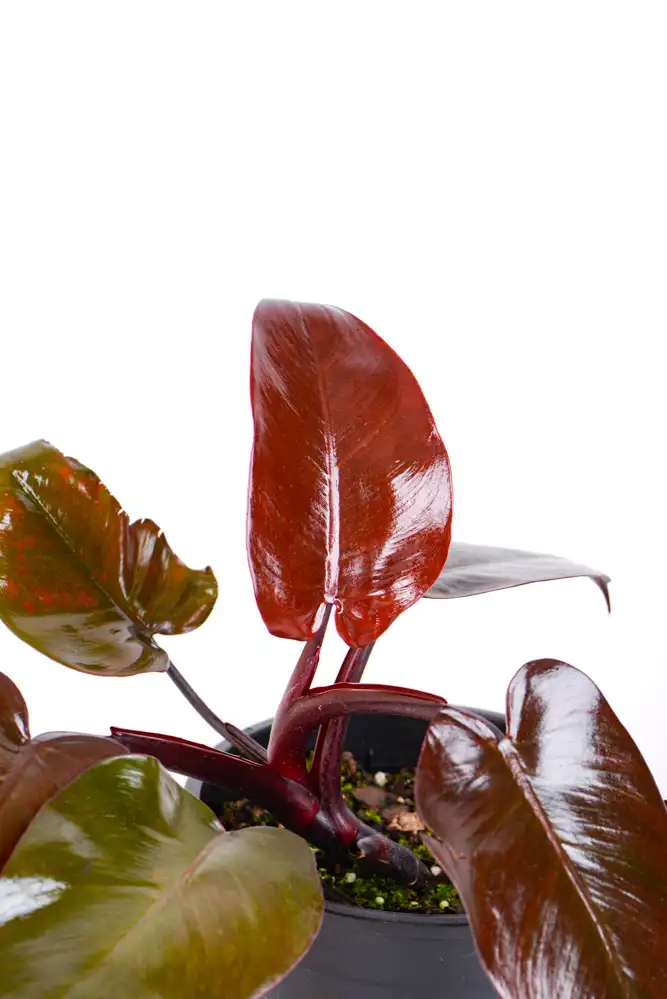
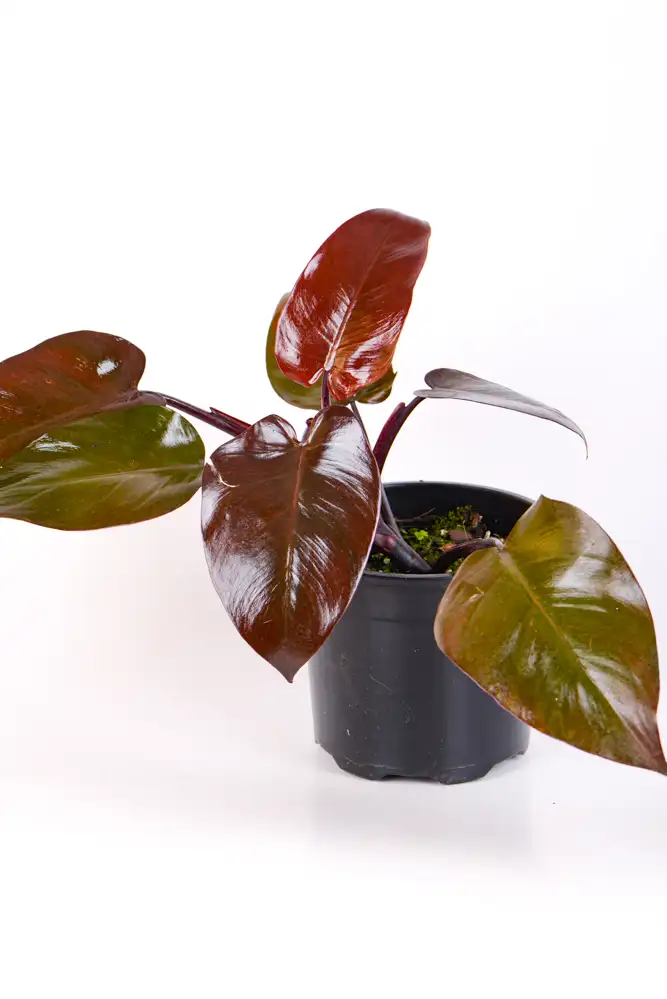
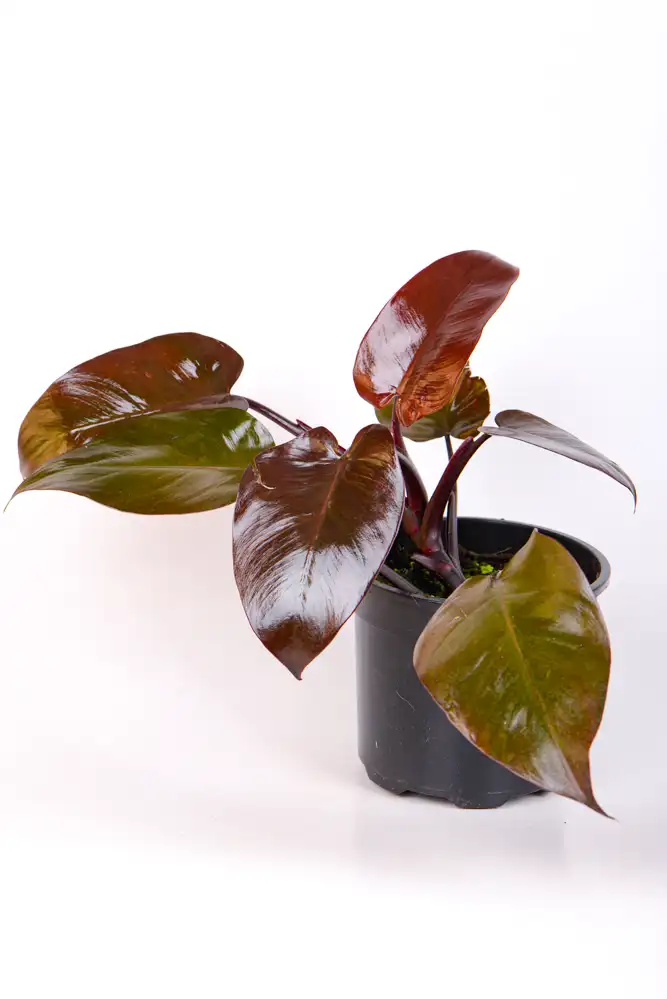
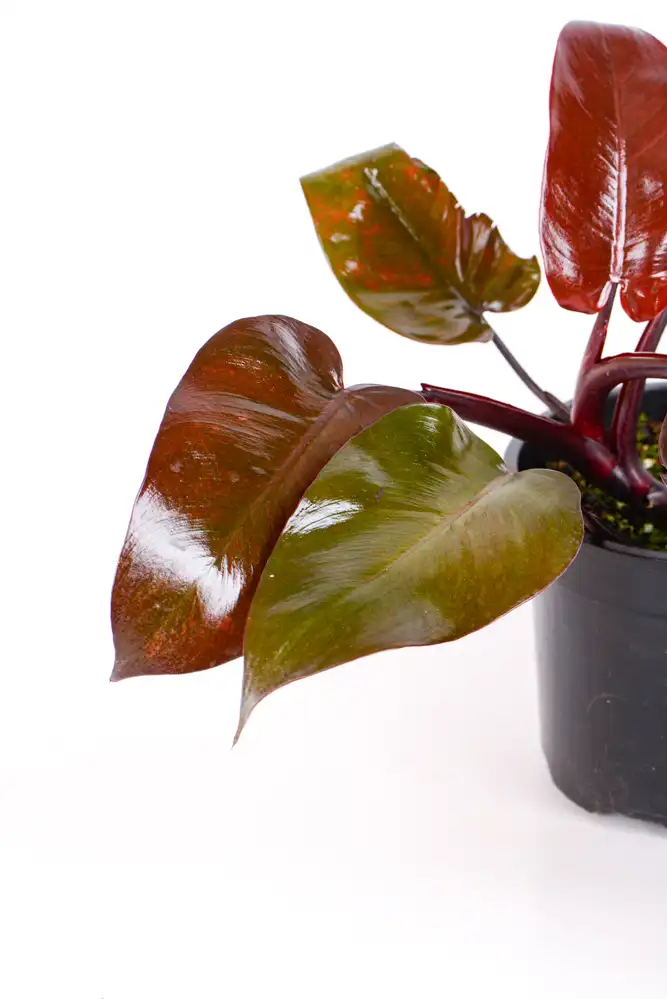
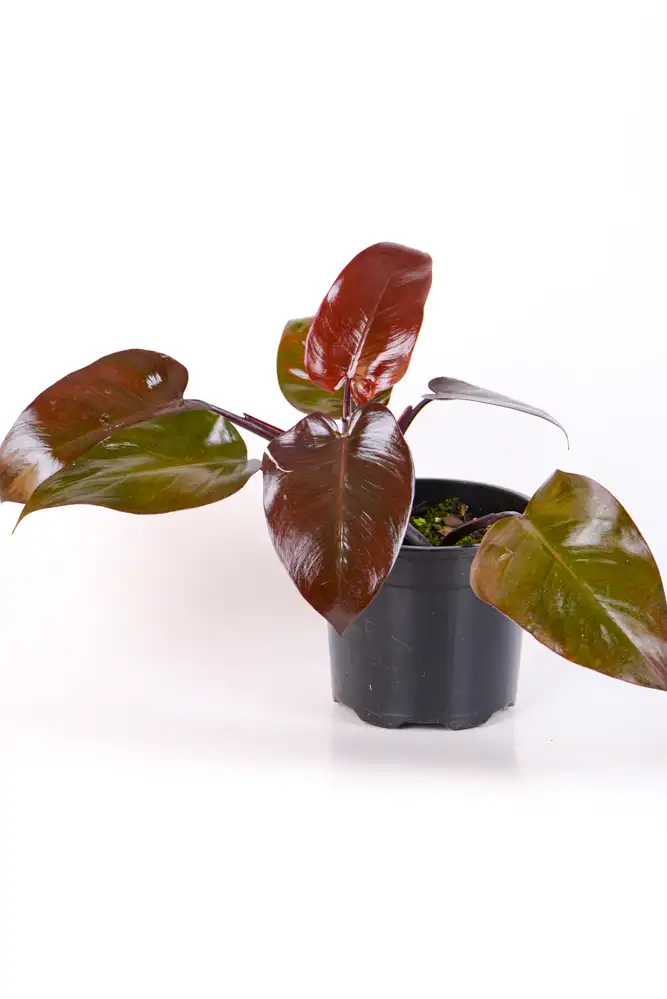
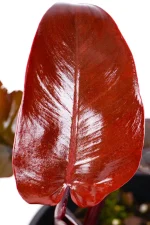
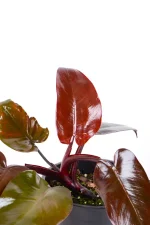
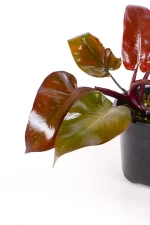
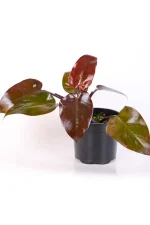
Philodendron Royal Queen is all about the new growth. Fresh leaves emerge in very dark burgundy and reddish tones, with some appearing almost black when they first open. As each leaf hardens, the colour gradually changes to deep green, so an actively growing plant can carry several different leaf colours at the same time.
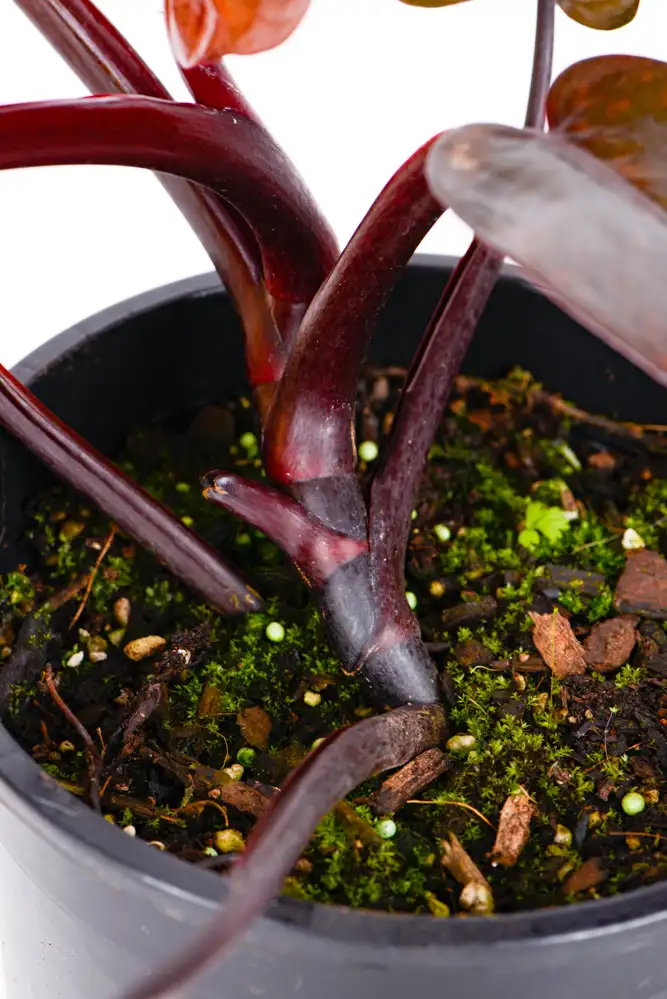
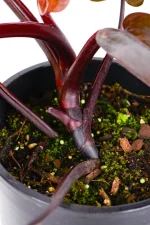
The stems and petioles also carry dark red and burgundy colouring, which becomes particularly noticeable against the older green foliage.
Royal Queen has a self-heading growth habit rather than producing long trailing vines. New leaves emerge closely from the centre, gradually building a full plant as it matures. This makes it easy to manage indoors without constantly having to train long stems around a support.
As with most dark-leaved Philodendrons, good light makes a considerable difference. Don’t put this one in a dark corner. Bright, indirect light encourages stronger growth and helps the new foliage develop the darker colouring Royal Queen is grown for.
It’s also a hungry plant when actively growing. Regular fertilising during spring and summer encourages larger leaves and keeps new growth coming. Combined with an open growing medium and sensible watering, it’s a relatively straightforward Philodendron to keep.
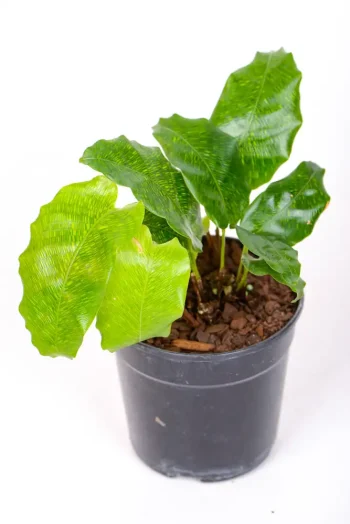
These plants are supplied in 16.5cm pots and already show the mixture of dark new growth and mature green foliage that makes Royal Queen so easy to recognise.
Philodendron Royal Queen Care Guide
Watering – How often should I water it?
Water thoroughly and then allow the upper few centimetres of growing medium to dry before watering again. Royal Queen enjoys consistent moisture while actively growing, but the roots shouldn’t remain constantly wet. Water less frequently during colder months.
Light – How much light does Philodendron Royal Queen need?
Give it plenty of bright, indirect light. Gentle morning sun is also beneficial. Although it will tolerate medium light, growth will slow and you may not get the same dark colouring from the new leaves. Avoid a dark corner.
Colour – Why are the new leaves burgundy?
That’s one of Royal Queen’s main characteristics. Fresh foliage emerges in dark red, burgundy and sometimes almost black tones before gradually changing to dark green as the leaf matures.
Humidity – Does it need high humidity?
Normal household humidity is generally sufficient. Higher humidity can benefit new leaves while they’re opening, but good airflow is just as important. Avoid keeping the plant in a permanently damp, stagnant area.
Soil – What growing medium should I use?
Royal Queen is an aroid and needs plenty of oxygen around its roots. I recommend Aroid Mix, which provides the open structure these roots prefer. You can add Perlite or Bark Chips if you want an even more open mix.
Feeding – How should I fertilise Royal Queen?
Feed regularly while the plant is actively growing. Grobest Organic Fertiliser works well for regular feeding, while Controlled Release Fertiliser provides a steady background supply of nutrients. You can also use Novatec Soluble Fertiliser during periods of active growth.
Repotting – When should I repot it?
Don’t rush to repot a newly purchased plant. Allow it to settle first and repot once the roots have filled most of the existing container. Move up only one pot size and use a free-draining Aroid Mix.
Pests – What should I check for?
Keep an eye out for thrips, spider mites, scale and mealybugs. New Philodendron growth is particularly worth checking because pests can hide inside leaves before they have completely unfurled.
Temperature – What temperatures does it prefer?
Royal Queen prefers warm conditions between approximately 18°C and 28°C. Protect it from cold drafts and temperatures below about 12°C, particularly when the growing medium is wet.
FAQ’s
Q: Does Philodendron Royal Queen stay black?
No. The very dark colour is most noticeable on fresh growth. As the leaves mature, they gradually change to deep green.
Q: Is Royal Queen a climbing Philodendron?
Royal Queen has a compact, self-heading growth habit rather than producing the long vines associated with climbing Philodendrons.
Q: How do I get darker new leaves?
Light plays an important role. Keep the plant in strong, bright indirect light and feed it regularly during active growth. A plant kept too far from natural light will generally grow more slowly.
Q: Is Philodendron Royal Queen difficult to grow?
No. Once you get the light and watering right, it’s a fairly straightforward Philodendron. The biggest things are avoiding a dark position and not keeping the roots permanently wet.
Q: Why is my Royal Queen turning green?
That’s normal. The leaves naturally change colour as they mature. The oldest leaves will be green while the newest growth carries the burgundy and darker colouring.
Q: Does Royal Queen need a moss pole?
No. Its self-heading growth means it doesn’t require a moss pole in the way climbing Philodendrons do.
Q: Is Philodendron Royal Queen pet safe?
No. Like other Philodendrons, it contains calcium oxalate crystals and shouldn’t be chewed or eaten by cats, dogs or people.
Be sure to visit and follow us Facebook and Instagram