






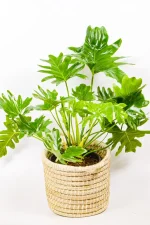
Commonly known as: Philodendron Selloum / Tree Philodendron
Botanical name: Thaumatophyllum bipinnatifidum
Often still referred to by its old name, Philodendron Selloum, this plant is now correctly classified as Thaumatophyllum bipinnatifidum. Regardless of the name, it remains one of the most striking foliage plants you can grow indoors. Its broad, deeply cut leaves emerge on sturdy stems, creating a lush, architectural form that fills a space beautifully.
Unlike climbing Philodendrons, Selloum is a self-heading plant. It grows outward and upward from a central base rather than trailing or needing support. Over time, it forms a thick trunk-like stem, giving it a strong, grounded appearance.
Despite its tropical look, Selloum is adaptable and resilient. It copes well with normal indoor conditions, responds positively to consistent care, and becomes more impressive with age. Given enough light and room to spread, it quickly becomes a focal
Philodendron Selloum Care Guide
Watering – How often should I water it?
Water when the top 3–5 cm of soil feels dry. Selloum prefers evenly moist soil but does not tolerate waterlogged conditions. Always allow excess water to drain away.
Light – What light does a Philodendron Selloum need?
Bright, indirect light is ideal. It tolerates moderate light but grows faster and develops larger leaves in brighter positions. Avoid harsh direct sun, which can scorch the foliage.
Humidity – Does it need high humidity?
Average household humidity is sufficient. While it appreciates slightly humid air, good airflow is more important than constant misting. Wipe leaves occasionally to remove dust and help with photosynthesis.
Soil – What soil mix works best?
Use a chunky, well-draining mix that supports strong root growth without staying wet. Our Aroid Mix works perfectly, or you can create your own using Barks Unlimited Potting Soil combined with Perlite and Bark Chips. This keeps the root zone airy and prevents compaction as the plant matures.
Feeding – How should I fertilise it?
Feed every 4–6 weeks during spring and summer using our Organic Fertiliser. For longer-term nutrition, add a measured amount of Controlled Release Fertiliser at the start of the growing season. Reduce feeding in winter.
Repotting – When should I repot a Selloum?
Repot every 18–24 months, or once the roots become crowded. Move up one pot size at a time. As the plant matures, it prefers stability and does not need frequent repotting.
Pests – What pests should I watch for?
Generally hardy, but spider mites, scale, or mealybugs may appear in dry conditions. Inspect leaves regularly and treat early with an insecticidal spray if needed.
Temperature – What temperature suits it best?
Ideal temperatures range between 18 °C and 30 °C. Protect from cold drafts and temperatures below 12 °C. Consistent warmth encourages larger leaf development.
FAQ’s
Q: Does Philodendron Selloum need a moss pole?
No. It is a self-heading plant and grows from a central base.
Q: How big will it get indoors?
With time and space, it can reach well over 1.5 m tall and wide.
Q: Can I prune it?
Yes. Removing older outer leaves keeps the plant tidy and encourages new growth.
Q: Is it safe around pets?
No. Like most Philodendrons, it is toxic if ingested.
Be sure to visit and follow us Facebook and Instagram